
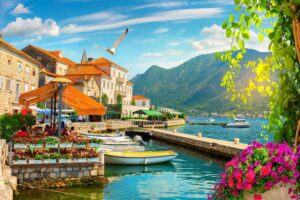
According to “Serbian Economist”, Montenegro’s Ministry of the Interior stated that approximately 80% of foreigners who attempted to obtain or regularize their stay in the country over the past two months had abused immigration procedures.
This was announced on October 30 by Ministry of Internal Affairs spokesperson Dragan Dašić on state television. According to him, in the last month alone, a large number of new companies were registered in Montenegro, which were likely created primarily to provide foreigners with grounds for residence.
Now, the Ministry of Internal Affairs, together with the police and the Tax Administration, will investigate all recently registered companies, as well as the circumstances surrounding the issuance of residence permits through them.
Why is this happening right now?
Starting November 1, 2026, Montenegro will require visas for citizens of five countries: Russia, Turkey, Belarus, China, and Saudi Arabia.
Therefore, it can be assumed that a significant portion of the new applications for residence permits come from citizens of Russia and Turkey, who make up two of the country’s three largest foreign communities.
Obtaining a valid residence permit allows one to live in Montenegro and return there without applying for a separate visa. However, registering a company does not in itself guarantee the issuance of a residence permit.
Dašić emphasized that foreigners with valid temporary or permanent residence permits will not face restrictions on entry or exit.
How many foreigners live in Montenegro?
According to September data from the Ministry of the Interior, published by the Center for Civic Education, 69,945 foreign citizens held residence permits.
Main groups by citizenship:
Russia — 17,907 people
Serbia — 15,287
Turkey — 10,600
Bosnia and Herzegovina — 3,801
Kosovo — 3,139
Albania — 3,064
Azerbaijan — 2,552
Ukraine — 1,614
North Macedonia — 1,174
Germany — 1,093
Thus, citizens of Russia and Turkey together account for about 41% of foreigners in these statistics, and when Serbs are included, the three largest groups account for nearly 63%.
Citizens of the five countries listed above are required to apply for visas in advance. The consular fee is 35 euros, and the standard processing time is 10 days.
Exceptions are provided, particularly for holders of certain valid foreign visas and residence permits.
For Montenegro, this is a significant change in migration policy that may affect the real estate market, business registration, and tourist flows.
MIGRATION, Ministry of Internal Affairs, MONTENEGRO, PERMITS, VISAS
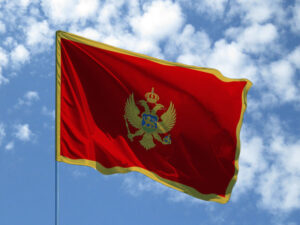
According to Serbian Economist, Montenegro will cancel visa-free entry for Russian citizens and introduce a visa regime by the end of the third quarter of 2026 as part of the harmonization of visa policy with the rules of the European Union.
“In accordance with the commitments undertaken by Montenegro on its path to full membership in the European Union, the country must fully harmonize its visa policy with the EU policy by the end of the third quarter of 2026. This includes, among other things, the introduction of a visa regime for Russian citizens,” the commentary reads.
Russian citizens can now enter Montenegro without a visa and stay in the country for up to 30 days under a bilateral agreement.
According to the national statistical service Monstat, in 2023 Montenegro was visited by about 247 thousand tourists from Russia, which provided 24% of all overnight stays of foreign guests; in 2024 their share amounted to 18.3% with a total flow of 2.6 million tourists. According to the Ministry of Internal Affairs of Montenegro, about 20 thousand citizens of the Russian Federation with temporary or permanent residence permits are officially registered in the country.
Thus, the tightening of the visa regime will potentially affect annually hundreds of thousands of tourist trips and tens of thousands of Russians living or regularly vacationing in Montenegro. Experts expect that part of this flow will be reoriented to other visa-free or easier destinations for Russians – primarily Turkey, Egypt, UAE, Serbia and a number of Asian countries.
https://t.me/relocationrs/1822
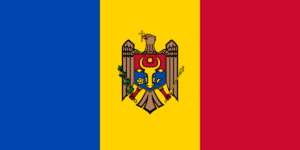
Moldova is launching a new visa category for digital nomads, designed for professionals who work remotely.
The visa is intended for foreigners who can confirm their remote work and stable income.
It is valid for up to one year with the possibility of extension, allowing holders to work and live in the country between trips.
Requirements include proof of income above a certain threshold, medical insurance, and no criminal record.
Under the visa, holders will be able to take advantage of preferential tax treatment or special tax conditions depending on their place of residence.
The country seeks to strengthen its position as an attractive destination for IT and creative sector professionals. Digital nomads bring revenue to the economy through accommodation, rent, and consumption of services and goods. This further stimulates the development of infrastructure, coworking spaces, and international relations.
Moldova is joining the ranks of countries introducing special visa regimes to attract remote workers. Similar schemes are already in place in Georgia, Portugal, Estonia, and other countries seeking to strengthen their digital economies and diversify their sources of income.
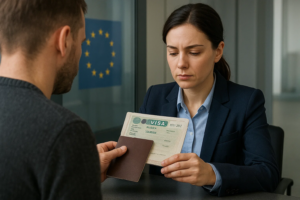
The European Commission is considering tightening the conditions for Russian citizens to obtain Schengen tourist visas. At present, short-term visas continue to be issued to Russians in 17 Schengen countries, including Austria, Germany, Italy, Spain, and France.
Among the measures under consideration are:
– increasing the processing time for visa applications from the current 10 to 15 days, with the possibility of extending it to 45 days,
– introducing stricter controls on document compliance and strengthening measures against abuse.
As part of the preparation of a new, 19th package of sanctions against Russia, a clause on a complete ban on the issuance of Schengen tourist visas is being discussed — the proposed option may be included in the package, which is expected to be presented on September 12.
The main impetus for this initiative is the sharp increase in the number of tourist trips by Russians to Schengen countries in the summer months of 2025, which raises concerns about the possible use of tourist trips to prepare malicious actions within the EU.
In 2024, Russians submitted about 606,600 applications for Schengen visas and received about 552,600 visas, an increase of 16-21% compared to the previous year.
Russia ranked fifth in the world in terms of the number of Schengen visas obtained, behind only China, Turkey, India, and Morocco.
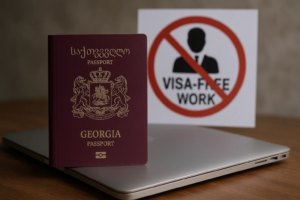
New rules will come into force in Georgia that will abolish the possibility of working without a permit for citizens of countries with a visa-free regime. From 2026, legal employment will require a work permit and a corresponding residence permit, according to the Serbian Economist Telegram channel.
On June 26, the country’s parliament adopted amendments to the laws “On Labor Migration” and “On the Legal Status of Foreigners.” Now, any foreigner who does not have a permanent residence permit will be required to obtain a work permit, even if they entered the country under a visa-free regime.
Key changes
• The visa-free regime no longer grants the right to work — it only applies to entry and short-term stays.
• The concepts of “labor migrant” and “self-employed foreigner” are introduced — both categories must obtain a permit.
• Employers are required to complete the paperwork for foreign employees before they officially start work.
Who will be affected by the new rules?
According to Geostat, fewer than 3,800 labor migrants were officially registered in 2015–2023, while the actual number of foreigners working in the country is significantly higher — in 2022–2023 alone, there were over 239,000 foreigners in Georgia. Many of them worked illegally.
The changes will have the greatest impact on citizens of:
• Russia — according to various estimates, between 80,000 and 120,000 Russians live in Georgia, a significant proportion of whom work remotely or in the service sector without formal permission;
• Georgia’s neighbors (Armenia, Azerbaijan);
• Ukraine;
• the Middle East;
• South Asia;
• some countries in Europe and Latin America.
For Russians, who have become one of the largest groups of foreigners in Georgia since 2022, the new rules may lead to the need for mass registration of work permits. Otherwise, there is a risk of fines and the inability to continue working.
The reform aims to legalize the labor market and protect the rights of Georgian citizens. It closes a loophole that allows foreigners to work without a visa and creates a new legal framework for tens of thousands of people. This will particularly affect citizens of the Russian Federation and CIS countries, who in recent years have made up the core of the foreign presence in Georgia’s economy.
Source: https://t.me/relocationrs
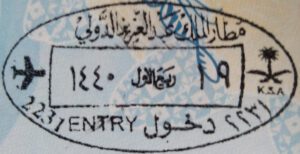
The Cabinet of Ministers of Ukraine intends to agree with the government of the Kingdom of Saudi Arabia on the mutual abolition of short-term visas for holders of diplomatic, special and service passports.
The relevant draft memorandum of understanding was approved at the Wednesday government meeting.
It is expected that the signing of the memorandum will establish a symmetric travel regime for Ukrainian citizens who use diplomatic and service passports and Saudi Arabians who hold diplomatic and service passports to another state.
In particular, the memorandum stipulates the possibility of visa-free travel up to 90 days within 180 days.



