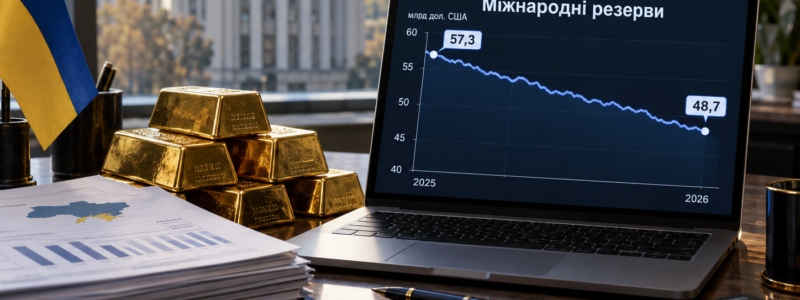
Ukraine’s international reserves amounted to $48.7 billion at the end of August 2026, which is approximately $8.6 billion, or 15%, less than at the beginning of the year, according to an analysis by the Experts Club information and analytical center.
As of January 1, reserves stood at a record level of $57.3 billion, and by the beginning of February they had risen to $57.7 billion. After that, they declined for four consecutive months: to $54.8 billion as of March 1, $52 billion as of April 1, $48.2 billion as of May 1, and $45.7 billion as of June 1.
The main factors behind the decline were significant foreign exchange interventions by the National Bank, government debt payments, and uneven inflows of international financial assistance.
The situation changed sharply in June, when Ukraine received large tranches of external financing. Reserves increased by 12.1% over the month — to $51.27 billion. About $11.3 billion was credited to the government’s foreign currency accounts, including $6.82 billion from the EU and almost $4.5 billion through the World Bank.
In July, reserves remained almost unchanged, but in August they again decreased by approximately $2.5 billion, or 5%, to $48.7 billion.
In August, the NBU sold about $4.82 billion on the foreign exchange market, while $927.3 million was credited to the government’s foreign currency accounts. Ukraine also directed $721.8 million toward servicing and repaying government debt in foreign currency and paid $258.2 million to the IMF.
Net international reserves declined even more sharply over the month — by 6.9%, to $33.8 billion.
At the same time, the current level of reserves remains approximately 5.8% higher than a year ago, when they stood at about $46 billion as of September 1, 2025.
Experts Club founder and economist Maksym Urakin previously emphasized that the absolute size of reserves should not be regarded as a guarantee of currency security.
“Reserves at the level of $51.2 billion remain a significant foreign exchange buffer, but the absolute figure itself should not create an impression of complete protection. The sustainability of reserves depends on the regularity of international financing, the volume of NBU interventions, debt payments, and the economy’s ability to increase export revenues,” Urakin noted.
According to the NBU, the current level of reserves remains sufficient and provides financing for approximately four months of future imports.