

The peak of tax authorities’ activity is expected to occur in the spring.
The State Tax Service has planned 4,500 audits for 2026. Most of the attention of tax authorities will be focused on companies — 78%. Most inspections are planned for spring. Kyiv and the surrounding region, Dnipropetrovsk and Lviv regions lead in terms of the number of visits by tax authorities. Ukrainian business leaders are also on the State Tax Service’s list.
The State Tax Service has planned 4,558 inspections this year, which is 5% less than last year. The peak of tax authorities’ activity is tentatively scheduled for March and April. However, tax authorities will make the fewest visits at the beginning of the year: only 278 inspections.

Follow the updates on the tax audit schedule page.
Who should expect tax audits?
This year, the State Tax Service plans to focus most of its attention on companies, which account for 78% or 3,542 of the planned audits. In every fifth case, guests from the tax authorities should be expected by sole proprietors — 1,016 inspections. However, only 258 inspections are planned for businesses with issues related to personal income tax, military tax, and social security contributions.
There are not that many “problematic” companies on the list: five businesses are facing bankruptcy proceedings, three companies are in the process of being shut down, and one company is trying to restore its solvency through reorganization.
The largest number of audits awaits companies in the wholesale trade and agriculture sectors — 21% each. Businesses engaged in food production are in third place in terms of demand from tax authorities, with 5% of inspections.

The most active will be the tax authorities of the capital and the region — 1,067 inspections, Dnipropetrovsk region — 372, and Lviv region — 264 inspections.
Traditionally, the State Tax Service will also visit the country’s largest businesses. The list includes companies that are among the top ten in their field according to the 2025 Index. These are Naftogaz of Ukraine, Kamet-Steel, MHP, Rozetka, and NOVUS.

Ukraine ranked fifth among countries that were sources of accumulated foreign direct investment (FDI) in Cyprus in 2024, reports the Experts Club information and analytical center.
The total volume of accumulated inward FDI in 2024 is estimated at €365.07 billion, with Ukraine accounting for €10.64 billion, or 3% of the total.
Russia remains the largest source of investment with €83.46 billion (23%), followed by the United States with €66.57 billion (18%), Luxembourg with €32.10 billion (9%), the United Kingdom with €17.17 billion (5%), Ukraine – €10.64 billion (3%), the Netherlands – €6.90 billion (2%), and Israel – €5.10 billion (1%).
In addition, the data mentions the Cayman Islands (€8.4 billion), other countries in the Middle East (€7.6 billion), the Marshall Islands (€3.5 billion), and the British Virgin Islands (€2.4 billion).
The Central Bank of Cyprus also notes a decrease in the total volume of accumulated FDI: from €489.4 billion in 2022 to €394.0 billion in 2023 and €365.07 billion in 2024; The figure for Russia for this period fell from €135.7 billion to €83.46 billion.
The Central Bank of Cyprus notes that this refers to FDI “positions” (the accumulated volume of equity participation and intra-corporate loans), rather than new investment flows into the real economy.

The Experts Club analytical center has published a video study on silver production in the world by leading countries in 1971-2024, which shows the long-term restructuring of production geography and the strengthening of the role of Latin America and a number of Asian countries.
According to the study (source: BGS), Mexico will remain the largest silver producer in 2024 with 7.43 million kg, having been the undisputed world leader in silver production for 15 consecutive years. It is followed by China with 3.389 million kg and Peru with 3.065 million kg. The next group of producers includes Russia (1.604 million kg), Poland (1.534 million kg), Bolivia (1.495 million kg), Australia (1.218 million kg), the United States (1.097 million kg), Chile (1.049 million kg), and Kazakhstan (878,000 kg).
The top 20 for 2024 also included Argentina (775 thousand kg), India (769 thousand kg), Canada (410 thousand kg), Sweden (372 thousand kg), Indonesia (325 thousand kg), Uzbekistan (258 thousand kg), Morocco (224,000 kg), Papua New Guinea (137,000 kg), Brazil (102,600 kg), and Turkey (96,130 kg).
The study notes that over the decade, the centers of production have changed: some countries have increased output by expanding polymetallic projects, where silver is often a by-product, while leadership has gradually consolidated among large producers with a stable raw material base and developed processing.
Commenting on the results, Experts Club founder Maxim Urakin emphasized that the long series from 1971 to 2024 shows not just a “race” between countries, but investment cycles and a structural shift in demand: “Silver is increasingly perceived as a strategic metal — both for industry and for investors, so understanding who has been increasing production for decades and how helps to assess future risks of shortages and price spikes.”
According to analysts’ estimates, the value of silver in 2025 rose by a record 128.47%, which was the best result among major assets and exceeded the dynamics of gold (+66.59%) as well as the largest crypto assets, which ended 2025 in negative territory (BTC -5.75%, ETH -11.58%).
The video analysis is available on the Experts Club YouTube channel –
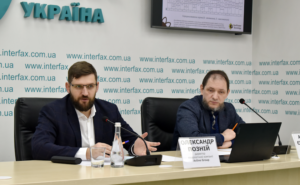
Among the areas of public policy in 2025, Ukrainians rated the digitization of public services most highly and the fight against corruption in government most poorly, according to the results of a nationwide sociological survey by Active Group, presented at a press conference at the Interfax-Ukraine agency on Tuesday.
“The only area that citizens perceive as an unconditional success with a clear practical effect on everyday life is the digitization of public services. The average rating is 2.92,” said Active Group co-founder Alexander Pozniy.
According to the study, Ukrainians also considered the promotion of Ukraine’s interests in the international arena (2.57) and the restoration of energy infrastructure after shelling (2.41) to be relatively successful areas. Attracting foreign investment (2.38) and developing the defense-industrial complex (2.23) also received above-average ratings.
In the middle of the scale were the improvement of the education system (2.18), the approach of a favorable end to the war for Ukraine (2.16), and the functioning of the healthcare system (2.15). Respondents rated the development of defense forces and high-quality mobilization at 2.08 points, social protection for veterans at 2.02, and support for socially vulnerable groups at 1.92.

The economic sector received lower ratings: overall economic development – 1.87, improvement in the work of law enforcement agencies – 1.80, and support for small and medium-sized businesses – 1.67. Respondents rated the return of people from abroad at 1.65 and the improvement in the demographic situation at 1.61.
According to the survey, the most problematic areas remain improving the judicial system (1.55) and reforming the system of government (1.51). The fight against corruption in government received the lowest rating of all areas, at 1.36.
“The 1.36 rating for the fight against corruption is a marker of major public disappointment and an area where people do not see systemic changes,” Pozniy said.
A separate section of the study concerned awareness of and trust in law enforcement and anti-corruption institutions. The most well-known remain the Armed Forces of Ukraine, which 89.6% of respondents had heard of, the SBU (76.8%), and the GUR (74.3%). Among anti-corruption bodies, the NABU (71.6%) and the MIA (65.1%) have a high level of recognition, while 37.4% have heard of the SAP, 36.7% of the VAKS, 34.6% of the NAZK, 33.6% of the BEB, and 31.5% of the Office of the Prosecutor General.

According to Active Group co-founder Andriy Yeremenko, the dynamics of trust in December 2025 showed growth primarily in the Defense Forces. “The Armed Forces of Ukraine remain the undisputed leader in terms of trust: 65.5% trust them in December, which is 13.2 percentage points more than in September—the largest increase among all structures,” he said.
According to the survey, trust in the Security Service of Ukraine (SBU) stands at 38.5% (+2.0 percentage points), and in the Main Intelligence Directorate (GUR) at 36.1% (+1.9 percentage points). Among anti-corruption agencies, the share of those who trust the NABU has grown to 23.6% (+3.2 p.p.), and the BEB to 7.8% (+3.2 p.p.).
At the same time, there has been a decline in trust in a number of institutions: the SAPO to 7.3% (-5.7 p.p.), the NACP to 3.5% (-5.8 p.p.), the VAKS to 4.1% (-2.4 p.p.), and the SBI to 9.7% (-2.4 p.p.). Trust in the Office of the Prosecutor General was 2.1%, with the institution being measured for the first time. The share of respondents who said they did not trust any of the listed structures was 20.8% (-3.3 p.p. compared to September).
The survey was conducted by Active Group on December 21-23, 2025, using the SunFlower Sociology online panel, with self-completed questionnaires by Ukrainian citizens aged 18 and older. The sample size was 2,000 questionnaires, with a theoretical margin of error of no more than 2.2% at a confidence level of 0.95.
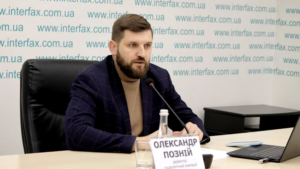
At the end of 2025, 56.2% of Ukrainians believe that the country is moving exclusively or predominantly in the right direction, while 30.6% assess this movement as wrong, according to the results of a nationwide sociological survey by Active Group, presented at a press conference at Interfax-Ukraine on Monday.
According to the published data, among Ukraine’s main achievements since the start of the full-scale invasion, respondents most often cited the attraction of international aid (61.4%). Respondents also noted the organization of the country’s defense (43.1%), the unification of society around support for defenders (32.8%), and the development of the domestic defense industry (32.6%).
At the same time, Ukrainians consider corruption to be the key internal challenge, with 79.2% of respondents naming it as the country’s main problem. Among other problems, respondents pointed to mobilization (39.7%), economic support (32.2%), and defense organization (33.7%). At the same time, 41.7% believe that the real fight against corruption has intensified, while 47.3% say it has weakened.

“Ukrainians are approaching the end of the year with a combination of cautious optimism and a demand for justice, which is why corruption remains the main internal challenge for society,” said Alexander Pozniy, director of the research company Active Group, commenting on the results of the study.
The survey also showed a high level of support for the idea of peace talks: 78.0% of Ukrainians view negotiations to end the war very or somewhat positively. At the same time, views on the terms of peace remain ambiguous. Thus, 46.5% admit the possibility of a temporary loss of certain territories during the truce, while 56.3% consider a freeze on the front line to be acceptable. The greatest resistance is caused by scenarios involving strategic concessions: 66.2% do not allow the withdrawal of Ukrainian troops from the controlled part of Donbas, and 57.6% do not agree to a complete refusal to return the occupied territories by military means. At the same time, 76.2% support the idea of deploying NATO troops in Ukraine as a security guarantee.
Regarding elections during wartime, a total of 53.7% of respondents expressed a negative attitude towards holding elections before the end of hostilities, while 33.8% viewed the idea positively.
In the simulation of the first round of the presidential election, Volodymyr Zelensky (17.8%) and Valery Zaluzhny (16.6%) received the most support, followed by Kirill Budanov (7.3%), Petro Poroshenko (6.5%), and Dmytro Razumkov (5.4%). At the same time, 18.4% of respondents were undecided, and another 15.2% said they intended not to vote or to spoil their ballot.
Modeling of the second round shows Valery Zaluzhny leading against Volodymyr Zelensky with 38.5% to 26.7%, and against Kirill Budanov with 34.6% to 28.7%. According to the survey results, the most competitive scenario for the second round appears to be between Volodymyr Zelensky and Kirill Budanov: 32.1% would support Budanov, while 29.8% would support Zelensky.
In hypothetical parliamentary elections, Valery Zaluzhny’s party leads (14.2%), ahead of Volodymyr Zelensky’s party (10.4%) and European Solidarity (9.0%). Potential party projects associated with Kirill Budanov (9.3%) also show noticeable results. The share of those who are undecided is 17.8%.
The survey was conducted by Active Group using the SunFlower Sociology online panel. The method involved self-completion of questionnaires by Ukrainian citizens aged 18+. The sample consisted of 2,000 questionnaires, representative in terms of age, gender, and region of Ukraine. The theoretical error at a confidence level of 0.95 does not exceed 2.2%. The data collection period was December 21-23, 2025.

Ukraine ranks first in Europe in terms of human and brain drain, according to the Experts Club analytical center, citing the 2024 Human Flight and Brain Drain ranking. According to the ranking, Ukraine has a score of 8.4 points (on a scale of 0-10, where a higher value indicates a more pronounced outflow), based on data from The Global Economy, which is based on the Fund for Peace indicator.
Ukraine ranks 7th in the global rating, behind six countries: Samoa, Palestine, Jamaica, Eritrea, El Salvador, and Somalia, according to a review by Ukrainian News, citing The Global Economy.

According to The Global Economy, Ukraine’s index was 8.9 points in 2023, and it fell to 8.4 points in 2024.



