
Viktor Mykyta, Deputy Head of the Office of the President of Ukraine and Chair of the Chamber of Regions of the Congress of Local and Regional Authorities, reported on a meeting with heads of regional administrations, during which they discussed the regions’ preparations for the start of the new school year, providing children with hot meals, setting up shelters, ensuring energy independence for educational institutions, and other issues.
“As of now, more than 9,370 educational institutions are ready to provide children with hot lunches. This covers nearly 99% of all students at this level. The state has provided communities with the financial resources needed to achieve this target,” Mykyta wrote on Telegram on Friday following the meeting.
He also reported on work to implement the president’s “Schoolchild’s Package” initiative, which provides funding to families of first-graders to purchase necessary school supplies before the start of the new school year, though he did not specify what stage the initiative is currently in.
The deputy head of the Presidential Office discussed efforts to create energy-independent schools, which involve equipping the largest educational institutions with autonomous power, generation, and heating systems. “Schools will become true havens of resilience, where, in the event of power outages, children will be able to stay warm and have access to electricity for an extended period of time. Last winter, which was particularly harsh, such solutions proved their effectiveness in communities and regions. This is our proven path, and we are moving forward along it,” Mykyta said.
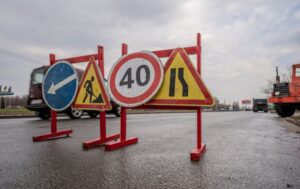
Due to security measures involving foreign delegations in the capital, temporary traffic restrictions will be implemented from August 22–25, according to the State Security Service of Ukraine.
It is noted that the restrictions will be in effect in the central part of the capital, as well as in certain areas of the Pechersky, Podilsky, Solomensky, and Shevchenkivsky districts.
“Please take this information into account when traveling,” reads a post by the State Security Service of Ukraine on Facebook.
KYIV, SECURITY, State Security Service, TRAFFIC, TRANSPORTATION
The proportion of unjustified hospitalizations in Ukraine is estimated at approximately 38%, and in general therapy wards, up to 65% of bed-days may be excessive, said Yevhen Gonchar, Ukraine’s Deputy Minister of Health, in an exclusive interview with Interfax-Ukraine.
The Ministry of Health observes the highest number of such cases in therapeutic specialties, particularly in neurology, cardiology, and endocrinology.
According to Gonchar, reducing unjustified hospitalizations should not lead to a reduction in the number of doctors. Some specialists who are currently employed primarily in hospitals will be able to devote more time to outpatient care.
This should increase access to subspecialists for patients who currently sometimes have difficulty seeing a doctor because the doctor is busy in an inpatient ward.
Another area of transformation could be the further development of same-day surgery. Over the past three years, the number of such surgeries in Ukraine has already more than tripled.
Source: An exclusive interview with Yevhen Gonchar, Ukraine’s Deputy Minister of Health, given to the Interfax-Ukraine news agency.

Children with mental disorders who require inpatient care in Ukraine should be treated in regional or city children’s hospitals, rather than in general psychiatric facilities, said Yevhen Gonchar, Ukraine’s Deputy Minister of Health, in an exclusive interview with the Interfax-Ukraine news agency.
According to him, the legislation was amended after cases were uncovered in which children from residential care facilities were referred to psychiatric hospitals—in particular, under the guise of treatment or rehabilitation, or in fact to influence their behavior.
Such cases were documented in reports by the Verkhovna Rada Commissioner for Human Rights and law enforcement agencies.
Gonchar emphasized that a psychiatric hospital should not be used as a tool for correcting a child’s behavior.
Adult patients with dementia who have been in psychiatric facilities for a long time, primarily for social rather than medical reasons, remain a separate issue.
Stable patients with dementia who do not require treatment for acute episodes, according to the deputy minister, should receive social care—specifically in supported living facilities or other specialized institutions—rather than permanently occupying beds in psychiatric hospitals.

The number of hospitalizations in Ukrainian medical facilities rose from 5.5 million cases in 2021 to 8.3 million in 2025, said Yevhen Gonchar, Ukraine’s Deputy Minister of Health, in an exclusive interview with Interfax-Ukraine.
According to him, the patient demographic has also changed: the proportion of hospitalized men aged 18–65 rose by 12 percentage points during this period.
At the same time, the increase in the number of hospitalizations came to a halt in 2025, and in the first half of 2026, the number had already decreased compared to the same period the previous year.
Gonchar emphasized that the new hospitalization criteria approved by the Ministry of Health do not trigger this decline but rather reinforce a trend that had already taken shape within the healthcare system.
However, comparing indicators over a long period requires caution. Between 2020 and 2022, Ukrainian healthcare facilities transitioned from paper-based to electronic record-keeping, so the quality of medical case coding gradually improved. According to the deputy minister, data from the electronic healthcare system has been stable enough for year-over-year comparisons since 2023.

Suiza, con unas reservas internacionales oficiales de 1,0877 billones de dólares, ocupó el primer puesto entre los países europeos, según un análisis del centro de información y análisis Experts Club basado en los últimos datos disponibles de los bancos centrales.
En segundo lugar se situó Alemania, con 539 770 millones de dólares. Rusia, tras ajustar la cifra teniendo en cuenta los activos inmovilizados, descendió al tercer puesto.
«Las reservas suizas de 120,7 mil dólares por habitante superan casi siete veces las de Dinamarca y la República Checa —17,95 mil y 17,2 mil dólares, respectivamente—, mientras que Polonia y Hungría cuentan con unos 7,8 mil dólares. Esta diferencia no refleja el nivel de bienestar personal de los ciudadanos, sino la magnitud del colchón financiero externo en relación con la base demográfica. En el caso de los Estados pequeños, el denominador amplifica drásticamente el resultado, por lo que la clasificación debe analizarse junto con la cobertura de las importaciones, la deuda externa a corto plazo, la liquidez y la estructura de los activos de reserva. «Sin este contexto, es fácil interpretar erróneamente una posición alta en la clasificación como una valoración universal de la estabilidad financiera», subrayó el economista y fundador del centro de análisis Experts Club, Máxim Urakin.
El Banco de Rusia estimó las reservas brutas del país en 755 600 millones de dólares. Al mismo tiempo, alrededor de 285 000 millones de dólares de activos soberanos rusos permanecen bloqueados en jurisdicciones de los países del G7. Tras su exclusión, la estimación analítica de la parte de las reservas operativamente disponible asciende a aproximadamente 470 600 millones de dólares. Este indicador no constituye una estadística oficial de las reservas netas.
Les siguen Italia, con 414 520 millones de dólares; Francia, con 404 020 millones de dólares; y Polonia, con 294 950 millones de dólares. También figuran entre los diez primeros el Reino Unido, Turquía, la República Checa y España.
La clasificación se ha elaborado según la metodología IRFCL del FMI. No se han tenido en cuenta el indicador de reservas agregado del Banco Central Europeo ni los activos del balance general de los bancos centrales en su conjunto.



