

Revenues to Ukraine’s state budget from assets under ARMA’s management in January–July 2026 amounted to only 210 million UAH, compared to 1.3 billion UAH for the same period in 2025, said Pavlo Velykorechanyn, an expert with the Verkhovna Rada’s Anti-Corruption Committee and former deputy head of ARMA, in an exclusive interview with the “Interfax-Ukraine” news agency.
Thus, revenue has fallen by more than six times.
For comparison, according to Velykorechanyn, 7.5 billion hryvnias were transferred to the state budget in 2023, in part due to major cases involving special confiscation.
He noted that the current 210 million hryvnias is largely the result of managing assets transferred to ARMA back in 2024–2025. A significant portion of the revenue is linked to payments from Naftogaz.
According to Velykorechanyn’s assessment, there are currently virtually no new economically attractive assets in the agency’s portfolio. Furthermore, regarding certain properties, the results of tenders to select managers are being annulled, after which courts rule such decisions unlawful, forcing the state to fund property appraisals again.
He identified the length of the procedure for transferring assets to management as a separate problem. While the property remains without a manager, the state is forced to bear the costs of its security and maintenance, while the asset may physically deteriorate or lose value.

Despite the fact that the Register of Seized Assets contains tens of thousands of items, the number of assets with real economic potential accounts for only a small portion of the portfolio, said Pavlo Velykorechanyn, an expert on the Verkhovna Rada’s Anti-Corruption Committee and former deputy head of ARMA, in an exclusive interview with the Interfax-Ukraine news agency.
According to him, a significant portion of the property exists only on paper in the registry or is in such a condition that commercial management of it is impractical.
Among such assets, Velykorechanyn cited ruined farms, old, unusable vehicles, illiquid basement spaces, property lacking the necessary documentation, as well as assets destroyed after the start of the full-scale war.
Agricultural assets that have effectively ceased to exist for a long time—such as records of unharvested crops from previous years—constitute a separate category.
In Velykorechanyn’s view, ARMA must conduct a comprehensive identification of the portfolio and separate out the business assets that are truly economically attractive.
It is advisable to promptly sell illiquid or rapidly depreciating property through auctions rather than keeping it on the registry for years.
He also proposed reviewing court decisions regarding assets for which a manager has not been appointed within several months. Otherwise, the state continues to finance the storage and security of property that is gradually losing value.

The sale of the seized yacht “Royal Romance,” which is linked to Viktor Medvedchuk, has effectively been blocked due to a change in the procedure for the sale of Ukrainian assets located abroad, stated Pavlo Velykorechanin, an expert with the Verkhovna Rada’s Anti-Corruption Committee and former deputy head of ARMA, in an exclusive interview with the “Interfax-Ukraine” news agency.
According to him, the mechanism developed in 2023 allowed for the sale of seized assets through the “Prozorro.Sales” system, including assets physically located outside Ukraine.
However, the new government regulation stipulates that the sale of seized property abroad must take place on the basis of an asset-sharing agreement between states.
According to international practice, such a division typically becomes possible only after a final conviction by a court.
As a result, Velikorecchanin estimates that the Royal Romance may remain frozen abroad for several years while the trials in the main criminal cases are ongoing.
“The sale of Medvedchuk’s yacht has reached a dead end—these assets will simply remain frozen abroad for many years,” he stated.
The Royal Romance was previously seized in Croatia. Ukraine had attempted to arrange its sale, with the proceeds to be transferred to the state.
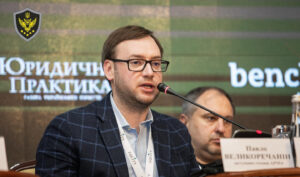
The Pechersky District Court of Kyiv has authorized the Asset Recovery and Management Agency (ARMA) to sell more than 8.3 million USDT worth approximately UAH 372 million, as current legislation effectively does not allow the agency to manage such assets in any other way, said Pavlo Velykorechanin, an expert of the Verkhovna Rada Anti-Corruption Committee and former deputy head of ARMA, in an exclusive interview with Interfax-Ukraine.
The decision to change the method of managing the seized virtual assets was adopted by the Pechersky District Court on August 14, 2026. The funds belonged to an organized transnational group of hackers and are stored on the WhiteBIT exchange.
According to Velykorechanin, after the USDT is sold, the proceeds may be placed in a deposit account. This approach makes it possible to reduce the state’s risks associated with possible changes in the value of virtual assets.
He noted that since 2025, ARMA has had the right to open a virtual asset wallet and accounts on specialized cryptocurrency platforms for the sale of cryptocurrency transferred to the agency. However, Ukraine still lacks a full-fledged mechanism for the conventional management of such assets.
In his opinion, a legally viable option remains the sale of crypto assets on market terms, followed by placing the proceeds on deposit or using them to purchase military bonds.
Velykorechanin also noted that in a number of countries, seized cryptocurrency is either held until a court decision is made or converted into traditional currency to reduce volatility risks. At the same time, the international practice studied by Europol practically does not provide for transferring cryptocurrency to an external manager in order to increase its value.

Holding a new competition to select an asset manager for IDS Ukraine, the producer of the “Morshynska” and “Mirgorodska” mineral waters, before the High Anti-Corruption Court issues a ruling may have limited prospects, said Pavlo Velykorechanyn, an expert with the Verkhovna Rada’s Anti-Corruption Committee and former deputy head of ARMA, in an exclusive interview with the “Interfax-Ukraine” news agency.
ARMA previously announced another tender to select an asset manager for IDS Ukraine and expects to hold it in September.
However, according to Velykorechanyn, there are legal obstacles that could significantly dampen the interest of potential participants.
In particular, certain court rulings lack a clear prohibition on current operators from using the companies’ assets. This could complicate the actual transfer of control to the new manager.
In addition, according to the company’s own data, the share of individuals subject to sanctions in IDS Ukraine is 49.7%, i.e., less than 100%. Under the new legislation, in such a situation, management requires either the consent of the other co-owners or a decision to forfeit the relevant share to the state budget.
The High Anti-Corruption Court (HACC) is currently considering a case regarding the forfeiture of the asset to the state; a decision is expected in the fall.
“Until the HACC issues a decision to forfeit this stake to the state and it is transferred to the State Property Fund, the prospects for ARMA conducting any tenders regarding IDS are highly uncertain,” Velikorechanyn noted.
Previously, several attempts were made to transfer IDS Ukraine’s assets into management. In particular, an agreement was signed with the company “Karpatska Dzherelna,” but the procedure for approving the concentration with the Antimonopoly Committee lasted about a year and a half and was not completed, after which the agreement was terminated.

Poland needs new specialized terminals for transshipping Ukrainian grain, as existing storage capacity for large shipments is virtually exhausted, said Bartosz Penchkovsky, owner and CEO of the Polish logistics company Frontier Logistics.
“Right now, if we look across all of Poland, it effectively has no capacity to store large volumes of cargo—30,000 metric tons or more. All of this capacity is effectively occupied,” he said during the online discussion “Alternative Export Routes: Synergy Between Ukrainian and Polish Logistics Amid the Black Sea Blockade.”
According to him, in 2022–2023, Polish investors expanded the capacity of port and border terminals for transshipping Ukrainian cargo, which, in theory, could have facilitated the export of 6–8 million metric tons of goods per year. However, after the ports of Greater Odesa resumed operations in 2024–2025, a portion of Ukrainian cargo returned to the Black Sea ports, while Polish terminals shifted their focus to other types of cargo. In particular, Poland began receiving approximately 3–3.5 million metric tons of soybean meal from Latin America and other goods.
According to him, another “bottleneck” is access to specialized railcars for transporting grain.
Penchkovsky also noted that some border crossings have spare capacity, while others are overloaded.
He added that Poland’s logistics infrastructure has significant potential to increase the transshipment of Ukrainian agricultural products, provided there are investments in specialized terminals and more efficient use of existing border crossings.



