

According to the Interfax-Ukraine Culture project, the 79th Cannes Film Festival has concluded in France, with the jury announcing the winners of the main competition program. The top prize—the “Palme d’Or”—went to the film Fjord by Romanian director Cristian Mungiu. This is the director’s second victory at Cannes following his triumph in 2007, reports the French publication Le Monde.
“This year has once again shown that cinema remains a way to talk about society, fears, and coexistence even in times of global tension,” Mungiu said during the awards ceremony.
The film “Fjord” marks the director’s English-language debut. The film tells the story of a Romanian family that moves to Norway and finds itself at the center of a conflict after social services intervene due to allegations of child neglect. The film explores the clash between traditional values and the modern European model of society. Sebastian Stan and Renate Reinsve starred in the lead roles.
The festival’s second most prestigious award—the Grand Prix—went to the film “Minotau” by Russian director Andrey Zvyagintsev.
The Jury Prize went to the film The Dreamed Adventure by director Valeska Grisebach.
The jury split the award for Best Director between Paweł Pawlikowski for the film Fatherland and the creative duo Javier Calvo and Javier Ambrosi for the film The Black Ball.
Virginie Efira and Tao Okamoto were named Best Actresses of the festival for their roles in the film All of a Sudden. The award for Best Actor was shared by Emmanuel Makia and Valentin Campagne for their work in the film Coward. The prize for Best Screenplay went to Emmanuel Marr for the film A Man of His Time.
This year’s festival took place against a backdrop of discussions about the role of cinema in times of war, political turbulence, and social change—these themes were among the key ones in the competition program.
https://interfax.com.ua/news/culture/1170680.html
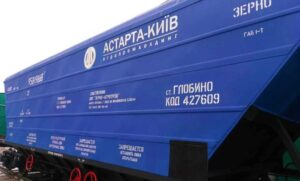
The Board of Directors of the Astarta agricultural holding has decided not to recommend a dividend payout from profits for the 2025 fiscal year for consideration at the annual general meeting of shareholders, which will take place on June 16.
“The Board’s decision is based on the need to retain profits to meet the company’s current investment and operational needs,” the company said in a stock exchange announcement on Friday.
Astarta’s share price fell 5.64% on that day to PLN50.2 per share.
Astarta is a vertically integrated agro-industrial holding operating in seven regions of Ukraine and is the country’s largest sugar producer. The company’s portfolio includes five sugar factories, agricultural holdings with a land bank of 214,000 hectares (including 129,000 hectares in Poltava Oblast, 42,000 hectares in Khmelnytskyi Oblast, and 16,000 hectares in Vinnytsia Oblast), and dairy farms with 30,000 head of cattle. The holding also operates a soybean processing plant and a bioenergy complex in Poltava Oblast, as well as a network of six grain elevators.
Astarta’s net profit for 2025 fell 4.2-fold to $19.94 million, while consolidated revenue decreased by 23% to $472 million.
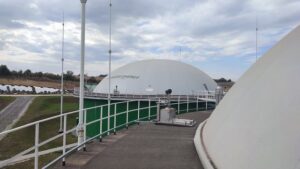
Ukraine plans to increase biomethane production to approximately 150 million cubic meters by 2026, and a production level of 500 million cubic meters is a realistic goal by 2030, according to a forecast by the Ministry of Economy, Environment, and Agriculture following a meeting with the European Investment Bank
“Ukraine has significant resources for producing biomethane from agricultural waste, livestock byproducts, straw, and sugar beets, which meets European requirements for ‘green’ fuel,” Deputy Minister Taras Vysotsky is quoted as saying in a press release on the ministry’s website.
He emphasized that exports to the EU should become the main driver of market development. The Deputy Minister noted that in 2025, Ukrainian private producers exported over 11.2 million cubic meters of biomethane via Ukraine’s gas transmission system for the first time.
Among the key challenges, he cited integration into the European certification system and the creation of the necessary technical database.
Following the meeting, the parties agreed to continue coordinating their work and further developing priority areas of cooperation in the fields of land reclamation, water resource management, and the development of sustainable agricultural infrastructure, as well as the biomethane sector.
As reported, on April 23, 2026, the government approved the Biomethane Production Development Program for the period up to 2035, which calls for increasing production to 2.1 billion cubic meters over 10 years.
According to data from the “Gas Transmission System Operator of Ukraine” (GTSOU), as of early February 2026, the declared capacity of biomethane producers in Ukraine, based on issued technical specifications for connection to the gas transmission system, stood at 11,000 cubic meters per hour, which equaled 96 million cubic meters per year.

The European Commission may present legislative proposals as early as summer 2026 to restrict minors’ access to social media. This was announced by European Commission President Ursula von der Leyen while speaking at a democracy summit in Copenhagen.
According to Reuters, von der Leyen said that the European Commission is stepping up measures to protect children from the “addictive design” of digital platforms, including TikTok, Meta, Facebook, Instagram, and X. She linked excessive social media use by teenagers to risks related to sleep, mental health, anxiety, cyberbullying, and other threats to young people.
However, this does not involve an immediate shutdown of social media platforms or a temporary suspension of their services for all users. Primary sources mention a possible “social media delay” for children, meaning a delay or restriction on the age at which minors can independently use social media. Euronews reports that the European Commission may present plans for a Europe-wide ban or age restriction for children as early as this summer.
The European Commission has already established a special panel of experts on children’s online safety. According to official EC documents, by the summer of 2026, the panel’s co-chairs are to present von der Leyen with recommendations on protecting children online, including possible harmonized age restrictions for access to social media and other online services.
Digital age verification will be a separate element of the future policy. In April 2026, the European Commission held the second meeting of the special panel, dedicated to current rules for protecting minors online and EU initiatives in this area. Reuters also reported that the EU has already developed an age verification app designed to help restrict children’s access to inappropriate content and services.
The new proposals could become part of a broader EU digital policy, including the Digital Services Act and the future Digital Fairness Act. The EU is currently investigating major platforms regarding the protection of minors, advertising transparency, researchers’ access to data, and the use of mechanisms designed to capture users’ attention.

Agricultural production in Ukraine increased by 1.7% in January–April 2026 compared to the same period last year, while growth for the first three months stood at 1.2%, according to the State Statistics Service (SSS).
According to the published data, the positive trend was driven exclusively by the livestock sector, as crop production data is not traditionally compiled until June.
The main driver of growth was agricultural enterprises, which increased production volumes by 10.5%. The best performance in this sector over the four-month period was demonstrated by Chernivtsi (+32.2%), Donetsk (30.8%), Zakarpattia (30.0%), and Lviv (29.4%) regions, while a decline in performance was recorded in four regions: Kherson (by 35.4%), Sumy (by 7.6%), Vinnytsia (by 3.6%), and Mykolaiv (by 3%).
In private households, the decline in production remained at the first-quarter level—15.7%. The largest declines in the private sector were observed in Donetsk (67%), Zakarpattia (48.4%), and Ternopil (35.9%) regions.
A slight increase in private households was recorded in only two regions—Kyiv (1.0%) and Odesa (0.1%).
As reported, by the end of 2025, agricultural production in Ukraine had decreased by 6.8% compared to 2024. In January 2026, growth of 3.2% was recorded, but for the period January–February, it slowed to 1.7%.
AGRICULTURAL PRODUCTION, AGRICULTURE, livestock farming, State Statistics Service
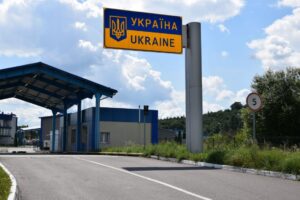
Passenger traffic across Ukraine’s western border during the week of May 16–22 increased by 2.3% to 496,000; with outbound traffic, as is typical for the second half of May, slightly exceeding inbound traffic, according to daily statistics from the State Border Service monitored by the agency “Interfax-Ukraine.”
According to these figures, the number of outbound border crossings rose to 253,000 from 245,000 the previous week, while the number of inbound crossings rose to 243,000 from 240,000.
The number of vehicles that passed through checkpoints this week matched the previous week’s figure—119,000—while the number of vehicles carrying humanitarian cargo decreased to 447 from 480.
According to the State Border Guard Service, as of 3:00 p.m. on Sunday, there were relatively short lines of passenger cars exiting the country at only three checkpoints: “Ustyluh” on the border with Poland—20 cars, “Uzhhorod” on the border with Slovakia – 10 vehicles, and “Tisa” on the border with Hungary – 6 vehicles.
At the same time, border guards recommend taking into account the possible instability of electronic systems used by control services at border crossing points when planning trips.
Last year, passenger traffic during this week was nearly the same—499,000—but vehicle traffic was slightly higher—125,000. The following week saw a slight increase of 1.4%, while the first week of June saw a jump of 13.2%.
As reported, starting May 10, 2022, the outflow of refugees from Ukraine, which began with the start of the war, shifted to an inflow that lasted until September 23, 2022, and totaled 409,000 people. However, since late September—possibly influenced by news of mobilization in Russia and “pseudo-referendums” in the occupied territories, followed by massive shelling of energy infrastructure—the number of people leaving has exceeded the number of those entering. In total, from the end of September 2022 until the first anniversary of the full-scale war, this figure reached 223,000 people.
In the second year of the full-scale war, the number of border crossings out of Ukraine, according to the State Border Guard Service, exceeded the number of crossings into the country by 25,000; in the third year, by 187,000; and in the fourth year, by 221,000, while in the period since the start of the fifth year, the inflows and outflows are currently equal.
In its April inflation report, the National Bank maintained its estimate of 0.2 million people migrating from Ukraine last year due to the deterioration of the security situation at the end of the year and the easing of exit rules for young people, but noted that this figure will be less than 0.5 million in 2024. The NBU continues to forecast a net outflow of 0.2 million in 2026, while net returns, according to its forecast, will begin in 2027 and amount to about 0.1 million people, increasing to 0.5 million people in 2028.
At the same time, after a brief pause, the UNHCR announced new data on the number of Ukrainian refugees, according to which the number in Europe as of April 30, 2026, had decreased to 5.213 million from 5.375 million on February 19, and globally to 5.762 million from 5.924 million.
In Ukraine itself, according to the latest UN data for January 2026, there were 3.70 million internally displaced persons (IDPs), compared to 3.34 million in July and 3.76 million in April 2025.



