

June 12 Expert-Rating rating agency decided to withdraw the financial stability rating of insurer PJSC Insurance Company Krajina (Kiev), according to the website of RA.
It is also noted that the reason for this decision is the termination of the contract.
As earlier reported, Expert Rating RA updated rating of IC Krajina at the level uaAA+ according to the national scale for the first quarter of 2023.
According to the agency, the proportion of insurance premiums of the company, owned by reinsurers, has grown by 32,2%, and their share in the structure of gross premiums has increased by 2,32 p.p., up to 4,32%.
The company has carried out UAH 1 mln of insurance payments for the first quarter of 2023, or by 32,01% less than in the same period last year, but the ratio between payments and gross premiums has grown by 5,33 p.p., to 53,49%.
Shareholders’ equity of the company has decreased by 10,38%, to UAH 139,43 mln, and gross liabilities have decreased by 3,06% down to UAH 175,91 mln, cash and cash equivalents have decreased by 5,32%, to UAH 58,82 mln, and the level of the insurer’s liabilities, as of 30 March, 2023 has not changed significantly and, as of the beginning of the Q2 2023, has amounted to 33,44%.
Herewith the RA notes, that as of the reporting date the insurer has formed a portfolio of current financial investments in government bonds in the amount of UAH 31,296 mln that has positively influenced the provision of liquid assets. In the aggregate, liquid assets (cash and OVGZ) covered 51,23% of liabilities of the insurer.
IC Krajina has been working in the insurance market of Ukraine since 1994. It has licenses for 23 types of insurance. The regional network of the insurer consists of 98 objects throughout the country.
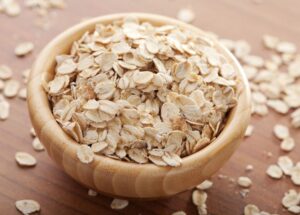
Agricom Group, after liberation from occupation of Chernihiv cluster, has invested $2mn in the second stage of reorganization of the plant, which produces cereal flakes and products based on them under Dobrodiya, San Grano, San Granola, Woosyanka and Yummoji brands, the press service of the agricultural holding reported.
“Investments are aimed at opening new facilities (launching extrusion and granola shops, starting a pellet shop), creating and launching new brands (Yummoji ready-made breakfasts), development in EU countries, new technologies, etc.,” the press service quoted Anatoly Shkribliak, one of the group’s shareholders, as saying.
According to the press release, Dobrodia Foods LLC, which sells the plant’s products, changed its strategy in 2022.
“We launched our own logistics of products to European countries. In the summer of 2022 we opened a trading house in Poland, which is now successfully developing, and our products increasingly appear on the shelves of European supermarkets. We have big plans to cover all of Europe,” Shkribliak stressed.
According to his information, Agricom currently exports its products to over 40 countries.
Agricom Group is an agribusiness group founded in 2013. It specializes in the development, production and distribution of food products from grain crops. It cultivates about 28,000 hectares in Lugansk, Chernigov, Rivne and Zhytomyr regions.
In May 2018, the agroholding launched a $10.5 million plant producing cereal flakes from Dobrodia TM in the village of Mikhailo-Kotsyubinskoye (Chernigov region). Dobrodia Foods LLC (Kiev) produces and sells grocery products, which include wheat flour, flour from other grains, cereal flakes and cereal mixtures.
This company was occupied in March 2022 by Russian troops and liberated by the AFU in April, in the same month the company resumed cereal production.

The Venice Commission recommends revising or clarifying a number of provisions of the law “On National Minorities (Communities)”, in particular removing the obligation to translate information about public events into Ukrainian or at least revising it based on the principle of proportionality.
“From the text of the conclusion: the Venice Commission “appreciates the desire of the Ukrainian authorities to take into account international and European standards for minority protection, as well as – albeit to a limited extent – some of the criticisms expressed by the Commission in previous conclusions.” – The press service of the Deputy Prime Minister for European and Euro-Atlantic Integration Olga Stefanishina said in a statement.
It is noted that at the same time, the Venice Commission recommends revising or clarifying a number of provisions of the law “On national minorities (communities)”.
In particular, it is recommended: to extend the right to organize events in minority languages to all persons; to remove the obligation to provide translation of information on public events into Ukrainian or at least revise it in light of the principle of proportionality; to review the obligations related to publishing books in minority languages and bookstores; to provide greater legal certainty regarding the possibility to translate official inscriptions and general information into the minority language.
In addition, it is recommended to provide in the law criteria for the adoption of a methodology to ensure the use of minority languages in contacts with administrative authorities in accordance with the norms of the Framework Convention for the Protection of National Minorities and Ukraine’s obligations under the European Charter for Regional Languages.
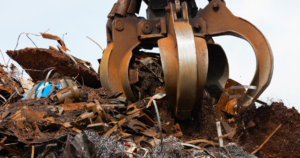
Ukrainian companies in January-May this year increased the export of scrap ferrous metals in 3.1 times compared to the same period last year – up to 77.452 thousand tons.
According to statistics released by the State Customs Service (SCS), the export of scrap metal for the period amounted to $23.028 million in monetary terms.
However, in March, April and May, there was an increase in exports of scrap metal: if about 8.28 thousand tons of scrap metal was exported in January and 16.5 thousand tons – in February, then in March – 15.45 thousand tons, April – about 16.19 thousand tons and May – 21.003 tons.
Exports of scrap metal in January-May 2023 was carried out in Poland (89.55%), Greece (7.51%) and the Netherlands (0.99%).
In the first two months of the year, the country did not import scrap metal, and in March-May imported 344 tons of scrap metal worth $138 thousand (41.30% from Slovakia, 18.12% from Poland and 13.77% from Estonia).
Earlier, the president of Ukrmetallurgprom Oleksandr Kalenkov wrote in his column on Interfax-Ukraine website that scrap metal is exported via the European Union, where a preferential export duty of EUR3 per ton operates, and from there the raw material is redirected to actual customers. To export scrap metal straight to customers would cost EUR 180 export duties and the Ukrainian budget has already lost 350 million hryvnias on it.
According to him, the State Bureau of Investigation has already taken interest in such export schemes.
The head of “Ukrmetallurgprom” urged to temporarily ban the export of scrap ferrous metals to provide the strategically important raw materials in the ongoing war.
“If scrap metal will remain in the country – more than 500 thousand people will have jobs, and the country will have millions of foreign exchange earnings from the export of steel. At the same time, the military also benefits, because metallurgists help the fighters a lot by buying equipment and cars for them, and even producing body armor. Nobody benefits from the export of scrap metal. That is why now the authorities should be proactive and temporarily ban the export until the situation stabilizes and stops threatening the national economic security,” says Kalenkov.
He noted that a ton of scrap metal, processed into steel, provides 10 times more to the budget than the export duty in the EU – about $300 per ton.
As reported, Ukraine in 2022, reduced exports of scrap ferrous metals in 11.5 times compared to the previous year – up to 53.557 tons, in monetary terms down to 12.4 times – to $ 19.271 million. At the same time last year, the country reduced the import of scrap metal in kind by 12.6 times – to 1.824 tons. Imports of scrap metal in 2022 was carried out mainly from Turkey (78.92% of supplies in monetary terms), Russia (13.25%) and Cyprus (5.08%), while exports – to Turkey (38.97%), Poland (34.25%) and Greece (10.12%).
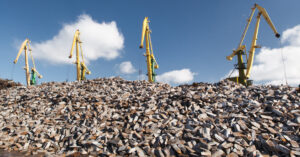
Ukraine in January-May of this year increased the export of pig iron in physical terms by 23.8% compared to the same period last year – up to 630.349 thousand tons.
According to statistics released by the State Customs Service (SCS), exports of pig iron in monetary terms amounted to $243.888 million for the period.
At that, exports were carried out mainly to Poland (63.76% of deliveries in money terms), Spain (13.39%) and Czech Republic (10.3%).
During these five months, Ukraine imported 37 tons of cast iron worth $52 thousand from Germany (61.54%) and Brazil (38.46%).
As reported, Ukraine in 2022, Ukraine reduced the export of pig iron in volume terms by 59% compared to the previous year – to 1 million 325.275 thousand tons, in monetary terms by 61.1% – to $638.774 million.
In 2022, Ukraine imported 40 tons of cast iron worth $23 thousand, while in 2021 – 185 tons of cast iron worth $226 thousand.
Exports were mainly to the United States (38.47% of supplies in monetary terms), Poland (32.91%) and Turkey (8.12%), and imports were from Germany (100%).

Corteva Agriscience, an international agricultural research company, increased its exports of Pioneer brand corn seed to the EU 16-fold in 2023 through established channels in Romania and Hungary, according to its press release.
According to it, the company was able to achieve a 15 percent increase in yields of Pioneer’s advanced seed hybrids last year through the introduction of precision farming, irrigation and other advanced approaches.
“For ten years we have been developing seed production in Ukraine, because for Corteva Agriscience our country is one of the major players in the global agricultural market, which has a significant impact on global food security,” – quoted the press service of the regional head of seed production Corteva Agriscience Andrey Andriushko.
He said that amid the war the company continues to invest in the production seed complex and support the communities of the region. For example, last year Corteva Agriscience signed a declaration with the Ministry of Agrarian Policy and Food of Ukraine on deepening and further developing cooperation for food security in Ukraine and the world, which resulted in increasing the production capacity of the seed complex in Stasi village, Poltava region, officially opened in June 2013 and investments of over $56 million. Its annual capacity has reached about 500 thousand seed units of corn and 250 thousand seed units.
According to the company, Corteva is one of the largest taxpayers in the region. The total number of employees, including seasonal workers, reaches nearly 400.
According to the press release, Corteva has invested about UAH 4.6 million in the development of Stasi village since 2013 (to improve infrastructure, medicine, education and social life of the community, in particular, it financed the reconstruction of a bomb shelter for 800 people.
Corteva Agriscience is a global agricultural company. It offers agricultural producers comprehensive solutions to maximize crop yields and profitability. It has more than 150 research facilities and more than 65 active substances in its portfolio.
Its representative office in Ukraine includes a central office in Kiev, a research center in Lyubartsy village (Kiev region) and a seed production complex opened in 2013 in Stasi village (Poltava region). Investments in the plant over five years amounted to more than $56 mln.
In April 2022, the company decided to leave the Russian market due to the full-scale war unleashed by Russia against Ukraine.



