
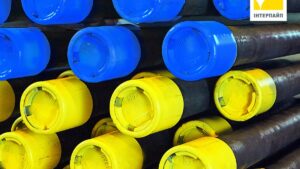
PJSC “Interpipe Dnipropetrovsk Vtormet” (Dnipro), a subsidiary of the pipe and wheel company (PWC) “Interpipe,” ended January-March of this year with a loss of UAH 4.731 million, whereas it reported a net profit of UAH 40.698 million for the same period last year.
According to the company’s data in the NSSMC’s disclosure system, the pre-tax loss for this period amounted to UAH 4.786 million, compared to a pre-tax profit of UAH 50.446 million in Q1 2025.
At the same time, revenue from ordinary activities amounted to UAH 776.710 million, compared to UAH 1.807 billion in January–March 2025.
Retained earnings as of the end of March 2026 reached UAH 327.043 million.
As reported, Interpipe Dnipropetrovsk Vtormet ended 2025 with a loss of UAH 2.821 million, while in 2024 it reported a net profit of UAH 65.931 million.
“Interpipe” is a Ukrainian industrial company and a manufacturer of steel pipes and railway products. The company’s products are supplied to more than 50 countries worldwide through a network of sales offices located in key markets in the Middle East, North America, and Europe.
The company’s structure includes six industrial assets: “Interpipe Nizhnedneprovsky Pipe Rolling Plant (NTZ),” “Interpipe Novomoskovsky Pipe Plant (NMTZ),” “Interpipe Nico-Tube,” “Dnipropetrovsk Vtormet,” the ‘Dniprostal’ electric steelmaking complex under the “Interpipe Steel” brand, and the Interpipe Roman pipe plant in Romania.
The company has a total workforce of approximately 9,500 employees.
The ultimate owner of Interpipe Limited is Ukrainian businessman and philanthropist Viktor Pinchuk and members of his family.
“Interpipe Dnipropetrovsk Vtormet” specializes in the procurement and processing of ferrous metal scrap in the Dnipropetrovsk region, followed by the sale of this product, specifically in the preparation of metal feedstock for steelmaking enterprises. The company’s production facilities have the capacity to process 1.35 million tons of scrap per year. The company has an extensive regional network of procurement and production facilities (Dnipro, Nikopol, Pavlohrad, Zhytomyr, Kyiv, Odesa, Poltava, Vinnytsia, Kharkiv, and Cherkasy).
According to the State Registration Service data for the fourth quarter of 2025, Interpipe Limited (Cyprus) owns 98.6699% of the shares of PJSC “Interpipe Dnipropetrovsk Vtormet.”
The company’s authorized capital is UAH 64.876 million.
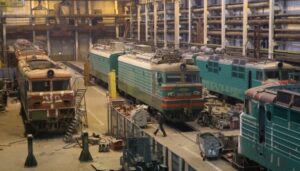
The Lviv Locomotive Repair Plant (LLRP), part of Ukrzaliznytsia, ended the January-March 2026 period with a loss of 16.2 million UAH, whereas during the same period in 2025, net profit amounted to 9.3 million UAH.
According to the plant’s financial report published in the NSSMC disclosure system, its net revenue decreased by 26.2% to nearly 163 million UAH.
The plant reported an operating loss of UAH 10 million compared to a profit of UAH 30.4 million, and the loss from operating activities amounted to UAH 22.6 million, whereas in January–March of last year, operating profit stood at UAH 13.3 million.
According to LLRZ, in January–March it repaired 3 units of rolling stock for Ukrzaliznytsia (6 units during the same period in 2025), 144 wheel sets (161), 29 traction motors (64), 20 auxiliary electric machines (45), 16 anchors (36), and 67 units of other line products (8 units).
Founded in 1861, the Lviv Locomotive Repair Plant is now a major Ukrainian enterprise specializing in the repair of electric locomotives (VL10, VL11m, and VL80t series), traction motors, and wheel sets.
As reported, in 2025 the plant increased its production volume by 24.2% compared to 2024—to 1.026 billion UAH.
By a decision of the shareholder of PJSC “LLRZ” dated April 23 of this year, 95% of the nearly UAH 7 million in net profit earned in 2025 will be allocated to cover losses from previous periods, and 5% will go to the reserve capital.
In 2024, the plant increased its net profit by 55% compared to 2023—to 24 million UAH—and its net revenue by 39%, to 827.7 million UAH.
On April 29, the “Delta-Lotsman” branch of the state-owned enterprise “Administration of Seaports of Ukraine” announced a tender for voluntary accident insurance for employees, according to the Prozorro electronic public procurement system.
As reported, the estimated cost of the services is 27,736 thousand UAH.
Bids are being accepted until May 11.
In March 2026, Express Insurance collected insurance premiums totaling UAH 119.9 million, which is 35.9% more than in March 2025, according to the insurer’s website.
Specifically, premiums under comprehensive auto insurance policies amounted to 78.1 million UAH, which is 28.9% higher than in March 2025.
“Based on the month’s results, we are seeing increased demand for comprehensive vehicle insurance programs,” the company notes.
According to its data, premiums for compulsory motor third-party liability insurance (CMTPL) reached 38.7 million UAH, which is 48.3% higher than the figure for the same period last year and confirms the upward trend in premiums in the compulsory auto insurance segment.
For other types of insurance, 3.1 million UAH was collected, which is double the result from March of last year.
Express Insurance was founded in 2008. It is part of the UkrAVTO group of companies. It specializes in auto insurance.
The company has over 300 insurance agents throughout Ukraine and is actively expanding its network of partner service stations.
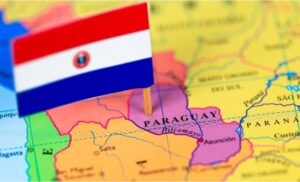
Paraguay has introduced new requirements for obtaining investor status, under which foreigners can apply for permanent residency by investing at least $200,000 in real estate.
According to information published by the Paraguayan Cabinet, the reform is enshrined in Decree No. 0283/2026 and involves the introduction of the Investor Pass system, which allows investors to obtain permanent residency directly, bypassing the temporary status stage. The new rules formalize four main tracks for investors: industrial investments of $70,000 or more, real estate investments of $200,000 or more, investments in financial instruments of $200,000 or more, and investments in tourism projects of $150,000 or more.
A key innovation for the real estate market is that applicants will be able to apply for investor status not only after full payment for the property. For the first time, Paraguay allows applicants to apply for permanent residency after paying just 30% of the property’s value, provided the transaction is formalized through a notarized purchase agreement and the commitment to pay the remaining amount is confirmed.
In effect, this means that Paraguay offers one of the most flexible investment migration models in South America. Unlike many programs that require full capital investment before status is granted, the Paraguayan scheme allows investors to join a project during the construction or design phase, thereby lowering the entry barrier for investors.
For the real estate market, this model could become an additional driver of demand from foreigners seeking both immigration status and investment opportunities in a relatively affordable market.
Paraguay is a landlocked country in central South America. The country borders Brazil, Argentina, and Bolivia, and its capital is Asunción. Paraguay is traditionally considered one of the most affordable countries in the region in terms of cost of living and doing business, and its economy relies on agriculture, hydropower, trade, and the processing of agricultural products.
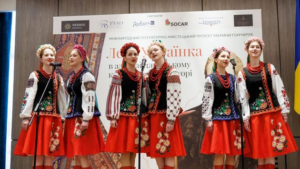
On April 27, an international literary and artistic event titled “Lesya Ukrainka in the Azerbaijani Cultural Space” took place in the capital to mark the 155th anniversary of the poet’s birth, according to the organizers.
“The project demonstrates the interconnection between cultural diplomacy and its impact on humanitarian support for Ukraine,” said Marina Goncharuk, director of the Ukrainian-Turkic Center, in a comment to the agency.
According to reports, the event featured the first-ever comprehensive study of Lesya Ukrainka’s literary presence in Azerbaijan, including the history of the monument to the poet in Lokbatan (Baku), as well as an overview of translations of her works into Azerbaijani, publications, and research by local authors.
A separate part of the program was the presentation of the fairy-tale drama “The Forest Song” in Azerbaijani, published with the support of the Ukrainian Book Institute.
According to Goncharuk, cultural cooperation between Ukraine and Azerbaijan has a practical dimension.
“Back in 2003, Irpin and Lokbatan signed a memorandum of cooperation, and as early as 2004, monuments to Lesya Ukrainka and Zarifa Aliyeva were unveiled. Subsequently, this cooperation evolved into humanitarian aid from Azerbaijan for the restoration of social infrastructure in Irpin,” she said.
The head of the Ukrainian representative office of NEQSOL Holding, Volodymyr Lavrenchuk, noted that the translation of the poet’s works into Azerbaijani is a continuation of cultural and value-based ties.
“Lesya Ukrainka is a symbol of strength of spirit, freedom, and Ukraine’s European identity, so supporting the translation of her works is a natural step for the company,” he noted.
Jalal Huseynov, President of the Ukrainian-Azerbaijani Business Association “Terezi,” emphasized the importance of cultural dialogue.
“The highest level of mutual understanding is the word,” he noted.
According to reports, the event was also attended by Olena Odynoka, Deputy Director of the Ukrainian Book Institute, who highlighted the role of translations in intercultural dialogue.
“Translations are bridges between nations; they are what enable us to better understand one another,” she said.
A greeting from Azerbaijani poet and translator Salam Sarvan was read aloud during the event.
The artistic program included performances by Ukrainian artists featuring dance and vocal numbers representing Azerbaijani culture, as well as a performance of the Azerbaijani national anthem on the bandura.
An exhibition of artistic collages by Maria Zamay, a student at Mariupol State University, was also presented.
Following the official portion of the event, guests were treated to a traditional Azerbaijani tea ceremony and refreshments.
The event was attended by representatives of the Ministry of Foreign Affairs of Ukraine, the diplomatic corps, cultural figures, and the media. Partners included the Radisson Blu Hotel Kyiv City Centre, NEQSOL Holding, SOCAR Energy Ukraine, and other organizations.



