
Central bank official rates of banking metals as of July 18
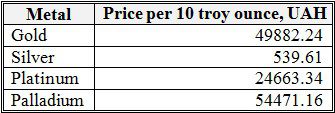
One troy ounce=31.10 grams
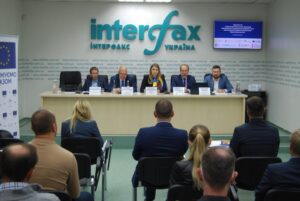
The European Commission has put forward a draft EU proposal for Ukraine to be invited to join the Common Transit Conventions (CTC) – an international framework for the customs transit of goods that ensures simplified procedures between the EU and partner countries.
“Ukraine fulfils all relevant criteria for admittance to the Conventions, including legal, structural and IT requirements,” the draft EU proposal, adopted on Friday, says.
In the draft EU position paper adopted today, the Commission takes the view that “furthermore, accession to these Conventions is foreseen in the EU-Ukraine Association Agreement and in the EU’s pre-accession strategy for Ukraine.”
The Conventions mean that goods can move much more easily between the EU and the seven so called Common Transit Countries (Norway, Iceland, Switzerland, North Macedonia, Serbia, Turkey and the UK).
In this way, the simplified rules, such as mutually recognised financial guarantees for customs transit and less controls, help to cut down on costs for EU and partner country businesses, while facilitating and boosting trade, the European Commission said in a press release.
Once endorsed by the EU Council, the EU’s position will be put forward to the highest body of the Conventions, the EU-CTC Joint Committees, made up of the EU and other CTC signatories, which can then formally invite Ukraine to join the Conventions by as early as 1 October.
In January-June 2022, Ukraine imported 3.221 million tonnes of petroleum products (according to economic activity code 2710: gasoline, diesel fuel, fuel oil, jet fuel, etc.), which is 14.7% less than in the same period last year (3.776 million tonnes).
According to the State Customs Service, oil products were imported in the amount of $3.261 billion, which is 56.3% more than in January-June 2021 ($2.087 billion).
Belarus imported fuel for $753.595 million (its share is 23.11%), Russia – for $569.548 million (17.47%), India – for $283.569 million (8.7%), and other countries – for $1.654 billion (50.72%).
In addition, Ukraine exported 45,564 tonnes (78% less compared to January-June 2021) of oil products for a total of $46.26 million (54.9% less) in four months. The cost of fuel delivered to contractors from Lithuania amounted to $16.334 million, Estonia – $6.022 million, Hungary – $3.606 million, and other countries – $20.298 million.
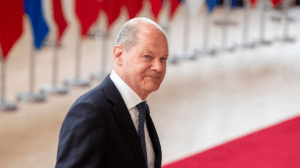
German Chancellor Olaf Scholz, in an article written for the Frankfurter Allgemeine newspaper, said that Europe knew from the beginning that sanctions against Russia would be in place for a long time.
“It was clear to us from the very beginning that the sanctions would have to be maintained for a long time,” the politician wrote.
He repeated his statement, made in May in an interview with the ZDF television channel, that the West would not agree to the lifting of sanctions in the event of a peaceful settlement of the Ukrainian conflict on “conditions imposed by Russia.”
At the same time, he acknowledged that most Germans are suffering from the consequences of the restrictions, including the high cost of gasoline and food.
“This path is not easy even for such a strong, prosperous country as ours,” Scholz added.
The article states that “the world economy is facing a challenge that has not been seen for decades,” and no country in the world can stand alone against such a development.
In this regard, Scholz called for the unity of the EU countries in policy towards Russia, noting that the EU has already demonstrated it.
“But we must not rest on our laurels,” he explained, adding that the EU must come to an agreement in other areas.
“For me, this means: no more selfish blockades of European decisions by individual member states. No more national single efforts that harm Europe as a whole,” he stressed.
In his words, “we simply can no longer afford a national veto, for example, in foreign policy, if we want to continue to be heard in a world of competing great powers.”
As reported, the EU Foreign Affairs Council will be held on Monday in Brussels. He plans to work in connection with the Ukrainian situation in three areas: support for Ukraine, sanctions against the Russian Federation, informing the international community about the consequences of the conflict, a source in the EU said.
“On the first part, we believe that there will be a discussion of additional military support for Ukraine,” a senior EU official told reporters on condition of anonymity, briefing them on the agenda of the ministerial meeting on Friday.
“There will be a discussion on sanctions (against the Russian Federation). We are preparing a number of measures,” the media interlocutor continued. He confirmed that during the discussion, council members will discuss a proposal to ban Russian exports of gold.
At the same time, the official noted that “we do not expect any decision on sanctions on Monday.”
With regard to military assistance to Kyiv, Brussels expects from the EU Council a “political decision” of the member states on the fifth tranche in accordance with the instructions of the European Council.
National bank of Ukraine’s official rates as of 18/07/22
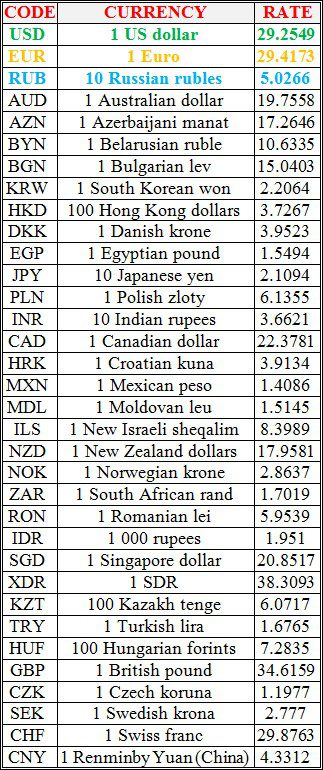
Source: National Bank of Ukraine
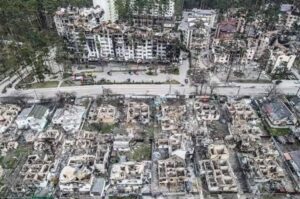
Damage to Irpin’s infrastructure from Russian military aggression against Ukraine is estimated at UAH 25.3 billion or $922 million, follows from a study by the KSE Institute as part of the RebuildUA project.
According to it, the destruction of the housing stock in the city constitutes the largest part of the total damage – UAH 17.7 billion, of which UAH 11.6 billion is the destruction of apartment buildings. In general, 48% of the entire housing stock of Irpin was destroyed – 9,690 residential buildings, household buildings and structures with a total area of 4.1 million square meters.
During the occupation of Irpin by Russians from the end of February until the liberation on March 28, some 10,500 buildings in the city were damaged, of which 2,501 were significantly damaged or completely destroyed.
As a result of the military aggression of the Russian Federation, 53% of all social facilities of the city were also destroyed, the damage is estimated at UAH 3.7 billion. According to the KSE, 54 educational institutions (damage in the amount of UAH 1.3 billion), 26 medical institutions (UAH 236 million), 16 cultural and religious facilities were destroyed due to hostilities.
In addition, damage was caused to a number of industrial infrastructure facilities. According to estimates, 323 industrial buildings worth UAH 2.9 billion were damaged or destroyed.
Due to the destruction of government, administrative buildings, police and post offices, the city suffered damage in the amount of UAH 262.5 million.
As reported, according to KSE estimates, the total amount of direct damage to the Ukrainian economy from damage or destruction of residential, non-residential buildings and infrastructure due to Russian aggression is $95.5 billion, or UAH 2.6 trillion.



