

The Kryvyi Rih Mining and Metallurgical Plant PJSC ArcelorMittal Kryvyi Rih (AMKR, Dnipropetrovsk region) will raise prices for its rebar and wire rod by $50/ton starting in March this year.
According to a press release issued by the company on Wednesday, the main reason for this move is the extremely high cost of electricity in Ukraine. Electricity prices have continued to rise rapidly in recent years, making them the highest in Europe and seriously affecting production costs.
At the same time, it is noted that in the second quarter of 2024, the average price of electricity reached about $120 per MWh (including delivery costs, excluding VAT), which forced the company to urgently appeal to the Ukrainian government for help in curbing it. Since then, prices have continued to rise, reaching around $230 in February 2026 and exceeding $370 per MWh during peak hours.
“This unprecedented increase in the cost of electricity is forcing the company to take urgent measures to ensure the economic viability of its operations,” the press release explains.
ArcelorMittal Kryvyi Rih is the largest producer of rolled steel in Ukraine. It specializes in the production of long products, in particular, rebar and wire rod. The company has a full production cycle, with production capacities designed for an annual output of over 6 million tons of steel, more than 5 million tons of rolled products, and over 5.5 million tons of pig iron.
ArcelorMittal owns Ukraine’s largest mining and metallurgical complex, ArcelorMittal Kryvyi Rih, and a number of small companies, including ArcelorMittal Beryslav.
In 2025, NASK Oranta collected gross insurance premiums in the amount of UAH 3.73 billion, which is 58% more than in 2024, according to the insurer’s website.
Insurance payments to customers reached UAH 1.15 billion (+76% compared to 2024). The number of active contracts increased to 2.9 million (+21%).
“2025 confirmed Oranta’s ability to operate in conditions of large-scale changes, both regulatory and economic. We not only adapted to the new market rules, but also strengthened our position and continued to fulfill our obligations, in particular under contracts covering military risks,” said Jacek Meisner, Chairman of the Board of Directors.
The report emphasizes that the key factor in the growth was the reform of the compulsory civil liability insurance market for owners of land vehicles (OSCPV).
Oranta’s premiums in the MTPL segment doubled to UAH 3.06 billion. At the same time, the number of contracts decreased slightly: from 1.37 million to 1.21 million. Last year, the company paid out UAH 858 million (+76%) for this type of insurance, which is explained by structural changes in the law, namely an increase in compensation limits to UAH 500,000 for damage to health and UAH 250,000 for property, the abolition of depreciation for cars up to 5 years old, and the introduction of mandatory direct settlement – a mechanism whereby the victim applies for compensation directly to their insurance company.
The loss ratio for MTPL remains at 28%. Despite the reduction in the number of contracts, the company did not resort to dumping and maintained tariff discipline. The average cost of a policy increased from approximately UAH 1,100 to UAH 2,500, according to the information.
In addition to MTPL, the company significantly increased its presence in other segments. Premiums from voluntary medical insurance (VMI) increased by 68% to UAH 148 million, and the number of contracts increased 2.5 times to 547 thousand. Accident insurance increased by 79% in premiums and 2.7 times in the number of contracts.
The property insurance portfolio expanded to 690,000 contracts (+145%), with premiums increasing to UAH 123 million. The company increased the volume of payments in this segment, although the overall loss ratio remains under control.
A separate part of the payments in 2025 was formed by losses related to military risks. In total, during 2025 and early 2026, Oranta settled such cases for more than UAH 28 million. In particular, for damaged housing and vehicles as a result of rocket strikes and drone attacks in various regions of the country. Some of the large corporate losses were settled with the involvement of reinsurance programs.
The company’s assets increased by 55% to UAH 3.55 billion during the reporting period, and its financial result increased by 78% to UAH 279 million. Insurance reserves grew by 71% to UAH 2.32 billion, which corresponds to the volume of accepted liabilities, and profit increased by 77.6%.
In 2025, Oranta transferred almost UAH 380 million in taxes and fees to the budget and state funds. Equity capital of over UAH 1 billion provides the company with a sufficient level of solvency and resistance to market fluctuations.
PJSC National Joint Stock Insurance Company (NASK) Oranta is the successor to Ukrderzhstrakh, founded on November 25, 1921, and has been conducting insurance activities in Ukraine for over 100 years.
Since 1994, the company has been a full member of the Motor Transport Insurance Bureau of Ukraine, and since 2003, a member of the Nuclear Insurance Pool. It has a license to conduct insurance activities in 16 insurance classes.
The company employs over 3,000 experts who provide “full cycle” services: both retail and corporate insurance.

Carlsberg Ukraine (Zaporizhia), a producer of beer, non-alcoholic and alcoholic beverages, is closing its offices in Kharkiv, Odesa, and Donetsk, the company reported in the information disclosure system of the National Securities and Stock Market Commission (NSSMC).
According to the report, the company’s supervisory board made the decision on February 25, 2026.
The reasons given for the liquidation of the divisions are the lack of need for their further operation, lack of personnel, management, and property. In addition, the representative offices did not actually carry out activities corresponding to the purpose of their creation.
The functions of these separate divisions were to protect and represent the company’s interests in the respective regions.
According to data from Opendatabot, Carlsberg Ukraine increased its revenue by 15.5% to UAH 12.488 billion in 2024, net profit by 19.4% to UAH 2.18 billion, debt obligations by 34.9% to UAH 5.11 billion, and assets by 33.1% to UAH 13.84 billion. The company currently employs 1,310 people.
The closure of Carlsberg Ukraine’s separate representative offices does not mean a reduction or curtailment of the company’s activities in the regions.
The separate representative offices were established in the early 2000s during a period of active investment in production facilities in Kyiv, Lviv, and Zaporizhzhia. Today, given current operating models, there is no need to maintain separate legal representative structures.
At the same time, Carlsberg Ukraine continues to operate throughout Ukraine. Our production sites in Kyiv, Lviv, and Zaporizhzhia are operating as usual. The sales teams continue to ensure the company’s full presence in all regions of the country, providing continuous service to partners and customers.
The change in the number of representative offices does not affect the company’s strategic course for development and investment in Ukraine. Since the start of the full-scale invasion, the Carlsberg Group has already invested nearly DKK 400 million to support operational stability and the development of Ukrainian business. The company remains consistent in its long-term presence in the country.
We are transforming to work more efficiently, but we remain a reliable employer, a responsible business, and one of the largest taxpayers in Ukraine.
Carlsberg Ukraine is part of the Carlsberg Group, one of the world’s leading brewery groups with a broad portfolio of beer, cider, and non-alcoholic beverage brands. In Ukraine, we represent such brands as Lvivske, Carlsberg, Grimbergen, Kronenbourg 1664, Arsenal, Kvas Taras, Somersby, Battery, Seth&Riley’s Garage, and others. The Carlsberg Group began operations in Ukraine in 1996 and has been one of the largest international investors in the FMCG sector year after year, providing jobs for more than 1,400 people at breweries in Kyiv, Lviv, and Zaporizhia, and more than 23,000 jobs in related industries (agriculture, retail, hotel and restaurant business, media, logistics, etc.). During the full-scale war in Ukraine, Carlsberg Group decided to cease its business in Russia and exit the market. With the support of the Carlsberg Group, Carlsberg Ukraine has implemented more than 50 humanitarian projects worth over UAH 530 million, including the production of drinking water to meet the needs of the population.
More detailed information is available on the website https://carlsbergukraine.com/.

In January 2026, Express Insurance settled 250 insurance claims under compulsory motor third-party liability insurance (CMTPL), taking into account direct settlements in the amount of UAH 11.9 million, which is 16% more than in December 2025, according to the insurer’s website.
It is also noted that in 48% of cases, the victims filed insurance claims with the participation of the police, and another 52% were filed under the Europrotocol procedure, with the maximum compensation amounting to UAH 131,500. Among the insurance claims settled in December, the largest payout involving the police was UAH 296,000 for damage to health and UAH 250,000 for damage to property.
In cases settled under the Europrotocol procedure, the maximum compensation amount was UAH 176,500.
Express Insurance LLC was founded in 2008 with the participation of the leader of the Ukrainian automotive market, UkrAvto Group. The company specializes in auto insurance.
The company is represented in more than 60 sales outlets throughout Ukraine and is actively expanding its network of partner service stations, which currently number more than 140.

Today, February 25, the interdisciplinary exhibition project “Art at the Turn of the Seasons 2026” opens at the ‘Khlibnya’ gallery of the National Reserve “Sofia Kyivska,” which will bring together the works of more than 50 artists, from recognized authors to new names, according to the organizers.
According to them, the project was prepared by the charitable organization “BF Dobre Serce Kyiv” in partnership with the reserve. Its concept is conceived as a trilogy dedicated to historical memory, international solidarity, and the continuity of the Ukrainian female artistic tradition.
The exhibition will consist of three thematic blocks. The first, “Between Fire and Silence,” is dedicated to reflections on life without heat during the frosty winter of 2026. The second, “United and Independent Ukraine: Emotions of Friends,” tells about the struggle of Ukrainians and the support of the international community; it is noted that the first presentation of this section took place in Kherson in August 2025. The third, “Fantastic Improvisations by Ukrainian Artists of the 21st Century,” focuses on decorativism and generational continuity and involves the use of modern technologies, including elements of augmented reality.
The opening of the project is scheduled for 4:00 p.m. at 24 Volodymyrska Street, Kyiv (Khlibnya Gallery).
The organizers note that the exhibition is intended to reflect on the experience of war, the transformation of society, and the role of art as a space for support, memory, and solidarity.
https://interfax.com.ua/news/culture/1147325.html
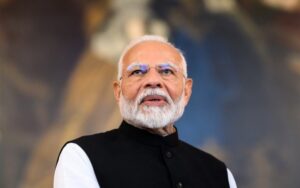
Indian Prime Minister Narendra Modi called on the international community to shape a “human-centric” future for artificial intelligence and presented the MANAV framework for global AI governance at the AI Impact Summit 2026 in New Delhi.
According to Modi, AI has the potential to accelerate change to a scale that was previously measured in decades, so it is crucial to adopt an approach where technology serves people, not the other way around, and where the well-being of society is at the center.
Within the framework proposed by India, MANAV (meaning “human”), the prime minister outlined five pillars: moral and ethical principles, accountable governance, respect for national sovereignty over data, accessibility and inclusiveness, and the legality and verifiability of AI systems.
Modi separately emphasized the need to counter deepfakes and disinformation, proposing the introduction of common standards for labeling digital content, including watermarks and source verification, and stressed the importance of protecting children when interacting with AI.
As examples of the practical application of AI in India, he cited the digital assistant for farmers, Sarlaben, which, according to him, provides advice on livestock health and dairy farm productivity, as well as initiatives for multilingual consultations for farmers, including Bharat-VISTAAR.
The Prime Minister also said that as part of the India AI Mission, India is rolling out computing infrastructure and a national repository of data and models to make access to capabilities cheaper for startups and accelerate the development of the AI ecosystem.



