
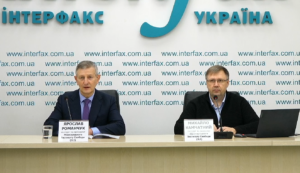
The International Liberty Institute (ILI) has presented its updated 2026 Common Sense Economy Index, a ranking that assesses the quality of governments’ economic policies and the adequacy of their decisions in terms of basic development axioms. According to this year’s results, Ukraine scored 24 points, dropping from 89th to 95th place and remaining in the fourth group of countries.
“The Common Sense Economy Index is a unique development for Ukraine, which makes it possible to assess the ”economic IQ” of public administration. In this case, by government, we mean not only the Cabinet of Ministers, but the entire decision-making process, which includes central and local authorities, legislators, the executive branch, politicians, deputies, and policymakers, i.e., everyone who actually influences the country’s economic policy,” said Mykhailo Kamchatnyi, director of the International Institute for Liberty, at a press conference at Interfax-Ukraine on Wednesday.

In total, 144 countries were included in the 2026 Index, which were structured into five groups based on their final scores. Ukraine received 581 points, a 24-point decline from the previous year. In the final ranking, it found itself between Rwanda and Gambia. At the presentation itself, this was described as a “diagnosis” of economic policy: the country is in the fourth group – the group of “rare manifestations of intelligence,” that is, in an area where individual decisions may be rational, but the systemic quality of policy remains weak.
“For Ukraine, this index is primarily a diagnosis, because we are in 95th place out of 144 countries, in the group with rare manifestations of wisdom in economic policy, and this is a signal that the economy must be taken much more seriously, even during wartime. If we want to be competitive with Central and Western European countries, attract capital, investment, and jobs, we must not reinforce misguided tax and regulatory decisions, but rather make institutions more attractive and consistently change economic policy,” emphasized Yaroslav Romanchuk, president of the International Liberty Institute.
In their presentation, ILI representatives emphasized that the Common Sense Economy Index is an aggregate indicator based on 15 axioms (e.g., it is better to be free than unfree; rich than poor; healthy than sick) and six international indices covering key parameters of a country’s development. These include human freedom, economic freedom, protection of property rights, rule of law, prosperity, and innovation. The presentation also separately mentioned the business climate, competition, quality of public administration, social protection, environment, and infrastructure as components of the assessment logic.
The speakers also explained the technical principle whereby a lower score means a better result, and the model’s range is from a conditional ideal of 6 points to 902 points (the worst positions in all indicators). After that, all countries are divided into five groups, from “smart decision-making governments” to the group with the worst results.
Switzerland became the new leader in the ranking, which the ILI calls an example of a government focused on science, facts, and a qualitative assessment of the country’s potential. Ireland, which rose five positions at once, is also among the top three leaders. Finland, New Zealand, the Netherlands, and Sweden have fallen in the top 10, while Luxembourg and Australia have improved their results. According to the ILI, the US and Germany have maintained their positions.

During the presentation, the speakers also highlighted Switzerland, Denmark, and Ireland as examples of countries where high positions in the index correlate with quality of life, institutional stability, and long-term economic growth.
In his speech, Yaroslav Romanchuk stressed that Ukraine needs not only to focus on security and defense capabilities, but also on a “common sense economy” framework that would not conflict with the goal of development even during wartime. He directly linked this to competition for capital, participation in value chains, and the creation of conditions under which Ukrainians would be motivated to work and develop business in Ukraine.
Among the problem areas mentioned in the presentation were Ukraine’s low rankings in certain international indicators, particularly the Human Freedom Index and the Economic Freedom Index, while its position in terms of property rights protection was assessed as relatively better (within the top 100). At the same time, the speakers drew attention to the weak parameters of public administration and regulatory policy.
The speakers also cited Estonia and the Czech Republic, post-socialist countries that are among the top performers, as important benchmarks for Ukraine. Their experience was presented as an example of a long, consistent course toward liberalization, competitive institutions, and integration into European production chains.
The presentation also focused on inflation, debt burden, public sector size, regulatory pressure, and quality of public administration as factors that directly affect investment and long-term growth. For Ukraine, these issues were presented as part of a broader problem—a lack of systemic economic rationality in policy-making.
“The 2026 Common Sense Economy Index is, in essence, a universal tool for assessing socio-economic development, economic growth, and the quality of institutions that any government can use. We see it both as a tool for economic education and as a practical guide for policymakers to see how specific institutional and regulatory factors affect the country’s development and social indicators,” Yaroslav Romanchuk concluded.

Today, February 25, the Khlibnya Gallery of the National Reserve “St. Sophia of Kyiv” is launching an interdisciplinary exhibition project called “Art at the Turn of the Seasons 2026,” which will bring together the works of more than 50 artists, from recognized authors to new names, according to the organizers.

According to them, the project was prepared by the charity organization “BF Dobre Serce Kyiv” in partnership with the reserve. Its concept is conceived as a trilogy dedicated to historical memory, international solidarity, and the continuity of the Ukrainian female artistic tradition.
The exhibition will consist of three thematic blocks. The first, “Between Fire and Silence,” is dedicated to reflections on life without heat during the frosty winter of 2026. The second, “United Independent Ukraine: Emotions of Friends,” tells about the struggle of Ukrainians and the support of the international community; it is noted that the first presentation of this section took place in Kherson in August 2025. The third, “Fantastic Improvisations by Ukrainian Artists of the 21st Century,” focuses on decorativism and generational continuity and involves the use of modern technologies, including elements of augmented reality.
The opening of the project is scheduled for 4:00 p.m. at 24 Volodymyrska Street, Kyiv (Khlibnya Gallery).
The organizers note that the exhibition aims to reflect on the experience of war, the transformation of society, and the role of art as a space for support, memory, and solidarity.
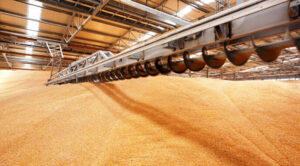
Ukraine has confirmed its readiness to open a food grain hub in Ghana and is interested in joint projects for the processing of agricultural products, Ukrainian Foreign Minister Andriy Sybiga said following talks with his Ghanaian counterpart Samuel Okudzeto Ablakawa in Kyiv on Wednesday.
During the meeting, the parties discussed strengthening global food security and developing agricultural partnerships. Sybiga emphasized that Ukraine considers Ghana a key partner in West Africa and is ready to remain a reliable supplier of agricultural products to the region.
“Ukraine is ready to remain a reliable supplier of agricultural products and at the same time is interested in joint projects with added value, particularly in the field of processing and logistics,” said the head of the foreign ministry.
As reported, in July 2025, Ukrainian President Volodymyr Zelensky held a telephone conversation with Ghanaian President John Dramani Mahama on cooperation in the agricultural industry. The presidents agreed to expand practical cooperation, particularly in the construction of a logistics hub for food storage. Zelensky also confirmed his intention to send a Ukrainian delegation to Ghana to work on these projects.
Ghana has consistently supported Ukraine’s territorial integrity, including by voting in favor of the UN General Assembly resolution “Support for sustainable peace in Ukraine” on February 24, 2026.
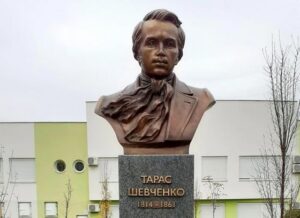
According to Serbian Economist, unknown persons damaged the monument to Ukrainian poet Taras Shevchenko in Novi Sad, Serbia.
According to available information, the monument was splashed with black paint, and the letters of the surname on the monument were also damaged.
The Ukrainian Embassy in the Republic of Serbia said it was deeply outraged by the incident and called it a “shameful act,” urging Serbian law enforcement agencies to investigate the incident and bring those responsible to justice. The diplomatic mission also noted that such actions are aimed at undermining Ukrainian-Serbian relations.
The Serbian Embassy in Ukraine also condemned the actions of the vandals and stated that it was deeply outraged by the incident and, after returning to Ukraine in 2025, is actively working to restore mutually beneficial cooperation between the two countries.
The Shevchenko monument in Novi Sad was erected in February 2021 on the initiative of the Ukrainian-Rusyn community in Serbia.

Global spending on information and communication technologies (ICT) in 2026 will increase by 10% and reach $4 trillion, forecasts the analytical organization International Data Corporation (IDC). At the same time by 2029 the indicator may grow to $6 trillion.
The largest category of expenditures in the current year will be software – this article will account for more than a third of all costs, according to IDC analysts. At the same time, the hardware category will show the highest growth rates, in the neighborhood of 15%.
The main sectors in terms of investment in ICT will be information services and software, banking and retail. Together they will account for over $1 trillion in spending. About $2 trillion will be spent in the U.S., with Western Europe spending $908 billion and China spending $355 billion.

Former majority owner of the Agro-Region agricultural holding and former Minister of Economic Development and Trade of Ukraine Aivaras Abromavičius will focus on investments in the Ukrainian technology sector and projects related to the future reconstruction of the country after selling the asset to the Kernel group.
“The day after the deal was closed, I already invested in a Ukrainian technology company. I think the corresponding press release will appear in the coming weeks. My wife and I want to remain very active people, so I am not planning to retire. On the contrary, now we must look at those Ukrainian companies that will become critically interesting when large-scale reconstruction begins,” he said during a Business Breakfast at Forbes Ukraine.
According to Abromavichus, shifting focus from the agricultural sector to IT and infrastructure projects is a logical step after almost 20 years of investing in Agro-Region. He noted that the technology market in Ukraine is currently showing high stability, and the upcoming reconstruction will create demand for assets in areas that will ensure economic recovery.
The investor added that despite his exit from agribusiness, he plans to attract foreign capital to Ukraine, focusing on companies with high growth potential.
Details of the new deal in the technology sector are not being disclosed until the investment round is officially completed.
Abromavichus also announced a number of promising areas for investment in Ukraine. He noted that the country has already become a “world champion in agrotech and militech,” so these are the areas to invest in. The businessman paid special attention to infrastructure and noted that although logistics was a step “where everyone wanted to be present,” now, due to falling prices, “it’s a different game.”
In his opinion, investors should focus on assets that will be in demand during reconstruction and software companies.
“I really like technology companies… we should go to Ukraine and look at them,” he concluded.
Aivaras Abromavičius is a Lithuanian-Ukrainian entrepreneur, former Minister of Economic Development and Trade of Ukraine (2014-2016) and former Chairman of the Supervisory Board of Ukroboronprom (2019-2020), who was a key partner of the investment company East Capital for a long time. Currently, Abromavičius owns shares in a number of Ukrainian IT startups and technology companies through controlled investment structures, and also has interests in real estate and consulting.
The sale of 100% of the Agro-Region group of companies (shareholders — Aivaras Abromavičius and Lars Erik Hokansson) to Andriy Verevsky’s Enselco group was one of the largest M&A transactions in Ukraine’s agricultural sector since February 2022. The investment company Dragon Capital acted as the exclusive financial advisor to the sellers, while OMP provided legal support. As a result of the acquisition of assets with a land bank of 41,000 hectares in the Kyiv, Chernihiv, Zhytomyr, and Khmelnytskyi regions, the Kernel Group (through Enselco) has increased its total land fund to 550-600 thousand hectares.
The Agro-Region Group is a high-tech integrated business comprising three operating clusters and approximately 200,000 tons of elevator capacity. The company specializes in growing corn, wheat, sunflowers, rapeseed, and soybeans, with an annual harvest of 200,000 tons. According to YouControl, at the time of the transaction, Aivaras Abromavičius owned a controlling stake in the holding (53.6%) through Garna Stockholm Holding AB, while Lars Erik Hokansson’s share was 44.28%. The deal was closed after receiving all necessary regulatory approvals, becoming a landmark investment signal for the industry amid martial law.



