

Montenegrin authorities issued 679 temporary residence and work permits to Ukrainian citizens in 2025, which is 1.67% of the total number of 40,567 permits, according to the annual report of the Employment Plant of Montenegro (ZZZCG), citing data from the Ministry of Interior.
A total of 40,567 permits were issued to foreigners in Montenegro in 2025 – 2,548 (6.7%) more than in 2024. Of these, 27,689 came under the quota, while 12,878 were issued outside the quota.
Foreign workers came from 107 countries.
Permits for temporary stay and work in Montenegro in 2025, by nationality (from higher to lower)
Turkey – 10,346 (25.50%)
Serbia – 8,148 (20.09%)
Russia – 7,429 (18.31%)
Azerbaijan – 2,513 (6.19%)
Albania – 2,098 (5.17%)
Bosnia and Herzegovina – 1,902 (4.69%)
Kosovo – 1,543 (3.80%)
North Macedonia – 766 (1.89%)
Ukraine – 679 (1.67%)
Belarus – 469 (1.16%)
India – 364 (0.90%)
Mexico – 257 (0.63%).
Serbian Economist notes that the 6 largest labor source countries provided 79.96% of all permits issued.
https://t.me/relocationrs/2327

In 2025, Ukrainian banks issued 8,282 thousand mortgage loans worth UAH 15.69 billion, which is 4.3% more than in 2024, when 8,807 thousand loans worth UAH 15.05 billion were issued, while the number of loans issued decreased by 6.0%, according to the results of a survey by the National Bank of Ukraine (NBU).
“The quality of the mortgage portfolio remains high: the share of non-performing loans is only 13%,” the regulator commented on the results.
According to the National Bank, in December 2025, 952 mortgage loans were issued in Ukraine for UAH 1.96 billion, which is 28.3% more than in November, when 743 loans were issued for UAH 1.52 billion.
As specified by the NBU, out of 38 banks surveyed, 14 financial institutions issued mortgage loans in December last year. Most of the deals were concluded in the primary housing market: 539 in December for UAH 1.13 billion, compared to 434 in November for UAH 0.91 billion.
On the secondary housing market, 413 deals were concluded for UAH 0.83 billion, compared to 309 in November for UAH 0.61 billion.
The weighted average effective rate in the primary housing market in December 2025 decreased to 8.11% per annum (8.14% in November), and in the secondary market to 8.66% (9.42%).
Survey data show that in December 2025, most loans were issued in Kyiv and the Kyiv region – 538 for UAH 1.18 billion (60.1% of the total volume), followed by Lviv region – 47 loans worth UAH 103 million, Odesa region – 40 loans worth UAH 78 million, and Volyn region – 38 loans worth UAH 69 million.
As reported, partner banks of the state affordable mortgage program “єОселя” issued a total of 7,769 loans worth almost UAH 15 billion in 2025, including 4,881 loans for “first sale” housing, including 1,499 apartments in buildings under construction.

Today, February 25, the Oscar cinema in the Gulliver shopping center in Kyiv will host the premiere of a new film directed by Jim Jarmusch, Father Mother Sister Brother, before the wide release, the press service reports.
The film is the winner of the main award of the Venice Film Festival – the Golden Lion.
The film stars Tom Waits, Adam Driver, Mayim Bialik, Charlotte Rampling, Cate Blanchett, Vicky Crips, India Moore, and Luca Sabbat.
Jim Jarmusch is one of the leading directors of American independent cinema, known, among other things, for his films Only Lovers Survive and Coffee and Cigarettes.
The pre-premiere screening in Kyiv will allow the audience to see the film before its official release in Ukraine.
https://interfax.com.ua/news/culture/1147265.html
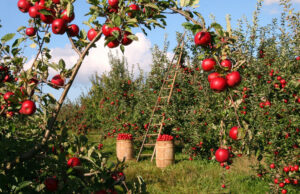
The Land Bank project has put 21 plots of land in six regions of Ukraine up for sublease auction in the Prozorro.Prozori system for the establishment of perennial plantations, the project announced on Facebook.
According to the announcement, the sublease term for the proposed plots for planting orchards is 25 years, and their areas range from 0.14 hectares to 91.40 hectares.
The largest number of lots is in the Zakarpattia region — 10 plots ranging in size from 0.40 to 26.87 hectares. Bidding will begin on February 27.
In the Mykolaiv region, five plots are offered for sublease, one of which is the largest lot for planting a garden (from 17.58 to 91.40 hectares, auctions from March 11). In the Poltava region, three plots ranging in size from 3.61 to 21.80 hectares are offered for sublease (auctions on March 12 and 18). One plot each is offered in the Sumy (27.74 hectares, March 13), Kyiv (2.26 hectares, March 23), and Dnipropetrovsk (0.14 hectares, March 6) regions.
As reported, since its launch on October 1, 2024, the Land Bank project has sold more than 60,700 hectares of state-owned land in 19 regions of Ukraine at auction, of which 57,400 hectares have already been transferred to farmers for use.

According to the results for January 2026, dairy enterprises of all categories in Ukraine produced 421,200 tons of raw milk, which is 11.8% less than in December 2025 and 7% less than in January last year, according to the Association of Milk Producers (AMP), citing preliminary data from the State Statistics Service.
The industry association explained that the decline in production in January was caused by prolonged blackouts and the limited ability of processing enterprises to accept raw materials during power outages.
At the same time, the industrial sector recorded growth: agricultural enterprises produced 269.9 thousand tons of milk, which is 4% more than in January 2025. The share of enterprises in the overall production structure was 64%.
On the other hand, there was a significant decline in private households – to 151.3 thousand tons, which is 21.7% less than in the same period last year and 26.7% less than in December.
According to the Ministry of Economy, Environment, and Agriculture, the negative dynamics in the household sector are due to a further reduction in the number of cows and a shortage of electricity due to shelling, which makes the processing process more expensive. In total, milk production in Ukraine amounted to 6.8 million tons in 2025 (4% less than in 2024).
Despite the general challenges, industrial milk production increased in 13 regions in January 2026. The highest growth rates were recorded in Rivne (+26%), Lviv (+15%), Ivano-Frankivsk (+14%), and Ternopil (+12%) regions. In the Volyn region, volumes increased by 9%. Positive dynamics were also recorded in the Zhytomyr, Kyiv, Khmelnytskyi, Vinnytsia, Mykolaiv, Cherkasy, Chernihiv, and Poltava regions.
The business association noted that farmers are forced to spend more money on their own electricity generation. Due to long blackouts, there were interruptions in the shipment of raw milk from dairy farms to milk processing enterprises.
“In the context of the crisis, dairy farms may revise their investment plans for 2026, as it is difficult to increase raw milk production during blackouts, and a significant recovery in demand for dairy products on the domestic market is unlikely in the short term,” the Milk Producers Association predicts.

The American Chamber of Commerce (AmCham) believes that the introduction of non-price criteria for the procurement of medicines at public expense should be as transparent as possible.
“The chamber’s member companies support the need to introduce non-price criteria. The lowest price does not always ensure the proper quality of equipment, as a result of which the patient’s needs are not met, and the state ends up spending more money on the healthcare system. It is also important that the process of introducing and applying non-price criteria be as transparent as possible,” AmCham told Interfax-Ukraine, commenting on the results of a roundtable discussion on “Non-price criteria in public procurement of medical devices: European practices and opportunities for Ukraine,” which the chamber recently held with the participation of international experts and the leadership of Ukrainian regulatory authorities.
AmCham recalled that a revision of Directive 2014/24/EU of the European Parliament and of the Council of February 26, 2014, is planned for 2026, including in terms of price orientation in procurement.
“The main criterion for procurement continues to be the lowest price, but, unfortunately, in practice, this does not ensure timely delivery and delivery in full, quality, and sufficient service life of the medical device. That is why, in particular, EU countries and the UK use non-price criteria or value-oriented procurement,” the chamber notes.
In turn, Oleg Kletz, Director General of the Ministry of Health, noted during the event that “price is an important indicator, but it is not synonymous with quality or uninterrupted supply.”
“We are moving towards a more comprehensive evaluation model, where, along with price, proven quality, ability to fulfill the contract, and clinical effectiveness are taken into account. That is why we are engaged in an open dialogue with the market and the expert community to develop an approach that will ensure competition and transparency and, most importantly, the uninterrupted availability of high-quality free medicines and medical devices for Ukrainians,” he said.



