

According to Experts.news, the number of words people speak in everyday life has decreased significantly over the past decade and a half, which could potentially affect social connections, psychological well-being, and communication at work, according to a study by psychologists at the University of Missouri–Kansas City and the University of Arizona.
According to the study, published in the scientific journal Perspectives on Psychological Science, between 2005 and 2019, the average number of words spoken per person decreased by approximately 338 words per day with each subsequent year of observation. As a result, the estimated decline over the entire period was about 28%.
The study is based on data from 2,197 people aged 10 to 94 who participated in 22 research projects conducted primarily in the United States, as well as in Mexico, Australia, and Europe. The assessment relied on periodic audio recordings of the participants’ natural daily lives, rather than their own recollections of how much they spoke.
In an earlier 2007 study using a similar methodology, the average person spoke about 15,959 words per day. In a later combined sample, this figure had dropped to about 12,792 words.
The researchers observed the most pronounced decline among young people. For participants under the age of 25, the number of words spoken decreased by approximately 451 words per day for each year, while for those over 25, it decreased by approximately 314 words. Thus, the rate of decline among young people was approximately 44% higher.
The authors did not identify a specific cause for this trend. The study period coincided with the rapid spread of smartphones, social media, messaging apps, email, and other forms of written digital communication; however, the researchers emphasize that the available data do not allow them to prove that technology itself was the cause of the decline in conversation.
The researchers also point out that texting does not necessarily fully replace the psychological and social functions of face-to-face conversation. Voice communication involves intonation, pauses, emotional cues, and immediate feedback, which are more difficult to convey through text.
The authors link this issue to a broader trend toward increasing social isolation. Previous studies show a consistent link between loneliness and a decline in various indicators of physical and mental health, although a reduction in the number of spoken words has not yet been proven to be the direct cause of such outcomes.
On September 10, Fast Company highlighted the potential implications of this trend for business. Talia Varly, a physician and corporate health specialist, notes that a decline in face-to-face conversations in the workplace potentially means fewer informal interactions among employees, fewer opportunities to discuss problems and voice dissent, and weaker bonds within teams.
In her view, small daily interactions are particularly important—a brief conversation with a colleague, discussing an idea outside a formal meeting, or a few minutes of casual conversation. Such interactions may seem insignificant on their own, but they are precisely what gradually build trust and social bonds within a team.
The rise of remote work and artificial intelligence may further alter the structure of communication. Digital tools allow for faster information exchange and the automation of some correspondence, but at the same time, they can reduce the number of situations in which people need to speak directly with one another.
At the same time, the researchers caution against the overly simplistic conclusion that people need only mechanically increase the number of words they speak. The quality of the conversation, the nature of the relationship, and the social context can be just as important as the duration of the interaction.
However, the study’s authors note that an additional 300 words per day may amount to only a few minutes of conversation—for example, a brief exchange with a neighbor or colleague, or a more detailed response to the common question, “How was your day?”
Thus, the observed decline in conversational activity may be one indicator of broader changes in how people maintain social connections in the age of digital communications. However, further research is needed to assess the long-term impact of this trend on health, loneliness, and productivity.
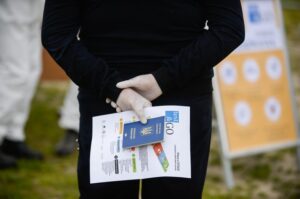
According to Experts.news, Poland remained the top destination for Ukrainians applying for EU residence permits outside the temporary protection mechanism: in 2025, the country accounted for 72% of all first-time residence permits issued to Ukrainian citizens in the European Union, according to Eurostat data.
In total, Ukrainians received 335,096 first-time residence permits in EU countries. Based on Poland’s share, this amounts to approximately 241,000 permits issued to Ukrainians by Polish authorities.
This concentration clearly sets Ukrainian migration apart from other large groups of third-country nationals. By comparison, Poland was also the primary destination for Belarusians, issuing 87.1% of all first-time residence permits received by Belarusian citizens in EU countries.
For Ukrainians, employment remains the main reason for applying for a residence permit. Moreover, 86.3% of all first-time residence permits granted to Ukrainians in the EU for work purposes were issued by Poland.
Poland itself issued 467,300 first-time residence permits to citizens of non-EU countries in 2025, ranking third in the European Union after Spain and Germany.
At the same time, Poland remains the undisputed EU leader in terms of the number of work-related permits: the country issued 318,200 first-time work-based residence permits. Eurostat notes that the main recipients were citizens of Ukraine and Belarus.
The statistics on first-time residence permits do not include Ukrainians who are in Poland or other EU countries under temporary protection.

According to Experts Club, EU countries issued approximately 3.9 million first-time residence permits to third-country nationals in 2025, which is 10.1%, or 355,350, more than in 2024.
This was the highest figure since Eurostat began compiling comparative statistics in 2008.
Labor migration was the main driver of this growth. The number of first-time work-related permits increased by 179,700, or 16.1%, over the year, reaching approximately 1.3 million. Work-related permits accounted for 33.6% of all first-time residence permits issued.
The number of permits issued for family reasons rose by 14.1%—to approximately 1.1 million, or 28.1% of the total.
Another 600,000 residence permits, or 15.5%, were issued for educational purposes. Their number increased by 9%.
About 22.8% of permits were issued on other grounds, including international protection. In this category, the number of residence permits decreased by 0.9%.
Ukrainian citizens constituted the largest group of first-time permit recipients—335,100—followed by India with 227,600 and Morocco with 202,100.
Spain led all EU countries in the total number of new permits, issuing 635,400 residence permits.
The data does not include individuals under temporary protection, including the millions of Ukrainians who fled the country after the start of the full-scale war.

Foreign workers, entrepreneurs, and digital nomads legally residing in Portugal can receive government financial support of more than EUR5,000 when relocating to inland areas of the country under the Emprego Interior MAIS program, according to data from the Portuguese Institute for Employment and Vocational Training (IEFP).
The program is available to workers who relocate to specific inland municipalities in Portugal to take a job, move their existing professional activities there, start their own business, or continue working remotely.
The base payment in 2026 is EUR 3,759.91 for workers with permanent employment contracts, as well as for those who create their own job or start a company. For fixed-term employment contracts lasting at least 12 months, the base payment is EUR 2,685.65.
In addition, the government pays 20% of the base amount for each family member moving with the recipient, as well as up to EUR805.70 for the transportation of personal belongings.
For example, an employee with a permanent contract who is relocating with one family member can receive EUR 5,317.59: EUR 3,759.91 in basic assistance, EUR 751.98 in family allowance, and EUR 805.70 for moving expenses. Therefore, the actual amount of assistance may exceed 5,000 EUR, and for larger families, it may be even higher.
EU citizens, citizens of the European Economic Area, and Swiss citizens, as well as third-country nationals legally residing in Portugal, are eligible for this assistance. The IEFP specifically notes that the program also applies to foreigners with temporary protection status. Thus, provided they meet the other conditions, Ukrainians residing in Portugal with the appropriate legal status may also take advantage of the program.
To receive support, you must relocate your permanent residence to an inland region of Portugal for at least 12 months. If you are starting a new job, the move must take place within 180 days before or after you begin working or start your own business. The salary under an employment contract must not be lower than the national minimum wage.
If the contract is for a fixed term, its duration must be at least 12 months. The program also allows applicants to open a small company with up to 10 employees or to create their own job. If the applicant establishes a commercial company, they must own more than 50% of its capital and voting rights.
A separate category is provided for foreign digital nomads. Foreign nationals who legally reside in Portugal, work remotely for an employer or client outside the country, and relocate to an inland region are eligible for assistance. For them, professional activities must have begun after January 1, 2022, and their income must be at least equal to Portugal’s minimum wage.
Payment is made in two stages. The first 60% of the approved amount is transferred after the application is accepted and the required documents are submitted; the remaining 40% is paid in the 13th month after starting work, establishing a business, or relocating the workplace.
Applications are submitted through the government portal iefponline. As of August 2026, the application period is open and will continue until the program’s funding is exhausted. The application must be submitted no later than 180 days after the start of the employment contract, the establishment of a business, or the relocation of the workplace.
The Emprego Interior MAIS program is part of Portugal’s policy to attract workers and entrepreneurs to the country’s inland regions, which are facing population outflow and labor shortages. It does not automatically apply to any move to Portugal—the new place of residence and, depending on the situation, the place of work must be located within a municipality or parish included by the IEFP in the list of inland areas.

Ukrainians in the U.S. under Temporary Protected Status (TPS) were set to lose their Employment Authorization Documents (EADs) as of July 22, but a Massachusetts court temporarily suspended that decision the day before, according to Valeriy Chaly, chairman of the board of the Ukrainian Cultural and Media Center (UKMC), who served as Ukraine’s ambassador to the U.S. from 2015 to 2019.
“On July 22, hundreds of thousands of Ukrainians with TPS status were set to lose their jobs in the U.S. Because initially there was one regulation, and then the president’s ‘One Big Beautiful Bill Act’ (IBBBA) was introduced, and it shortened the validity period of the work permit—the so-called EAD—to July 22… In just one state, the matter went to court, and that court has so far temporarily suspended the decision,” Chalyi described the situation during a discussion organized by NV dedicated to lobbying and promoting Ukraine’s interests in the U.S.
The diplomat noted with regret that the new wave of Ukrainian refugees in the U.S. has so far been unable to unite and organize to defend themselves, and many advocacy organizations dealing with issues of American political and military support have also failed to provide assistance to Ukrainians.
“The situation for these Ukrainians in America is very difficult right now. But our government isn’t doing anything about it—not at all,” Chalyi noted, although, in his opinion, the vast majority of these Ukrainians will not return to Ukraine anyway.
He told the “Interfax-Ukraine” news agency that the current TPS term for Ukrainians expires on October 19 of this year, and if it is not extended and a person does not have any other legal status, they will have to leave the U.S. According to Chaly, the decision to extend this status must be made no later than 60 days before its expiration, that is, by mid-August.
According to information on specialized websites, on July 21, the U.S. District Court for the District of Massachusetts, in the case of Venezuelan Association of Massachusetts v. USCIS (U.S. Citizenship and Immigration Services), issued an emergency injunction preventing the termination of EADs for TPS beneficiaries—including Ukrainians—effective July 22. A final decision on this matter is expected no later than August 5, 2026.
The U.S. Department of Homeland Security (DHS) may extend TPS status for Ukrainians for 12 or 18 months; if DHS does not issue a decision by August 20 of this year, the status will be automatically extended for another 6 months.
According to the nonprofit organization Nova Ukraine, the cost of the initial TPS application is $510, while a TPS-based EAD costs $1,030, and the reduced fee under certain conditions is $560.
Current estimates indicate that more than 100,000 Ukrainians hold TPS status in the U.S.
As previously reported, the EU recently decided to extend temporary protection for Ukrainians for another year—until March 4, 2028—but to impose restrictions on granting it to those subject to military service.

In Spain, more than 609,000 migrants without legal status have received temporary work permits as part of an emergency regularization program, according to Spanish authorities. The Spanish government released the first official results of the program on July 2.
In total, about 1.17 million people submitted applications for legalization by the June 30 deadline. This was more than double the authorities’ initial expectations, which had been for approximately 500,000 applicants. According to Reuters, 609,737 people have already received temporary work permits, allowing them to enter the formal economy while their main applications are under review.
The program ran from April 16 to June 30, 2026. It was open to undocumented migrants who could prove they had been residing in Spain for at least five months by the end of 2025 and had no criminal record. Participants are granted a one-year renewable residence permit and, for the duration of the application review, a temporary right to work.
As of the end of June, about 160,000 people among those who received temporary permits had already found formal employment. Spanish authorities are working separately with companies in the construction, tourism, transportation, and care sectors to help regularized migrants transition from the informal labor market to the formal one.
About 11,000 people have received fully positive decisions so far. The remaining cases are still under review: after the application period closes, the government has several months to process the bulk of the applications. According to El País, cases that have already been accepted for review grant applicants temporary residence and work permits.
Most applicants are from Latin America. Euronews, citing data from Spain’s Ministry of Integration, Social Security, and Migration, reports that about 67% of the applications came from citizens of Central and South American countries. Colombia leads the list, followed by Morocco, Venezuela, Peru, and Honduras.
For Spain, this program has not only humanitarian but also economic significance. The country is facing labor shortages in tourism, construction, caregiving, transportation, and agriculture. Legalization allows for bringing some workers out of the “gray” zone, expanding the base for social security contributions, and reducing businesses’ reliance on informal employment.
At the same time, the program remains politically controversial. Pedro Sánchez’s government presents it as a tool for integrating people already living in the country and as a response to labor market needs. Opposition parties criticize the amnesty, fearing an increased burden on state and municipal services. Legal disputes over certain aspects of the procedure are also ongoing, but the legalization process has not been halted.
This program does not primarily affect Ukrainians, as most Ukrainian citizens who arrived in Spain after the war began are not in an undocumented status but are under the EU’s temporary protection regime. According to the Spanish Ministry of Integration, Social Protection, and Migration, as of March 31, 2026, there were 345,995 Ukrainian citizens in Spain with valid residence documents, including temporary protection and other permits; these figures were published on April 30, 2026. This status already grants the right to reside and work, so the Spanish amnesty for undocumented migrants is primarily aimed at other groups of undocumented foreigners. Theoretically, it may apply only to certain Ukrainians who, for whatever reason, do not have temporary protection or other legal status and meet the program’s conditions. On June 26, 2026, the European Commission proposed extending temporary protection for people who fled Ukraine for another year—until March 4, 2028.



