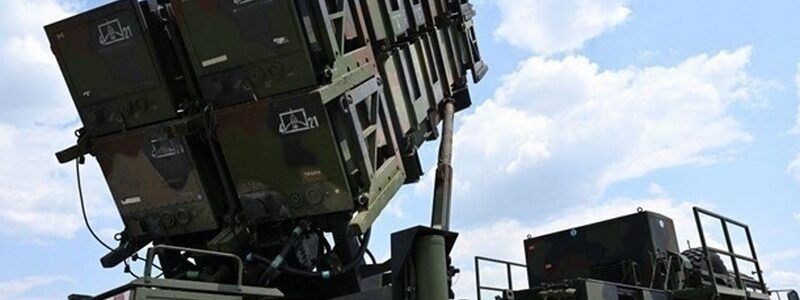
Germany is currently unable to provide Ukraine with additional Patriot air defense missile systems from the Bundeswehr’s stockpiles, as further reductions in its own reserves would pose critical risks to the country’s defense capabilities. However, previously agreed-upon deliveries of missiles for Ukraine’s air defense remain in effect.
German Defense Minister Boris Pistorius made this statement in an interview with newspapers of the Funke Media Group, published on November 7, 2026.
According to the head of the German Defense Ministry, Germany has already transferred several Patriot systems and a significant number of guided missiles for them to Ukraine; however, further allocation of weapons from existing stockpiles is not possible at this time.
“We have already transferred several systems and a large number of guided missiles. We cannot do more at this time. Anything we transfer now, we will not be able to replenish in the near future. This would create gaps in our defense that we cannot afford,” Pistorius said.
The minister emphasized that Germany has made a significant contribution to strengthening Ukraine’s air defense, while a number of other countries have provided significantly less assistance.
In this regard, Berlin is counting on increased support from international partners who have additional Patriot systems and interceptor missiles at their disposal.
According to Pistorius, the issue of further supplying Ukraine with air defense systems must be seriously discussed at the next meeting of the Contact Group on Ukraine’s Defense in the “Ramstein” format, scheduled for November 17 in Brussels.
As early as November 2, Pistorius reported that Germany, together with the United Kingdom, is working on a plan to provide additional air defense systems to Ukraine.
According to him, the supply situation remains challenging, as the United States is providing only limited quantities of new Patriot systems and corresponding guided missiles. An additional challenge is that production of PAC-2 GEM-T missiles in Germany is only just beginning to ramp up.
Berlin and London plan to prepare proposals for the Contact Group meeting to involve other countries that possess the necessary stockpiles.
It is anticipated that additional deliveries could be made from the reserves of allies who maintain such capabilities without significantly weakening their own defense systems.
Pistorius’s statement came three days after the German defense minister held talks with Ukrainian President Volodymyr Zelenskyy in Berlin.
On November 4, Zelenskyy announced that Ukraine has a valid contract to purchase German-made PAC-2 missiles for Patriot systems for the next two years.
“We have a substantial contract to purchase German-made PAC-2 missiles for the next two years. We are working to expedite deliveries. This would significantly help Ukrainians get through this winter,” the Ukrainian president stated.
According to him, Russian strikes on energy infrastructure continue almost daily, and the most challenging situation involves intercepting ballistic missiles due to a shortage of ammunition for the Patriot systems.
Following the talks, the parties agreed to further explore options for accelerating PAC-2 deliveries and also discussed providing Ukraine with IRIS-T systems and ammunition for F-16 fighter jets.
Earlier, the German government confirmed an agreement to fund the delivery of several hundred Patriot missiles over the coming years.
Specifically, in April 2026, Berlin announced funding for a Ukrainian contract with the American company Raytheon to supply several hundred interceptor missiles. In August, a representative of the German Ministry of Defense further confirmed that this involved several hundred PAC-2 guided missiles, scheduled for delivery in the coming years.
Thus, Pistorius’s current statement primarily concerns the inability to allocate additional ready-to-deploy systems and weapons from German military reserves, rather than the termination of previously concluded contracts for the production and procurement of missiles.
Ukraine uses Patriot systems to counter Russian missile attacks, particularly strikes on energy infrastructure, industrial facilities, and populated areas. These systems are especially important for intercepting ballistic missiles, against which the capabilities of other air defense systems are significantly limited.
At the same time, the effectiveness of Ukraine’s air defense depends not only on the number of launchers but also on the availability of sufficient stocks of interceptor missiles, the stability of logistics routes, and the production capabilities of partner countries.
Accelerating the production of PAC-2 and PAC-3 missiles, as well as organizing additional deliveries from allied reserves, remain key areas of international support for Ukraine.
According to the German Ministry of Defense, the scope for further transfers of weapons from national stockpiles is limited by the need to maintain the Bundeswehr’s combat readiness and fulfill Germany’s obligations to NATO.
Under these circumstances, further strengthening of Ukraine’s air defense will depend on expanding missile production, fulfilling existing contracts, and the participation of other countries in supplying systems and ammunition.
DEFENSE, GERMANY, Patriot, UKRAINE, WEAPONS

Related: