
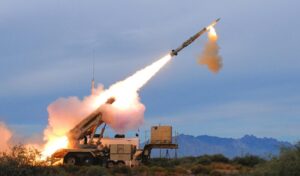
Stocks of Patriot interceptor missiles held by U.S. forces in Europe have plummeted following large-scale deliveries to Ukraine and particularly heavy ammunition consumption during the war with Iran, raising concerns about NATO’s ability to repel sustained ballistic missile attacks.
The Associated Press reported this on August 27, citing a U.S. military official in Europe and a NATO spokesperson, both of whom spoke on condition of anonymity.
According to the U.S. official, the most serious problem concerns the Patriot missiles specifically designed to intercept high-speed ballistic missiles.
He described inventory levels as “below critical” and stated that U.S. forces in Europe currently “definitely” do not have enough interceptors to repel a sustained series of ballistic missile strikes.
The official described the ability to defend against even a single ballistic strike or an errant Russian missile that has veered off course and is heading toward NATO territory as “very limited.”
A NATO spokesperson who spoke with the AP also confirmed the low level of Patriot stockpiles among U.S. and NATO forces in Europe.
However, both the Pentagon and NATO officially reject assessments of a critical shortage.
NATO’s senior military representative, U.S. Army Colonel Martin O’Donnell, told the AP that the claim that the number of Patriot missiles in Europe is “below critical levels” is not true. According to him, NATO has sufficient air defense capabilities both for its own protection and to continue assisting Ukraine.
Pentagon spokesperson Sean Parnell also dismissed reports of a shortage of U.S. ammunition as false and stated that the U.S. military has the necessary stockpiles to conduct operations.
Nevertheless, independent assessments show a significant reduction in U.S. reserves.
According to Mark Kansian, a senior advisor at the Center for Strategic and International Studies (CSIS), Ukraine has received more than 600 Patriot missiles from U.S. and allied stocks since the start of the full-scale war.
However, the main factor behind the sharp decline in reserves was the U.S. war with Iran.
According to CSIS estimates, approximately 65% of U.S. Patriot stockpiles—roughly 1,500 out of 2,330 interceptors—were expended during the campaign against Iran. By the end of July, CSIS analysts estimated that the remaining U.S. Patriot stockpiles stood at fewer than 1,000 missiles.
Ed Arnold, an expert at the British Royal United Services Institute, noted that deliveries to Ukraine had been planned in advance and were relatively manageable, whereas the need for massive deployment of interceptors in the Middle East arose much sooner than expected, exposing the limitations of the production chain.
The shortage is particularly acute for Europe, as there are currently few alternatives to the Patriot system for intercepting modern ballistic missiles.
France and Italy are developing a new version of the SAMP/T NG system, which is expected to have broader capabilities against ballistic targets; however, this new variant has not yet been tested in actual combat conditions. The current version of the SAMP/T has a shorter range than the Patriot.
A sharp increase in production capacity should partially resolve the problem.
In 2026, approximately 600–650 modern PAC-3 MSE missiles are expected to be produced, and the U.S. defense industry plans to increase production capacity to 2,000 interceptors per year by 2030. Lockheed Martin and the Pentagon have already signed agreements designed to significantly expand production.
Additional production capacity is being established directly in Europe.
In September 2026, the first European production center for Patriot missiles is scheduled to launch in Schrobenhausen, Germany. The facility is being established by COMLOG, a joint venture between MBDA Deutschland and the American company Raytheon.
The new facility will carry out final assembly and testing of PAC-2 GEM-T missiles. The first deliveries are expected in 2027. Among the countries that have already placed orders, AP lists Germany, the Netherlands, Romania, and Spain.
Raytheon received a separate $3.7 billion contract in April 2026 to produce GEM-T missiles for Ukraine. The company explicitly stated that the new plant in Germany is also expected to play a key role in replenishing Ukraine’s stockpile of interceptors.
For Ukraine, this situation means increased competition for the limited supply of missiles being produced. Kyiv needs the Patriot system primarily to intercept Russian ballistic missiles, which remain one of the most challenging targets for Ukraine’s air defense.
At the same time, U.S. manufacturers must replenish their own stockpiles, meet the needs of European NATO members, fulfill orders from Middle Eastern countries, and continue to support Ukraine.
CSIS warns that even with a significant ramp-up in production, it will take several years to fully replenish U.S. stockpiles. Until new production lines reach full capacity, the U.S. and its allies will have to prioritize the allocation of a limited number of interceptors among Europe, Ukraine, the Middle East, and the Indo-Pacific region.
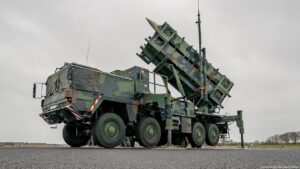
Norway has announced the allocation of 3 billion kroner (268 million euros) to strengthen Ukraine’s air defense, specifically as part of the PURL program and to purchase Patriot missiles from countries that already have them, the Norwegian government’s press service reported.
“Norway is now providing an additional 3 billion Norwegian kroner to strengthen Ukraine’s air defense systems,” the government press service stated on its website.
It is reported that Norway, together with Denmark, Germany, and Canada, will order new Patriot air defense missiles directly from the manufacturer in the U.S. as part of the PURL program.
“Given the long delivery times for some of these missiles, Norway also plans to purchase Patriot missiles from countries that already have them in order to deliver them to Ukraine as quickly as possible,” the Norwegian government emphasized.
Norway is also allocating funds to join Ukraine’s initiative to jointly develop anti-ballistic systems with European partners. “Ukraine has invited European partners to participate in the development of a specialized missile defense system. This could also be significant for the defense of Norway and other NATO member states. Norway is allocating funding to be able to contribute to this initiative,” the statement said.
“In the future, ballistic missiles may also pose a serious threat to Norway and its allies. Therefore, the Ukrainian initiative is of interest from the perspective of strengthening Norway’s defense capabilities,” said Defense Minister Tore O. Sandvik.
During the NATO summit in Ankara, Ukrainian President Volodymyr Zelenskyy stated that a key topic of discussion with partners would be the supply of interceptor missiles for the Patriot air defense system, which are critical to Ukraine’s ability to shoot down Russian ballistic missiles—and noted that these missiles are not exclusive to the United States.
As previously reported, the Netherlands, Germany, Finland, Sweden, Lithuania, Estonia, Latvia, Denmark, and Poland have appealed to the European Commission to grant authorization as soon as possible for the purchase of missiles for U.S.-made air defense systems as part of the 90 billion euro “defense” component that the EU is providing to Ukraine in 2026–27.
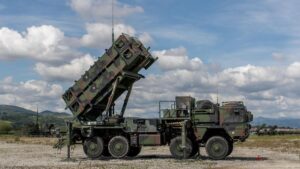
Norway is now providing an additional 3 billion Norwegian kroner to strengthen Ukraine’s air defense systems, according to the Norwegian government.
“Ukraine has been successful in intercepting most drones and cruise missiles, but it needs to strengthen its defenses against ballistic missiles. This is one of Ukraine’s most urgent priorities. That is why Norway is now allocating 3 billion Norwegian kroner for air defense,” said Prime Minister Jonas Gar Støre.
On Tuesday, the prime minister met with Ukrainian President Volodymyr Zelenskyy at the NATO summit in Ankara, Turkey.
“Russia is sending hundreds of drones and missiles into Ukraine day and night. The Patriot air defense system is highly effective and can counter a wide range of threats, including ballistic missiles,” said Defense Minister Tore O. Sandvik.
Together with Denmark, Germany, and Canada, Norway will order new Patriot air defense missiles directly from the manufacturer in the United States. Norway will continue to support the U.S.-led PURL program. PURL is a NATO program for coordinating the funding and donation of advanced U.S. military equipment to Ukraine, including air defense systems. Given the long lead times for some of these missiles, Norway also plans to procure Patriot missiles from countries that already possess them to facilitate rapid donations to Ukraine.
According to the Norwegian government, Ukraine has asked its European partners to participate in the development of a specialized missile defense system. This could also be significant for the defense of Norway and other Alliance member countries. Norway is allocating funding to be able to contribute to this initiative.
“In the future, ballistic missiles could also pose a serious threat to Norway and its allies. Therefore, the Ukrainian initiative is of interest in terms of strengthening Norway’s defense capabilities,” Sandvik said.
The government noted that between 2023 and 2025, Norway provided Ukraine with air defense support totaling 30 billion Norwegian kroner. Norway is also providing significant funding to strengthen Ukraine’s air defense in 2026.

Metinvest Mining and Metallurgical Group has manufactured and assembled a 3 ton armor shell to cover key elements of the Patriot system as part of Rinat Akhmetov’s Steel Front military initiative.
According to the group’s press release, Metinvest continues to strengthen the protection of Ukraine’s air defense forces as part of the Steel Front initiative, this time by creating a shelter for the Patriot air defense system.
It is specified that the protection consists of a steel frame and armored plates. The design covers several important components of the system: the SAM control station, radar comparator (Doghouse), and generator.
“In such war conditions, every minute that air defense works saves lives. Our protective shells are designed for this very purpose – to ensure that the equipment remains in service even under fire,” commented Oleksandr Myronenko, Group Chief Operating Officer.
In addition, it is reported that since the beginning of 2025, Metinvest has begun systematic work on protection for air defense systems. The first shells were installed at air defense facilities back in the spring, and since then, the designs have been constantly improved. Each new project is adapted to a specific location and type of equipment.
Dozens of specialists are involved in the production of the armor: milling, turning, drilling, planing, electric and gas welders, metalworkers, blacksmiths, and painters. For security reasons, Metivest has moved all production for the army off-site: these are secret sites whose location is not disclosed.
“Rinat Akhmetov’s Steel Front is the largest private initiative to support the Armed Forces of Ukraine. As part of the project, SCM Group companies manufacture and supply the army with modern shelters, equipment protection, electronic warfare equipment, vehicles, drones, fortifications and other equipment that is critical at the front. The initiative focuses on the in-house production of solutions adapted to war conditions.
“Staliy Front already manufactures protective screens for vehicles such as Abrams, Bradley, Roshel, Kozak, and MT-LB, which perform combat missions on a daily basis.
The Patriot air defense system is an American medium- and long-range air defense system developed by Raytheon. Designed to intercept aircraft, cruise and ballistic missiles, it has a phased array radar and high-precision interceptor missiles.

Metinvest Mining and Metallurgical Group, as part of Rinat Akhmetov’s Steel Front military initiative, has mastered the production of armor protection for the MIM-104 Patriot control module, which protects the Ukrainian sky from enemy attacks.
According to the group’s press release on Friday, Metinvest engineers have already mounted the first armor on the air defense system’s operational control module.
At the same time, it is noted that Metinvest continues to actively expand its line of protective products for the Ukrainian army, which increases the level of security and protects the lives of defenders and military equipment. The company has mastered the production of steel shields for the main domestic T-64 and T-72 tanks, American M1 Abrams tanks and Bradley infantry fighting vehicles, and is preparing to integrate them into various Leopard 2 modifications. The soldiers have already received more than 300 screens.
Oleksandr Myronenko, Head of Steel Production for the Ukrainian Army at Metinvest and Group Chief Operating Officer, noted that the defenders of the sky also need reliable protection.
“Since this is one of the main areas of the Steel Front initiative, in which we have extensive experience, it is not surprising that we have been entrusted with such a responsible mission. In a month and a half, we created a project from scratch and manufactured a shield for the crew of the Patriot air defense system from Metinvest’s Ukrainian armor steel according to the drawings, which guarantees protection against fragmentation damage to both the defenders and the air defense control system. Our experienced engineers also supervised the installation of the armor,” explained Myronenko.
The company clarified that Metinvest engineers have set up the production of a unique armor patch for the Patriot air defense system’s brain center, which controls the air defense system. The crew protection against shrapnel damage is made of 30KhN2MA steel, which has improved wear resistance, strength, toughness and resistance to mechanical stress.
The armor consists of nearly 200 elements – plates of armored steel up to 8 mm thick that protect the air defense control center. The total weight of the armor exceeds 2.6 tons, but this does not affect the functionality or mobility of the complex. A team of project engineers worked on the creation of the Patriot air defense system’s armor, supervising the work of turners, fitters, mechanical assemblers, and electric and gas welders.
The Patriot system is an anti-aircraft missile system. The core of the system is the AN/MPQ-53 Patriot radar. This is a multi-purpose radar with a passive phased array antenna (PFAR) operating in G- or H-bands. Patriot uses advanced air-to-air interceptor missiles and highly effective radar systems. The maximum range of airborne targets is 170 km.

German Chancellor Olaf Scholz says that Germany will soon provide Ukraine with the third Patriot system, IRIS-T and Gepard missiles, rockets and ammunition.
“Ukraine’s most important need today is ammunition and weapons, especially air defense. Therefore, in the coming weeks and months, we will supply Ukraine with the third Patriot system, IRIS-T, Cheetahs, missiles and ammunition,” he said at a conference on Ukraine’s recovery on Tuesday.
According to him, since February 24, 2022, Germany has provided Ukraine with 30 billion euros in military aid, as well as billions in humanitarian aid.
“I would like to address all those present and ask you to support our initiative to increase the capacity of the Ukrainian air defense with everything you can,” Scholz urged.
AMMUNITION, GERMANY, Iris-T, missiles, Patriot, SCHOLZ, гепард



