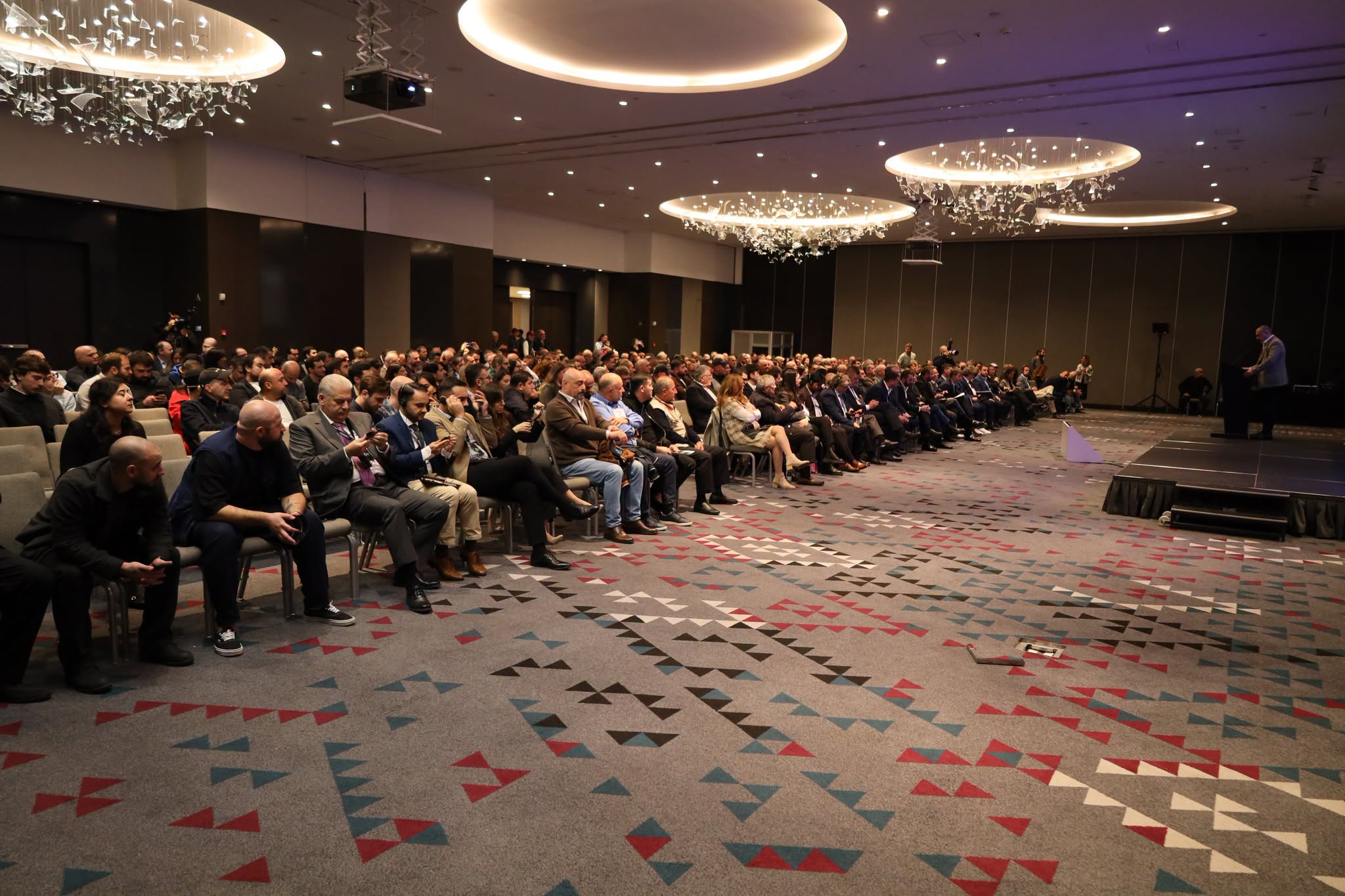
The third international agricultural forum, AgriFuture Georgia 2026, was held in Tbilisi, bringing together more than 500 participants, including representatives of 17 international companies from ten countries. More than 110 business meetings took place during the event, resulting in the launch of preparations for new projects in the areas of fruit and vegetable production, the implementation of modern agricultural technologies, and the development of export shipments.
According to an EastFruit report dated November 23, 2026, the forum, organized by the Georgian company NIADAGI Group, served as a platform for direct negotiations between local producers, international technology suppliers, investors, financial institutions, and government agencies.
The event took place at the Sheraton Grand Tbilisi Metechi Palace Hotel. Companies from Italy, the Netherlands, the United Kingdom, Spain, Germany, Switzerland, Greece, the United States, Chile, and Moldova participated.
International participants presented solutions in the areas of fruit crop breeding and cultivation, protecting orchards from adverse weather conditions, agricultural automation, product storage and packaging, as well as organizing shipments to foreign markets.
International companies have begun preparing new projects in Georgia
One of the forum’s key outcomes was the transition from preliminary negotiations to the preparation of specific technological projects on Georgian farms.
In particular, the British company Haygrove has begun working with local blueberry growers to implement automated ventilation systems in existing plantings and to establish new orchards using protective covers.
Some farms are considering the possibility of implementing pilot projects with subsequent expansion of acreage following an evaluation of the results obtained.
The Italian company RK Growers has begun exploring the introduction of licensed premium fruit varieties. This collaboration involves not only the supply of planting material but also the establishment of production chains that meet the requirements of international retail chains.
Discussions are underway with the Dutch company Legro regarding the creation of new blueberry plantations using container-based cultivation technology and specialized growing media. The parties are also considering the possibility of conducting trial plantings.
According to the organizers, following the forum, NIADAGI will continue to facilitate negotiations with interested farms, refine technical requirements, and prepare customized commercial proposals.
However, the scale of potential investments, the value of future contracts, and the timelines for individual projects have not yet been disclosed.
Blueberry Growers Are Interested in Crop Protection and Digital Technologies
Significant attention at the forum was devoted to the development of blueberry production, which is becoming one of the most promising export sectors for Georgia’s fruit and vegetable industry.
In particular, technologies for protecting plantings from hail, wind, rain, and spring frosts were discussed.
The British company Haygrove presented solutions for growing berries under protective structures; the Italian company Agrintech showcased protective nets and films; and the Greek Thrace Group presented technical agrotextile materials.
The Swiss company Vivent Biosignals demonstrated technologies for monitoring the physiological condition of plants using sensors and artificial intelligence.
Such systems make it possible to detect signs of plant stress at early stages and to plan irrigation and the application of protective agents more accurately. For export-oriented farms, this is particularly important given international buyers’ requirements regarding product quality and permissible levels of pesticide residues.
The German company Exatrek presented digital solutions for managing agricultural machinery and monitoring production processes.
Of particular interest were new blueberry varieties from the Dutch company Schrijnwerkers Plants, genetic developments by Bloom Fresh, and planting material from the Italian Mazzoni Group.
Georgia is studying the European model of cooperation and fruit exports
One of the central themes of AgriFuture Georgia 2026 was the organization of stable supplies of Georgian fruit and vegetable products to international markets.
Representatives from the Italian company RK Growers discussed the requirements of European and Asian retail chains regarding supply volumes, certification, consistent quality, and adherence to shipping schedules.
The Italian apple cooperative VIP Val Venosta, which works with approximately 1,500 farmers, shared practical experience in producer collaboration.
Georgian participants were particularly interested in mechanisms for joint storage, sorting, packaging, and marketing of products, which enable small farms to assemble the consignments required by large international buyers.
A separate session of the talks focused on post-harvest processing technologies and maintaining fruit quality during transportation.
The American company AgroFresh presented solutions for post-harvest processing, the Italian company Infia showcased specialized packaging, and the Chilean company Tres Castillos demonstrated ventilated pallet covers.
The Moldovan company Rudiment Agro Grup introduced participants to the FumAGRO technology for protecting crops from frost.
The government and banks presented financing mechanisms for agribusiness
Representatives from Georgia’s Ministry of Environment and Agriculture, the Agency for Rural Development, and TBC Bank participated in the forum.
Deputy Minister of Agriculture Lasha Dolidze emphasized the importance of international cooperation, attracting investment, and implementing modern technologies to enhance the competitiveness of Georgian agricultural production.
The Rural Development Agency presented existing mechanisms for state support and co-financing of agricultural projects.
TBC Bank familiarized participants with financial instruments for agribusiness, particularly financing for environmentally focused projects.
According to the organizers, access to bank loans and government support is one of the key conditions for modernizing horticulture, as establishing modern orchards, purchasing equipment, and implementing new technologies require significant initial investments.
NIADAGI founder Nikoloz Didebashvili noted that to successfully attract funding, an agricultural project must include a clear production process, promising varieties, agronomic support, and pre-identified sales markets.
AgriFuture Georgia Plans to Expand International Cooperation
The AgriFuture Georgia Forum has been held since 2024. In 2025, the event brought together about 250 participants and five international companies, while in 2026, the number of foreign companies increased to 17.
The organizers intend to continue expanding international representation, attracting new technology partners, and developing projects in various regions of Georgia.
Promising areas include the production of blueberries, table grapes, and garden strawberries; the introduction of new fruit crop varieties; the creation of modern storage systems; and the establishment of export supply chains.
Holding such events reflects the gradual transformation of Georgia’s fruit and vegetable sector from predominantly small-scale farms to technologically advanced operations focused on international markets.
At the same time, the long-term economic impact of AgriFuture Georgia 2026 will depend on the number of projects actually implemented, the investments attracted, and the export contracts signed.
NIADAGI Group is a Georgian company specializing in comprehensive support for agricultural projects. Its activities include the selection of varieties and certified planting material, orchard design, the implementation of agricultural technologies, agronomic consulting, and the development of international trade ties.
Sources: EastFruit, November 23, 2026; Ministry of Environment and Agriculture of Georgia, October 31, 2026; NIADAGI Group.