

Ukraine’s first municipal specialized driving school for veterans with musculoskeletal disorders has opened in Kyiv; the first class currently has 17 students, according to the capital’s mayor, Vitali Klitschko.
“We’ve opened Ukraine’s first municipal specialized driving school in the capital for veterans with disabilities who have musculoskeletal disorders, particularly as a result of limb amputations. This is another important element of the city’s support system for defenders,” he wrote on Telegram on Tuesday.
The mayor noted that the driving school has already passed an inspection of its training facility, and specially equipped vehicles have been provided for practical lessons toward a Category B license.
“They were provided at my request by the Dzhurinsky Family Charitable Foundation. Thank you for your support! I would also like to thank the Ministry of Internal Affairs Service Center for its guidance and assistance in implementing this project,” Klitschko said.
According to him, the first class of 17 veterans has now been formed. Here, participants can learn to drive from scratch, obtain a driver’s license, or—if they had driving experience prior to their injury—undergo retraining to master driving a vehicle with adaptive equipment, including hand controls. Training is conducted by certified instructors. An important principle is “peer-to-peer.” The instructors include veterans who have completed the necessary training, passed the exams, and earned the right to teach others. For those who have difficulty getting to the training location on their own, the Kyiv Military Hub provides a transportation service.
“We will continue to expand the range of training programs. In the future, the courses will be open to all people with disabilities who require specialized training,” Klitschko said.
Klitschko also noted that a comprehensive approach to veterans’ automotive mobility is currently being developed. Specifically, upon completion of the training, the city may help partially subsidize the purchase of a car, partially subsidize its retrofitting to meet the individual’s needs, and assist with retraining and employment.
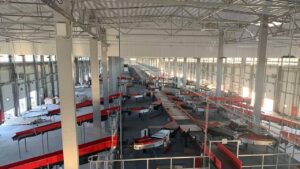
Nova Poshta, the leader in express delivery in Ukraine and part of the Nova Group, plans to expand its network of sorting centers and is seeking entrepreneurs, owners of logistics centers, and warehouse properties with an area of at least 500 square meters for long-term cooperation.
According to a post by “Nova Poshta” on its Telegram channel on Tuesday, the company is looking for partners who are ready to receive, sort by destination, and ship cargo and packages.
In turn, Nova Poshta will provide the cargo flow, business model, standards, and technological solutions, as well as the ability to scale operations, and may also offer risk insurance.
“Terms are negotiated on a case-by-case basis,” the company emphasized, adding that it is interested in proposals from Kyiv, the Kyiv region, and the eastern regions of Ukraine.
The need for space, employees, and equipment depends on the projected cargo volume for a specific location, the company noted.
As previously reported, in January–June 2026, “Nova Poshta” increased its consolidated net profit by 24.3% compared to the same period in 2025—to 2.195 billion UAH—and its revenue by 31.8%, to 39.127 billion UAH.
As of July 13, 2026, the company’s network comprised 54,700 service points: 16,800 branches and 37,900 parcel lockers throughout Ukraine.
In 2025, Nova Poshta increased its revenue by 21.6% compared to 2024—to 54.2 billion UAH—and its net profit rose by 4.4%—to 2.6 billion UAH. The number of packages and shipments delivered increased by 7.4%—from 486 million to 522 million—with international shipments rising by 52.6%, from 19 million to 29 million.
Nova Poshta’s core business remains the express delivery of documents, packages, and palletized bulky cargo. The company is the leader in express delivery in Ukraine. Its ultimate beneficial owners are Volodymyr Poperešniuk and Vyacheslav Klimov.

As of August 25, Ukrainian farmers had threshed 6.76 million hectares, or 58% of the projected area, and harvested 31.73 million metric tons of grain from the new crop, according to the press service of the Ministry of Agrarian Policy and Food.
Wheat was harvested from 5 million hectares, yielding 24.61 million metric tons, with an average yield of 49.2 centners per hectare; barley was harvested from 1.46 million hectares, yielding 6.33 million metric tons, with an average yield of 43.4 centners per hectare. Peas were harvested from 297,000 hectares, yielding 786,900 metric tons, with a yield of 26.5 ts/ha.
Farmers in the Odesa, Kirovohrad, and Dnipropetrovsk regions currently lead in terms of the gross harvest volume of grain and legume crops.
In the Odesa region, 4.82 million metric tons were harvested from an area of 1.19 million hectares, specifically: 3.22 million metric tons of wheat, 1.31 million metric tons of barley, and 285,000 metric tons of peas.
In the Kirovohrad region, 2.42 million metric tons have been harvested from an area of 556,000 hectares: 1.92 million metric tons of wheat, 412,000 metric tons of barley, and 82,000 metric tons of peas.
In Dnipropetrovsk Oblast—2.63 million metric tons from an area of 634,000 hectares: wheat—2.02 million metric tons, barley—568,000 metric tons, and peas—37,000 metric tons.
The highest grain yields are currently recorded in the Khmelnytskyi (70.8 ts/ha), Sumy (60.1 ts/ha), and Vinnytsia (59.7 ts/ha) regions.
The rapeseed harvest is nearly complete—1.32 million hectares have been threshed, or 99% of the projected area, yielding 3.79 million metric tons of seed with an average yield of 28.6 centners per hectare.
In some regions, the harvest of buckwheat and millet has begun. For buckwheat, 0.65 thousand hectares have been threshed, yielding 0.9 thousand metric tons at a yield of 13.8 centners per hectare; for millet, 3.6 thousand hectares have been harvested, yielding 7.84 thousand metric tons at a yield of 21.8 centners per hectare.

According to The Serbian Economist, Tamara Vučić, the wife of the President of Serbia, participated in the 6th Summit of First Ladies and Gentlemen, which took place on August 24 in Kyiv on Ukraine’s Independence Day. The theme of this year’s meeting was “Peace-2026: Finding Stability in Times of Uncertainty.”
The First Lady of Lithuania, Diana Nausėdenė; the wife of the President of Estonia, Sirje Karis; the wife of the President of Finland, Susanna Innes-Stubb; the First Lady of Romania, Mirabela Gredinaru; Tamara Vučić; and the First Gentleman of Slovenia, Ales Musar, all traveled to Kyiv in person. As is tradition, Olena Zelenska served as the host of the summit. Representatives from Germany, Turkey, Israel, the Czech Republic, Georgia, Belize, and Guatemala joined online. In total, the event brought together representatives from 14 countries.
An interesting part of the summit was the presentation of a unique “dictionary of resilience”—words and traditions from various nations that help society maintain unity in times of crisis.
Serbia presented “krsna slava”—a unique Serbian tradition of honoring the family’s patron saint.
Vucic called the slava “the living code of our identity” and explained that this tradition unites the family regardless of where its members are.
Speaking about the historical roots of Serbian resilience, she recalled the medieval rulers who, instead of palaces, left behind monasteries and charitable foundations. Vucic specifically mentioned the Serbian monasteries in Kosovo and Metohija, which are on UNESCO’s List of World Heritage Sites in Danger.
According to her, during difficult historical periods, Serbs effectively “brought the church under their own roof”: the home became a place for preserving faith, memory, and family unity, while glory became an intangible legacy passed down from generation to generation.
The First Ladies and Gentlemen Summit was launched at the initiative of Olena Zelenska in 2021 as an international platform for humanitarian and social projects. This year, the main focus was on what helps people, families, and nations maintain resilience during times of war and global uncertainty.
https://t.me/relocationrs/3532
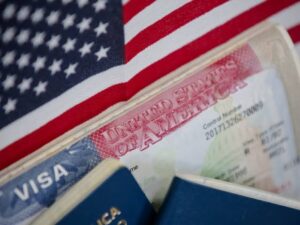
The administration of U.S. President Donald Trump is preparing to revoke up to 200,000 business and tourist visas held by foreign nationals who applied for asylum after entering the country. If the decision is carried out on the stated scale, it will be the largest single mass revocation of visas in U.S. history.
The Associated Press reported this on August 24, citing documents from the U.S. State Department and two U.S. officials.
The measure applies to nonimmigrant visas in the B1 and B2 categories, which are intended primarily for business and tourist travel, visiting relatives, and receiving medical treatment, respectively.
Visas issued between 2016 and 2026 may be subject to this new measure if their holders applied for asylum after arriving in the United States or are continuing the asylum process.
State Department spokesperson Tommy Pigott confirmed that the procedure is being prepared but did not specify its final scope.
“We are coordinating with the Department of Homeland Security to identify and revoke nonimmigrant visas held by foreign nationals who entered the United States as short-term visitors and subsequently applied for asylum in order to remain here permanently,” the State Department spokesperson said.
According to him, the process will be carried out gradually, so the number of revoked visas remains uncertain for now.
Thus, the figure of up to 200,000 visas is currently an AP estimate based on internal documents and information from U.S. officials, rather than an officially announced quota by the State Department.
The revocation of visas will not result in the immediate deportation of all affected foreign nationals from the U.S.
According to the AP, most people whose asylum applications are pending will be transferred to the appropriate immigration category; however, they will no longer be considered to be in the country as business or tourist visitors.
The administration’s main argument is that B1/B2 visas are issued to people who state that their trip is temporary and that they intend to leave the U.S. The authorities view the filing of an asylum application after entry as possible evidence that the original purpose of the trip may not have matched the stated one.
The large-scale revocation of visas is expected to face legal challenges. The AP notes that the decision could still be reviewed or challenged before it is fully implemented.
The new measure will be a continuation of the significant tightening of U.S. visa and immigration policies.
The State Department reported on August 10, 2026, that more than 175,000 visas for foreign nationals have already been revoked since Donald Trump’s return to the White House.
According to the department, the grounds for revocation included visa violations, criminal offenses, fraud, threats to national security, and other violations. Among the most common reasons cited by the State Department were assaults, driving under the influence, theft, and drug-related crimes.
However, the planned revocation of up to 200,000 visas is unique in that it targets a single specific category of visa holders and is part of a unified administrative campaign. This is precisely why the AP describes it as potentially the largest one-time mass revocation of visas in U.S. history.
In 2025–2026, the Trump administration also expanded social media screening of applicants, tightened requirements for several categories of foreign nationals, introduced or expanded visa restrictions for citizens of dozens of countries, and intensified scrutiny of visas that had already been issued.
The new measure applies to foreign nationals regardless of their specific nationality, provided they meet the specified criteria. Therefore, in theory, it could also affect Ukrainian citizens who entered the U.S. on valid B1/B2 visas and subsequently applied for asylum. At the same time, other mechanisms governing Ukrainians’ stay in
the U.S. are not, in and of themselves, the subject of the announced campaign.

Italian Foreign Minister Antonio Tajani confirmed that a new aid package for Ukraine is being prepared, as well as the continuation of the Italian government’s commitments regarding Ukraine’s security, recovery, and defense.
According to the website of the Italian Ministry of Foreign Affairs and International Cooperation, Tajani made these remarks during a phone call with Ukrainian Foreign Minister Andriy Sybiga on the occasion of the 35th anniversary of Ukraine’s restoration of independence.
During the conversation, Tajani condemned the ongoing Russian attacks on Ukrainian territory and reaffirmed the Italian government’s full support for the Ukrainian people.
“The minister reaffirmed the government’s commitment to maintaining maximum pressure on Moscow, as demonstrated by Prime Minister Giorgia Meloni’s participation today in the Coalition of the Willing. Tajani confirmed that the government’s commitment to Ukraine’s security, reconstruction, and defense remains firm, in particular thanks to a new Italian aid package currently being prepared, as well as support through EU sanctions,” the statement reads.
Separately, the parties discussed food security and maritime safety. Tajani emphasized the importance of the Black Sea and the entire Mediterranean for global food security and ensuring the continuity of Ukrainian grain exports.
He reaffirmed Italy’s readiness to cooperate with Kyiv, in particular by exploring avenues for collaboration with MED9+ initiatives regarding the Strait of Hormuz, underscoring the interconnection between maritime security, economic stability, energy flows, and food security.
The conversation also touched on Ukraine’s recovery. According to the Italian Ministry of Foreign Affairs, Italy has already allocated approximately 3.2 billion euros to support Ukraine’s recovery and reconstruction, in part through contributions from Italian companies.



