
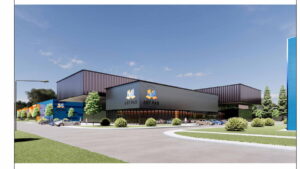
The Ministry of Economy and Environment of Ukraine has decided to provide a total of 56 million hryvnias in state support to the “ART PACK INDUSTRIAL” industrial park in the Khmelnytskyi region and the “KRONOSPAN RIVNE” industrial park in the Rivne region, the ministry announced on August 21.
The “ART PACK INDUSTRIAL” industrial park will receive 9.699 million UAH to construct access roads to the park’s territory. An additional 46.305 million UAH will be allocated to “KRONOSPAN RIVNE” for the development of energy infrastructure.
“Government incentives are a practical tool that enables the creation of industrial infrastructure, attracts investment, and fosters the development of the manufacturing sector,” said Vitaliy Kindrativ, Deputy Minister of Economy and Environment of Ukraine. According to him, this support will allow the industrial parks in the Khmelnytskyi and Rivne regions to launch new production facilities more quickly.
Following the new decision, four industrial parks have already received state support since the beginning of 2026 to implement four projects totaling approximately 152 million hryvnias. In late May, “SMART TECH INDUSTRY” in the Poltava region and “Sparrow Park Lviv” became the first recipients this year, receiving over 96.5 million hryvnias. Of this amount, 5.5 million UAH was allocated for the construction of gas and water supply networks in the Poltava industrial park, and another 91 million UAH was allocated for the restoration of infrastructure in the Lviv industrial park that was damaged by a rocket strike.
Government funding for industrial parks is provided on a co-financing basis. Typically, the state covers up to 50% of the project cost, while for de-occupied and frontline territories, as well as for the restoration of infrastructure damaged by hostilities, the share of state support can reach 80%. The maximum amount of funding is up to 150 million hryvnias per industrial park.
Recipients of the funds are required to commission at least 5,000 square meters of industrial real estate within three years and attract at least two participants—industrial enterprises—to the park. The Ministry of Economy has extended the deadline for submitting applications for state incentives in 2026 until August 31.
The “ART PACK INDUSTRIAL” industrial park was included in the state register on December 17, 2025. It is located within the Khmelnytskyi city community, covers 10.22 hectares, and was established for a term of 50 years. The park’s primary focus is stated as the production of paper and paper products. In April 2026, “ART PAK SERVICE” LLC became the managing company.
“KRONOSPAN RIVNE” operates in the village of Horodok in the Rivne District and occupies approximately 85 hectares. The park was entered into the registry in July 2021. Its main areas of focus are the woodworking and furniture industries, as well as warehousing. The initial concept calls for the creation of approximately 1,100 jobs.
For “KRONOSPAN RIVNE,” the current funding is not the first instance of state support. In 2025, the park received an additional 55.3 million UAH for the construction of infrastructure for a cogeneration plant. According to the Rivne Regional State Administration, Kronospan has invested over 560 million euros in production in the region over the past few years, and the industrial park is viewed as a core platform for the development of a furniture cluster.
According to the Ministry of Economy, there are currently 123 registered industrial parks in Ukraine. As of the end of 2025, 37 industrial enterprises had been built or were under construction on their territories, and the total volume of attracted investments exceeded 45 billion UAH.
The 2026 state budget allocates 1 billion UAH for the development of industrial infrastructure in industrial parks as part of the “Made in Ukraine” policy to support Ukrainian manufacturers.
government support, INDUSTRIAL PARK, INDUSTRY, INFRASTRUCTURE, INVESTMENT
Oil refining capacity in Europe and the U.S. will decline over the next decade, while it will continue to grow in the Middle East, Africa, and Asia, according to forecasts by S&P Global Energy experts.
Western governments are urging companies to expand refinery capacity to ensure uninterrupted supplies of critical resources during future crises, but investors are reluctant to fund new projects, which will create problems in the future—both in Europe and North America, the Financial Times reports.
This year, refineries in the U.S. and Europe are operating near full capacity as the industry struggles to cope with shortages caused by the war in the Middle East, and they are generating high profits.
According to a forecast by S&P Global Energy, European refinery capacity will decline by 20% over the next ten years through 2035, to a level slightly above 9 million barrels per day (bpd). Last year, facilities with a combined refining capacity of about 500,000 b/d were shut down in Europe, and the United Kingdom, for example, lost two of its six refineries.
S&P Global Energy also expects U.S. capacity to decline by 7% over this period, to 16.7 million bpd.
The energy crisis caused by the war in the Middle East has not altered the industry’s trajectory, notes Daniel Evans, who is responsible for the oil refining market at S&P Global.
“Recent supply disruptions have forced a reassessment of the strategic importance of the refining industry in the West. But does this change the long-term fundamentals? I would say most likely not,” he noted.
Unlike in North America and Europe, companies in China, the Middle East, India, and Africa have built large, new, and highly competitive refineries.

Blueberry yields in Ukraine during the 2026 season were low across nearly the entire country, with some farms reporting virtually no harvest of mid-season varieties, according to the president of the Ukrainian Fruit and Vegetable Association (UPOA).
The main cause of the problems was spring frosts, which had the most severe impact on mid-season and late-season blueberry varieties.
“This year’s yield is really poor. And that’s the case almost throughout Ukraine,” said Bashtannik. According to him, in some areas, the yield of mid-season varieties was “absolutely zero.”
At the same time, the situation in the consumer market looks quite different: despite the yield problems, blueberries have become significantly cheaper at the height of the season. According to the UPOA chairman’s estimate, the farmgate price of the berries is about 100 UAH/kg, while the retail price is approximately 200 UAH/kg.
Bashtannik notes that blueberries are gradually ceasing to be a niche, expensive berry and are becoming a mass-market product for the Ukrainian market. The growth in domestic consumption is accompanied by an expansion of supply, although the most efficient producers continue to focus, in particular, on exports.
“Blueberries have become a ‘people’s’ berry because they are now abundant and consumers like them,” noted the president of the UPOA.
A labor shortage remains an additional constraint for the industry, especially during harvest time. According to Bashtannik, the labor shortage affects virtually all producers and has the potential to hinder the further expansion of the berry business.
Growing blueberries in containers and tunnels—which helps partially mitigate the impact of adverse weather—has not yet become widespread in Ukraine. The head of the UPOA considers this technology to be more of a niche practice due to the high cost of substrates, infrastructure, and additional production requirements.
Harvest problems are arising against the backdrop of a challenging situation with Ukrainian blueberry exports. According to data published on August 12 by the “Berry Farming of Ukraine” association, blueberry exports fell by nearly two-thirds in the 2025/26 marketing year—to 7,600 metric tons, compared to 24,400 metric tons in the previous season. Export revenue fell by 40%—to 44.5 million euros—despite an increase in the average export price to 5.85 euros per kg.
Poland, Austria, and the Czech Republic remained the main foreign markets for Ukrainian blueberries.
Thus, the 2026 season has been mixed for Ukrainian blueberry producers: domestic demand is growing, and the berries are becoming more affordable for consumers; however, spring frosts sharply reduced yields for some varieties, the industry is facing a labor shortage, and export volumes remain significantly lower than in the previous season.
The Ukrainian Fruit and Vegetable Association brings together producers, processors, and exporters of fruit and vegetable products and is engaged in developing the domestic market and promoting Ukrainian products in foreign markets.
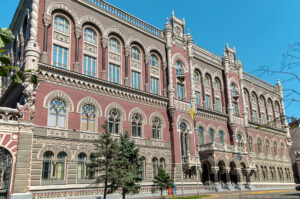
The National Bank of Ukraine has suspended FC “Esayment” LLC’s operations involving the provision of funds to other parties under repayable financial assistance agreements until August 17, 2027.
This decision was made based on the results of an off-site supervision of the company’s activities.
According to the regulator, the NBU determined that the company was engaging in risky activities that could threaten the interests of its clients or creditors. Among the violations identified by the regulator was the conduct of transactions that lacked economic rationality.
The enforcement measure applies to a specific type of transaction and does not constitute a full revocation of the financial company’s license.
The decision to impose the restriction was adopted on August 17, 2026, by the NBU’s Committee on Supervision and Regulation of Non-Bank Financial Services Markets.
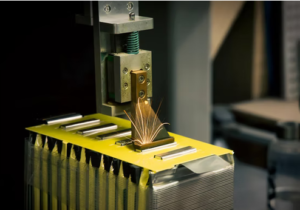
According to “Serbian Economist”, the Chinese company Reliance plans to invest 100.5 million euros in the construction of a high-tech battery manufacturing plant in the Serbian city of Indija; the project is expected to create about 250 jobs, Serbian President Aleksandar Vučić announced on August 20.
According to him, the plant will produce batteries for unmanned aerial vehicles, autonomous vehicles, robots, household appliances, and other devices.
“We are talking about a high-tech company, one of the world’s best in the production of batteries for drones, autonomous vehicles, robots, household appliances, and other devices,” the publication Danas quoted Vučić as saying, citing his interview with Radio and Television of Serbia (RTS).
A framework agreement with the investor is expected to be signed in late August 2026, and construction work could begin as early as late October.
Vucic clarified that Reliance was one of 14 companies with whose representatives the Serbian side held talks during his most recent trip to China.
Judging by the name and the product profile described by the president, this refers to Jiangsu Reliance New Energy Technology Co., Ltd., which operates under the Reliance Battery brand. However, the Serbian authorities have not yet publicly disclosed the full legal name of the investor in the Indija project.
According to Reliance itself, the company was founded in Changzhou, China, in November 2021 and specializes in the development and production of high-power cylindrical lithium-ion cells. It manufactures 21700 and 46-series cells based on NCA and LFP, and conducts research into semi-solid-state and solid-state batteries as well as dry-electrode technology.
The company explicitly lists drones, eVTOLs, humanoid and logistics robots, power tools, household cleaning equipment, electric motorcycles and bicycles, automobiles, backup power systems, and specialized equipment among the applications for its batteries.
Thus, if the project is implemented, India will gain another high-tech manufacturing facility related to the electrical engineering industry. The city has already established a large industrial cluster between Belgrade and Novi Sad. In particular, in April 2025, Europe’s first factory of the Japanese company JFE Shoji, worth over 50 million euros, began operations here; it manufactures motor cores for home appliances and the automotive industry.
The Toyo Tire Serbia plant also operates in Inji, and in 2026, the Japanese company began construction here on a new European research and development center worth 29 million euros.
The National Bank of Ukraine has suspended, until August 17, 2027, “Profit Finance” LLC’s operations involving the provision of funds to other parties under the terms of a repayable financial assistance agreement.
This enforcement measure was imposed following an on-site inspection.
According to the NBU, the company’s activities included transactions that the regulator classified as risky activities threatening the interests of clients or creditors. In particular, the National Bank identified transactions that lacked economic justification.
This does not involve the revocation of the company’s license as a whole, but rather a temporary ban on a specific type of transaction—providing funds to third parties under the terms of a repayable financial assistance agreement.
The decision was adopted on August 17, 2026, by the NBU’s Committee on Supervision and Regulation of Non-Bank Financial Services Markets.



