

The National Bank of Ukraine has suspended, until August 17, 2027, “Profit Finance” LLC’s operations involving the provision of funds to other parties under the terms of a repayable financial assistance agreement.
This enforcement measure was imposed following an on-site inspection.
According to the NBU, the company’s activities included transactions that the regulator classified as risky activities threatening the interests of clients or creditors. In particular, the National Bank identified transactions that lacked economic justification.
This does not involve the revocation of the company’s license as a whole, but rather a temporary ban on a specific type of transaction—providing funds to third parties under the terms of a repayable financial assistance agreement.
The decision was adopted on August 17, 2026, by the NBU’s Committee on Supervision and Regulation of Non-Bank Financial Services Markets.

Ukraine currently has 15 GW of electrical capacity available, including cogeneration and imports, and by the end of the year, this figure is expected to rise to 21.4 GW, provided there is no significant damage resulting from Russian attacks, First Deputy Prime Minister for Energy Denys Shmyhal said during Question Time with the government in the Verkhovna Rada on Friday.
According to him, nuclear power accounts for over 40%, thermal power plants for 25%, and hydropower for 15%.
“Six of the nine nuclear power plant units are generating electricity; three units are undergoing scheduled maintenance, and scheduled maintenance has already been completed on five units,” Shmyhal said.
The Minister of Energy noted that Ukraine continues to increase its power generation capacity, which is expected to reach 19.6 GW by November 1 and 21.4 GW by the end of the year, provided that the already restored capacity is not damaged by Russia.
“The power grid is operating stably, but everything can change depending on the intensity of Russian air attacks during the evening peak period,” Shmyhal emphasized.
CAPACITY, ENERGY, NUCLEAR POWER PLANTS, POWER GENERATION, SHMYHAL

Indonesian authorities have begun reviewing the residency and taxation rules for foreign digital nomads and other remote workers, whose numbers are growing, particularly in Bali and other popular tourist regions of the country.
Hendarsam Marantoko, Director General of the Indonesian Immigration Service, announced at a press conference that the agency, in collaboration with the tax service and other government agencies, is exploring possible legislative changes regarding foreign professionals who are physically present in Indonesia but work for companies abroad.
According to Marantoko, the current system creates a legal conflict. Standard work visas are primarily intended for foreigners employed by Indonesian employers, whereas digital nomads earn their income outside the country. The authorities need to determine whether they should be considered primarily as long-term foreign visitors who spend money on housing, food, and services, or as working residents subject to tax obligations.
That said, a separate legal framework for remote work in the country already exists. The current visa classification includes the E33G Remote Worker category for foreigners who are employed by a company located outside Indonesia and perform this work from within the country.
One of the key issues in the upcoming review will be taxation. According to current guidelines from the Indonesian Directorate General of Taxes, a foreign national can generally obtain domestic tax resident status if they reside in the country for more than 183 days within a 12-month period or demonstrate an intention to reside permanently in Indonesia. These rules may also apply to digital nomads, depending on specific circumstances and international double taxation treaties.
The Indonesian authorities have not yet disclosed the specific details of the new rules or the timeline for their implementation. The Immigration Service has stated that official changes will be announced after the completion of an interagency review. At the same time, the authorities aim to preserve the economic benefits of having remote workers while strengthening oversight of immigration violations, overstaying visas, and undeclared economic activities.
Bali remains one of the world’s largest hubs for digital nomads: foreigners who live here long-term drive demand for rental housing, restaurants, coworking spaces, and other services. Therefore, changes to visa and, especially, tax regulations could directly affect a significant portion of foreigners who use the island as a permanent base for remote work.
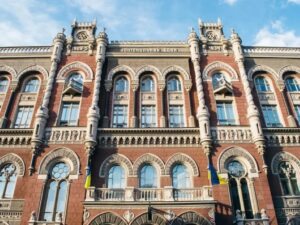
The National Bank of Ukraine fined FC “Finstyle” LLC 182,810 UAH and issued the company a written warning due to violations and shortcomings in its reporting.
According to the regulator, the company violated the requirements for the preparation and submission of financial statements. The NBU also identified a lack of necessary automation in record-keeping and deficiencies in the system for verifying the completeness and accuracy of reported data.
“Finstyle” must pay the fine within one month from the date the decision takes effect and must remedy the violations and deficiencies listed in the NBU’s written warning by September 8, 2026.
The decision to impose these measures was adopted by the Committee on Supervision and Regulation of Non-Bank Financial Services Markets on August 17.

The National Bank of Ukraine revoked LLC “FC ”Growway”’s license to operate as a financial company and simultaneously fined it 216,180 UAH.
According to the NBU, the fine was imposed for violations of the laws governing the activities of financial companies, as well as requirements related to corporate governance and internal control.
In a separate decision, the regulator revoked the company’s license due to its failure to comply with the NBU’s requirement dated July 6, 2026. The company was required to rectify a violation related to its failure to submit, within the established deadline, a report providing assurance regarding the annual financial statements for 2025.
The company must pay a fine of 216,180 UAH within one month after the decision takes effect.
“Growway” had previously been subject to enforcement measures by the NBU. In 2024, the regulator reported that the company had failed to submit, within the prescribed time limit, a similar assurance report regarding the annual financial statements for 2023.
In addition, the NBU included Financial Company “Growway” in its inspection plan for non-bank financial institutions for the third quarter of 2026.

On August 22, South Korea will send a commercial container ship from Busan to Europe via the Northern Sea Route for the first time, the Experts Club information and analytical center reports.
The 2,700-TEU container ship PanStar Acro will call at Felixstowe in the United Kingdom, Rotterdam in the Netherlands and Gdańsk in Poland before returning to South Korea. The entire experimental voyage will take around 40–45 days, according to operator PanStar.
The Arctic route could potentially reduce the distance between Asia and Europe from approximately 20,000 km to 13,000 km and cut delivery time from 30 to 20 days. If the trial is successful, Seoul will consider launching a regular seasonal container service by 2030.



