

Oleksandr Gavrysh has been appointed director of Lavina Mall, replacing Dmytro Lashin in this position, according to OpenDataBot.
As previously reported by Dmytro Lashyn, CEO of Lavina Mall and Blockbuster Mall, his contract with Mandarin Plaza Group ended after eight years; the decision not to renew it was mutual. Inna Dzyadzin, who was responsible for leasing at Lavina Mall, Mandarin Plaza, Blockbuster Mall, and Ocean Mall, also announced the end of her contract after nine years with Mandarin Plaza Group.
“We will introduce the new management team shortly. We will share our plans for the group’s further development later,” Alexander Chernitsky, director of the Mandarin Plaza Group, told the Interfax-Ukraine news agency. He added that the group’s asset in the Petrivka district of Kyiv (Book Market LLC) is currently the most pressing issue: “Almost everything there has been destroyed. We have not yet fully assessed the full extent of the damage.”
Mandarin Plaza Group is a developer and management company engaged in the operational management of commercial real estate in Ukraine. It manages the following completed projects: Mandarin Plaza, Lavina Mall, and Blockbuster Mall; Ocean Mall is in its final stages of construction (with a total area exceeding 940,000 square meters); and seven projects are currently under development.

In the first half of 2026, foreign citizens purchased 51,627 residential properties in Spain, which is approximately 4% more than during the same period last year and marks the highest figure in the history of relevant statistics from Spanish registries.
The second quarter proved to be the most active: foreigners concluded more than 26,8 thousand transactions, and their share of all registered housing purchases reached 15.98%—a historic high, according to data from the Colegio de Registradores de España.
At the same time, the overall Spanish housing market, on the contrary, cooled off somewhat in the second quarter. The number of transactions fell by 5.7% compared to the previous quarter—to 167,934 thousand, with sales of new-construction properties dropping by 11.5% to 34,919 thousand. Thus, foreign demand strengthened against the backdrop of a decline in overall buyer activity.
British citizens remained the largest group of foreign buyers in the first half of the year. They purchased 3,567 properties, although the number of transactions fell by approximately 10% year-over-year.
Dutch citizens came in a close second—with 3,489 purchases, a 12% increase compared to the first half of 2025. The gap between the two largest groups was just 78 transactions. In the second quarter alone, British buyers closed 1,843 deals, while Dutch buyers closed 1,830.
Official statistics for the second quarter show that British buyers accounted for 6.99% of all foreign transactions, while Dutch citizens accounted for 6.94%. Germans came in third with a 6.11% share.
Germany retained its third place among the largest foreign markets, although demand from German buyers declined slightly over the first half of the year—by approximately 2%. At the same time, the number of purchases by Italian citizens rose by 11%, by Poles—also by 11%, by French citizens—by 3%, and by Irish citizens—by 6%. Belgian demand, on the other hand, fell by approximately 16%.
Thus, the structure of foreign demand in Spain is becoming increasingly diversified. Just ten years ago, British buyers were significantly ahead of other nationalities, whereas now the gap between the United Kingdom, the Netherlands, Germany, and the next group of European buyers has narrowed considerably. In the first quarter of 2026, for example, British and Dutch buyers accounted for 6.82% and 6.56%, respectively, of foreign purchases.
The most detailed official report from the Colegio de Registradores for the first quarter of 2026 shows that Ukrainians ranked 10th among foreign buyers, accounting for 3.08% of all foreign real estate transactions; Ukrainian citizens made approximately 765 purchases over the three-month period.
In terms of the number of transactions at the start of the year, Ukrainians trailed behind the British, Dutch, Moroccans, Germans, Italians, French, Romanians, Poles, and Belgians, but outpaced citizens of China, Sweden, Ireland, the U.S., and Russia.
By comparison, Chinese nationals accounted for 2.69% of foreign purchases, while Russians accounted for only 1.44%. Thus, the share of Ukrainians was more than twice that of Russians.
The full official report for the first half of the year, broken down by nationality, has not yet been presented in the registrars’ brief press release; therefore, the exact number of purchases made by Ukrainians over the six-month period should be interpreted with caution. If the share remains at around 3%, this could amount to approximately 1,500 transactions for January–June; however, this is an estimated figure and not a separately published official statistic.
In support of these statistics, Ukraine’s largest international real estate agency—HomiUm—notes a steady increase in demand for real estate in Spain and confirms the long-term investment potential of this market.
According to the company’s CEO, Artur Brazilevsky: “One in five of our agency’s clients buys real estate specifically in Spain.”
The opposite trend is observed among Russian citizens. In the first half of the year, Russians purchased fewer than 1,000 properties, and the number of transactions fell by more than 20% year-over-year.
In the second quarter, the share of foreign buyers reached 32.27% in the Balearic Islands and 31.03% in the Valencian Community. At the same time, the share of foreign buyers increased in all of the country’s autonomous communities.
In the first quarter, a high concentration of foreign demand was also observed in the Canary Islands—22.78% of transactions—and in the Region of Murcia—21.73%. In the province of Alicante, foreigners accounted for about 44.7% of home sales, and in Málaga, more than a third.
Overall, over the past 12 months, foreign citizens have purchased approximately 99,400 homes in Spain, meaning the market has come very close to the 100,000 mark for foreign transactions per year.
The growth in international demand is occurring alongside a sharp rise in real estate prices. The average registered price of housing in the second quarter reached a new all-time high of 2,487 euros per square meter, increasing by 2.4% quarter-over-quarter and by 9.2% year-over-year. The resale index showed even more significant year-over-year growth—16.7%.
Thus, despite a decline in the total number of transactions in Spain, foreign demand continues to strengthen. At the same time, the market is becoming less dependent on traditional British and German buyers: the role of the Netherlands, Poland, and a number of other European countries is growing, while Ukrainians remain among the most prominent nationalities in the Spanish real estate market.
Brazilevsky, FOREIGNER, Homium, HOUSING, REAL ESTATE, SPAIN, UKRAINE

Local budgets received 28.8 billion UAH in land tax revenues for January–July 2026, which is 13% higher than the figure for the same period in 2025 (25.5 billion UAH).
According to a report published by the State Tax Service (STS) on its website on Thursday, Dnipropetrovsk Oblast led in the volume of revenues to local budgets, with taxpayers contributing 5.3 billion UAH. Significant revenues were also received by the budgets of Kyiv (4 billion UAH), Odesa Oblast (2.5 billion UAH), and Lviv Oblast (2.1 billion UAH).
Land tax is a mandatory local tax paid by owners of land plots, land shares, and permanent land users. For individuals, tax assessments are issued by tax authorities, and payment must be made within 60 days of receiving the tax assessment notice. Legal entities calculate the tax themselves and file returns annually by February 20.
Land tax exemptions are available to retirees, individuals with Group I and II disabilities, war veterans, large families, and individuals affected by the Chernobyl disaster. The exemption applies within the established limits on land plot area. The State Tax Service emphasizes that the obligation to pay the tax remains with the owner even if no notice is received, and the status of payments can be checked through the taxpayer’s online account.

Insurance Company “Arsenal Insurance” made the largest payment under a comprehensive auto insurance policy in the company’s history—11.4 million UAH—for the total loss of a 2024 Aston Martin.
According to the company’s website, while driving on a wet road, the driver lost control of the vehicle—the car skidded and crashed into a guardrail at high speed.
“Arsenal Insurance” is a non-life insurance company with 100% Ukrainian capital. It has been operating since 2005. It holds a license that allows it to operate in all 18 classes of non-life insurance. It is also the leader in premiums collected in the comprehensive auto insurance (CASCO) market for January–June 2026.
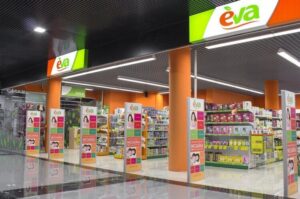
Rush LLC, the owner of the EVA chain in Ukraine, reported a 21.4% increase in net revenue for January–June 2026 compared to the same period in 2025—to 18 billion UAH—while net profit rose by a quarter to 674.5 million UAH.
According to the company’s filing in the disclosure system of the National Securities and Stock Market Commission, its gross profit in the first half of 2026 grew by 26.8% to 6.5 billion UAH.
Rush’s retained earnings increased by 0.7% to 5.9 billion UAH, long-term liabilities rose by 19.6% to 5.3 billion UAH, and short-term liabilities increased by 1% to 8.1 billion UAH. Rush’s assets increased by 5.2% to UAH 20.2 billion.
As of June 30, 2026, Rush LLC had issued long-term unsecured Series “H” and “G” series unsecured bonds with a face value of 500 million UAH maturing in 2027, as well as “I” series bonds with a face value of 500 million UAH maturing in May 2030, with potential call options in May 2026 and 2028.
As noted in the report, as of June 30, 2026, the EVA chain had 1,185 stores in various regions of Ukraine. Since the beginning of the year, the company has opened 27 new retail locations.
As previously reported, the EVA chain’s distribution center in Brovary (Kyiv Oblast) was damaged as a result of a Russian attack on August 18.
Rush LLC was founded in 2002. According to the YouControl analytics system, the company’s owner is listed as the Cypriot firm Incetera Holdings Limited (100%), with Ruslan Shostak (through the Cypriot company Mitali Holdings Ltd) and Valeriy Kiptyk (through the Cypriot company Kingsbarns Holdings Limited) as the ultimate beneficiaries.

From August 1 to 18, Ukraine exported 900,000 metric tons of agricultural products, which accounts for 31% of the volume that could have been exported had there been unimpeded access to logistics, said Minister of Agrarian Policy and Food Taras Vysotsky at a briefing in Kyiv on Thursday.
“The biggest drop was in grains. A total of 522,000 metric tons of grain were exported, which is only 20% of the required volume. Exports of oilseeds during this period totaled 163,000 metric tons, vegetable oil—128,000 metric tons, and meal—86,000 metric tons. In these sectors, export rates are in line with balance sheet figures,” Vysotsky noted.
According to him, alternative logistics routes can, in terms of volume, support the export of oilseeds and their processed products. As for grains, alternative routes can primarily be used to export products from border regions.
He added that due to changes in logistics, transportation costs have increased by approximately $50 per metric ton.
According to Vysotsky, exports of oilseeds and their processed products remain profitable, whereas for grains—with the exception of border regions—they are unprofitable.
Overall, via alternative routes from August 1 to 18, about 45% of agricultural products were exported via the Danube, 45% by rail, and another 7–8% by road.
As previously reported, according to data from the Ministry of Agrarian Policy, Ukraine exported 590,000 metric tons, or 30% of its needs, from August 1 to 12.



