
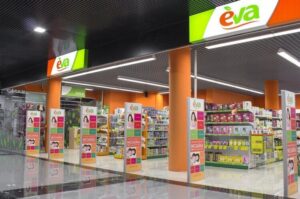
Rush LLC, the owner of the EVA chain in Ukraine, reported a 21.4% increase in net revenue for January–June 2026 compared to the same period in 2025—to 18 billion UAH—while net profit rose by a quarter to 674.5 million UAH.
According to the company’s filing in the disclosure system of the National Securities and Stock Market Commission, its gross profit in the first half of 2026 grew by 26.8% to 6.5 billion UAH.
Rush’s retained earnings increased by 0.7% to 5.9 billion UAH, long-term liabilities rose by 19.6% to 5.3 billion UAH, and short-term liabilities increased by 1% to 8.1 billion UAH. Rush’s assets increased by 5.2% to UAH 20.2 billion.
As of June 30, 2026, Rush LLC had issued long-term unsecured Series “H” and “G” series unsecured bonds with a face value of 500 million UAH maturing in 2027, as well as “I” series bonds with a face value of 500 million UAH maturing in May 2030, with potential call options in May 2026 and 2028.
As noted in the report, as of June 30, 2026, the EVA chain had 1,185 stores in various regions of Ukraine. Since the beginning of the year, the company has opened 27 new retail locations.
As previously reported, the EVA chain’s distribution center in Brovary (Kyiv Oblast) was damaged as a result of a Russian attack on August 18.
Rush LLC was founded in 2002. According to the YouControl analytics system, the company’s owner is listed as the Cypriot firm Incetera Holdings Limited (100%), with Ruslan Shostak (through the Cypriot company Mitali Holdings Ltd) and Valeriy Kiptyk (through the Cypriot company Kingsbarns Holdings Limited) as the ultimate beneficiaries.

From August 1 to 18, Ukraine exported 900,000 metric tons of agricultural products, which accounts for 31% of the volume that could have been exported had there been unimpeded access to logistics, said Minister of Agrarian Policy and Food Taras Vysotsky at a briefing in Kyiv on Thursday.
“The biggest drop was in grains. A total of 522,000 metric tons of grain were exported, which is only 20% of the required volume. Exports of oilseeds during this period totaled 163,000 metric tons, vegetable oil—128,000 metric tons, and meal—86,000 metric tons. In these sectors, export rates are in line with balance sheet figures,” Vysotsky noted.
According to him, alternative logistics routes can, in terms of volume, support the export of oilseeds and their processed products. As for grains, alternative routes can primarily be used to export products from border regions.
He added that due to changes in logistics, transportation costs have increased by approximately $50 per metric ton.
According to Vysotsky, exports of oilseeds and their processed products remain profitable, whereas for grains—with the exception of border regions—they are unprofitable.
Overall, via alternative routes from August 1 to 18, about 45% of agricultural products were exported via the Danube, 45% by rail, and another 7–8% by road.
As previously reported, according to data from the Ministry of Agrarian Policy, Ukraine exported 590,000 metric tons, or 30% of its needs, from August 1 to 12.

Nearly half (45%) of parents spend more than 6,000 hryvnias on back-to-school preparations, with the bulk of the expenses going toward clothing and shoes. This is according to the results of a Rakuten Viber survey.
“45% of Ukrainian parents spend more than 6,000 hryvnias on preparing their child for school. One in five respondents (18%) spends 3,000–6,000 hryvnias, while 10% say they don’t buy anything—they already have everything they need from last year,” according to a Rakuten Viber statement received by the Interfax-Ukraine news agency on Thursday.
Rakuten Viber asked parents how much they spend on preparing their child for school and what takes up the largest portion of their budget.
Responses to the question “How much are you spending on getting your child ready for school this year?” were distributed as follows: Over 6,000 hryvnias – 45%; 3,000–6,000 hryvnias – 18%; 1,000–3,000 hryvnias – 14%; Did not buy anything—we have everything we need from last year—10%; Up to 1,000 UAH—8%; Did not buy anything—everything was given as gifts by relatives or purchased by the school—5%.
Here’s how school expenses were broken down: 58% of respondents spend the most on clothing and footwear: school uniforms, gym clothes, and seasonal items. Another 11% noted that school supplies—from notebooks to backpacks—were their biggest expense.
When asked, “What took up the largest portion of the budget while preparing for school?” the responses were distributed as follows: Clothing and shoes (school uniforms, athletic wear, seasonal items) – 58%; School supplies (from notebooks to backpacks) – 11%; Educational gadgets (laptop, tablet, smartphone, power bank) – 8%; Textbooks and other reading materials – 3%; Setting up a home workspace (desk, chair, desk lamp) – 3%; Expenses were roughly equal across all categories – 17%.
About 10,000 users participated in the survey conducted on Rakuten Viber Ukraine’s official channel. The research methodology consisted of an anonymous online survey. The key age group was 34–45 years old, with over 50% of respondents under the age of 45.

The September Fest 2026 urban festival, dedicated to urban development, contemporary architecture, real estate development, design, culture, and the quality of urban life, will take place on September 18–19 in Kyiv at the A-STATION complex near the “Arsenalska” metro station.
The festival will last two days—from 11:00 a.m. to 9:00 p.m. The main entrance to the event grounds will be through the Mykilski Gates.
According to the organizers, approximately 10,000 people are expected to attend September Fest over the two days, and the professional program features more than 150 speakers.
Invited participants include representatives of central and local authorities, mayors of Ukrainian cities, chief architects, developers, investment funds, architectural firms, designers, international experts, and representatives of specialized media.
One of the festival’s key themes will be discussions on the reconstruction of Ukrainian cities and infrastructure, the development of the modern urban environment, attracting investment in real estate and infrastructure projects, as well as new approaches to architecture and urban planning.
A separate component of September Fest will be the VIP program, designed for representatives of state and municipal authorities, mayors, heads of development companies, CEOs, investors, and other professionals in the industry.
Tickets to the VIP area cost EUR250 for one day and EUR500 for two days.
Free registration is available for general admission to the festival. Tickets can be obtained on the September Fest website: www.ubc-ua.info/september-fest.
September Fest 2026 is organized by DMNTR, with A Development serving as the general partner.
Date: September 18–19, 2026
Time: 11:00 a.m.–9:00 p.m.
Location: A-STATION, Kyiv, “Arsenalska” metro station, main entrance—Mykils’ki Voryta
Expected attendance: approximately 10,000 visitors
Speakers: over 150
Standard admission: free registration
VIP ticket: EUR 250 – one day, EUR 500 – two days
Additional information:
Tel. 044 461 91 28, 077 777 25 47
Organizer – DMNTR.
General Partner – A Development.
Open4business – Media Partner
ARCHITECTURE, DEVELOPMENT, DMNTR, KYIV, September Fest, urbanism
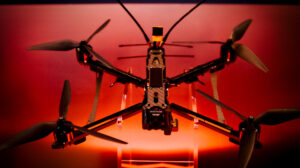
Ukrainian defense technology manufacturer TAF Industries, in partnership with the Danish company Upteko, has signed a memorandum of understanding (MoU) to establish a joint venture (JV) in Denmark, which is expected to produce thousands of drones per month starting in early 2027.
According to a press release, the memorandum was signed during the DALO Industry Days in Herning, Denmark. This collaboration is part of the “Build with Ukraine” initiative.
Under the agreement, the companies are expected to work on scaling up production capacity in the field of FPV drones and strengthening supply chains.
“Today’s agreement is another strategic step that will contribute to further deepening cooperation both between our companies and between Ukraine and Denmark,” TAF Industries CEO Volodymyr Zinovsky is quoted as saying in the press release.
For his part, Upteko founder Benjamin Meinerz added that the companies jointly aim to foster innovation by developing high-performance systems and building an organization capable of adapting to future challenges.
“Establishing a manufacturing facility and a development office outside of Ukraine creates a solid foundation for cooperation in the fields of research, engineering, and manufacturing,” noted the founder of Upteko.
In June, TAF Industries, together with the Polish Defense Group (Polska Grupa Zbrojeniowa), signed a memorandum of understanding regarding the further localization of production in Poland and the expansion of manufacturing capacity.
The Danish technology company Upteko was founded in 2018 and specializes in developing drone solutions for the maritime and industrial sectors. The company collaborates with industrial partners, government agencies, and representatives of the maritime sector.
Ukrainian defense technology manufacturer TAF Industries produces over 30 types of defense products, including FPV drones and reconnaissance UAVs, electronic warfare systems, remote control solutions, and AI-based combat technologies. The company’s monthly production of FPV drones reaches up to 80,000 units.

Tea and coffee producer Monomakh PJSC (Kyiv Oblast) increased its revenue by 21.9% to 1.51104 billion UAH in January–June 2026, but saw its net profit decline by a factor of 3.4 to 24.43 million UAH.
According to the company’s semi-annual report filed with the National Securities and Stock Market Commission (NSSMC)’s disclosure system, gross profit rose by 29.2% to 484.75 million UAH, while operating profit fell by 41.6% to 84.4 million UAH.
The company’s assets for the first half of the year decreased by 6% to 1.7752 billion UAH, equity by 5.7% to 609.87 million UAH, and total liabilities by 6.1% to 1.16534 billion UAH.
According to the report, revenue in the second quarter rose by 18.0% to 685.42 million UAH, while net profit fell 2.8-fold to 9.52 million UAH.
The company specified that in the second quarter it produced and sold 1.39 thousand metric tons of products, with export revenue accounting for 11% of total sales.
PJSC “Monomakh” was founded in 2000. It produces packaged tea and coffee products under the LOVARE, “Monomakh,” “Three Elephants,” “Tea Masterpieces,” “KAIF,” Ferrara, and “Coffee Masterpieces” brands. The average number of employees is 567. The ultimate beneficial owner is Taras Barabash.
In 2025, the company increased its revenue by 22%—to 2.77 billion UAH—but saw its net profit decline by 40%—to 181.84 million UAH.



