
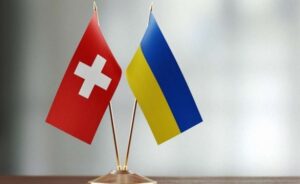
Switzerland will maintain the temporary protection status (Status S) for Ukrainians who fled Ukraine due to Russia’s full-scale invasion until March 4, 2028, but will tighten the eligibility criteria for obtaining it.
“There are still no signs of long-term stabilization of the situation in Ukraine. Therefore, Status S for individuals from Ukraine seeking protection will be extended until March 4, 2028. Support measures for individuals with Status S (Program S) will also continue until that date,” the Swiss government stated in a Wednesday announcement on its website.
It is reported that the Federal Council made this decision at its meeting on August 19 following consultations with relevant stakeholders.
At the same time, it is noted that as of August 20, S protection status will be restricted for certain other groups of individuals—S protection status will now be granted only to those performing military duties they may have in Ukraine. “This new rule applies to all new applicants who submitted their applications on August 20 or later. It does not affect individuals who have already been granted S protection status,” the government statement notes.
As explained by the Swiss government, this decision was made to align with EU policy on this matter. “Switzerland has thus far closely coordinated its actions with the EU regarding S protection status and will continue to do so. On July 30, EU member states decided to extend temporary protection until March 4, 2028. At the same time, they decided to restrict access to temporary protection in the EU: as of July 31, temporary protection is granted only to those performing military duties in Ukraine. The requirement to perform military duties applies, in particular, to Ukrainian citizens of draft age, those in the reserves, and those who have voluntarily joined the armed forces. “Switzerland is not legally obligated to implement this decision adopted by the Council of the EU. However, the Federal Council believes that it is in Switzerland’s interest to align its practices with those of the EU,” the statement reads.
Should the situation in Ukraine stabilize sustainably, the Federal Council will review the status of protection for Ukrainians.
As previously reported, in late July, the European Union extended temporary protection for Ukrainians until March 4, 2028, with a new provision stipulating that newly arrived Ukrainian citizens subject to military service will be eligible for protection only if they have no issues with their military registration documents.

Ukrainian banks earned UAH 54.07 billion in net profit in the first half of 2026, while their pre-tax profit reached UAH 108.57 billion, the Experts Club information and analytical center reports, based on Opendatabot calculations and data from the National Bank of Ukraine. The material was published on August 19, 2026.
Banks’ income tax expenses amounted to UAH 54.5 billion, thereby exceeding half of the financial result earned before taxation. During the same period last year, banks accrued UAH 21.99 billion in tax.
In its review of the results of solvent banks, the National Bank also reported that the sector’s net profit in the first half of the year amounted to about UAH 54 billion and was 32% lower year-on-year. One of the main reasons was the application of an increased 50% corporate income tax rate for banks in 2026.
At the same time, the banking sector’s operating profitability remains high. According to the NBU, the pre-tax profit of solvent banks in the first half of the year increased by 6.5% compared with the corresponding period of 2025.
In 2025, banks paid corporate income tax at the standard sector rate of 25%, but in 2026 the rate was raised again to 50%. The NBU has repeatedly warned that increased taxation reduces banks’ ability to build up capital and expand lending to the economy.
The primary sources are NBU data and the Opendatabot study dated August 19, 2026.
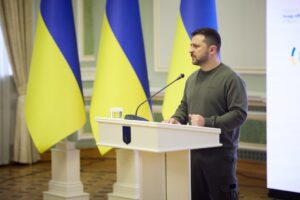
Ukrainian President Volodymyr Zelenskyy accepted letters of credence from the newly appointed ambassadors of Bulgaria, Estonia, India, and Germany and congratulated them on the start of their missions in Ukraine.
“He discussed diplomatic efforts to bring about peace and the importance of supporting Ukraine amid intensified Russian shelling and preparations for winter,” according to the president’s Telegram channel.
According to reports, they discussed shared priorities: the development of trade and economic relations and specific areas of cooperation—“everything that can make our nations stronger.”
“I am grateful to all partners who are truly helping Ukraine,” Zelenskyy emphasized.

Indonesia plans to allow limited dual citizenship for the first time for certain members of the national diaspora and highly skilled professionals. President Prabowo Subianto put forward the initiative, proposing that Parliament amend the citizenship law. The president presented the initiative during a speech in parliament on Indonesia’s 2027 state budget proposal.
According to him, the new policy will not apply to everyone who wishes to obtain a second passport. It involves limited dual citizenship for professionals and members of the diaspora in whom the state has an interest.
Among the potential categories, Prabowo named scientists, doctors, engineers, artificial intelligence specialists, researchers, entrepreneurs, artists, and athletes.
“We propose allowing dual citizenship for certain talents that the country needs,” the president stated.
According to him, the authorities should not force Indonesia’s most successful expatriates to choose between an international career and maintaining ties with their historical homeland.
It is expected that potential recipients of dual citizenship will undergo a separate selection process, including a background check. The rights and obligations of such citizens are to be defined separately by law, taking into account national security considerations.
Current Indonesian law generally does not recognize dual citizenship for adults.
Children who have acquired citizenship in two countries may temporarily retain both statuses; however, upon reaching the age specified by law, they must choose one citizenship.
Therefore, implementing Prabowo’s initiative will require amending the current law and obtaining parliamentary approval. A timeline for adopting the relevant amendments has not yet been announced.
The initiative is a continuation of a long-standing discussion on engaging the Indonesian diaspora. As far back as 2024, authorities publicly discussed the possibility of dual citizenship for former citizens and professionals of Indonesian descent.
The authorities cite the brain drain as one of the reasons for the reform. According to Indonesia’s Directorate General of Immigration, nearly 4,000 Indonesians obtained Singaporean citizenship between 2019 and 2022, renouncing their Indonesian passports. The authorities hope that the option to retain Indonesian citizenship will allow professionals to pursue international careers without severing their legal ties to the country.
The involvement of the diaspora is already particularly noticeable in sports. In recent years, the Indonesian national soccer team has included a number of players born primarily in the Netherlands who have Indonesian roots. The authorities implemented special procedures for them to obtain citizenship.
Ahead of a possible reform, Indonesia launched the Global Citizenship of Indonesia (GCI) program.
It allows former Indonesian citizens and certain foreigners of Indonesian descent to obtain a permanent residence permit with the right to enter the country multiple times without renouncing their existing foreign citizenship. However, GCI does not constitute Indonesian citizenship and does not entitle holders to an Indonesian passport.
The program applies, in particular, to former Indonesian citizens, their descendants, and certain categories of family members with ties to Indonesia.
The limited dual citizenship currently being proposed should go much further and allow certain members of the diaspora to simultaneously retain their foreign citizenship and restore or obtain Indonesian citizenship.
CITIZENSHIP, DUAL CITIZENSHIP, IMMIGRATION, INDONESIA, ДІАСПОРА

Foreign buyers account for about 60% of the demand for ultra-luxury housing in Spain, and prices in this segment have risen by approximately 30% over the past five years. Alongside traditional British and German buyers, the most notable activity is currently being driven by citizens of the Netherlands, Poland, and the United States, as well as affluent clients from the Gulf States. Ukrainians also remain among the most active foreign buyers of Spanish real estate.
These estimates are contained in data published in August by Hiscox on the Spanish ultra-luxury housing market. This primarily refers to properties valued at EUR3 million or more.
Most of the demand is concentrated in just a few regions. The Balearic Islands, the province of Málaga, Madrid, and Barcelona account for 83% of Spanish real estate listings priced at over EUR3 million.
A particularly high proportion of foreign buyers is observed in resort markets. In Benahavís, in the province of Málaga, foreign buyers account for about 84% of luxury real estate transactions, while in Andratx, on Mallorca, they account for about 79%. In Madrid, the situation is the opposite: in the capital itself, foreign buyers account for only about 14% of transactions in this segment, while in the prestigious suburb of Alcohendas, the figure is 17%. Thus, Madrid’s luxury market remains focused to a much greater extent on affluent Spanish buyers.
At the same time, non-resident foreigners pay some of the highest prices per square meter, as they focus on properties in the most prestigious neighborhoods. According to Hiscox’s assessment, international capital has been one of the factors driving the approximately 30% increase in prices for luxury real estate in Spain over the past five years.
The Hiscox study does not provide a detailed breakdown by nationality of buyers specifically for homes priced above EUR 3 million. However, the latest data from Spanish property registries reveal which foreign groups are currently the most active in the country’s market as a whole.
In the second quarter of 2026, foreigners purchased more than 26,800 residential properties in Spain, accounting for a record 15.98% of all registered transactions.
British citizens took first place with a 6.99% share of foreign purchases, virtually tying with Dutch citizens at 6.94%. They were followed by Germany (6.11%), Morocco (6.09%), Romania (5.70%), Italy (5.13%), France (4.97%), and Poland (4.33%).
In the first half of the year, British buyers purchased approximately 3,570 properties, while buyers from the Netherlands purchased about 3,490. Dutch demand grew by approximately 12% year-over-year, while Polish demand rose by about 11%.
In the luxury market itself, the structure of demand is shifting even more noticeably. In June, Reuters noted a sharp influx of affluent buyers from Poland, the U.S., and the Gulf states to Madrid and the Costa del Sol. Meanwhile, British and German buyers remain traditionally strong groups of foreign property owners along the Spanish coast.
Polish demand has grown particularly rapidly in recent years. The share of Poles among all foreign buyers increased from approximately 1.6% in 2019 to 4% in 2025. In the Santa Clara luxury complex in Marbella, which was completed last year, about 70% of the 102 homes were sold to Polish clients. Polish buyers also make up the majority of clients for the 64-story residential skyscraper currently under construction in Benidorm.
At the same time, American investment is growing rapidly. According to the real estate agency Gilmar, the share of U.S. clients in its transactions rose from 0.5% in 2024 to 6.2% in 2025, with Americans having already surpassed Britons as the agency’s top foreign buyers on the Costa del Sol. Across Spain as a whole, U.S. buyers also stand out for the high value of the homes they purchase.
Ukrainians are also among the most prominent foreign real estate buyers in Spain, although their purchases are not exclusively concentrated in the luxury segment.
In the first quarter of 2026, Ukrainian citizens accounted for 3.08% of all foreign home purchases, ranking tenth among nationalities. This corresponds to approximately 760–765 transactions over three months. In the second quarter, the share of Ukrainians was about 2.94%, placing them 11th among foreign buyers. In the first half of the year, Ukrainians purchased approximately 1,500 residential properties. This last figure is an estimate, as Spanish registrars did not publish the absolute number of Ukrainian transactions for the half-year separately.
For comparison, in the second quarter, Ukrainian buyers ranked just behind China, which accounted for 3.02%. At the same time, Ukraine remained ahead of a number of traditional markets for foreign buyers.
As early as the first half of 2025, Ukrainians set a record for themselves by purchasing 2,165 properties. At that time, the number of transactions by Ukrainian citizens increased by 4.5% year-over-year. The average price of housing purchased by Ukrainians was approximately EUR1,832 per square meter, which is significantly lower than the levels paid by American, German, or Scandinavian buyers and indicates that a significant portion of Ukrainian demand is concentrated not in the ultra-luxury segment, but in the standard and mid-range segments.
From a regional perspective, Ukrainians are particularly prominent in the Valencian Community, where they accounted for 5.92% of all home purchases by foreigners as of the end of 2025.
It is noteworthy that Spain’s cancellation of the Golden Visa program as of April 3, 2025, had virtually no impact on the situation in the high-end price segment.
According to Hiscox’s estimates, transactions related to obtaining a residence permit through investment accounted for only about 0.5% of the total number of deals. A typical buyer of real estate worth several million euros chooses Spain primarily for its quality of life, climate, safety, infrastructure, and the opportunity to diversify their capital—rather than to obtain a residence permit.
Reuters also confirms this trend: geopolitical instability has become an additional driver of demand. For some Polish and Ukrainian families, a home on the Costa del Sol is viewed as a safe haven far from Europe’s eastern border; American buyers are seeking an alternative place to live and invest their capital; and clients from the Gulf states are beginning to view Spain as a potential alternative to Dubai.
As a result, Spain’s luxury real estate market is becoming increasingly international.

On August 19, JSC “NAEK ‘Energoatom’” announced a tender for liability insurance covering damage that may result from emergencies related to the operation of high-risk facilities
According to the Prozorro e-procurement system, the total expected cost of the services is 96,400 UAH.
Bids for participation in the tender will be accepted until August 27.



