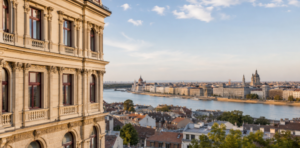
The Hungarian housing market continued its recovery in 2025, with prices rising by 20% in nominal terms and by 15% after adjusting for inflation. The number of registered transactions approached 136,000, and the final figure, according to estimates by the Hungarian Central Statistical Office (KSH), is expected to exceed 140,000 transactions, according to the latest annual market review.
However, the KSH has not yet published detailed statistics for 2025 breaking down homebuyers by citizenship. The latest available comprehensive snapshot shows that in 2024, foreign nationals purchased 6,600 residential properties in Hungary with a total value of approximately 834 million euros. This represented a 5.2% increase in the number of properties compared to the previous year.
Thus, foreigners accounted for about 5% of all real estate transactions in Hungary in 2024, and in monetary terms, they accounted for 6.4% of the market’s turnover. In total, approximately 131,100 real estate properties were sold in the country that year.
Following a decline in activity in 2023, the number of transactions in Hungary rose by 25% in 2024—to 131,100. Growth continued in 2025: as of the data cutoff, the Hungarian Central Statistical Office (KSH) had received information on 135,700 sales, of which 128,200 were in the resale market and approximately 7,600 were new construction units. The final number of transactions is expected to exceed 140,000.
The market picked up particularly noticeably in the second half of the year following the launch of the Home Start government program for subsidized housing loans. In September, the number of sales was 47% higher than a year earlier, and in the fourth quarter, KSH estimated annual growth in the number of transactions at approximately 10%.
In Budapest, the average price per square meter for resale housing in the fourth quarter of 2025 was approximately 3,240 euros.
The average price of a sold property reached approximately 184,000 euros. Prefabricated apartments sold for an average of approximately 165,000 euros, while single-family homes sold for 284,000 euros.
The price per square meter in the capital rose by 21% over the year. At the same time, growth was even higher in certain segments: prefabricated apartments rose in price by approximately 35%.
Outside the capital, the highest prices among administrative centers at the end of 2025 were observed in Debrecen—about 2,620 euros per square meter, Dióra—2,450 euros, Veszprém—2,440 euros, and Szeged—about 2,380 euros per square meter.
Although comprehensive statistics for 2025 are nearly complete, the most recent detailed ranking of buyers by citizenship published by the KSH still pertains to 2024.
Foreign nationals purchased 6,600 residential properties that year, which is 5.2% more than in 2023.
The total value of real estate purchased by foreigners amounted to approximately 834 million euros, or 6.4% of the Hungarian housing market’s turnover.
Statistics by major groups of foreigners in 2024:
Germany — 1,369 properties
China — 708
Romania — 671
Slovakia — 671
Netherlands — 438
Vietnam — 329
Austria — 268
Russia — 185
Ukraine — 144
Israel — 137
Differences between groups of foreign buyers are particularly noticeable in terms of the geographic location of purchases.
Chinese citizens completed 91.5% of their transactions in Budapest, Vietnamese buyers — 96%, and Russians — 84.9%.
Ukrainians were significantly less focused on the capital: only 39.6% of the homes they purchased were located in Budapest. Thus, the majority of Ukrainian buyers chose other cities and regions of Hungary.
Germans, despite ranking first in the number of transactions, showed virtually no concentration in the capital—Budapest accounted for only 8% of their purchases. The KSH notes high activity among German citizens in small towns in the Southern and Western Transdanubia regions.
The average price of a property purchased by a Ukrainian citizen was approximately 96,000 euros, and the average price per square meter was about 1,350 euros.
Nationwide in Hungary, foreigners account for about 5% of the total number of transactions, but their share is significantly higher in Budapest. In 2024, foreign citizens accounted for 7.8% of residential purchases in the capital and 10% of their total value.
In the inner districts of Pest, foreigners accounted for approximately 19% of all transactions and, in terms of value, represented about 26% of the market. Chinese and Vietnamese buyers were particularly prominent here.
Thus, the latest official statistics already allow us to assess the Hungarian real estate market for 2025: approximately 136,000 registered transactions, with the prospect of exceeding 140,000 after final data processing; a 20% increase in prices; and a further significant rise in housing costs in Budapest and most major cities.
However, the breakdown of purchases by citizenship for 2025 has not yet been published.
Source: Hungarian Central Statistical Office (KSH).

The Ukrainian company Termojet, a manufacturer of equipment for boiler rooms and heating systems, is considering entering the Serbian market and is seeking a local representative or partner to develop sales and distribution, the Serbian Economist Telegram channel reports.
The company has been operating since 2002 and has its own full-cycle production facilities.
Its product range includes pump groups, distribution manifolds, hydraulic separators, separators, valves, circulation pumps, underfloor heating equipment and automation systems.
For large facilities, the company produces the Termojet Mega series with a capacity of up to 2,200 kW.
In Serbia, the company is primarily interested in cooperating with an established participant in the heating and HVAC equipment market.
The preferred partner:
In addition, entering the markets of neighboring countries — Bosnia, Montenegro, Albania and other countries in the region — is also a near-term prospect.
Termojet is ready to work with dealers, distributors, installation companies and design organizations and provides its partners with technical support and training.
For inquiries regarding partnership and the organization of cooperation in Serbia, please contact: 100events@ukr.net.

The international hotel management company Ribas Hotels Group (RHG) has joined the nationwide project to promote hotel accessibility, “Space with Opportunities.” WOL.GREEN Polyana has undergone an independent audit, the group’s press service reported.
“Today, accessibility is no longer a competitive advantage that sets a hotel apart from others, but rather a basic requirement for all market players. Amid the war, the number of people with amputations and disabilities is growing, and businesses must ensure equal opportunities for all,” notes Anastasia Ocheretnyuk, PR Lead at Ribas Hotels Group, whose remarks are quoted in the press release.
Inclusivity requirements under Ukraine’s State Building Codes (DBN) are constantly being raised (the latest changes took effect on August 1, 2025; work is currently underway on a new edition—IF-U), and it is not always possible to fully implement these innovations in existing projects. In particular, in the existing hotels of the RHG chain, accessibility has so far been implemented mainly in part—through individual elements such as adapted rooms, ramps, or elevators, the press service explains. Accessibility is being incorporated more comprehensively into new projects that the group is building from the ground up, particularly at “WOL Vinnytsia” and AMA Family Resort, where relevant solutions are planned as early as the design phase.
To assess how truly accessible these solutions are in practice, the Ribas Hotels Group participated in Metro Ukraine’s special project “Space with Opportunities,” carried out in collaboration with the nonprofit organization “Dostupno.UA,” during which 10 free audits of hospitality establishments across Ukraine were conducted. The project’s goal is to help HoReCa businesses create accessible spaces for guests and staff amid the growing number of people with disabilities in Ukraine as a result of the war—a number that, according to rough estimates, could reach 300,000–400,000 people in the post-war period.
The RHG network selected the WOL.GREEN Polyana Hotel for the audit; the company had renovated this unfinished building while the full-scale war was still underway, which allowed it to incorporate some accessibility standards right from the construction phase. The audit confirmed a number of implemented solutions: barrier-free common areas, a reception desk with two service areas, a universal restroom with standard handrails, and an elevator that complies with regulations. At the same time, the experts provided the hotel with recommendations on how to design a guest room adapted for guests with disabilities.
According to Tetyana Morozova, head of the architecture division at TEMO Design, incorporating barrier-free solutions into a project from the very beginning is always less expensive than retrofitting a completed facility. At the same time, inclusivity is not limited to the width of passageways or ramps, but encompasses the guest’s entire journey through the hotel: navigation, lighting, acoustics, and psychological comfort.
Ribas Hotels Group was founded in 2014 in Odesa as an international full-cycle management company and a hotel business ecosystem. It manages the entire process: from site selection, design, and construction to management, franchising, and investment. It is the only hotel group in Ukraine that independently handles all stages of creating and developing hotel projects.
The company’s portfolio includes 56 projects currently in the construction phase, launch phase, or under management, including locations in Ukraine, Poland, Turkey, and Bali. It develops 3-, 4-, and 5-star city and resort hotels under the brands Ribas Hotels, Ribas Rooms, WOL home + hotel, and Mandra Moments. The operator’s total room inventory exceeds 1,000 rooms.
accessibility, AUDIT, HOTEL, inclusivity, RIBAS HOTELS GROUP

The large-scale reconstruction of Ukraine will mean a significant increase in the number of international contracts, tenders, subcontracts and joint projects involving the state, international financial organizations, donors and private capital. For Ukrainian companies, access to such projects will increasingly depend on their ability to quickly confirm their legal and business transparency.
International customers check potential contractors before concluding a contract: their legal status, owners and beneficiaries, corporate ties, business history, financial condition, sanctions exposure and compliance risks. Business verification is therefore effectively becoming part of the infrastructure of future reconstruction.
“It is important for Ukrainian companies to prepare for reconstruction projects before a specific tender has already been announced. An international partner first looks at whether a company can be quickly identified, its ownership structure understood and its risks assessed. The more transparent the business profile, the less time due diligence takes and the better prepared the company is for international cooperation,” said Maksym Urakin, Director of Development and Marketing at Interfax-Ukraine, Head of the D&B-Interfax-Ukraine Business Division and PhD in Economics.
This is particularly important for small and medium-sized businesses. A Ukrainian company may possess strong manufacturing expertise but lose opportunities because of incomplete or inconsistent corporate data, a lack of information in English, outdated information about its management or an opaque ownership structure.
Preparing for international verification includes checking the company’s registration data, updating contact details, describing its business activities, confirming its ownership structure, analyzing financial statements and understanding what risk signals a foreign customer or bank may identify.
D&B uses standardized international business data to identify legal entities and build corporate profiles. Such data is used by companies, banks and procurement organizations in KYC, due diligence, supplier onboarding and risk management processes.
For Ukraine, developing a culture of corporate transparency may become one of the practical factors in attracting private capital and integrating Ukrainian suppliers into international reconstruction projects.
Dun & Bradstreet is an international provider of business data and analytical solutions whose history began in 1841. D&B works with data on companies worldwide and provides tools for business identification, counterparty verification, credit and commercial risk assessment, compliance and supply chain management.
The official representative of Dun & Bradstreet in Ukraine is the Interfax-Ukraine News Agency. The specialized D&B-Interfax-Ukraine division provides Ukrainian companies with access to international business data, helps them verify foreign counterparties and work with D&B tools.
Inquiries can be submitted through the specialized D&B resource — dnb.ua, by email at Urakin@interfax.kyiv.ua or by phone at +38 (044) 270-65-74.
BUSINESS VERIFICATION, DUN & BRADSTREET, UKRAINE RECONSTRUCTION

Latvia announced a contribution of 50,000 EUR to the Ukrainian Cultural Heritage Fund (UCHF), according to Ukraine’s Deputy Prime Minister for Humanitarian Policy and Minister of Culture Tetiana Berezhna.
“This is the eleventh country to support the Fund,” she wrote on Facebook on Tuesday.
The Ukrainian Cultural Heritage Fund was established as an international mechanism to mobilize resources for the protection and restoration of Ukrainian cultural heritage. To date, the Fund has already raised over EUR4.3 million, Berezhna noted.
“Funds from the Ukrainian Cultural Heritage Fund are directed toward specific projects—the protection, restoration, and preservation of Ukrainian cultural heritage. The first project to receive support is ‘Mystetskyi Arsenal,’” the post states.
Berezhna thanked Latvia for its support of Ukraine, its solidarity with Ukrainian culture, and its willingness to invest resources in its preservation.
As previously reported, in July 2025, the Ministry of Culture, together with its partners, presented new international instruments to support Ukrainian culture at the Recovery Conference in Rome (Italy): the Alliance for Cultural Resilience, the Ukrainian Cultural Heritage Fund, and Team Europe Ukraine.
In early November 2025, the second international conference, “Cooperation for Resilience,” took place in Copenhagen, Denmark, where the operational framework of the Ukrainian Cultural Heritage Fund was presented. Following the conference, Denmark, the Netherlands, Poland, and the United Kingdom announced that they would invest EUR 3 million in the newly established Ukrainian Cultural Heritage Fund.
In late January 2026, Berezhna stated that launching the UCHF’s operations would require an initial budget of EUR10–15 million. In June, she confirmed that EUR15 million would need to be raised by the end of 2026 for the UCHF to fully launch.
The following countries have announced their contributions: the Kingdom of Denmark—10 million Danish kroner; the Kingdom of the Netherlands—1 million euros; the United Kingdom—200,000 pounds sterling; the Republic of Poland and the Kingdom of Spain—0.5 million euros each; the Republic of Estonia—20,000 euros; the Republic of Latvia – 50,000 euros
It has been reported that the first site to be restored under the auspices of the Ukrainian Cultural Heritage Fund will be the History and Local Lore Museum in Ivankiv (Kyiv Oblast), which was destroyed by the occupiers and once housed paintings by Ukrainian artist Maria Pryimachenko.