

The Chinese company Guangzhou CEB Business Consulting Co., Ltd. intends to expand its operations in Ukraine, particularly in the areas of trade, economic, and investment cooperation. The company’s future prospects were discussed during a meeting between Serhiy Kapuzo, Ukraine’s Consul General in Guangzhou, and the company’s management, according to a statement from the Consulate General of Ukraine in Guangzhou.
Representatives of Guangzhou CEB Business Consulting presented the company’s main areas of focus and plans for its future development to Ukrainian diplomats. Since 2025, the company has been working to develop bilateral trade, economic, and investment cooperation between China and Ukraine.
According to the Consulate General, during this time the Chinese company has already implemented several projects and prepared a number of potential initiatives for further work in Ukraine. Guangzhou CEB Business Consulting is also a member of the Odesa Chamber of Commerce and Industry.
During the talks, the parties discussed joint steps to intensify the company’s activities in the Ukrainian market. The statement does not disclose specific amounts of potential investments or a list of new projects.
Humanitarian cooperation was a separate topic of the meeting. Guangzhou CEB Business Consulting participates in volunteer initiatives in the Odesa region and provides humanitarian and social assistance to Ukrainian citizens and organizations. The Ukrainian and Chinese sides agreed to explore opportunities to continue and expand this assistance.
The meeting took place against the backdrop of increased contacts between the Consulate General of Ukraine in Guangzhou and businesses in southern China. Specifically, in March 2026, the consulate held talks with companies from Guangdong and Shanghai regarding cooperation and humanitarian aid, and in April, Serhiy Kapuzo met with a delegation from the Guangdong Small Commodity Association.

China’s current account surplus in the second quarter of 2026 totaled $195.1 billion (1.33 trillion yuan), according to preliminary data from the State Administration of Foreign Exchange (SAFE).
This is a record high for this period. In April–June of last year, the surplus stood at $128.7 billion.
The goods trade surplus rose by 27.3% to $278.9 billion, while the services trade deficit increased by 11.3% to $52.4 billion. The primary income deficit decreased by 20.7% to $37.6 billion, while the secondary income surplus rose by 53.7% to $6.3 billion.
In the first half of the year, China’s current account surplus totaled 2.62 trillion yuan.
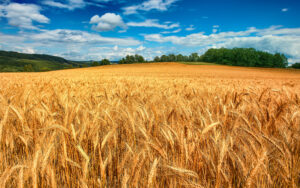
As of August 18, Ukrainian farmers had threshed 6.6 million hectares, or 56% of the projected area, and harvested over 30.8 million metric tons of grain from the new harvest, with an average yield of 46.8 centners per hectare, according to the press service of the Ministry of Agrarian Policy and Food.
As of the same date in 2025, 6.18 million hectares had been threshed, the statement noted.
Wheat was threshed from 4,855.25 thousand hectares, yielding 23,822.36 thousand metric tons, with an average yield of 49.1 centners per hectare. Barley was threshed from 1,437.17 thousand hectares, yielding 6,239.99 thousand metric tons, with an average yield of 44 centners per hectare. Peas have been harvested from 295,66 thousand hectares, with 779,02 thousand metric tons collected and an average yield of 26.3 centners per hectare. Millet has been harvested from 1.2 thousand hectares, with 2.7 thousand metric tons collected and an average yield of 22.5 centners per hectare.
In terms of harvest volumes of early grain and legume crops, the Odesa, Kirovohrad, and Mykolaiv regions are currently leading.
In Odesa Oblast, 4,819.70 thousand metric tons were harvested from an area of 1,188.8 thousand hectares (wheat—3,223.30 thousand metric tons; barley—1,311.50 thousand metric tons; peas—284.90 thousand metric tons).
In the Kirovohrad region, 2,418.30 thousand metric tons were harvested from an area of 555.7 thousand hectares (wheat—1,923.80 thousand metric tons; barley—412.50 thousand metric tons; peas—82.0 thousand metric tons).
In the Mykolaiv region, 2,326,10 thousand metric tons were harvested from an area of 653.8 thousand hectares (wheat – 1,631,80 thousand metric tons, barley – 587.5 thousand metric tons, peas – 106.80 thousand metric tons).
The highest grain yields are currently being recorded in the Khmelnytskyi (69.9 centners per hectare), Sumy (59.8 centners per hectare), and Vinnytsia (59.5 centners per hectare) regions.
Rapeseed has already been threshed from 1,318.64 thousand hectares, yielding 3.7 million metric tons of seeds with an average yield of 28.5 centners per hectare.

Ukrainian high school student Taras Symak from Kolomyia won a bronze medal at the 22nd International Geography Olympiad (iGeo 2026), which took place August 11–17 in Istanbul.
Taras Symak is a student at the Vasyl Stefanyk Lyceum No. 1 in Kolomyia. He has previously won prizes at several student Olympiads, and in the spring of 2026, he won the regional round of the All-Ukrainian History Olympiad.
This year’s iGeo featured 184 high school students from 50 countries around the world. Each national team could consist of a maximum of four participants, selected based on the results of national Olympiads.
Among the countries whose representatives won awards in Istanbul were Serbia, Belarus, Romania, Mongolia, Turkey, and Iran.
In particular, Serbian high school student Petar Tolimir from Belgrade won a gold medal. The Belarusian participants won gold, silver, and bronze medals. The Romanian team finished the Olympiad with two silver and two bronze medals.
Mongolia achieved a historic result—Amina Ayanbek won the country’s first-ever gold medal at the International Geography Olympiad. Another Mongolian participant received a bronze medal. A representative from the host country, Turkey, took silver, while Iran received bronze.
The International Geography Olympiad is considered the premier international geography competition for high school students aged 16–19 and is held under the auspices of the International Geographical Union.
Unlike traditional subject-based tests, participants are required not only to demonstrate knowledge of geographical facts but also to analyze maps, statistical data, economic and demographic processes, and conduct fieldwork.
The final score is based on three components: 40% from a written exam, 40% from field research, and 20% from a multimedia test using maps, photographs, graphs, and statistics.
The first iGeo took place in 1996 in The Hague with only five countries participating. Over the course of three decades, the Olympiad has become one of the leading international academic competitions for high school students, alongside the Olympiads in mathematics, physics, chemistry, biology, and computer science.
The next, 23rd International Geography Olympiad, is scheduled to take place in 2027 in Jelgava, Latvia.
EDUCATION, GEOGRAPHY, high school student, OLYMPIAD, UKRAINE
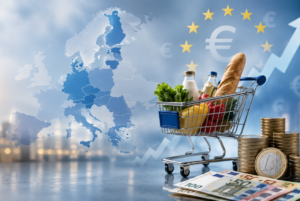
Romania may set a goal of joining the eurozone in 2032, provided that public finances stabilize and the country meets the criteria for the monetary union, said Dragos Pislaru, the country’s acting minister of investment and European projects.
The statement was made in an interview with the Romanian television channel TVR Info. However, 2032 is not yet an officially approved date for Romania’s transition to the euro, but is viewed by Pislaru as a possible target.
According to the minister, the country’s top priority should be fiscal and budgetary consolidation and bringing public finances to a stable state by 2030.
“The goal is to put our finances in order by 2030. Therefore, I see an opportunity to align several objectives: fiscal and budgetary consolidation and the adoption of a coordinated national development plan for 2028–2034,” Pislaru stated.
He also emphasized the need for political stability, which would allow the government to consistently implement such a plan. Once Romania has achieved the necessary macroeconomic indicators, it will need to go through the phase of participating in the European Exchange Rate Mechanism II (ERM II).
“Romania could, say, join in 2030 plus two years, because two years must be spent in the waiting room. This is a monitoring period. The year 2032 could be an important target for joining the eurozone,” the minister noted.
Currently, Romania does not yet meet the key criteria for adopting the euro. According to the European Central Bank’s convergence report published in June 2026, the country is not participating in ERM II. To meet the exchange rate criterion, a country must remain in this mechanism for at least two years without significant fluctuations or devaluation of its currency against the euro.
Inflation also remains a significant problem. The 12-month average harmonized inflation rate in Romania as of May 2026 stood at 8.4%, while the reference level for joining the eurozone was 2.7%. The average long-term interest rate was 6.7%, compared to the maximum permissible level of 5.1% for this criterion.
In addition, Romania is continuing the process of reducing its excessive budget deficit. The EU has set a trajectory for Bucharest that should allow it to eliminate the excessive deficit by 2030. The European Commission projected that the deficit would be reduced to 6.2% of GDP in 2026 and 5.8% in 2027. Public debt, on the other hand, is projected to rise to 63.4% of GDP in 2027.
Thus, the scenario for adopting the euro in 2032 envisages a significant reduction in the budget deficit and inflation, stabilization of public debt, entry into ERM II, and at least a two-year stay in this mechanism before final accession to the eurozone.
JSC NAEK “Energoatom” has fully fulfilled its special obligations to ensure the availability of electricity for residential consumers (PSO), aimed at making it more affordable, by covering 100% of the cost of the service for January–July 2026, totaling 141.448 billion UAH (including VAT), the company reported on Tuesday.
“The company continues to bear the key financial burden within the social tariff support system. Thanks to NAEK’s contributions, the state maintains the electricity tariff for millions of Ukrainian families at a level below the market rate,” Energoatom noted.
Currently, Energoatom has no outstanding debt to JSC “Guaranteed Buyer” for the PSO service.
In total, during the years of Russia’s full-scale war against Ukraine—from 2022 to 2025—Energoatom paid over 528.900 billion UAH (including VAT) for the PSO service.
As previously reported, in 2025, “Energoatom” paid 168.546 billion UAH for the PSO and transferred over 44.5 billion UAH to the state budget.
The Cabinet of Ministers of Ukraine, by Decree No. 399-r dated April 29, 2026, “On the Annual General Meeting of JSC NAEK ‘Energoatom,’” approved a net profit of 18,688,306,075 UAH, in accordance with the company’s consolidated financial statements for 2025. The government allocated 50% of the profit, amounting to 9,344,153,037.5 UAH, for the payment of dividends to the state budget.



