

Foreign buyers account for about 60% of the demand for ultra-luxury housing in Spain, and prices in this segment have risen by approximately 30% over the past five years. Alongside traditional British and German buyers, the most notable activity is currently being driven by citizens of the Netherlands, Poland, and the United States, as well as affluent clients from the Gulf States. Ukrainians also remain among the most active foreign buyers of Spanish real estate.
These estimates are contained in data published in August by Hiscox on the Spanish ultra-luxury housing market. This primarily refers to properties valued at EUR3 million or more.
Most of the demand is concentrated in just a few regions. The Balearic Islands, the province of Málaga, Madrid, and Barcelona account for 83% of Spanish real estate listings priced at over EUR3 million.
A particularly high proportion of foreign buyers is observed in resort markets. In Benahavís, in the province of Málaga, foreign buyers account for about 84% of luxury real estate transactions, while in Andratx, on Mallorca, they account for about 79%. In Madrid, the situation is the opposite: in the capital itself, foreign buyers account for only about 14% of transactions in this segment, while in the prestigious suburb of Alcohendas, the figure is 17%. Thus, Madrid’s luxury market remains focused to a much greater extent on affluent Spanish buyers.
At the same time, non-resident foreigners pay some of the highest prices per square meter, as they focus on properties in the most prestigious neighborhoods. According to Hiscox’s assessment, international capital has been one of the factors driving the approximately 30% increase in prices for luxury real estate in Spain over the past five years.
The Hiscox study does not provide a detailed breakdown by nationality of buyers specifically for homes priced above EUR 3 million. However, the latest data from Spanish property registries reveal which foreign groups are currently the most active in the country’s market as a whole.
In the second quarter of 2026, foreigners purchased more than 26,800 residential properties in Spain, accounting for a record 15.98% of all registered transactions.
British citizens took first place with a 6.99% share of foreign purchases, virtually tying with Dutch citizens at 6.94%. They were followed by Germany (6.11%), Morocco (6.09%), Romania (5.70%), Italy (5.13%), France (4.97%), and Poland (4.33%).
In the first half of the year, British buyers purchased approximately 3,570 properties, while buyers from the Netherlands purchased about 3,490. Dutch demand grew by approximately 12% year-over-year, while Polish demand rose by about 11%.
In the luxury market itself, the structure of demand is shifting even more noticeably. In June, Reuters noted a sharp influx of affluent buyers from Poland, the U.S., and the Gulf states to Madrid and the Costa del Sol. Meanwhile, British and German buyers remain traditionally strong groups of foreign property owners along the Spanish coast.
Polish demand has grown particularly rapidly in recent years. The share of Poles among all foreign buyers increased from approximately 1.6% in 2019 to 4% in 2025. In the Santa Clara luxury complex in Marbella, which was completed last year, about 70% of the 102 homes were sold to Polish clients. Polish buyers also make up the majority of clients for the 64-story residential skyscraper currently under construction in Benidorm.
At the same time, American investment is growing rapidly. According to the real estate agency Gilmar, the share of U.S. clients in its transactions rose from 0.5% in 2024 to 6.2% in 2025, with Americans having already surpassed Britons as the agency’s top foreign buyers on the Costa del Sol. Across Spain as a whole, U.S. buyers also stand out for the high value of the homes they purchase.
Ukrainians are also among the most prominent foreign real estate buyers in Spain, although their purchases are not exclusively concentrated in the luxury segment.
In the first quarter of 2026, Ukrainian citizens accounted for 3.08% of all foreign home purchases, ranking tenth among nationalities. This corresponds to approximately 760–765 transactions over three months. In the second quarter, the share of Ukrainians was about 2.94%, placing them 11th among foreign buyers. In the first half of the year, Ukrainians purchased approximately 1,500 residential properties. This last figure is an estimate, as Spanish registrars did not publish the absolute number of Ukrainian transactions for the half-year separately.
For comparison, in the second quarter, Ukrainian buyers ranked just behind China, which accounted for 3.02%. At the same time, Ukraine remained ahead of a number of traditional markets for foreign buyers.
As early as the first half of 2025, Ukrainians set a record for themselves by purchasing 2,165 properties. At that time, the number of transactions by Ukrainian citizens increased by 4.5% year-over-year. The average price of housing purchased by Ukrainians was approximately EUR1,832 per square meter, which is significantly lower than the levels paid by American, German, or Scandinavian buyers and indicates that a significant portion of Ukrainian demand is concentrated not in the ultra-luxury segment, but in the standard and mid-range segments.
From a regional perspective, Ukrainians are particularly prominent in the Valencian Community, where they accounted for 5.92% of all home purchases by foreigners as of the end of 2025.
It is noteworthy that Spain’s cancellation of the Golden Visa program as of April 3, 2025, had virtually no impact on the situation in the high-end price segment.
According to Hiscox’s estimates, transactions related to obtaining a residence permit through investment accounted for only about 0.5% of the total number of deals. A typical buyer of real estate worth several million euros chooses Spain primarily for its quality of life, climate, safety, infrastructure, and the opportunity to diversify their capital—rather than to obtain a residence permit.
Reuters also confirms this trend: geopolitical instability has become an additional driver of demand. For some Polish and Ukrainian families, a home on the Costa del Sol is viewed as a safe haven far from Europe’s eastern border; American buyers are seeking an alternative place to live and invest their capital; and clients from the Gulf states are beginning to view Spain as a potential alternative to Dubai.
As a result, Spain’s luxury real estate market is becoming increasingly international.

On August 19, JSC “NAEK ‘Energoatom’” announced a tender for liability insurance covering damage that may result from emergencies related to the operation of high-risk facilities
According to the Prozorro e-procurement system, the total expected cost of the services is 96,400 UAH.
Bids for participation in the tender will be accepted until August 27.

Banks with Ukrainian private capital earned 9.7 billion UAH in net profit during the first half of 2026, with just two banks—Universal Bank and PUMB—accounting for approximately 72% of this group’s total profit, according to data released on August 19 by Opendatabot.
Universal Bank, under whose banking license monobank operates, earned 3.85 billion UAH, while PUMB earned 3.12 billion UAH. Both institutions ranked among the top five most profitable banks in Ukraine for the first six months of the year.
Universal Bank significantly improved its performance compared to the same period in 2025, when its net profit was 2.41 billion UAH. The bank rose from ninth to second place in the all-Ukrainian profitability ranking.
In total, 30 profitable privately owned banks earned 9.86 billion UAH, while nine unprofitable institutions in this group posted a combined net loss of 161.78 million UAH. Privately owned banks’ income tax expenses totaled 9.87 billion UAH.
By comparison, 15 banks with foreign capital generated 11.91 billion UAH in net profit, or 22% of the entire banking system’s total profit. Among them, Raiffeisen Bank posted the highest profit in the first half of the year—3.57 billion UAH—followed by OTP Bank with 1.91 billion UAH, UkrSibbank with 1.85 billion UAH, Citibank with 1.68 billion UAH, and Credit Agricole Bank with 1.53 billion UAH. All five made it into the overall top 10.
Of the 15 banks with foreign capital, 13 ended the first half of the year with a profit. Pravex Bank and the transitional bank UTE Bank posted a combined loss of about 43 million UAH.
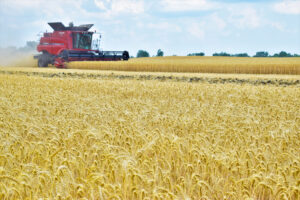
The agricultural holding company “Astarta” has completed the harvest of early grain crops and winter rapeseed across an area of 54,000 hectares, yielding approximately 256,000 metric tons, the company reported.
According to the report, the agricultural holding harvested over 210,000 metric tons of wheat and 43,000 metric tons of winter rapeseed.
The average yield of winter wheat at Astarta was 5.4 metric tons per hectare, and that of winter rapeseed was 3.1 metric tons per hectare. The highest yields were recorded at Khmilnytske LLC in the Vinnytsia region—7.7 metric tons per hectare of winter wheat and 3.8 metric tons per hectare of winter rapeseed.
Andriy Zagorulko, Director of the Agricultural Holding’s Department of Crop Production, Logistics, and Mechanization, noted that the season was challenging due to unfavorable weather conditions and diseases affecting winter rapeseed.
Astarta has already begun preparing the soil for the winter crop planting season.
Astarta is a vertically integrated agribusiness holding company operating in seven regions of Ukraine and is the country’s largest sugar producer. The company’s portfolio includes five sugar refineries, agricultural enterprises with a land bank of 214,000 hectares (including 129,000 hectares in the Poltava region, 42,000 hectares in the Khmelnytskyi region, and 16,000 hectares in the Vinnytsia region), and dairy farms with 30,000 head of cattle. The holding company also operates a soybean processing plant and a bioenergy complex in the Poltava region, as well as a network of six grain elevators.
Astarta’s net profit for 2025 fell 4.2-fold to $19.94 million, while consolidated revenue decreased by 23% to $472 million.

The national postal operator, JSC “Ukrposhta,” has launched an integration with Etsy, one of the world’s largest marketplaces, which will allow customers to process international shipments without duplicating data, the company’s CEO, Ihor Smiliansky, announced on Wednesday.
“Starting today, Ukrposhta has launched integration with Etsy, where more than 1.7 million Ukrainian handmade goods, craft items, works of art, and vintage products are sold,” Smiliansky wrote on his Telegram channel.
According to him, Ukrainian sellers will be able to automatically import orders from Etsy, process international shipments without re-entering data, and automatically send tracking numbers once a shipment is created.
Among other features, the integration will allow sellers to print shipping labels directly from their personal account, pay for shipping online, take advantage of cumulative discounts on international shipments, and return shipments free of charge if they are undeliverable.
Users will be able to set up the integration in their Ukrposhta account by syncing it with their Etsy shop, which will then allow new orders to be imported automatically.
“After that, all that’s left is to process and pay for the shipment online, print the shipping label (or provide the tracking number at a post office), and hand the package over to Ukrposhta, which will deliver it to any of the 230 countries and territories around the world,” noted the CEO of the national postal operator.
Separately, Smiliansky clarified that the company is developing a program for VIP exporters, allowing them to send shipments from anywhere in a confidential manner and use a courier service.
As reported in late June, “Ukrposhta” signed an agreement with Etsy, thereby becoming its official partner.
Ukrposhta noted that the national postal operator will handle all customs duty payments (in the U.S. and the EU).
Etsy is an international marketplace specializing in the sale of handmade items, vintage goods, jewelry, and other products.
As previously reported, Ukrposhta posted a net profit of 296.7 million UAH for the second quarter of 2026, compared to a net loss of 108 million UAH in the same period of 2025.
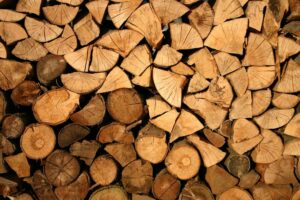
Sustainable development of the wood processing industry—the achievement of this operational objective of the Government Action Program—is now the responsibility of the Ministry of Agrarian Policy and Food, whereas until recently, forestry was overseen by the Ministry of Economy and Environment.
According to the Program, which the Cabinet of Ministers submitted to the Verkhovna Rada, the Ministry of Agrarian Policy and Food is tasked with approving the Strategy for the Development of Ukraine’s Wood Processing and Furniture Industries for the period up to 2030 and adopting an operational plan of measures for its implementation for 2026–2028 (2026).
Other tasks in this area include introducing, in 2027, uniform rules for the functioning of the timber market for all permanent forest users and forest owners; completing the corporatization of the state-owned enterprise “Forests of Ukraine”; and imposing a permanent moratorium on the sale of state-owned shares.
The forestry sector and the State Forest Resources Agency (State Forest Agency) were under the jurisdiction of the Ministry of Agrarian Policy until 2019, after which they were transferred to the jurisdiction of the merged Ministry of Energy and Environmental Protection (Ministry of Energy and Environment), and in 2020, following its split, they were transferred to the jurisdiction of the Ministry of Environmental Protection and Natural Resources, where they remained until the summer of 2025, when yet another merged ministry was created—the Ministry of Economy, Environment, and Agriculture.
People’s Deputy Olga Vasilevska-Smaglyuk criticized the possible decision to return the forestry sector to the jurisdiction of the Ministry of Agrarian Policy. “The key risk is a change in the very philosophy of forest management. Forests cannot be viewed merely as an economic resource that needs to be used more efficiently. After all, they are first and foremost natural capital, an ecosystem, and a component of the country’s environmental security,” she explained.
In her view, such a transfer could also slow down the corporatization of the state-owned enterprise “Forests of Ukraine,” the digitization of timber accounting, and the transition to European forest management standards.
CORPORATIZATION, FOREST, MINISTRY OF AGRARIAN POLICY, TIMBER, WOOD PROCESSING



