

Tea and coffee producer Monomakh PJSC (Kyiv Oblast) increased its revenue by 21.9% to 1.51104 billion UAH in January–June 2026, but saw its net profit decline by a factor of 3.4 to 24.43 million UAH.
According to the company’s semi-annual report filed with the National Securities and Stock Market Commission (NSSMC)’s disclosure system, gross profit rose by 29.2% to 484.75 million UAH, while operating profit fell by 41.6% to 84.4 million UAH.
The company’s assets for the first half of the year decreased by 6% to 1.7752 billion UAH, equity by 5.7% to 609.87 million UAH, and total liabilities by 6.1% to 1.16534 billion UAH.
According to the report, revenue in the second quarter rose by 18.0% to 685.42 million UAH, while net profit fell 2.8-fold to 9.52 million UAH.
The company specified that in the second quarter it produced and sold 1.39 thousand metric tons of products, with export revenue accounting for 11% of total sales.
PJSC “Monomakh” was founded in 2000. It produces packaged tea and coffee products under the LOVARE, “Monomakh,” “Three Elephants,” “Tea Masterpieces,” “KAIF,” Ferrara, and “Coffee Masterpieces” brands. The average number of employees is 567. The ultimate beneficial owner is Taras Barabash.
In 2025, the company increased its revenue by 22%—to 2.77 billion UAH—but saw its net profit decline by 40%—to 181.84 million UAH.
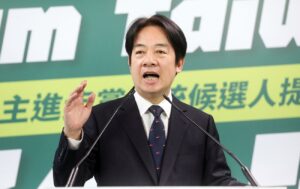
According to Experts Club, the Taiwanese administration plans to include 235.7 billion New Taiwan dollars, or about $7.4 billion, in the 2027 budget for one-time payments to the population. Each recipient is set to receive 10,000 New Taiwan dollars, or approximately $314, according to the island’s chief executive, Lai Ching-te.
Lai described these payments as an opportunity to share the “dividends of artificial intelligence” with the public. However, this does not refer to dividends from companies or a special tax on AI, but rather to a budgetary payment that the government attributes to the sharp acceleration of the economy driven by demand for semiconductors, computing equipment, and other AI-related products.
It is important to note that this is currently a proposal in the draft central budget for 2027, not a payment that has been finally approved by parliament. Lai announced this on August 17 following the executive branch’s review of the budget draft. The plan calls for an increase in spending of NT$235.7 billion while maintaining a balanced budget and, according to the head of the administration, with virtually no new net borrowing.
Taiwan’s strong financial performance allows the government to take this step. The revenue forecast for the 2027 central budget has been raised to NT$3.9266 trillion.
The main reason for the increase in budgetary capacity is the technology boom. According to data from Taiwan’s Directorate General of Budget, Accounting, and Statistics (DGBAS) published on August 14, 2026, the island’s GDP grew by 15.43% year-over-year in the first quarter and by 12.93% in the second quarter. In the first half of the year, the economy grew by approximately 14.15%.
The agency raised its forecast for Taiwan’s GDP growth for the entire year of 2026 from 9.64% to 11.05%. If the forecast holds true, this will be the highest annual growth rate since 1987, when the economy grew by 12.75%. For 2027, the DGBAS expects growth to slow to 6.04%.
Global demand for artificial intelligence infrastructure remains the main driver of the economy. The DGBAS expects Taiwan’s real exports of goods and services to increase by 21.28% in 2026, and private investment in fixed capital to rise by 11.58%.
Manufacturing output in the second quarter rose by 18.27%, driven primarily by semiconductors, computers, electronics, and optical products.
Taiwan plays a key role in the global supply chain for state-of-the-art semiconductors. High demand for artificial intelligence equipment and investments by the world’s largest technology companies have led to a sharp increase in production and exports in Taiwan’s electronics industry.
Authorities expect that direct payments will allow the benefits of the technology boom to extend to households and sectors not directly related to semiconductor and AI production. Recipients will be able to use the money as they see fit—for everyday expenses, education, caring for elderly relatives, or other purposes.
Taiwan de facto has its own administration, armed forces, and currency, and independently conducts domestic and economic policy; however, its status under international law remains disputed.
The People’s Republic of China does not recognize Taiwan as a separate state and considers the island part of China’s territory. Beijing adheres to the “One China” principle and requires countries that establish diplomatic relations with the PRC to refrain from having official diplomatic relations with the Taiwan authorities. According to the PRC Ministry of Foreign Affairs, 183 countries have established diplomatic relations with Beijing.
Therefore, most countries in the world do not have official diplomatic relations with Taiwan, although many maintain close unofficial economic, trade, cultural, and political ties with it through representative offices.
As of August 2026, Taiwan maintains official diplomatic relations with only 12 countries and the Holy See, including: Belize, Guatemala, Haiti, Paraguay, Saint Kitts and Nevis, Saint Lucia, Saint Vincent and the Grenadines, the Marshall Islands, Palau, Tuvalu, Eswatini, and the Holy See. This list is provided by the Ministry of Foreign Affairs of Taiwan.
At the same time, the lack of official diplomatic recognition does not prevent Taiwan from remaining one of the world’s most important technology economies and a key player in the global semiconductor industry.
artificial intelligence, CHINA, ECONOMY, semiconductors, TAIWAN

“Express Insurance” collected 128.9 million UAH in insurance premiums in July 2026, an 18% increase compared to the same period in 2025, according to the insurer’s website. It is noted that the company received the largest share of insurance premiums from comprehensive auto insurance (CASCO) policies—81nearly 44.9 million UAH in insurance premiums from mandatory auto liability insurance (OSAGO) policies—a 30.6% increase.
Revenue from other types of insurance totaled nearly 2.3 million UAH.
The number of insurance policies issued in July 2026 increased by 25.7% compared to July 2025, indicating steady growth in demand for insurance products from Express Insurance.
It is also reported that in July 2026, Express Insurance paid out 65 million UAH in insurance claims, a 52.5% increase compared to the same period last year.
Express Insurance was founded in 2008. It is part of the UkrAVTO group of companies. The company specializes in auto insurance. It has more than 300 insurance agents throughout Ukraine and is actively expanding its network of partner auto service centers.
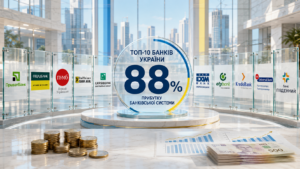
Ukraine’s ten most profitable banks accounted for 47.68 billion hryvnias, or 88 per cent of the entire banking system’s net profit, in the first half of 2026, according to the Experts Club information and analysis centre, based on data from Opendatabot and NBU statistics published on 19 August.
The total net profit of 59 Ukrainian banks amounted to UAH 54.07 billion. The top 10 included three state-owned banks, five banks with foreign capital, and two banks with Ukrainian private capital.
The ranking was topped by PrivatBank with UAH 24.56 billion in net profit. Universal Bank, on whose platform monobank operates, ranked second with UAH 3.85 billion, while Raiffeisen Bank placed third with UAH 3.57 billion. They were followed by Oschadbank with UAH 3.38 billion, FUIB with UAH 3.12 billion, Ukreximbank with UAH 2.24 billion, OTP Bank with UAH 1.91 billion, Ukrsibbank with UAH 1.85 billion, Citibank with UAH 1.68 billion, and Credit Agricole Bank with UAH 1.53 billion.
At the same time, Universal Bank became one of the few leaders to significantly improve its result: its profit increased from UAH 2.41 billion in the first half of 2025 to UAH 3.85 billion in 2026. PrivatBank, Oschadbank, Raiffeisen Bank, FUIB, Ukreximbank, and most other top-10 banks posted lower net results, largely due to the increased tax burden.
Thus, the Ukrainian banking market remains highly concentrated in terms of profit: nearly nine out of every ten hryvnias of the sector’s net financial result were earned by just ten institutions.
The primary source is Opendatabot, dated August 19, 2026, with calculations based on data from the National Bank of Ukraine.

Bitcoin (BTC) saw its price surge sharply on Wednesday evening, rising to $69,700, gaining around $4,000 in a short space of time and reaching its highest level in roughly two months, according to the Fixygen website.
After reaching its intraday high, the leading cryptocurrency corrected to around $68,500–$68,700 but remained up about 6% over 24 hours. The intraday low was around $64,100.
The sharp move began after the US Department of the Treasury announced that it would at least double the volume of buyback operations involving long-term US government bonds, to $4 billion or more per transaction.
Following the news, the yield on 30-year US Treasuries fell by around 8 basis points to 5.20%, with a similar decline observed in 10-year securities. At the same time, the US dollar began to weaken, while demand for risk and safe-haven assets increased.
Initially, following the Treasury’s announcement, bitcoin rose to around $64,900, then broke above $65,000, after which the rally sharply accelerated. At its peak, the price reached $69,700.
The surge triggered large-scale liquidations of short positions in the cryptocurrency market. According to CoinGlass data cited by CoinDesk, approximately $1.3 billion worth of cryptocurrency derivatives positions were liquidated in just one hour, between 14:50 and 15:50 UTC, with more than half of the total involving bitcoin trading pairs. Ethereum liquidations amounted to around $430 million.
The gains spread across virtually the entire major cryptocurrency market. Ethereum rose by around 9%, XRP by more than 6%, and Solana by around 6%.
BTC’s technical movement provided an additional factor. Before the current surge, analysts had noted the formation of an “inverse head and shoulders” pattern on the daily chart. According to technical analyst Aksel Kibar, a sustained breakout above the area around $66,600 could open the way for a move toward $76,000.
At the same time, the rapid pace of the current rally increases the likelihood of short-term volatility: a significant part of the move was amplified by the forced closure of short positions, and after reaching $69,700, bitcoin had already retreated by more than $1,000.
Bitcoin is the world’s largest cryptocurrency by market capitalization. Its supply is algorithmically limited to 21 million coins, with around 20 million BTC currently in circulation. Cryptocurrency prices are characterized by heightened volatility and can change significantly within a short period.
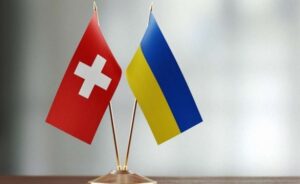
Switzerland will maintain the temporary protection status (Status S) for Ukrainians who fled Ukraine due to Russia’s full-scale invasion until March 4, 2028, but will tighten the eligibility criteria for obtaining it.
“There are still no signs of long-term stabilization of the situation in Ukraine. Therefore, Status S for individuals from Ukraine seeking protection will be extended until March 4, 2028. Support measures for individuals with Status S (Program S) will also continue until that date,” the Swiss government stated in a Wednesday announcement on its website.
It is reported that the Federal Council made this decision at its meeting on August 19 following consultations with relevant stakeholders.
At the same time, it is noted that as of August 20, S protection status will be restricted for certain other groups of individuals—S protection status will now be granted only to those performing military duties they may have in Ukraine. “This new rule applies to all new applicants who submitted their applications on August 20 or later. It does not affect individuals who have already been granted S protection status,” the government statement notes.
As explained by the Swiss government, this decision was made to align with EU policy on this matter. “Switzerland has thus far closely coordinated its actions with the EU regarding S protection status and will continue to do so. On July 30, EU member states decided to extend temporary protection until March 4, 2028. At the same time, they decided to restrict access to temporary protection in the EU: as of July 31, temporary protection is granted only to those performing military duties in Ukraine. The requirement to perform military duties applies, in particular, to Ukrainian citizens of draft age, those in the reserves, and those who have voluntarily joined the armed forces. “Switzerland is not legally obligated to implement this decision adopted by the Council of the EU. However, the Federal Council believes that it is in Switzerland’s interest to align its practices with those of the EU,” the statement reads.
Should the situation in Ukraine stabilize sustainably, the Federal Council will review the status of protection for Ukrainians.
As previously reported, in late July, the European Union extended temporary protection for Ukrainians until March 4, 2028, with a new provision stipulating that newly arrived Ukrainian citizens subject to military service will be eligible for protection only if they have no issues with their military registration documents.



