

Global primary nickel production is projected to decline by 4.3% in 2026, reaching 3.715 million tons, according to the International Nickel Study Group (INSG).
By the end of 2025, it had grown by 8.1% to 3.88 million tons.
These estimates do not account for the possibility of any significant disruptions in operations, the INSG report notes.
Indonesia, the world’s leading nickel producer, introduced additional measures in 2026 to tighten regulation of the mining sector. The approved nickel ore production quota for this year was set at a significantly lower level than in 2025. However, it may be revised upward, depending on the government’s assessment of supply and demand.
Global consumption of primary nickel is expected to increase by 4.2% this year, reaching 3.747 million tons. Last year, it rose by 3.5% to 3.473 million tons.
As a result, the global nickel market will face a shortage in 2026. The deficit will amount to 32,000 tons, whereas in 2025 a surplus of 283,000 tons was recorded, in 2024 – 226,000 tons, and in 2023 – 175,000 tons.
Uncertainty regarding production volumes in Indonesia and the conflict in the Middle East could lead to a revision of forecasts. “The consequences (of the war in Iran – ed.) for metal markets—both in terms of production and final demand—have not yet been adequately assessed,” the INSG report notes.
The INSG is an independent intergovernmental organization founded in 1990 and based in Lisbon, Portugal. The group’s members include nickel-producing and consuming countries: Australia, Brazil, the United Kingdom, Germany, India, Italy, Cuba, Norway, Portugal, Russia, Finland, France, Sweden, Japan, and the European Union.

In India, amid a severe shortage of liquefied petroleum gas, demand is growing for traditional fuels, including firewood and dried cow dung.
The crisis was triggered by disruptions in LPG shipments through the Strait of Hormuz amid the war in the Middle East. Reuters and other outlets report that India, where about 65% of cooking fuel relies on imports, is facing one of the most serious gas crises in recent decades, and authorities have already restricted industrial consumption to prioritize supplying households.
Amid the shortage, Indian media are reporting that some households and small businesses are returning to cheaper and more accessible fuel sources. In particular, the Times of India writes about the shift to coal, firewood, and kerosene in Jamshedpur, while Bloomberg notes a rise in biofuel sales.
According to the Times of India, commercial consumers in several Indian cities have faced a sharp rise in LPG prices, and supplies have either been cut or partially diverted to the black market. This has already led to higher costs for restaurants, bakeries, and small retailers, and some businesses have been forced to seek alternatives to gas.
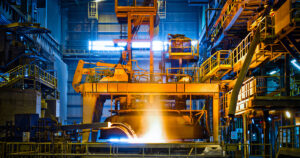
PJSC Ukrainian Graphite (Ukrgraphite, Zaporizhia) is establishing new logistics routes to optimize risks, allowing it to plan the timely delivery of raw materials and consumables to the enterprise and finished products to end consumers.
According to the interim management report, one of the problematic issues is the shortage of qualified workers and engineering personnel involved in the continuous cycle of metallurgical production. This is primarily due to the mobilization of workers, the departure of women with children abroad, and internal migration within the country.
“Despite everything, we continue to work, accept orders, manufacture products, upgrade production facilities, pay taxes, and provide resources for the restoration of Ukraine,” the report states.
It also notes that Ukrgrafit continues to manufacture products in wartime conditions and, in particular, in the context of the difficult situation in Ukraine’s energy sector and high energy prices, which requires additional measures to improve energy efficiency for the uninterrupted operation of the enterprise. This involves work to modernize the mixing and pressing section (introduction of an electrically heated mixing machine and restoration of the operability of the electrode mass production line for the manufacture of carbonizers), as well as the modernization of the impregnation section – the purchase and commissioning of a new vacuum unit, which will ensure the stable operation of autoclaves in achieving a deep vacuum and contribute to reducing vacuum oil consumption.
In addition, the graphitization section is being modernized – modernization of the mobile pneumatic unit, which improves the reliability of the unit, increases the intervals between repairs and reduces downtime. The company is also updating its technical accounting system for electrical energy, automating the systems for monitoring electrical energy consumption by the company’s divisions (consumer workshops) in production processes. In addition, the schedule for the operation of technological equipment and consumption management is being optimized.
As reported, Ukrgrafit increased its net loss by 56.7% in January-September 2025 compared to the same period last year, to UAH 185.076 million. Net income for this period decreased by 9.8% to UAH 973.915 million.
Ukrgrafit ended 2024 with a net loss of UAH 202.447 million, while in 2023 it increased its net profit by 2.34 times compared to 2022, to UAH 122.920 million.
Ukrgrafit is a leading Ukrainian manufacturer of graphite electrodes for electric steel melting, ore-thermal, and other types of electric furnaces, commercial carbon masses for Söderberg electrodes, and carbon-based refractory materials for metallurgical, machine-building, chemical, and other industrial complexes.
According to the National Depository of Ukraine (NDU) for the first quarter of 2025, Intergraphite Holdings Company Limited (Malta) owns 23.9841% of the private joint-stock company, and C6 Safe Group Limited (Cyprus) owns 72.0394%.
The authorized capital of the private joint-stock company is UAH 233.959 million, and the par value of a share is UAH 3.35.

Some waste-to-energy plants in China are experiencing a shortage of waste to fuel their capacity amid rapid expansion of the sector and changes in household waste management, according to Chinese media reports.
There are more than 1,000 waste-to-energy plants in the country, and by 2022, their combined waste incineration capacity exceeded the volume of household waste collected (333 million tons versus 311 million tons).
Experts attribute the problem not to the fact that “the waste has run out,” but to excess capacity and an imbalance between where the waste is generated and where the facilities are built. In particular, in China, the share of urban household waste processed by incineration increased to 79% in 2024, and the number of waste incineration facilities, according to Dialogue Earth, increased from approximately 104 in 2010 to about 1,000 at present.
The media notes that some companies are expanding the “geography” of waste delivery to support their operations, switching to industrial waste and resorting to so-called landfill mining – the extraction of “old” waste from landfills for further incineration.
At the same time, statements about the possible import of waste to fill capacity are hampered by existing restrictions: the Chinese authorities have previously announced a complete ban on the import of solid waste from January 1, 2021.
Analysts also point to the risk of misguided incentives: discussions about a “waste shortage” may push the market to try to increase waste volumes, but industry experts emphasize that the priority should remain reduction, reuse, and recycling, rather than increasing waste generation to fill furnaces.

The pharmaceutical company Sanofi has reduced its supply of flu vaccines to Ukraine during the current epidemic season, delivering 100,000 doses with no additional deliveries planned.
According to information provided to Interfax-Ukraine by the pharmaceutical company, it supplied 250,000 doses to Ukraine during the previous epidemic season.
“The reduction in deliveries of Sanofi influenza vaccines this season is due to temporary difficulties in production processes, including the company’s global transition to the production of trivalent vaccines in accordance with updated WHO recommendations. The adaptation of technological and logistical processes is currently underway, which has temporarily affected the volume of vaccine supplies to countries in the northern hemisphere, including Ukraine. No additional vaccine supplies are expected this year,” the company said.
In addition, the company reported that Sanofi’s quadrivalent influenza vaccine, which was imported in the amount of 100,000 doses, remains the only vaccine registered by the Ministry of Health in Ukraine for the 2025/2026 epidemic season.
Currently, the media and social networks are reporting a significant shortage of flu vaccines during the current epidemic season. Private clinics are reporting that it is impossible to purchase the vaccine.
The Interfax-Ukraine agency is awaiting comments on the vaccine situation during the current epidemic season from the Ministry of Health, the State Emergency Service, and the State Service of Ukraine on Medicines and Drugs Control.
As reported, as of the end of September 2025, the State Medical Service announced that the first 76,000 doses of the Korean vaccine GC FLU, manufactured by GC BioPharma Corp. and imported by Biolabs LLC, had passed quality control. The quality control procedure was also passed by 100,000 doses of the French vaccine VAXIGRIP TETRA, manufactured by Sanofi Pasteur and imported by Sanofi-Aventis Ukraine LLC. In early October, Biolabs LLC planned to import another 54,000 doses of the GC Flu vaccine manufactured by GC Biopharma Corp.

The shortage of professional staff at construction sites in Ukraine is up to 50% in both technical and labor specialties, while salaries are showing positive dynamics, according to a survey of developers conducted by Interfax-Ukraine.
“The need for people on construction sites is only increasing as the construction market is gradually recovering, work is ongoing, and construction volumes are increasing. But the war continues, as does mobilization into the Armed Forces, so this certainly affects the labor market. In general, we can state that the level of workers employed in construction is about 40% of the pre-war level,” said Dmitry Novikov, Marketing Director of City One Development.
According to him, the most sought-after specialties include welders, operators of tower cranes and specialized construction equipment, and high-rise mountaineers. In addition, there is a shortage of ordinary construction workers and general laborers, Novikov noted.
According to Olga Pylypenko, Executive Director of Kovalska Group, more than 70% of the group’s vacancies are for workers, most of them concrete workers, reinforcing steelworkers and electricians.
“Today, the number of workers is already about 50%. Given the overall drop in demand, this labor force is in a fragile balance that can be upset if construction volumes increase,” she explained.
The lack of labor at Intergal-Bud’s construction sites was felt again in the fall after the start of the full-scale war, said its commercial director, Anna Laevska.
“At the beginning of the full-scale war, we felt a shortage of workers at construction sites, but the situation was resolved quickly enough. And until May 2023, there was practically no labor shortage. But in the last few months, we have been noticing a shortage of construction workers. We observe a shortage of all specialists,” the expert said.
According to her, the company’s construction volumes allow it to increase its staff by a third, but due to the shortage of personnel, it has to restructure its teams.
According to the Greenville Group, the staffing situation has somewhat leveled off compared to last year, but the group also experienced a labor shortage and began to re-staff construction teams.
“Currently, the shortage is 40% – all of them are highly qualified specialists. Among the scarce specialties on the market are electricians, crane operators, monolithic workers, handymen, and facade workers,” said Natalia Dubyk, project manager of the Greenville group of companies.
At the same time, Alliance Novobud managed to increase its staff at construction sites by expanding the types of work performed by its own labor force. In addition, the company noted an increase in female demand for construction jobs.
“Construction is mostly a male sphere, but amid the difficult situation with the search for workers and the overall economic situation in the country, there is some growth in interest in working on construction sites from women. Most often, these are painting professions related to interior decoration,” said Oleksandra Kachan, HR Director at Alliance Novobud.
The interviewed developers noted the positive dynamics of changes in the salaries of builders. Thus, Intergal-Bud and the Greenville Group of Companies estimated the salary growth in October 2023 at 15-20% compared to spring, and Kovalska Group – up to 25%. In general, developers expect further salary growth next year, provided the economic situation is stable.
At the same time, City One Development expects the shortage of personnel in the construction sector to increase after the war ends.
“Even after the specialists who are currently serving in the army return to work, it will still not be able to cover the shortage of personnel and compensate for the demand for professional construction specialists,” Novikov said.
A similar opinion was expressed by Oleksandr Nasikovsky, co-founder and managing partner of DIM Group. According to him, encouraging Ukrainians to get technical education should become a priority of government policy.
“The deepening deficit in certain highly skilled professions is due, in particular, to the low demand for technical education from young people. Today, there is an acute shortage of monolithic workers, crane operators, painters, and electricians. Encouraging Ukrainians to master construction specialties should be a priority for both the government and private businesses. The vocational education system must undergo radical changes. It will be useful to involve private players who are ready to create a kind of corporate training institutions and facilitate the acquisition of various professions by those who are willing,” the expert said.



