

The pharmaceutical company “JSC Galichpharm” (Lviv) produced 3.934 million packages of finished pharmaceutical products in the second quarter of 2026, worth approximately 981.424 million UAH.
According to the company’s disclosure in the National Securities and Stock Market Commission (NSSMC) disclosure system, the average cost per package of medicines is 213.18 UAH for injectables, 52.11 UAH for infusions, 117.25 UAH for liquids and syrups, and 52.6 UAH for tablets.
Galichpharm’s total revenue for the second quarter of 2026 amounted to 354.394 million UAH. Total exports reached 115.4 million UAH, or 48.3% of total sales.
Currently, the company supplies products to the Ukrainian market and exports them to Kazakhstan, Uzbekistan, Latvia, Australia, and other countries.
As previously reported, “Galichpharm” (Lviv) produced 22.098 million packages of medicines in 2025 and sold finished products worth 1.774 billion UAH. The company then reported a net loss of 1.151 billion UAH, compared to a net profit of 13.705 million UAH in 2024 (-39% compared to 2023).
As previously reported, in May 2025, the Commercial Court of Lviv Oblast opened bankruptcy proceedings against the pharmaceutical manufacturer JSC “Galichpharm” based on claims filed by LLC “Sky-Development” in the amount of 479.262 million UAH. On April 21, 2025, Sky-Development LLC acquired from JSC “Bank Finansy i Kredit” the rights to claims against JSC “Galichpharm” under loan agreements and security agreements.
The investment company “Sky-Development” won an open auction organized by the Deposit Guarantee Fund for Individuals and acquired the claims of the insolvent JSC “Bank ‘Finansy i Kredit’” under ten loan agreements with leading Ukrainian pharmaceutical companies: JSC “Galichpharm” and JSC “Kyivmedpreparat.” According to Sky Development, the total amount of its claims exceeds 3.5 billion UAH.
For their part, “Kyivmedpreparat” and “Galichpharm” stated that the information disseminated by Sky Development Investment Company is “inaccurate, manipulative, and shows signs of a deliberate attempt to discredit the companies’ operations.” In particular, both companies denied having “multi-billion debts” to “Sky Development.” The pharmaceutical companies characterized the statements by “Sky Development” LLC as “an attempt to illegally and artificially create non-existent creditor debt for a possible future hostile takeover of the companies.”
EXPORTS, Galichpharm, MANUFACTURING, MEDICINES, PHARMACEUTICALS

The “Agrain” Group of Companies has begun sowing winter rapeseed for the 2027 harvest, for which it has allocated over 18,000 hectares this season, the company’s press service reported.
The farms in the Chernihiv cluster were the first to begin planting—work there started in early August. In the Odesa and Kharkiv clusters, they are waiting for sufficient productive moisture to accumulate in the soil.
“We only plant when there is sufficient moisture in the topsoil. We constantly monitor weather conditions and adjust the pace of work depending on the situation in each region. Our goal is to complete sowing within the optimal timeframe, ensure uniform emergence, and create the right conditions for plant development before winter sets in,” the press service quotes Chief Agronomist Taras Korniyenko as saying.
“Agrain” is engaged in the cultivation and storage of grain and oilseed crops, as well as livestock farming. Prior to the full-scale Russian invasion, the agricultural holding comprised 11 agricultural enterprises; that number has now grown to 13. The group of companies cultivates approximately 110,000 hectares in the Zhytomyr, Kharkiv, Chernihiv, Odesa, and Cherkasy regions.
The group includes two large grain elevators and two mini-elevators, with a combined capacity of 320,000 metric tons. The agricultural division comprises nine enterprises. Four enterprises are engaged in livestock farming. The beef cattle herd numbers 5,500 head, and the dairy herd numbers 1,750 head, including over 800 milking cows.
The holding company is owned by SAS Investcompagnie (France).
AGRICULTURAL HOLDING, GRAIN, HARVEST, planting season, RAPESEED
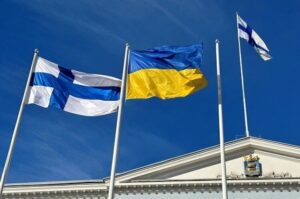
Finland is supporting the reconstruction of Ukraine’s war-torn energy sector by allocating 28.5 million euros from its development cooperation funds.
According to a press release from the Finnish Ministry of Foreign Affairs, the total cost of the power plant technology is 46.5 million euros, with Ukraine financing the remainder of the project on its own.
Wärtsilä Finland Oy was selected as the supplier. The power plants will be manufactured in Vaasa, which will also contribute to job creation, the development of expertise, and exports in Finland.
The Ukrainian state-owned energy company Ukrnafta is purchasing these power plants to ensure energy production in the country. Reliable energy production is of vital importance, especially during the winter months, when Russian attacks on energy infrastructure complicate daily life in Ukraine.
According to Minister of Foreign Trade and Development Ville Tavio, this project combines Finland’s support for Ukraine with the advantages of Finnish technology.
“Finland possesses world-class expertise in the energy sector, which can be of great help to Ukraine in its recovery efforts. I am pleased that Finnish technology and Finnish workers are contributing to strengthening the security of Ukraine’s energy supply. At the same time, this project promotes Finnish exports and employment,” Minister Tavio noted.
Finland’s funding for the project is provided through the Finnish-Ukrainian Investment Fund (FUIF). The FUIF’s goal is to support public investments in Ukraine using Finnish technology, expertise, and services. Finland’s financial resources will be used to cover the interest expenses and principal amount of the investment loan that Ukraine will receive. Finvera is providing a 100% export guarantee for this loan.

The ongoing eruption of Mount Etna has evolved from a local problem in Sicily into a major transportation crisis for the central Mediterranean. As of the evening of August 14, 2026, Catania Airport remains closed until at least 2:00 a.m. on August 15; hundreds of flights have been canceled or rerouted; the problehave already directly affected Serbia and Malta; and the main burden has shifted to other airports in Sicily and southern Italy.
The current crisis is the most severe for Catania Airport in at least two decades and the longest-lasting since the 2002 eruption. From August 6 to 12, more than a third of the 1,974 flights scheduled for Catania were canceled, and approximately 630 planes were diverted to other airports. Italian sources estimate the total number of disrupted flights at approximately 700. Thousands of passengers were stranded in Sicily at the height of the summer season.
The restrictions are due not to the lava itself—which remains largely confined to the volcano’s vicinity—but to the ongoing ash emissions. The Italian National Institute of Geophysics and Volcanology (INGV) is monitoring Etna’s ongoing effusive and explosive activity, including ash emissions from the Voragine crater. In recent days, volcanic ash has spread primarily southward. This poses a particular danger to aviation, as fine particles can enter engines and damage aircraft systems.
Etna’s activity has affected more than just flights to Catania. On August 11, a cloud of volcanic ash moved approximately 220 km south and reached Malta. As a result, Malta Airport canceled 19 flights by midday, and a number of other departures and arrivals were significantly delayed.
Most of the planes unable to land in Catania are being rerouted to Palermo, Trapani, Comiso, and Lamezia Terme. However, the backup system has also proven vulnerable. Comiso Airport in southeastern Sicily temporarily suspended operations due to volcanic ash, so part of the traffic had to be rerouted even further.
As a result, the aviation crisis quickly turned into a ground transportation crisis. Passengers are forced to travel from one end of Sicily to the other by bus, train, and rental car.
Demand for taxis and rental cars has skyrocketed. Following complaints from passengers about price hikes, the consumer organization Codacons announced its intention to file a complaint with the Italian antitrust authority.
The eruption occurred at the worst possible time for the tourism industry—just before Ferragosto on August 15, the traditional peak of the summer vacation season in Italy. Catania is the main aviation hub in eastern Sicily and serves more than 12 million passengers a year.
The losses are felt throughout the entire tourism chain. A canceled flight means more than just a ticket refund. A tourist may be unable to check into a hotel or may have to cancel a car rental, restaurant reservation, tour, or transfer. On the other hand, tourists who are already on the island and cannot fly out are forced to pay extra for lodging and transportation.
Paradoxically, the eruption itself has simultaneously become a tourist attraction. In the evenings, crowds of people head to Etna’s viewing areas to see the lava, further congesting local roads. However, this local interest is incomparable to the damage caused by the disruption of operations at the main air gateway to the eastern part of the island.
If the wind direction changes again, the geography of the flight restrictions may also change.
Etna’s current phase of activity began on August 6 and is characterized by unusually prolonged ash emissions.
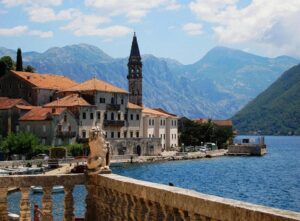
According to information from “Serbian Economist”, as of July 31, 2026, nearly 100,000 foreign citizens were legally residing in Montenegro, with Ukrainians remaining one of the country’s largest foreign communities, according to data from the Montenegrin Ministry of the Interior and previously published detailed statistics from the ministry.
According to data from the Montenegrin Ministry of Internal Affairs, 67,344 foreigners hold temporary residence permits, while another 29,783 hold permanent residence permits. Thus, the total number of foreigners with regulated status exceeds 97,000. Of those with temporary residence permits, 40,907 hold permits for temporary residence and work.
The Ministry of Internal Affairs identifies citizens of Serbia, the Russian Federation, and Turkey as the three largest groups of foreign residents. The ministry did not provide a complete breakdown by citizenship as of July 31, 2026, in its published response; therefore, it is currently impossible to determine Ukraine’s exact current ranking based on this data.
However, the latest available comprehensive table from the Ministry of Internal Affairs, which allows for a comparison of the main national groups, shows that as of October 31, 2023, Ukrainian citizens ranked fifth among foreigners with temporary or permanent residence in Montenegro.
At that time, the Ministry of Internal Affairs’ records listed:
Russia — 27,032 people;
Serbia—22,661;
Turkey—9,467;
Bosnia and Herzegovina—7,733;
Ukraine—5,208;
Kosovo—3,821;
Albania—3,027;
Belarus—1,288.
At the same time, the size of the Ukrainian community has been growing since 2023. An article in the Montenegrin publication Dan, cited by Niksic Radio and Television in March 2026, reported that in December there were over 9,000 Ukrainian citizens in the country with residence permits. By comparison, the number of Turkish citizens was approximately 13,000.
Ukrainians residing in Montenegro under temporary protection should be considered separately. This status is legally distinct from a standard temporary residence permit; therefore, data on individuals granted temporary protection and those with standard residence permits cannot be mechanically combined when compiling a ranking of foreign residents.
In March 2026, the Montenegrin government extended temporary protection for individuals from Ukraine until March 4, 2027.
The scale of the Ukrainian presence is also clearly evident in migration statistics. From January through early August 2025 alone, 69,826 Ukrainian citizens entered Montenegro, while 67,561 departed.
Thus, based on the available data, it can be confidently stated that Ukrainians are among the largest foreign communities in Montenegro.
The growth in the number of foreign residents is of significant economic importance to Montenegro.
With a population of approximately 624,000, the nearly 97,100 foreigners with legal residency account for about 15–16% of the country’s population. Foreign residents are particularly noticeable along the coast and in Podgorica, and they influence the real estate market, the rental market, services, employment, and consumer demand.
https://t.me/relocationrs/3458

Prices for housing in Turkey in July 2026 rose by an average of 23.3% in local currency compared to last year; however, high inflation completely offset this increase: in real terms, real estate prices fell by 6.6%, according to the July market review by the platforms Emlakjet and Endeksa. The data was published on August 14.
The average price per square meter of housing nationwide reached 41,700 Turkish lira, or approximately $871, while the average price of a property sold was 5.21 million lira, which corresponds to approximately $109,000.
At the same time, July saw the first small positive sign in short-term trends: prices rose by 1.9% in nominal terms over the month and by approximately 0.5% when adjusted for inflation. However, one month is not yet enough to speak of a sustained recovery in the real value of Turkish housing.
Ankara’s Prices Are Rising Faster Than Istanbul’s and Antalya’s
Among the 30 provinces with the highest number of transactions, the most notable growth was recorded in Ordu—32.4% over the year. This is the only province among those analyzed where growth was positive even after adjusting for inflation—about 0.4%.
Ankara ranks second with a nominal increase of 28.7%, although in real terms, housing in the capital became approximately 2.5% cheaper. Next are Kocaeli—up 28.5%, Denizli—27.1%, and Elazığ—26.9%.
In Istanbul, a square meter of housing cost an average of 65,100 liras in July, and the average price of a property was about 7.16 million liras, or $149,500.
In Antalya, one of the main markets for foreign buyers, the average price per square meter reached 55,500 lira, and the average price per property was about 6.1 million lira, or $127,500. In Izmir, the average price was about 54,000 lira per square meter and 6.48 million lira per property.
Muğla remains Turkey’s most expensive province, home to resort centers such as Bodrum and Marmaris. Here, the average price per square meter reached 87,200 lira, and the average price per property was 11.34 million lira, or nearly $237,000. This is more than double the national average.
Housing sales have fallen sharply
The rise in prices is occurring against the backdrop of a significant decline in the number of transactions. According to the Turkish Statistical Institute (TÜİK), statistics on residential and commercial real estate sales for July were published on August 13, 2026. A total of 123,603 residential properties were sold nationwide during the month, which is approximately 17% less than a year earlier.
Istanbul remained the largest market with 22,600 transactions, followed by Ankara with 9,640, Izmir—6,550, and Antalya—6,300.
At the same time, the sales breakdown sends mixed signals. The number of mortgage transactions rose by 23.7%, while sales of new homes fell by 8.6% and those of existing homes dropped by as much as 20.8%. This may indicate a gradual return to the market of some buyers who are able to take advantage of bank financing.
Thus, the rise in the value of Turkish real estate in lira remains, to a large extent, a consequence of inflation. For investors, it is more important to pay attention not only to nominal growth of 20–30%, but also to real price trends, exchange rates, and rental yields. As of the end of July, the average property in Turkey is nominally significantly more expensive than a year ago; however, its real value continues to decline.
Open4Business recently conducted a separate analysis of the composition of foreign buyers of Turkish real estate. As of June 2026, Russian citizens ranked first with 381 purchases, while Ukrainians acquired 170 properties and tied for second place with Iranian citizens. In total, foreigners purchased 2,015 residential properties in June. From January through June, foreign demand totaled 9,083 properties, down 9.2% from the previous year.
Ukrainians remain one of the largest groups of homebuyers in Turkey, even over the long term. In 2025, Ukrainian citizens purchased 1,541 properties and ranked third among foreign buyers, trailing only Russians and Iranians. Thus, the decline in real prices for Turkish housing is of direct interest to Ukrainian private investors, who continue to maintain an active presence in this market.



