
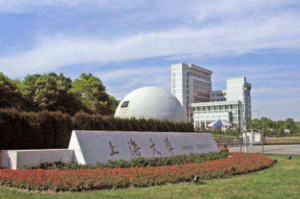
Not a single Ukrainian university has made it into the top 1,000 in the world according to the 2026 Academic Ranking of World Universities (ARWU), published by ShanghaiRanking. Consequently, for the second year running, Ukraine has no representation in the main Shanghai ranking.
Ukraine is not included in the official list of countries and territories that have at least one university among the 1,000 best higher education institutions published for 2026. However, according to data from the Experts Club information and analysis centre, the list includes Poland, the Czech Republic, Hungary, Lithuania, Estonia, Bulgaria, Serbia, Croatia and Slovenia.
The same situation was observed in 2025 – Ukraine was also absent from the countries represented in the ARWU top 1,000.
The last time a Ukrainian university appeared in the main Shanghai Ranking was in 2024. At that time, Taras Shevchenko National University of Kyiv was ranked in the 901–1,000 bracket. The university’s official ShanghaiRanking profile still lists this result as its most recent inclusion in the ARWU.
The Shanghai Ranking does not directly measure the quality of teaching, student well-being or the employability of graduates. It is very strongly focused on the scale and international visibility of research.
In particular, the ARWU 2026 was compiled using the most highly cited researchers from the Clarivate list published in December 2025. For the indicator of publications in *Nature* and *Science*, papers from 2021 to 2025 were analysed, whilst publications indexed in Web of Science in 2025 were used to calculate total research output.
This means that, unlike previous editions of the ranking, the ARWU 2026 now features a significantly greater representation of research output from Ukrainian universities produced directly during the war. In the 2024 ranking, for example, the Nature and Science indicator covered the period 2019–2023.
However, it cannot be stated outright that Ukraine’s drop out of the top 1,000 was solely due to the war. The ARWU is a comparative global ranking: a university’s position depends not only on its own performance but also on how rapidly competing universities in other countries are increasing their research output and citation rates.
This competition is particularly evident in the case of China. By 2026, mainland China will already have 234 universities in the published top 1,000 and 16 in the top 100, whereas a year earlier there were 13 Chinese universities in the top 100.
For Ukraine, the situation serves as a telling indicator precisely in terms of international research competitiveness. Taras Shevchenko National University of Kyiv managed to break into the ARWU for the first time in 2024, but by 2025 it had dropped out of the top 1,000 and was unable to return to that ranking in 2026.
Source: ShanghaiRanking Consultancy, Academic Ranking of World Universities 2026.
The ranking assesses more than 2,500 universities and publishes the top 1,000.
EXPERTS CLUB, SHANGHAI-RANKING, UNIVERSITIES AROUND THE WORLD
A new, potentially multibillion-dollar market is emerging in the global pharmaceutical industry for drugs that target the orexin system in the brain. The first drug in this new class has already received approval from the U.S. regulatory agency for the treatment of narcolepsy, while pharmaceutical companies are beginning to explore the same mechanism for other sleep disorders, attention disorders, cognitive disorders, and neurological diseases.
On August 11, 2026, *The Economist* described these developments as a potential “Ozempic moment” for the brain—drawing an analogy with GLP-1 drugs, which were initially developed primarily to treat diabetes but later radically transformed the obesity treatment market and began to be investigated for a whole range of other diseases.
In the case of brain disorders, the orexin system could become such a universal mechanism.
A key milestone occurred on August 5, 2026, when the U.S. Food and Drug Administration (FDA) approved Takeda’s drug Orzeyful (oveporexton) for adults with type 1 narcolepsy.
This is the first approved drug that directly targets the biological mechanism of this disease.
Type 1 narcolepsy is associated with the death of brain cells that produce orexin—a neuropeptide that regulates wakefulness, sleep, and muscle tone. When orexin is deficient, the brain has a harder time maintaining a stable state of wakefulness and distinguishing between sleep and wakefulness.
Traditional therapies have primarily targeted individual symptoms—for example, by promoting alertness or reducing cataplexy. Oveporexton works differently: the drug activates the orexin receptor OX2R, thereby partially restoring the missing signal.
This is precisely what makes this new approach particularly interesting for the pharmaceutical industry.
The FDA’s decision was based, in particular, on two 12-week randomized, double-blind, placebo-controlled trials involving 273 adult patients with type 1 narcolepsy.
Patients who received oveporestone showed improved ability to remain alert during the day, as well as reduced subjective sleepiness and frequency of cataplexy episodes. Improvements were also observed in other symptoms of the disease.
However, the drug is not without side effects. The FDA lists insomnia, frequent urination, urinary urgency, and increased salivation among the most common side effects.
So, for now, we’re not talking about a “brain-boosting pill,” but rather a medication with a specific medical indication and known risks.
However, the pharmaceutical industry’s interest extends far beyond type 1 narcolepsy.
A good illustration of the scale of these expectations is Eli Lilly’s deal with the British company Centessa Pharmaceuticals.
On June 24, 2026, Lilly completed its acquisition of Centessa, gaining a portfolio of experimental OX2R receptor agonists.
When announcing the deal on March 31, Lilly estimated the initial purchase price at approximately $6.3 billion, with up to an additional $1.5 billion potentially payable depending on the achievement of certain regulatory milestones. Thus, the potential value of the deal reaches about $7.8 billion.
Centessa’s lead drug—cleminorexton, formerly known as ORX750—has already completed a Phase 2a trial in patients with Type 1 and Type 2 narcolepsy and idiopathic hypersomnia. Lilly notes that other drugs in this platform could potentially be studied for a broader range of neurological, neurodegenerative, and neuropsychiatric disorders.
In fact, one of the world’s largest pharmaceutical companies paid billions of dollars for the opportunity to secure a position in a new class of drugs even before most of its potential applications had been proven.
Takeda and Lilly are not the only players in the market.
Alkermes is developing its own OX2R agonist, alixorexton. By 2026, it will already be in Phase 3 trials for narcolepsy types 1 and 2 and in Phase 2 trials for idiopathic hypersomnia.
At the same time, the company is beginning to explore other molecules in this class. ALKS 7290 is in the early stages of development for the treatment of attention-deficit/hyperactivity disorder, and ALKS 4510 is being studied as a potential treatment for fatigue associated with multiple sclerosis and Parkinson’s disease. For now, both programs are still in the early clinical stages.
It is precisely the potential to extend the application of a single biological mechanism to numerous diseases that explains the comparison with GLP-1.
Orexin was discovered relatively recently—in the late 1990s. It is produced by a small group of neurons in the hypothalamus, but their signals spread throughout numerous areas of the brain.
The orexin system is involved in more than just maintaining alertness. It is linked to attention, motivation, energy balance, mood, and other functions of the central nervous system.
Takeda explicitly views orexin as a system linked to sleep and wakefulness, attention, mood, metabolism, and respiration.
This means that pharmacological intervention targeting orexin receptors could theoretically be beneficial not only in cases where there is a direct deficiency of this neuropeptide.
Following the approval of oveporexton, *Nature Reviews Drug Discovery* also noted that the pharmaceutical industry is already exploring broader indications for drugs in this class.
The history of GLP-1 has shown pharmaceutical companies just how valuable a mechanism can be that targets not a single symptom but a fundamental system of the body.
GLP-1 drugs have expanded from treating diabetes to a global market for obesity therapy and are now being studied for a multitude of comorbidities.
Orexin-based drugs may follow a similar trajectory: a rare and well-studied disease serves as the first proof of concept for a new mechanism, after which developers begin testing it for much more common conditions.
This is precisely why the FDA’s approval of oveporexton is important not only for patients with narcolepsy.
It marked the first time a major regulatory agency confirmed that restoring a specific neurochemical signal can directly influence the fundamental mechanism of a brain disorder.
The comparison is interesting, but it’s important not to take it literally.
Proven efficacy currently exists primarily for type 1 narcolepsy. For type 2 narcolepsy and idiopathic hypersomnia, other drugs are in the clinical trial phase, while the use of orexin agonists for ADHD, Parkinson’s disease, multiple sclerosis, and other conditions is still in much earlier stages.
There is no evidence that these drugs will become universal cognitive stimulants or will be able to treat a wide range of mental and neurodegenerative disorders.
Therefore, the main significance of these developments lies not in the emergence of an “Ozempic for the brain” as a single miracle drug, but in the emergence of a new pharmacological platform.
And if further research confirms the ability to safely regulate wakefulness, attention, and other brain functions through the orexin system, this class of drugs could indeed become one of the most important new areas in global neurology and psychiatry.
The combination of the first FDA approval, several competing clinical programs, and multibillion-dollar investments from the largest pharmaceutical companies indicates that the industry is already placing a serious bet on this mechanism.

The suspension of the maritime corridor since late July has led to a drop in grain exports from Ukraine: from August 1 to 12, exports totaled 590,000 metric tons, or 30% of demand, Agriculture Minister Taras Vysotsky said at a briefing in Kyiv on Friday.
“From August 1 to 12, we exported 590,000 metric tons. That’s about 30% of the required volume. We expect to be able to reach 50% going forward… taking into account all the relevant impacts on international trade balances,” the minister said.
He clarified that of these 590,000 metric tons, about 40% were exported by rail, about 40% via the Danube region, about 10% by road, and the remaining 10% consisted of several ships that were still able to leave Ukrainian ports in early August.
“If we subtract those, we can say that as of today, 45% is exported by rail, 45% via the Danube region, and about 10% by road,” the minister stated.
At the same time, he emphasized that there is potential to partially increase exports, but even so, without the resumption of operations at the Black Sea ports, exports will amount to no more than 50% of demand.
According to Vysotsky, due to the drought, the Danube route is currently unable to operate at full capacity; reaching its full potential—about 1.5 million metric tons per month—will be possible closer to the end of the year.
The minister also reported that Ukraine currently has sufficient permanent storage facilities for grain, but in November, after the corn harvest, there may be a storage capacity shortfall of 8 to 11 million metric tons, which they hope to cover using temporary storage facilities and silo bags.
According to Vysotsky, a request for $10 million in funding for the temporary storage of 2–2.5 million metric tons has already been sent to international partners. In addition, a similar request to the World Bank for $25 million—covering more than 6 million metric tons of grain—is being finalized.
He noted that it is currently difficult to predict how quickly maritime exports can be resumed.
“We see that every day there are various rumors… gossip about different proposals (regarding a maritime ceasefire)… As always, we must rely first and foremost on ourselves. By ‘ourselves,’ I mean the military… As of today, the only way to enable exports is through military security… This is a very important area; the military is working on it, but so far, they cannot report any progress on their end. Therefore, as of today, exports from the ports of Greater Odesa are suspended. We are focusing on alternative logistics channels,” stated the head of the Ministry of Agrarian Policy.
Regarding the U.S. Department of Agriculture’s downward revision this week of its forecast for grain exports from Ukraine this marketing year by 2.21 million metric tons—to 37.77 million metric tons—Vysotsky noted that, overall, the figures remain within the range of the typical annual balance.
“We do not rule out that this could be the case. We are still only a month and a half into the marketing year. We understand that, provided there is some recovery during a certain period, we can make up the shortfall. Therefore, from our point of view, this balance is currently based on the annual cycle—no more, no less—rather than on an assessment of the current situation,” the minister said.
He noted that this year’s total harvest of grains and oilseeds is expected to exceed 80 million metric tons, of which domestic consumption and adequate carryover stocks will account for up to 20 million metric tons.
“The baseline volume of exports of grains, oilseeds, and processed products could reach up to 60 million metric tons. However, given how logistics are currently developing, we understand that there is a possibility this trend will continue throughout the year, and exports will amount to no more than 30 million metric tons,” Vysotsky said, outlining the worst-case scenario.

Generation Z may become the first generation in many decades to score lower on certain cognitive ability tests than its predecessors. This is indicated by studies in the U.S. and Europe, international educational tests, and data on the so-called Flynn effect reversal.
The debate has reignited following the publication of the article “Is Gen Z the First Generation Less Intelligent Than Their Parents?” by the popular science website RathBiotaClan. The author, Shibasis Rath, compiled research showing a decline in scores on specific measures—mathematical and verbal reasoning, attention span, memory, and problem-solving.
One of the catalysts for the article’s publication was a hearing held by the U.S. Senate Committee on Commerce, Science, and Transportation on January 15, 2026. Neurobiologist and education expert Jared Kuni Horvath presented data to senators showing that over the past two decades, a number of developed countries have seen stagnation or a decline in literacy, math skills, attention, and the ability to engage in complex reasoning.
For most of the 20th century, IQ test scores consistently improved from one generation to the next. This phenomenon became known as the Flynn effect. The increase was attributed to improvements in nutrition and healthcare, expanded access to education, smaller family sizes, and the growing complexity of the environments in which people grow up and work.
However, in some developed countries, this trend first slowed down and then reversed.
One of the most well-known studies was conducted by Norwegian scientists Bernt Bratsberg and Ole Røgeberg. In a paper published in the *Proceedings of the National Academy of Sciences* in 2018, they used data on military conscription and administrative records spanning several decades. By comparing brothers within the same families, the authors concluded that both the initial rise and the subsequent decline in outcomes were largely linked to environmental changes rather than genetic changes in the population.
In July 2026, Bratsberg and his colleagues published a new study in PNAS based on data from 579,379 Norwegian men born between 1967 and 1991. It showed that the expansion of secondary education may have masked a more general downward trend in cognitive test scores for a time. Once the growth in educational attainment slowed, the decline became more pronounced across various social groups.
American data yield a similar, albeit more complex, result.
Researchers at Northwestern University analyzed the results of 394,378 Americans who took online tests as part of the SAPA project between 2006 and 2018. Scores on verbal reasoning, matrix tasks, and number sequences declined over time. At the same time, spatial reasoning, on the contrary, improved.
That is why one of the study’s authors, Elizabeth Dvorak, cautioned against claiming that Americans are simply “getting dumber.” According to her, changes in test scores do not necessarily indicate a corresponding change in overall intellectual ability. It may reflect changes in skills, motivation, education, or the ability to perform a specific type of test task.
This is a fundamentally important caveat for evaluating Generation Z as well. Today’s young people may perform worse on some types of cognitive tasks and, at the same time, better on others—for example, when processing visual information or using digital tools.
Another major source of data is the OECD’s PISA program, which assesses the knowledge and ability to apply that knowledge among 15-year-old students.
Between PISA 2018 and PISA 2022, the average score in mathematics across OECD countries fell by a record 15 points, and in reading by 10 points. At the same time, science scores remained largely unchanged. The OECD emphasizes that the decline in reading scores began even before the COVID-19 pandemic, so it is impossible to attribute the entire trend solely to school closures in 2020–2021.
At the same time, the OECD itself does not attribute the problem solely to smartphones or computers. The organization notes that the reasons for the decline in educational outcomes are numerous, and that the competent use of digital technologies by teachers can, on the contrary, contribute to the development of digital literacy and the ability to critically evaluate information.
This is where the most controversial part of the discussion begins.
Horvat attributes the decline in certain indicators to the rapid proliferation of laptops, tablets, and other digital devices in the education sector. In his written testimony to the Senate, he argues that excessive screen-based learning can impair concentration, the depth of information processing, and memory retention—especially if digital technology simply replaces traditional instruction without offering improved pedagogical methods.
However, based on the available data, it cannot be concluded that smartphones are the sole or even the proven primary cause of the Flynn effect reversal.
The results may be influenced simultaneously by the quality of school education, changes in curricula, the social environment, the pandemic, sleep, physical activity, nutrition, patterns of information consumption, and shifts in motivation to take standardized tests.
Therefore, it is more accurate to speak not of a proven “decline in the intelligence of Generation Z,” but rather of an observed decline in performance across a range of cognitive and educational indicators in several developed countries.
Even this more cautious phrasing has serious economic implications.
Skills such as reading complex texts, mathematical analysis, concentration, and solving non-standard problems directly impact human capital. As artificial intelligence becomes more widespread, the importance of these skills may not diminish but rather increase: people need not only to receive a ready-made answer from a machine but also to evaluate its correctness, spot errors, and formulate complex tasks on their own.
If the decline in certain cognitive indicators is indeed sustained, the consequences may manifest in labor productivity, the quality of vocational education, the ability to master complex professions, and the economy’s innovative potential.
But there is also the opposite possibility: the digital environment does not so much reduce intelligence as it changes the structure of skills, making certain forms of information processing less in demand while developing others. This is precisely the question that remains open today.
The RathBiotaClan article is useful primarily as a popular science overview that brings together in one place several studies and public presentations by Jared Kuni Horvath. RathBiotaClan positions itself as an Indian platform for science education and media, registered in India as a micro services enterprise under the MSME/Udyam system. The resource’s founder, Shibasis Rath, specializes in popularizing research in biology and related sciences.
RathBiotaClan is not a peer-reviewed scientific journal. Therefore, it is more appropriate to use this publication as a starting point rather than as standalone evidence that Generation Z has become less intelligent.
The most important primary sources for this topic are studies in PNAS and the journal Intelligence, OECD PISA statistics, and materials from U.S. Senate hearings. These sources make it possible to verify the main claims of the popular publication.
DIGITALIZATION, EDUCATION, Generation Z, intelligence, RESEARCH

According to the Experts Club information and analysis centre, Harvard University has once again topped the 2026 Academic Ranking of World Universities (ARWU), known as the Shanghai Ranking. It is followed by Stanford University and the Massachusetts Institute of Technology (MIT). Cambridge came fourth, and the University of California, Berkeley, fifth.
The top ten also included Princeton in 6th place, Oxford in 7th, Columbia University in 8th, the University of Chicago in 9th, and the California Institute of Technology (Caltech) in 10th. Thus, eight of the world’s ten best universities are located in the United States, with the other two in the United Kingdom.
The composition of the top ten did not change compared with 2025, although there were some shifts in positions. Princeton rose from seventh to sixth place, overtaking Oxford, while the University of Chicago moved from tenth to ninth, swapping positions with Caltech. Harvard, Stanford, MIT, Cambridge, and Berkeley retained the top five positions.
The best university outside the United States and the United Kingdom was France’s Paris-Saclay University, ranked 13th. Asia’s best university, China’s Tsinghua University, rose to 18th place. ETH Zurich ranks 19th, Peking University 22nd, while the University of Toronto and Zhejiang University share 24th place.
Despite the dominance of American universities at the top of the ranking, the most notable long-term trend remains China’s strengthening position.
In the ARWU 2026 top 100, the United States is represented by 37 universities, mainland China by 16, up from 13 a year earlier, and the United Kingdom by eight. They are followed by Australia and Switzerland with five universities each, France and Germany with four each, and Canada with three.
In total, universities from 18 countries and territories are represented in the top 100. At the same time, China’s position is strengthening rapidly: in ARWU 2025, mainland China had 13 universities in the top 100, compared with 16 now. Southeast University, Tianjin University, and Harbin Institute of Technology, in particular, entered the new top 100.
But the situation across the entire published top 1,000 is even more revealing. Mainland China is represented by 234 universities, compared with 187 from the United States. Thus, China already significantly surpasses the United States in terms of the breadth of its representation in ARWU, although American universities still maintain an enormous advantage at the very top of the ranking.
France has 27 universities in the top 1,000, four of which are in the top 100. In addition to Paris-Saclay in 13th place, PSL University ranks 33rd, Sorbonne University 55th, and Université Paris Cité 57th.
ARWU evaluates more than 2,500 universities worldwide but publishes only the top 1,000. Unlike rankings that take into account reputation among students and employers, internationalization, or the quality of the educational environment, the Shanghai Ranking is focused almost entirely on research activity.
Its methodology takes into account alumni and staff who are Nobel Prize and Fields Medal laureates, Highly Cited Researchers identified by Clarivate, publications in Nature and Science, the number of research papers indexed in Web of Science, and academic performance per capita. Therefore, ARWU is essentially primarily a ranking of universities’ research strength rather than the quality of education as such.
Not a single university from Ukraine appeared in this ranking.
The original source is ShanghaiRanking Consultancy, Academic Ranking of World Universities 2026, published on August 15, 2026.
EDUCATION IN CHINA, EXPERTS CLUB, SHANGHAI-RANKING, WORLD UNIVERSITIES

In July 2026, Ukraine received medical humanitarian aid from international partners totaling nearly 67 million UAH, the Ukrainian Ministry of Health reported on August 13. This is nearly double the amount received the previous month, when the volume of aid exceeded 34.2 million hryvnia.
Humanitarian supplies in July were provided by partners from Norway, Georgia, Finland, and Switzerland, as well as the Global Fund to Fight AIDS, Tuberculosis, and Malaria. Ukraine received ambulances, medicines, diagnostic supplies, medical furniture, and other equipment.
The Norwegian government donated four Mercedes-Benz Sprinter ambulances to Ukraine, with a total value of over 2 million UAH. The vehicles are intended to strengthen the capabilities of Ukrainian medical facilities and emergency medical services.
Ukraine received rabies immunoglobulin worth more than 358,000 UAH from the Georgian government. The medication is used to prevent rabies following possible human contact with an infected animal. Finland donated medical furniture and supplies for healthcare facilities.
A significant portion of the July shipments consisted of aid provided under the Global Fund’s program “Sustainable Response to HIV and TB Epidemics in the Context of War and Recovery in Ukraine.”
Ukraine received test kits for detecting tuberculosis infection, blood collection tubes, and antibacterial and antituberculosis medications. The shipments also included amphotericin B, used to treat severe fungal infections, as well as isoniazid and isoniazid/rifapentine for the preventive treatment of tuberculosis in people living with HIV.
A separate shipment of humanitarian aid was provided by the Swiss company Abbott Products Operations AG. The company donated the drug Physiotens for the treatment of hypertension, with a total value of over 2.7 million UAH.
Compared to June, the value of medical humanitarian aid increased by approximately 96%—from more than 34.2 million UAH to nearly 67 million UAH.
Since the start of the full-scale Russian invasion, Ukraine has received more than 18,700 metric tons of medical humanitarian aid through the Ministry of Health’s channels of cooperation with international partners and organizations.



