

For Ukrainian companies, participation in international tenders increasingly requires not only a high-quality commercial proposal but also standardised international business identification. One of the most widely used identifiers is the D-U-N-S Number — a unique nine-digit number assigned to companies within the global Dun & Bradstreet system.
The D-U-N-S Number is used by international corporations, financial institutions, procurement platforms, and certain government and donor organisations to unambiguously identify a legal entity. For a Ukrainian company, having such a number may be necessary when registering in a supplier system, undergoing due diligence, or submitting documents to participate in a tender.
“An international tender does not begin with the price. First, the customer must make sure that it is dealing with a genuine legal entity with a verified name, address, and business profile. The D-U-N-S Number helps connect a Ukrainian company to the global business identification system and simplifies its verification by international partners,” Maksym Urakin noted.
Before obtaining or updating a D-U-N-S Number, a company should verify the correct English-language spelling of its legal name, address, legal form, contact details, and management information. Discrepancies between registration documents, the corporate website, and the international profile may delay verification.
The D-U-N-S Number is particularly relevant for companies seeking to become suppliers to large international groups, work with global IT platforms, participate in procurement by donor organisations, or systematically enter the markets of the EU, the United States, and other countries.
At the same time, the number itself is not a certificate of reliability and does not guarantee success in a tender. Its function is to ensure the unambiguous identification of a business and link a legal entity to an international business profile that the customer can use during verification.
Dun & Bradstreet maintains the global D-U-N-S business identification system and develops solutions for company verification, risk assessment, compliance, and supplier management. In Ukraine, companies may contact the D&B — Interfax-Ukraine division regarding the obtaining and updating of a D-U-N-S Number.
Dun & Bradstreet is an international provider of business data and analytical solutions whose history began in 1841. D&B works with data on companies worldwide and provides tools for business identification, counterparty verification, credit and commercial risk assessment, compliance, and supply chain management.
The official representative of Dun & Bradstreet in Ukraine is the Interfax-Ukraine News Agency. The specialised D&B — Interfax-Ukraine division provides Ukrainian companies with access to international business data, helps them verify foreign counterparties, and assists them in working with D&B tools.
Enquiries can be submitted through the specialised D&B resource at dnb.ua, by email at Urakin@interfax.kyiv.ua, or by telephone at +38 (044) 270-65-74.
BUSINESS VERIFICATION, D-U-N-S Number, DUN & BRADSTREET, INTERNATIONAL TENDERS
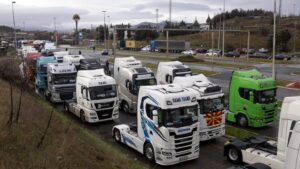
According to the Serbian business publication Parametar, trucking companies in Serbia, Bosnia and Herzegovina, Montenegro, and North Macedonia are demanding that the European Union propose a concrete solution by September 1, 2026, to the problem of restrictions on professional drivers’ stays in the Schengen Area. Otherwise, the carriers are prepared to stage coordinated protests again and block freight terminals at the borders with the EU.
The decision was agreed upon by representatives of transport associations from the four countries at a regional meeting in Skopje. However, September 1 is not automatically the start date for the blockade. The carriers intend to wait for negotiations with the European Commission and discussions on the EU’s new visa strategy, after which they will decide on further actions.
The carriers’ main complaint concerns the 90/180 rule. Third-country nationals who benefit from the visa-free regime may stay in the Schengen Area for no more than 90 days within any 180-day period. This restriction also applies to professional drivers from the Western Balkans.
Carriers consider this approach unfair, since drivers do not enter the EU as tourists but regularly cross the border while delivering international cargo and return to their home countries after their trips.
“Our drivers leave every two, three, or five days, depending on the route, and then return. They don’t want to leave their home countries; they want to work for our companies. But 90 days isn’t enough for professional work,” said Nejo Mandić, president of the Serbian Association of International Carriers.
According to estimates by regional transport organizations, the problem affects about 100,000 professional drivers in four countries. Stricter enforcement of the limit has become particularly noticeable following the introduction of the European Entry/Exit System (EES), which automatically records the entry and exit of third-country nationals.
There is already a precedent for this threat to carriers. In late January 2026, drivers from Serbia, Bosnia and Herzegovina, Montenegro, and North Macedonia simultaneously blocked more than 20 freight crossings into the Schengen Area. The borders between Serbia and Bosnia and Herzegovina with Croatia, between North Macedonia and Greece and Bulgaria, as well as the port of Bar in Montenegro, were blocked.
The economic impact was significant. Marko Čadež, president of the Serbian Chamber of Commerce and Industry, estimated at the time that the blockade affected about 93% of the four countries’ exports, with total losses amounting to approximately 92 million euros per day.
According to his assessment, individual companies faced fines and losses of 10,000–50,000 euros per day per company due to their inability to fulfill contractual obligations. Moreover, the problems were not limited to Balkan manufacturers—European companies with factories, suppliers, and customers in the region also suffered from the delays.
If a new regional blockade were to occur on a similar scale, economic losses could again amount to tens of millions of euros daily.
For Serbia, the most vulnerable sector is the industry oriented toward European supply chains. Automotive components, electrical equipment, rubber products, metal products, food, and other goods are often transported by truck on a scheduled basis and must reach the customer at a strictly defined time.
Even a brief halt in traffic leads to a buildup of cargo in warehouses, disruptions to production cycles, and the risk of penalties from European buyers.
A prolonged blockade is particularly dangerous for manufacturers of perishable goods. During the January protests, carriers reported that Lidl alone had planned to deliver approximately 120 truckloads of meat, dairy products, fruits, and vegetables from Europe to Serbia within a single week. The traffic blockade directly threatened these deliveries.
The transport companies themselves are suffering double losses: while a truck is idle, it continues to incur costs for leasing, driver salaries, insurance, and other payments, but generates no revenue. Industry associations also warn that the inability to fully utilize drivers on EU routes could lead to the loss of contracts to carriers from EU countries.
The economic damage will not be limited to the Western Balkans. A significant portion of businesses in Serbia, North Macedonia, and Bosnia and Herzegovina are directly integrated into the production chains of EU companies.
Delays in the supply of components could affect factories in Germany, Italy, Austria, Slovenia, Hungary, and other countries. The reverse flow of European goods to the Balkans is also coming to a halt.
In addition, an important land transport corridor connecting Central Europe, Turkey, and onward to the Middle East runs through Serbia and North Macedonia. During the January protests, Reuters noted that the blockade was disrupting traffic along precisely this strategic route.
Following the January protests, the European Commission acknowledged that the established regime creates problems for highly mobile professions, particularly international drivers, artists, and athletes. The EU’s new visa strategy, adopted in January, provides for the possibility of finding a more flexible mechanism for these categories of workers.
However, an automatic exemption for professional drivers from the 90/180 rule has not yet been implemented.
Carriers are insisting on either special status for international drivers or a system of professional visas or other permits that would allow them to stay in the Schengen Area for more than 90 days without the risk of detention, deportation, or a travel ban.
Thus, September 1 becomes a key date for the Western Balkans’ transport market. If Brussels proposes a workable mechanism for professional drivers, a new blockade can be avoided. If an agreement cannot be reached, carriers from the four countries have already agreed on the possibility of joint action.
The issue of restrictions on professional drivers’ stays in the Schengen Area also affects Ukraine.
Ukrainian long-haul truck drivers employed by carriers registered in Ukraine, when entering the Schengen Area under the visa-free regime, are also generally subject to the 90-day rule within an 180-day period, unless they hold a separate long-term status or a residence permit. In its visa strategy dated January 29, 2026, the European Commission explicitly acknowledged that the current system creates problems for mobile professions, specifically mentioning truck drivers who serve EU businesses.
At the same time, the EU-Ukraine Road Transport Agreement, in effect until March 31, 2027, simplifies access for Ukrainian carriers to the EU market and eliminates the need for a number of permits for bilateral and transit transport, but does not in itself constitute an exception to Schengen migration rules.
Therefore, Ukraine has a genuine interest in the very same solution demanded by carriers in the Western Balkans: to distinguish between a professional driver’s working hours on an international route and a regular tourist stay, or to establish a special regime for such drivers.

Against the backdrop of shrinking fuel supply channels and the Russian Federation’s increasingly intense attacks on fuel infrastructure, Ukraine needs to build decentralized, small-scale underground storage facilities for petroleum products, according to Serhiy Kuyun, director of the consulting firm A-95.
“There is only one solution—storage in underground facilities. It appears that both the government and private players are already working on this. At the same time, building such infrastructure is at least twice as expensive as above-ground storage tanks,” he wrote on his Facebook page on Wednesday.
Meanwhile, according to the expert, there is currently no government support, not even in the form of deregulation or expedited approval of project documentation, let alone preferential lending and other incentives.
According to Kuyun, when creating underground storage facilities, the goal should not be to build large-scale facilities, as they are more vulnerable to complex missile strikes.
“But if every importer builds its own small storage facilities with a capacity of 3,000–4,000–5,000–10,000 cubic meters, this will already be a much more resilient structure. In any case, however, it’s important to understand that this won’t happen quickly—it will take one and a half to two years if we start today,” he believes.
According to the expert, it is necessary to convey to citizens, municipal institutions, and government organizations, as well as private companies, the need to build up fuel reserves. “A reserve distributed among consumers will help prevent panic buying and an excessive, sudden strain on the supply system in the event of a crisis,” noted the director of A-95.
According to him, Russia has launched new strikes on the bridge in Mayaky (the route from Reni to the “mainland”) and a “Shahed” drone strike on a tanker carrying lubricants on that same route.
“I think that when planning the strategy for securing petroleum products for the coming months, it’s best to forget about the South (…). This means that the entire burden will fall on the land border, which is already at maximum capacity. All of this indicates that the system is becoming less diversified, which carries corresponding risks,” Kuyun wrote.
As he explained, the enemy is gradually cutting off Ukraine’s southern fuel supply route, which amounts to a triple blow: a reduction in supply channels, a decrease in consumption due to the shift from “maritime” exports to “road” transport, and an increase in the burden on the border coupled with a decrease in its capacity for fuel imports.
At the same time, Russia is already attacking not only oil depots in Ukraine but also gas stations with fuel tankers.
As reported, the Ukrainian Oil and Gas Association (NAU) is urging the government to grant the fuel industry access to loans at 10% interest, which can be achieved by extending the scope of Cabinet of Ministers Resolution
No. 594 to all types of businesses for the purpose of creating underground storage tanks for petroleum products as part of the reconstruction of existing oil depots.
This was announced, in particular, by UGA President Yaroslav Starovoitenko during an online meeting with business representatives organized by the parliamentary committee on finance, tax, and customs policy earlier this week.

Following the reinstatement of mandatory statistical reporting in 2026, Ukrainian companies must once again comply with the data submission deadlines set by the State Statistics Service. However, as noted by the Experts Club Information and Analytical Center, the set of statistical forms varies by company and depends on the type of activity and whether the company is included in a specific government statistical survey.
How to Find Out What a Specific Company Must Submit
The State Statistics Service uses the “My Reporting” service, where an enterprise can check the list of forms for the statistical surveys in which it is included. A qualified electronic signature — QES — is required to obtain this information.
In addition, the official portal of the State Statistics Service has published the calendar for submitting state statistical survey forms and financial statements for 2026.
Depending on a company’s activities, the statistics authorities may request information on production, sales, services, the number of employees and wages, freight and passenger transportation, agriculture, foreign economic operations and other indicators. The list of forms for 2026 has been published by the State Statistics Service itself.
At the same time, financial statements must be submitted to the statistics authorities by legal entities that are required to maintain accounting records and file such statements in accordance with the law. The State Statistics Service specifically indicates this in its reporting calendar for 2026.
Do Individual Entrepreneurs Need to Report?
Most individual entrepreneurs do not submit statistical reports. However, an individual entrepreneur may be included in a particular state statistical survey depending on the type of activity. In this case, the relevant form appears in the “Respondent’s Cabinet” and must be submitted within the established deadline.
The State Statistics Service cites individual entrepreneurs engaged in industrial production and passenger or freight road transportation as examples.
How to Submit Reports
Reports may be submitted electronically through the official free “Respondent’s Cabinet” or through compatible specialised software. The Cabinet displays the forms applicable directly to a particular enterprise or individual entrepreneur, their submission deadlines and instructions.
What Penalties Are Provided For?
According to Opendatabot, citing the applicable administrative liability provisions, failure to submit statistical reports, violation of submission deadlines, or the submission of incomplete or inaccurate information is punishable by a fine of UAH 51–85 for individuals and UAH 170–255 for officials and individual entrepreneurs. Liability may be higher for a repeated violation.
In practice, the average fine imposed by the State Statistics Service in 2020–2025 amounted to approximately UAH 170. Over six years, 228 penalty orders totalling UAH 38,862 were issued.
Mandatory statistical reporting was fully reinstated on 5 July 2025. Therefore, in 2026, enterprises should no longer rely on the deferral regime that was in force during the first years of the full-scale war.
EXPERTS CLUB, penalties, State Statistics Service, STATISTICAL REPORTING
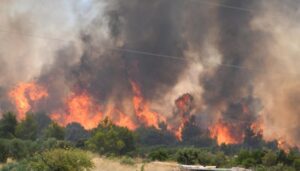
According to The Serbian Economist, wildfires are raging in Croatia. Firefighting efforts are currently concentrated in the Omis area, southeast of Split, and on the Pelješac Peninsula.
The largest fire broke out on the evening of August 13 near the village of Lokva-Rogoznica and, driven by strong winds, quickly spread toward Omis. The fire swept through pine forests and coastal vegetation, damaging homes, cars, and boats. According to the latest estimates by Croatian authorities, the area affected by the fire is approximately 900–1,000 hectares.
The situation proved particularly challenging due to strong winds that constantly changed direction. Croatia’s Chief Fire Officer, Slavko Tucaković, described the events of the night as a “fire storm.” More than 150 firefighters took part in the firefighting efforts, along with Canadair aircraft and units from other regions of the country.
Residents and numerous tourists were evacuated from the most dangerous areas. At one point, there were about 1,500 evacuees at the reception center in Omis. Some people, fleeing the rapidly approaching fire, headed toward the sea.
As of midday on August 14, 40 people required medical attention. Fourteen people remain in the Split hospital, seven of whom are in life-threatening condition. The most severely injured have been diagnosed with burns covering a significant portion of their bodies.
By midday, the situation near Omis had improved significantly. No open flames were visible at the main fire site, and firefighters had moved on to dousing and extinguishing isolated hot spots. However, emergency services continue to operate in the area due to the risk of the fire reigniting.
At the same time, on the morning of August 14, a new large forest fire broke out on the Pelješac Peninsula, in the Kuna Pelješka area near Orebić. A pine forest is burning there; due to strong winds, the fire spread toward populated areas and threatened homes.
The fires have also caused transportation problems. In the Omis area, coastal roads were closed, and on Pelješac, traffic was halted on the section of the road between Prizdrina and Potomje.
Thus, as of 1:00–2:00 p.m. on August 14, the most critical situation along the Croatian coast remains in southern Dalmatia.
The Ukrainian Embassy in Croatia has recommended that Ukrainian citizens temporarily refrain from traveling to the city of Omis and the surrounding resort areas of Dalmatia due to the large-scale forest fires.
The fire broke out on the evening of August 13 in the Lokva-Rogoznica area and quickly spread toward Omis. As of August 14, the region has experienced infrastructure damage, partial power outages, and road closures along sections of the main coastal highway. Firefighting efforts and the evacuation of residents are ongoing.
Ukrainians already in the emergency zone are advised to avoid forested areas and fire zones, follow the instructions of local authorities and emergency services, and, if an evacuation is ordered, proceed immediately to designated assembly points.
In the event of a threat to life or health, Ukrainian citizens should contact the embassy’s hotline: +385 91 605 10 10.
https://t.me/relocationrs/3456
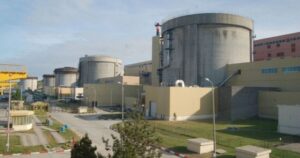
On August 13, the Romanian state-owned company Nuclearelectrica began a controlled shutdown of the second power unit at the Cernavodă Nuclear Power Plant due to a prolonged drop in the water level of the Danube, leaving the country’s only nuclear power plant temporarily without any operating reactors.
Nuclearelectrica’s official announcement was sent to the Bucharest Stock Exchange on August 13. The company notes that the decision was made due to a “significant and prolonged drop in water levels in the Danube,” based on forecasts from Romania’s National Institute of Hydrology and Water Management (INHGA).
The procedure for the controlled reduction of Unit 2’s output began this morning. Nuclearelectrica Director Romeo Urian previously reported that output is expected to drop to zero around noon, after which the unit will be disconnected from the national power grid.
Chernavoda’s Unit 1 was shut down for the same reason on July 28. At that time, Nuclearelectrica also attributed this decision to the unprecedentedly low water level in the Danube caused by a severe drought.
Each of the two operating CANDU-type reactors has a capacity of about 706 MW. Together, under normal operating conditions, they account for approximately 20% of Romania’s electricity production.
The water situation remains extremely challenging. According to INHGA data as of the morning of August 13, the Danube’s flow rate at its entry into Romania near Băziaș was only 1,350,000 cubic meters per second.
The long-term average for August is about 3,900 cubic meters per second. Thus, the current flow rate corresponds to only about 35% of the typical August level.
Most importantly, the official hydrological forecast does not yet predict a significant recovery.
This means that even if the Danube’s level stabilizes at current levels, there is still insufficient basis for a rapid return of the nuclear units to operation.
Prior to the shutdown of Unit 2, Romanian authorities took extraordinary engineering measures to divert more water toward Cernavodă.
In one section, controlled blasting was carried out on a rocky obstacle, the riverbed was deepened, and four barges loaded with rocks were deliberately sunk to partially redirect water from the Bala branch into the main channel of the Danube.
These measures yielded temporary results. After the barges were sunk, the water level in the Cernavodă area was approximately 8 cm higher than the projected trajectory, which allowed the second reactor to remain operational for several more days.
However, in the long term, it was not possible to compensate for the lack of water through engineering measures.
For the recovery of Cernavoda, what matters is not so much local precipitation directly near the plant as it is rainfall across a large area of the upper and middle Danube basin—primarily in Germany, Austria, Slovakia, Hungary, and further downstream.
The current 10-day forecast shows the first noticeable change in weather in the upper part of the basin on August 18. Thunderstorms are forecast for Vienna on August 17, and rain on August 21. Heavy rain is expected in Bratislava on August 17, followed by localized thunderstorms on August 18.
However, further downstream, the situation is less favorable. No significant precipitation is currently forecast for Budapest through August 22. Belgrade is also expected to experience mostly dry and hot weather.
In Černavoda itself, the forecast through August 22 is almost entirely dry, and after August 17, temperatures may rise above 30 degrees again.
Based on a combination of hydrological and meteorological forecasts, no significant improvement is expected by August 20.
Optimistic scenario: Heavy rainfall will occur in Austria and Slovakia on August 17–18, a new weather front will arrive around August 21, after which the Danube’s water level will begin to rise noticeably. In that case, the technical conditions for preparing the restart may be met around August 23–26.
The baseline scenario is that precipitation will be moderate and will only halt the further decline in water levels. In that case, a restart is more likely in the last week of August, around August 26–31.
The negative scenario is that rains will be localized, and the heat will persist in the middle and lower reaches. In that case, both units may remain offline into early September.
To compensate for the lost generation, the authorities will utilize several sources.
The Ministry of Energy is counting on an increase in wind power generation: in the coming days, average capacity is estimated at approximately 525 MW, and during certain periods it may reach 1.56 GW.
In addition, the 330-MW Rovinari 4 coal-fired power unit has been placed on standby, and Hidroelectrica is expected to provide at least about 300 MW of available additional capacity within the limits of existing hydropower resources. Romania has also begun purchasing electricity from Ukraine.
The total cross-border transmission capacity of the Romanian power grid for imports is approximately 4 GW. The authorities are considering, in particular, electricity supplies from southern Europe via Bulgaria.
At the same time, the shutdown of “Cernavodă” increases price risks.



