
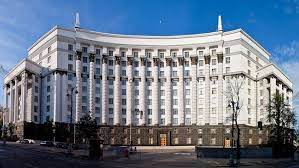
Ukraine’s Cabinet of Ministers is considering raising electricity tariffs in the wake of Russia’s new attacks on the energy sector, Energy Minister Herman Galushchenko said in an interview with Bloomberg.
“Depending on the situation in July and August, we will ask people to save as much as possible. The Russians will not be able to cause a repeat of the blackouts of 2022 and 2023. Even in the event of huge losses, we will have a basic generation that will cover 30% to 50% of our needs,” the minister said.
At the same time, Galushchenko did not rule out an increase in electricity tariffs for households and said that the government is exploring various ways to finance the repair of its energy assets.
“Today the situation is even more complicated than last year, as we have lost a lot of hydropower production and are forced to carry out scheduled repairs of nuclear power units,” he said.
The minister emphasized that Russia’s bombing of Ukrainian energy facilities in recent weeks was more extensive and better planned than the attacks of the previous two years, disabling generating capacity and limiting electricity supplies. As a result, restoring equipment and protecting the power grid have become key priorities for the government, although it is struggling to assess the extent of the damage.
“The destruction was extensive – in power generation and transmission. The situation is complicated. We still do not understand the extent of the damage, as many facilities are still in ruins and we cannot get to them,” explained Galushchenko.
In addition, in the spring of 2024, thermal and hydroelectric power plants became the main targets of Russian strikes. These attacks threaten not only electricity losses but also environmental disasters, Galushchenko said.
“Attacks on hydroelectric power plants are terrorist acts and war crimes, as they affect not only energy production but also the operation of dams on rivers,” the minister said.
Russia’s goal is to destroy Ukraine’s economy, Galushchenko said, adding that more damage to the power system would make it harder to overcome this summer’s consumption peaks.
“We will definitely communicate with people. Everyone wants to live comfortably, but we have to take into account the fact that there are restrictions now,” the minister concluded.
Bloomberg, CABINET OF MINISTERS OF UKRAINE, ELECTRICITY, Herman Galushchenko, tariff increase
Change in consumer prices in 2023-2024

Source: Open4Business.com.ua and experts.news

On Sunday, April 7, at night in most of the northern, central and southern regions of Ukraine are expected small, in Kirovograd, Odessa and Mykolayiv regions moderate rains, according to Ukrhydrometcenter.
In the rest of the territory, in the afternoon in Ukraine without significant precipitation.
The wind is predominantly north-westerly, 5-10 m/s.
The temperature at night 4-9° of heat, during the day 14-19°, in Transcarpathia up to 23°.
In Kiev, light rain at night, without significant precipitation during the day. The wind is northwest, 5-10 m/s. The temperature at night is 7-9° of heat, during the day 16-18°.
According to the Central Geophysical Observatory named after Boris Sreznevsky. Borys Sreznevsky, the highest temperature during the day on April 7 in Kiev was recorded in 1975, it was 26.5 °, the lowest at night – 5.8 ° frost in 1929.
On Monday, April 8, in Ukraine without precipitation, wind of variable directions, 3-8 m/s.
The temperature at night 5-10° warm, during the day 17-22°.
In Kiev without precipitation, wind of variable directions, 3-5 m/s. The temperature at night is 8-10° of heat, during the day 20-22°.
2022-2024 goods trade balance forecast (USD bln)

Source: Open4Business.com.ua and experts.news

Since August 2023, the sea corridor created by the Ukrainian Navy has exported almost 36 million tons of cargo, said Oleksandr Kubrakov, Vice Prime Minister for Reconstruction of Ukraine, Minister of Community Development, Territories and Infrastructure (Ministry of Reconstruction).
“More than 36 million tons of cargo have been exported via the Ukrainian sea corridor since August 2023. This is higher than the figures of the Grain Initiative for the year of its existence,” Kubrakov wrote on Facebook on Saturday.
According to him, 195.7 thousand tons were loaded on the largest of those that called after the full-scale invasion of Ukrainian ports, the Panamanian-flagged CAPTAIN LEONIDAS at Pivdennyi port. The vessel is 300 meters long, 50 meters wide, and has a deadweight of over 203 thousand tons.
Since August 2023, 1,286,000 vessels have sailed through the Ukrainian sea corridor, exporting 25 million tons of agricultural products to Asia, Africa, and Europe. There are 135 vessels waiting to enter the Black Sea ports, which are expected to export another 4 million tons of cargo.
“The Ministry’s team is working hard to ensure the stable movement of exports by sea and reach the targets by 2022,” Kubrakov wrote, emphasizing that the Ukrainian corridor is an effective logistics route, the rhythmic operation of which is the result of joint efforts of the state, the Joint Defense Forces and the entire maritime infrastructure team.
Earlier it was reported that exports via the Ukrainian sea corridor reached 33.8 million tons in 7 months.

Ukrzaliznytsia JSC (UZ) plans to increase passenger traffic by 10% to 27.5 million passengers in 2024, according to a presentation made by the company’s CEO Yevhen Lyaschenko during a chat with journalists on Thursday.
At the same time, revenue from passenger transportation is expected to grow to UAH 10.6 billion in 2024, up from UAH 9.3 billion last year and UAH 5.3 billion a year earlier.
The growth in passenger traffic is driven by the launch of trains on international routes, according to a presentation by Ukrzaliznytsia. In particular, revenues from international passenger transportation amounted to UAH 2.6 billion in 2023, compared to UAH 1 billion in 2022. In fact, 2.1 million passengers were transported, compared to 1.1 million in 2022 and 0.04 million in 2021. In 2024, UZ expects to carry 2.3 million passengers, generating UAH 3.5 billion in revenue.
“International transportation, unlike domestic transportation, is profitable. We break even only on the Lviv-Rava-Ruska-Warsaw route (operated by the Polish company SKPL, which receives payment from UZ for services – IF-U),” Lyashchenko said.
In 2024, UZ also expects to increase domestic transportation to 25.2 million passengers, up from 22.8 million last year. Revenue from their transportation is expected to increase from UAH 6.7 billion in 2023 to UAH 7.2 billion.
The company reminded that in 2023, 15 new passenger trains were appointed, increasing the number of domestic routes to 66. In addition, three new international routes were launched: Vienna-Budapest-Chop, Lviv-Rava-Ruska-Warsaw, and Chop-Prague (operated by the Czech railway operator RegioJet – IF-U). The number of international routes in 2023 reached 25.
UZ plans to overhaul 63 passenger cars in 2024, which will increase the capacity of the passenger service. Also, the overhaul of the laundry in Kyiv, which will improve the quality of washing and the volume of laundry processing.
The seat availability monitoring feature, which is currently being tested in the UZ app, will be launched in full. The company also plans to integrate online scoreboards with a GPS system, refine loyalty programs, and update the classification of cars depending on their brand, which will make it easier for passengers to find the right category for them depending on the range of services.



