
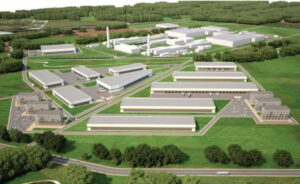
In 2026, the Ministry of Economy and Environment of Ukraine decided to provide state funding for infrastructure development to nine industrial parks totaling 557 million UAH, and will soon review applications from the “Uzhhorod” and “Khust” industrial parks for 120 million hryvnias, according to Dmytro Kysilevsky, deputy chairman of the parliamentary committee on economic development.
“In 2026, decisions have already been made regarding nine industrial parks totaling 557 million hryvnias. Among them are the Transcarpathian industrial parks ‘Tyachiv’ and ‘Friendly Wind Technology.’ Applications from the “Uzhhorod” and “Khust” industrial parks, totaling 120 million hryvnias, will also be reviewed in the near future,” he wrote on Facebook following a meeting held on Wednesday with the initiators and management companies of Transcarpathia’s industrial parks.
Kysilevsky noted that the state provides funding for the development of industrial infrastructure in industrial parks on a 50:50 co-financing basis; recipients are also required to build at least 5,000 square meters of industrial space and attract at least two tenants.
He noted that prior to the full-scale invasion, there was only one industrial park in the Zakarpattia region, but now there are already 12, and three more are preparing to apply for registration by the end of 2026.
“The security factor has become the main draw for industrial investment in the region. In terms of the number of industrial parks, the region is already among the top three, behind Kyiv and Lviv regions, and has well-founded ambitions to become a leader. There are 13 factories that have been built or are under construction in Transcarpathian industrial parks. They already provide jobs for about 2,000 workers,” the MP emphasized.
Kysilevsky also announced the start of construction on new production facilities in the industrial parks of Uzhhorod, Khust, and Svalyava.
As previously reported, as of September of this year, 125 industrial parks had been registered in Ukraine across nearly all regions. By the end of 2025, 37 industrial enterprises had been built or were under construction in these industrial parks. The total amount of investment attracted to the industrial parks exceeds 45 billion hryvnias.
government support, INDUSTRIAL PARK, INDUSTRY, INVESTMENT, UKRAINE

The European Bank for Reconstruction and Development (EBRD) is providing the city of Kyiv with a loan of 150 million euros to purchase new energy-efficient subway cars, spare parts, and maintenance and diagnostic equipment for the Kyiv Metro municipal enterprise, the bank’s press office announced on Wednesday.
The loan is backed by a partial guarantee from Spain and supplemented by grant funding from the bank’s internal resources.
“The new subway cars are expected to be up to 25% more energy-efficient than the outdated cars they will replace, ensuring a more environmentally friendly, safer, and more reliable subway service,” the statement said.
In addition to the purchase of rolling stock, the EBRD will fund an audit of the metro’s accessibility to develop an action plan for inclusive transportation throughout Kyiv, tailored to the needs of people with disabilities, veterans, elderly passengers, and parents with children. The bank will also support a three-year training program for female electric train drivers in partnership with UN Women’s “She Drives” initiative to address the labor shortage.
In total, since the start of Russia’s full-scale invasion in February 2022, the EBRD has allocated nearly 11 billion euros to support Ukraine’s real economy.
EBRD, KYIV, LOAN, METRO, TRANSPORTATION

People who regularly consume more coffee may have a lower proportion of total and visceral fat and, at the same time, greater muscle mass, according to the results of a new Finnish study. In men, higher coffee consumption was also found to be associated with characteristics of testosterone levels and more favorable indicators of glucose and insulin metabolism.
The study was published in the scientific journal European Journal of Nutrition. The researchers used data from the large-scale Northern Finland Birth Cohort 1966 project, whose participants have been followed since birth. The analysis included 2,264 people aged 46.
The participants were divided according to their habitual coffee consumption. Seventy people practically did not consume coffee, 296 drank one to two cups a day, 822 drank three to four cups, and another 1,076 participants drank five or more cups daily.
The researchers found an interesting pattern: body mass index did not differ significantly between the groups, but body composition did.
Participants who consumed more coffee had, on average, a lower percentage of body fat, lower total fat mass and a smaller area of visceral fat. At the same time, they had greater skeletal muscle mass. Differences in body composition were observed in both men and women.
“This study is interesting primarily because it demonstrates the limitations of the familiar BMI indicator. Two people may have practically the same body mass index but a completely different ratio of fat to muscle tissue. In the Finnish sample, it was body composition, rather than BMI, that was associated with the level of coffee consumption,” notes Sviatoslav Morozov-Leonov, Doctor of Biological Sciences and head of a division at the Experts Club analytical center.
The researchers separately studied hormonal indicators. In men, each additional cup of coffee per day was statistically associated with an increase in total testosterone of approximately 0.29 nmol/L and in bioavailable testosterone of approximately 0.08 nmol/L. The level of sex hormone-binding globulin — SHBG — also increased. These associations persisted after statistical adjustment for BMI, education, smoking, physical activity and alcohol consumption.
However, the hormonal results turned out to be considerably more complex than the phrase “coffee increases testosterone” might suggest.
Along with higher total and bioavailable testosterone, greater coffee consumption in men was associated with lower free testosterone and a lower free androgen index. In women, the researchers found no statistically significant association between the amount of coffee consumed and total or bioavailable testosterone. At the same time, women also had higher SHBG and lower free androgen indicators.
“Therefore, it would be incorrect to conclude from the study that five cups of coffee a day increase testosterone in men. The hormonal picture is much more complex: total testosterone increased, but free testosterone decreased at the same time. The authors themselves speak of a specific hormonal profile rather than a proven stimulating effect of coffee,” Morozov-Leonov emphasized.
Another interesting result is related to metabolism.
In men with higher coffee consumption, the researchers identified a more favorable profile of glucose and insulin indicators. In representatives of both sexes, coffee consumption was also inversely correlated with blood concentrations of branched-chain amino acids — BCAAs.
Elevated BCAA concentrations have been associated in a number of previous studies with insulin resistance and an increased risk of metabolic disorders. The authors of the Finnish study believe that the detected changes may help to better understand the association between coffee consumption and metabolic health observed in other studies.
At the same time, the scientists specifically warn that the results do not prove a cause-and-effect relationship.
The study was cross-sectional: coffee consumption, body composition, hormones and metabolic indicators were assessed essentially during the same period of time. Therefore, it is impossible to determine whether coffee led to the observed differences or whether people with a particular lifestyle and metabolic profile simply consumed coffee more often.
In addition, the participants self-reported the amount of coffee they consumed, while the group of people who did not consume coffee at all was small — only 70 people out of 2,264. The Finnish population is also relatively homogeneous, so the results cannot automatically be extrapolated to the populations of other countries.
“This is a good example of how nutrition studies should be read. An association between a product and a particular health indicator does not yet mean that the product is the cause of that effect. Practical recommendations require prospective studies and, most importantly, randomized controlled trials,” says Experts Club representative Morozov-Leonov.
The authors also do not recommend increasing coffee consumption on the basis of the results obtained. They point to the need for further research, including intervention studies in humans, which would make it possible to establish whether a causal relationship exists and which specific biologically active components of coffee may be responsible for the observed associations.
Coffee contains more than a thousand different compounds, so the potential mechanism of action remains uncertain. The researchers consider hormonal and metabolic changes to be one of the possible directions for further study of coffee’s effects on health.
“The most interesting result of the work is not the assertion that ‘the more coffee, the better.’ The study shows a much more complex relationship between habitual diet, body composition, hormones and metabolism. Testing these mechanisms in long-term and controlled studies should be the next stage,” Sviatoslav Morozov-Leonov summarized.
The study Associations of habitual coffee intake with testosterone and cardiometabolic markers: the Northern Finland Birth Cohort 1966 study. The analysis included 2,264 participants from the Northern Finland Birth Cohort 1966. The authors declared no conflict of interest.

The Arab Council of Ukraine and the Khmelnytskyi Regional Council have agreed to develop the region’s cooperation with the countries of the Arab world, particularly in the economic, investment and humanitarian spheres.
According to Mohammad Farajallah, Secretary-General of the Arab Council in Ukraine, Violeta Labazuk, Chair of the Khmelnytskyi Regional Council, met with Khusam Raad, Chair of the Committee on Foreign and Diplomatic Relations of the Arab Council in Ukraine, advisor to the Honorary Consul General of Ukraine in Syria, and representative of the Muslim community in the Khmelnytskyi region.
The parties discussed opportunities to expand the international ties of the Khmelnytskyi region and establish contacts with representatives of businesses and public organizations from Arab states.
Particular attention was paid to the prospects of attracting investment, implementing joint projects, developing trade and economic cooperation, and humanitarian initiatives.
During the meeting, the parties also discussed opportunities to present the economic and investment potential of the Khmelnytskyi region to potential partners from Arab countries.
The Arab Council of Ukraine stated its readiness to facilitate the establishment of direct contacts between representatives of the region and business circles of Arab states, as well as to support initiatives aimed at developing interregional and international cooperation.
The parties agreed to continue their interaction and work out specific areas of possible cooperation.
The Arab Council of Ukraine is a public organization whose activities are aimed at developing relations between Ukraine and Arab countries and strengthening business, public, cultural and humanitarian ties.
ARAB COUNCIL OF UKRAINE, Arab countries, COOPERATION, INVESTMENT, Khmelnytskyi region, LABAZIUK, UKRAINE, АБУ АЛРУБ
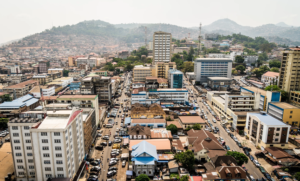
According to Relocation, Sierra Leone has expanded its citizenship program for foreign investors by adding two new options: expedited citizenship for $1 million and naturalization through residency in the country with investments starting at $90,000.
According to information from the Go-FOR-GOLD Sierra Leone program, the first new option provides for expedited citizenship upon payment of $1 million.
This option is aimed at high-net-worth applicants who need the fastest possible citizenship process. The program requires verification of the source of funds and the applicant’s good character.
The second route is significantly cheaper but requires the investor to have a genuine connection to the country. To participate, applicants must invest at least $90,000 in an approved business or enterprise in Sierra Leone.
Afterward, the applicant must reside in the country for at least 90 days per year for five years. Once these conditions are met, the applicant becomes eligible to apply for citizenship through naturalization.
Thus, the minimum physical presence requirement over five years is 450 days.
These new options complement Sierra Leone’s existing investment citizenship program, launched under the Go-FOR-GOLD brand.
The basic investment track requires a non-refundable contribution of $140,000 for the principal applicant. An additional fee is required to include a spouse in the application, and separate fees apply for other dependents.
One of the program’s unique features is the ability for participants in the main investment track to obtain citizenship without having to reside permanently in Sierra Leone.
The country’s government positions Go-FOR-GOLD not only as a mechanism for attracting foreign investors but also as a tool for financing environmental and economic projects.
Sierra Leone has become one of the new entrants to the rapidly growing market for citizenship-by-investment programs. Such programs are most common in the Caribbean, where they are in place in Antigua and Barbuda, Dominica, Grenada, St. Kitts and Nevis, and St. Lucia.
Official source: Go-FOR-GOLD Sierra Leone — the official citizenship program.
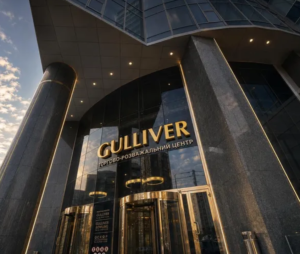
The auction for the sale of the Gulliver shopping and office complex in Kyiv did not take place due to a lack of bids, Oschadbank reported Wednesday evening on its Telegram channel.
“In light of this, the supervisory boards of Oschadbank and Ukreximbank will determine the further strategy for selling the asset, taking into account market conditions, the readiness of potential investors, and security risks,” the statement noted.
As previously reported, the state-owned Oschadbank and Ukreximbank put the Gulliver TOK up for public auction via the “Prozorro.Sales” system in late August with a starting price of 9.2355 billion UAH (excluding VAT) ($207 million).
The lot included a retail and office complex with a parking lot totaling 151,805 thousand square meters on Sportivna Square, 1-A in Kyiv, and two land plots with a combined area of 1.2512 hectares. Oschadbank holds an 80% stake in the property, while Ukreximbank holds 20%.
The sale was intended to be the final stage in the foreclosure of collateral for one of the largest non-performing corporate loans in the banking system.
A consortium of state-owned banks began financing the construction of the complex in 2006, and it was commissioned in 2014. Following several restructurings, Tri O LLC, which owned Gulliver, began reducing its loan payments in June 2024 and subsequently ceased servicing the debt entirely.
On July 26, 2025, a decision was made to register the ownership rights to the complex in the name of a consortium comprising Oschadbank and Ukreximbank as a result of foreclosure on the mortgaged property due to “Tri O” LLC’s failure to fulfill its obligations under the loan agreement.
In late October 2025, Oschadbank’s Emergency Commission deemed the situation dangerous to people and the complex’s operation, particularly due to the refusal of “Tri O” LLC employees to transfer control of critical engineering systems to the bank. In December, the bank began gradually reopening the complex after addressing some of the causes of the emergency.



