

Agrarians of all regions of Ukraine have harvested early grain and leguminous crops on the area of 3782 thousand hectares, having threshed 16 million 574 thousand tons of grain at a yield of 44 c/ha, the press service of the Ministry of Agrarian Policy and Food reported.
According to the report, in terms of threshing rates the agrarians of Mykolaiv and Odessa regions are leading, which threshed 1772.2 thousand tons and 2.009 million tons of grain, respectively. In these regions grain has been threshed on 82% and 64% of areas.
To date, Ukraine has harvested barley on 939 thousand hectares, which is 66% of the planned, of which threshed 3.755 million tons; wheat from 2.698 million hectares (60%) harvested 12.513 million tons; peas from 125.3 thousand hectares (87%) received 306.4 thousand tons.
In addition, on the area of 1182.3 thousand hectares (86% of the planned area) harvested 3319.8 thousand tons of winter rape.
The Ministry of Agrarian Policy changes weekly information about the yield of harvested crops and indicates its growth. Thus, for barley this week it amounted to 40 c/ha, and a week earlier 39.4%, wheat from 44.4 c/ha reached 46.4 c/ha, winter rape from 26.8 c/ha – to 28.1 c/ha. Only peas slightly “gave up positions” from 24.7 c/ha to 24.5 c/ha.
According to the report, agrarians of nine regions have completed pea harvesting. In Dnipropetrovsk region they have started harvesting buckwheat.
As reported, winter wheat sowing this season amounted to 4166 thousand hectares (-834 thousand hectares to the previous season), winter barley – 536 thousand hectares (-255 thousand hectares), rape – 1374 thousand hectares (+110 thousand hectares).
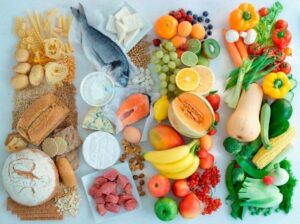
World food prices, which declined in May and June, rose by 1.3% in July compared to the previous month, according to the FAO (Food and Agriculture Organization of the United Nations) in its latest survey.
The food price index for July 2023 was at 123.9 points, up 1.3% from June. However, it remains 11.8% below the value for July last year. The recovery of the index in July was driven by a significant increase in vegetable oil prices, partly offset by a significant decline in sugar prices, as well as a slight decline in cereals, dairy and meat prices, FAO experts explained.
The cereal price index in July was down 0.5 percent year-on-year and 14.5 percent year-on-year. “The slight decline this month was due to a 4.8% drop in world feed grain prices compared to June. World corn prices continued to fall due to increased seasonal supplies amid ongoing harvests in Argentina and Brazil and potentially higher than initially expected U.S. production,” the survey said.
World wheat prices rose 1.6%, the first monthly increase in nine months. FAO attributes this growth mainly to Russia’s withdrawal from the grain deal. Rice prices in July rose by 2.8%, the highest since September 2011. This was a result of price growth in the indica market segment.
The price index for vegetable oil in July rose by 12.1% y-o-y, which was the first increase after seven months of consecutive decline. Such a noticeable growth in July was due to the increase in world quotations for sunflower, palm, soybean and rapeseed oils, experts explain. In particular, world prices for sunflower oil increased by more than 15% in monthly terms.
Among the reasons for the growth the experts name “renewed uncertainty related to export supplies from the Black Sea region”, as well as “restrained prospects for growth of palm oil production in major producing countries, continuing concerns about the prospects of soybean production in the U.S. and rapeseed in Canada”. A rise in global crude oil prices also supported vegetable oil prices, the survey said.
The dairy price index fell 0.4% year-on-year and 20.6% year-on-year in July. The general cheapening was caused by a decrease in quotations for skimmed milk powder and butter. At the same time, whole milk powder prices rose slightly, mainly due to currency fluctuations. Cheese prices recovered slightly after five months of sharp decline.
Last month the meat price index decreased by 0.3% compared to June and by 5.1% compared to July last year. For example, poultry prices declined due to increased supplies from leading exporters, despite the lingering effects of avian influenza outbreaks in major producing regions. At the same time, pork prices continued to rise for the sixth consecutive month amid limited supplies from Western Europe and the US combined with strong seasonal demand.
The sugar price index decreased by 3.9% in July, the second consecutive monthly decline. But on an annualized basis, prices remain 29.6% higher. The price decline was influenced by “progress in the sugarcane harvest in Brazil and soil moisture in most parts of India,” as well as “sluggish import demand from Indonesia and China, the world’s largest sugar importers.”
The FAO Food Price Index is a weighted average that tracks international price trends for five major food commodity groups.

In June, the world central banks returned to gold purchases and, according to preliminary estimates of the World Gold Council (WGC), purchased 55.4 tons of gold into the gold and foreign exchange reserves. For comparison: in May, according to revised data, there was an outflow of 26.6 tons.
In June, Turkey returned to purchases (increased its reserves by 11.4 tons), which supported the general trend. The largest buyer was China (21.2 tons), as well as Poland (13.7 tons), Uzbekistan (8.4 tons), Czech Republic (2.5 tons), Qatar (1.6 tons), etc. were buying gold for reserves.
Only Kazakhstan (3.2 tons) and Singapore (1 ton) turned out to be large net sellers.

State Enterprise “Medical Procurement of Ukraine” (MZU) for seven months of 2023 within the framework of centralized procurement contracted 547 items of medicines and medical products for the amount of almost UAH 4 billion.
According to the Ministry of Health, the goods contracted in 2023 for the amount of more than 325.5 million UAH have already been shipped to medical institutions.
In addition, the Ministry of Health reminds that in 2023 it is planned to purchase medical equipment worth more than 2 billion UAH. We are talking about linear gas pedals, MRI machines, equipment for forensic medicine and other equipment.
The Ministry of Health also specifies that the medical goods purchased in 2022 with a total value of UAH 5.9 billion have already been delivered to hospitals.
The Ministry of Health reminds that in 2023 hospitals can use for the procurement of medical goods electronic catalog Prozorro Market, the medical part of which is administered by the Ministry of Health. Currently, the catalog has more than 3,800 medical goods of different categories. The volume of sales of medical goods through the e-catalog for the first seven months of 2023 is 285 million UAH.
The catalog for procurement in 2023 was used by 2,600 hospitals, which concluded 2,353 contracts, saving UAH 31 million.

The Board of the National Bank of Ukraine has decided to resume inspections of banks suspended since March 2020 in connection with COVID-19, and approved the plan of their conduct for the IV quarter of 2023, according to a statement on the NBU website on Thursday evening.
According to it, scheduled inspections of 8 banks will be carried out in the IV quarter of 2023, in particular A-Bank, Bank ¾, TAScombank and MTB Bank.
EPB Bank, Globus Bank, Sky Bank and Family Bank were also included.
“The inspection plan is drawn up with a risk-based approach, taking into account the specificity and complexity of the bank’s operations, the level of risks of its activities and a certain overall assessment of SREP (Supervisory Review and Evaluation Process),” the regulator pointed out.
It recalled that in May it started assessing the stability of banks to determine the real state of the banking sector under wartime conditions.

Oil prices are moderately higher on Friday morning after a strong rise at the end of the previous session, triggered by the decision of Saudi Arabia and Russia to extend supply cuts.
The price of October Brent futures on the London-based ICE Futures exchange at 8:01 a.m. Q1 is $85.26 per barrel, up 12 cents (0.14%) from the previous session’s close. On Thursday, these contracts rose in price by $1.94 (2.3%) – to $85.14 per barrel.
Quotes of futures for WTI for September at the electronic trading of the New York Mercantile Exchange (NYMEX) by the specified time rose by 17 cents (0.21%) and amounted to $81.72 per barrel. At the end of the previous session they rose by $2.05 (2.6%) – to $81.55 per barrel.
Both grades may end in the plus for the sixth week in a row.
Riyadh extends an additional voluntary cut in oil production by 1 million barrels per day for September, the kingdom’s state news agency reported, citing an official source in the energy ministry. Thus, the actual level of oil production in Saudi Arabia next month is expected to be 9 million bpd.
This reduction is in addition to the announced in April limitation of production by 500 thousand b / s, which will last until the end of 2024.
Investors are waiting for the meeting of the OPEC+ Ministerial Monitoring Committee (JMMC) on Friday, although it is unlikely to recommend any changes in production policy, MarketWatch writes.



