

Ukraine’s unemployment rate will decline to an average of 21.1% in 2023 from 21.1% in 2022, the National Bank said in its inflation report, explaining the improvement by revised methodology and positive trends in the labor market.
In its January report, it estimated unemployment in 2022 at 25.8% and expected it to rise slightly to 26.1% this year.
“In the absence of official statistics, assessing the impact of the war on the labor market, both in general and in terms of certain categories of the population and regions, is difficult and requires additional research methods, including the use of alternative sources of information. These are the data and survey results that allowed us to refine the unemployment estimate for 2022,” the NBU said.
He specified that based on such surveys, the average unemployment rate in 2022 is estimated at 19% to 23%. In addition, an improvement in the unemployment rate in the second half of 2022 was confirmed.
“Since the beginning of 2023, the labor market has been gradually recovering, but this process is still unstable… Since the beginning of 2023, the situation on the labor market has been improving. However, unemployment remains high and is becoming structural,” the NBU said.
It is noted that imbalances in the labor market will persist, the unemployment rate will remain higher than before the war, and real wage growth will be more restrained, but uneven by sector and region.
According to the published information, the recovery in the labor market was driven by an improved situation in the energy sector and a seasonal pickup in activity.
The NBU added that the burden per vacancy has increased and differs significantly between regions and professions. This is due to both changes in the structure of the economy as a result of the war and a large number of IDPs, and may indicate increased signs of structural unemployment. One of the reasons for structural unemployment is the difficulty of moving potential employees to a region where there is work in their specialty.
In terms of wages, the SSSU estimates that in 2022, thanks to the public sector, the average nominal wage increased by 5.9% (real wages decreased by 11.8%), which is better than the NBU’s previous estimates.
It is expected that real wages will grow by 3.7% on average in 2023, while nominal wages will grow by 21.9%, while in January the NBU estimated these figures at 3.3% and 25%, respectively.
As reported, the NBU improved its inflation forecast for this year to 14.8% from 18.7% compared to its January report. According to its estimates, inflation in annual terms will decline from 21.3% to 14.5% in the second quarter, after which it will fluctuate between 14.9 and 14.7% by the end of the first quarter of 2024.
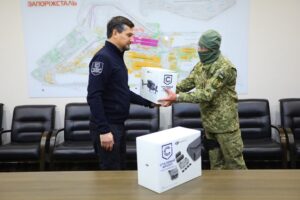
Zaporizhstal Iron and Steel Works and Metinvest Group have handed over two modern DJI Mavic 3 reconnaissance drones to the Ukrainian Armed Forces as part of the Rinat Akhmetov Steel Front military initiative.
According to the company’s statement on Friday, the delivery took place this week.
“Ukrainian defenders use drones for reconnaissance, correction or strike. However, their first and most important mission is to contribute to saving the lives of the personnel of the Ukrainian Armed Forces. That’s why we can never have too many copters, and we systematically transfer these “birds” to our defenders. Today, two more Mavic drones from Zaporizhstal and Metinvest are on their way to the National Guard,” Yevgeny Avdzhi, Zaporizhstal’s procurement director, commented on the situation, as quoted by the press service.
It is specified that the DJI Mavic 3 is the most needed and popular model of drones in the Armed Forces of Ukraine, which helps to detect and destroy the enemy on the front line. The copter is used for reconnaissance and fire control. The competitive advantage of this model is its excellent optics and navigation. Two new Mavic drones have already been delivered to the Donetsk sector, where a Zaporizhstal employee with the call sign “Thunder” serves in the Armed Forces.
“Zaporizhstal and Metinvest always support their employees. And even now, when we are at the front line, the company does not stand aside, the soldier noted.
“Today we received two reconnaissance drones. These drones are our eyes at the front. They help us to detect the accumulation of military equipment and enemy manpower and then, if necessary, adjust our fire. This drone is operated remotely from a control panel. The pilot sees in real time where, what is located and what is happening, and then a decision is made to evacuate or fire,” explained Hrom.
“The Steel Front is an initiative that brings together all the military assistance provided by Rinat Akhmetov’s SCM businesses to the Ukrainian Armed Forces, medical workers and critical infrastructure. From the first day of the full-scale war in Ukraine, Rinat Akhmetov’s businesses (Metinvest, DTEK, FUIB, Ukrtelecom and others) and FC Shakhtar started helping the defenders of Ukraine by buying and delivering protective equipment, first aid kits, vehicles, fuel and more. As part of the military initiative, the soldiers also receive modern copters on a regular basis, which, as the military say, become their eyes on the front line. As part of the Rinat Akhmetov’s Steel Front military initiative, Metinvest Group has supplied more than 1,200 modern copters to Ukrainian defenders.
“Zaporizhstal is one of the largest industrial enterprises in Ukraine, whose products are in great demand among consumers both in the domestic market and in many countries around the world. The plant specializes in high-quality steel hot-rolled coils, hot-rolled sheets, cold-rolled sheets, cold-rolled coils made of carbon and low-alloy steels, as well as steel strips, ferrous tin, and bent sections.
The main consumers of the products are producers of welded pipes, automotive, transport and agricultural machinery companies, and manufacturers of household appliances.
“Zaporizhstal is in the process of integration into Metinvest Group, whose major shareholders are System Capital Management (71.24%) and Smart Holding Group (23.76%).
Metinvest Holding LLC is the management company of Metinvest Group.
Real GDP percentage changes over previous period in 2010-2023
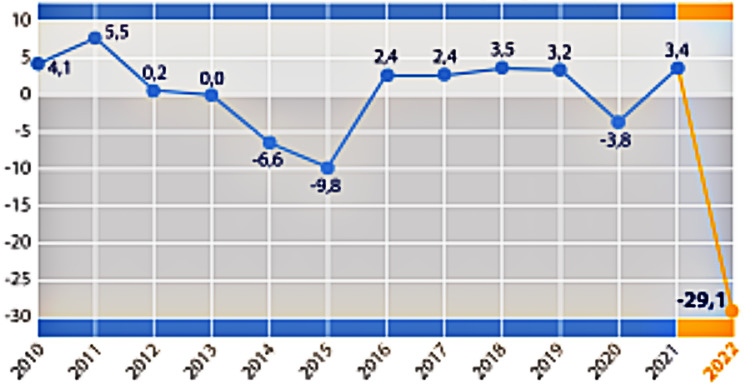
Source: Open4Business.com.ua and experts.news
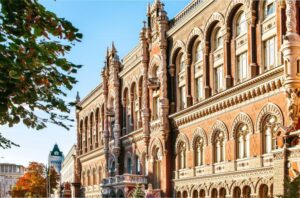
On May 5, the National Bank of Ukraine (NBU) has cancelled the licenses of Universal Policy Insurance Company (Kyiv) due to repeated violations of license conditions during the year.
According to the regulator’s website, the company fails to comply with mandatory financial ratios (solvency and capital adequacy ratio and risk operations ratio).
Earlier it was reported that “IC “Universalniy Polis” was subjected to a temporary suspension of the license on November 11, 2022.
The NBU notes that according to accounts for 2022, the amount of insurance premiums collected by the company was UAH 72 million (90% of them – from reinsurers), insurance payments – UAH 36 million. The market share of the company according to the results of 2022 is 0,2%.
According to reports for the first quarter of 2023, “IC “Universal polis” has not received insurance premiums.
IC “Universal polis”, registered in 2001, specializes in providing services in the field of risk insurance.
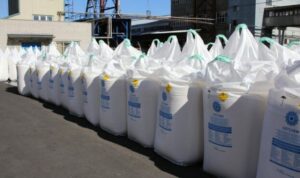
Ostchem’s nitrogen holding plants produced 515.5 thousand tons of mineral fertilizers in the first quarter of 2023, up 36.2% year-on-year, Group DF said in a statement on Friday.
According to it, Cherkasy Azot produced 387.4 thousand tons and Rivneazot produced 128 thousand tons, while Azot produced 137.8 thousand tons in March, the maximum since the beginning of the full-scale war.
“Lower gas prices have reduced the selling prices of mineral fertilizers. As fertilizers became more affordable, we started selling more and showed very good results. This spring, the high utilization of enterprises lasts longer than usual,” a comment by Oleg Arestarhov, head of Group DF’s corporate communications department, is quoted in the report.
It is pointed out that the key products produced by Ostchem plants were urea, UAN (Urea Ammonium Nitrate Network), ammonium nitrate, and lime ammonium nitrate (LAN). Urea output in the first quarter increased 4.7 times, to 106,500 tonnes, and UAN output 2.1 times, to 108,500 tonnes.
Production of ammonium nitrate increased from 217.1 thousand tons to 255.4 thousand tons, while UAN production fell from 62.3 thousand tons to 10.6 thousand tons.
“The structure of production corresponds to the structure of demand. The further demand will determine the production load of the plants, the terms of the repair campaign,” Arestarhov pointed out.
Among the new market trends the company highlighted the active supply of fertilizers in the de-occupied territories (Kherson, Nikolaev, Chernigov and Sumy regions). And among the factors constraining the growth of the fertilizer market, it noted an increase of marketing and logistics risks of agribusiness, such as the uncertainty of the prospects for a grain agreement, and restrictions on imports of Ukrainian grain, introduced in April 2023 by some EU countries.
As reported in early February, Group DF’s nitrogen holding Ostchem reported on the planned increase of its capacity utilization for the production of mineral fertilizers at Cherkasy Azot from 30% to 70%, and Rivneazot – up to 50% due to the seasonal increase in demand
Group DF earlier estimated the volume of consumption of ammonium nitrate by the Ukrainian market in 2022 at 1 million tons (import – 330 thousand tons); urea – 410 thousand tons (import – 225 thousand tons); UAN – 580 thousand tons (import – 190 thousand tons), stating that the expected increase in fertilizer consumption in 2023 by 15-20%.

Ukraine’s population at the end of 2022 was about 31.4 million people, of which about 1.15 million live in the temporarily occupied territories, according to experts at the Ukrainian Health Center (UHC).
“The war has resulted in an unprecedented migration crisis and large-scale internal displacements. UCH estimates that at the end of 2022, Ukraine’s population was about 31.4 million people. Of these, 1.15 million people live in the temporarily Russian-occupied territories seized after the start of the invasion,” the center’s report on the health care system after the start of the active invasion states.
The center’s experts also note that in the year after the start of the full-scale invasion, the system of outpatient and specialized medical care has fully recovered, in contrast to the system of primary medical care.
“The consumption of medical services at various levels declined in the first months after the invasion. However, outpatient and specialized medical care gradually recovered to prewar levels during 2022. Primary medical care has not resumed and requires support,” the center’s experts stressed.



