
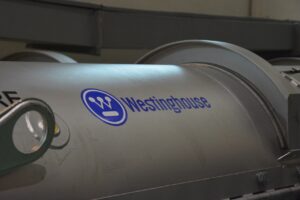
Ukrainian nuclear power plants will be able to fully switch to fuel from the American company Westinghouse by the end of 2023, Ukrainian Energy Minister Herman Galushchenko said.
“We have quite optimistic forecasts and confirmation that our cooperation with Westinghouse will enable us to implement this process (provision of American fuel – ER) already by the end of this year,” the minister said on the air of national TV marathon “United News” on Thursday, referring to his visit to the American partners’ fuel fabrication plant.
At that he noted that Ukrainian specialists present at the plant “are doing a lot to produce the corresponding fuel as soon as possible in order to replace the Russian fuel.
Answering the presenter’s question about the prospects of nuclear fuel production in Ukraine, the head of the Ministry of Energy said: “We also have relevant agreements with Westinghouse to build a nuclear fuel production plant in Ukraine. There is no doubt that this will be done.
Along with this Galushchenko paid attention to the fact that the whole Europe is now very urgent to stop using Russian nuclear fuel.
“During our meetings with ministers of power of EU and USA we discussed in details that it is important to ensure fuel production in necessary amount as soon as possible in order to replace Russian fuel in European market”, – he explained, adding that it is impossible to quickly find nuclear fuel substitute, unlike, for example, for gas, because it is produced in certain amount, and increase of amount requires time.
At the same time the minister emphasized that the Russians have almost a monopoly position on the market of fuel for VVER-440 units.
“The Minister stressed that the Russian Federation is nearly a monopolist on the market of VVER-440 power units, therefore we are working to ensure that Westinghouse starts producing assemblies for these units this year which will help to get rid of strong dependence on Rosatom in this area.
As reported, in early March 2022, after a full-scale invasion of Ukraine by Russia, Energoatom completely abandoned the purchase of Russian nuclear fuel.
On June 2, at the Khmelnitsky nuclear power plant, Energoatom and the US Westinghouse signed an agreement to supply nuclear fuel to all Ukrainian nuclear power plants with 15 power units (currently 7 power units are loaded with this fuel – ER).
Before this in the very beginning of 2022 Peter Kotin, President of Energoatom, in his comments to Interfax-Ukraine noted that it would take Westinghouse about two years to be ready to cover the fuel demand of the NAEK for 13 existing VVER-1000 units, for which time the nuclear power plants have enough fuel.
Asked about the timing of Westinghouse fuel deliveries for the two VVER-440s at the Rivne NPP, Kotin indicated that the first batch of American fuel for VVER-440s will be delivered in 2025.
Then in a March 2022 interview with Interfax-Ukraine, Kotin explained that there were no questions about fuel for VVER-1000, while more effort was needed for fuel for VVER-440 so that Westinghouse would have time to provide supplies next year, which is 2023.
At the same time, Kotin noted that Energoatom is also optimizing fuel delivery schedules so that the U.S. partners can meet the fuel demand. According to him, due to the reduced consumption of electricity during the war, which resulted in reduced production, the units will be able to work longer on the fuel already brought in.
As part of the cooperation, Energoatom and Westinghouse launched a training program for Ukrainian nuclear specialists in the United States, under which more than 60 specialists and nuclear graduates will study the AP1000® technology.
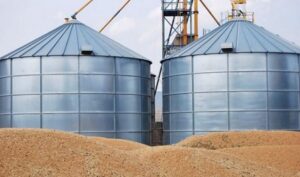
The U.S. Agency for International Development (USAID) announced collaboration with three major Ukrainian agricultural holdings to develop their grain export and storage infrastructure for a total project investment of $44 million.
According to CNN’s website, the three companies are large Ukrainian agricultural producers Kernel, Nibulon and Grain Alliance.
It is specified that the cooperation with the companies will help increase Ukraine’s capacity to ship over 3 million tons of grain to foreign markets per year. Investments will be used to develop the infrastructure of agricultural products storage and expansion of elevators.
“This announcement is part of a deliberate effort by the Biden administration to develop Ukraine’s economy and mitigate the global food security crisis that escalated after Russia’s invasion of Ukraine,” the publication specified in the report.
As earlier reported, before the war Kernel was the world’s number one producer and exporter of sunflower oil (about 7% of world production) and was the largest producer and seller of bottled sunflower oil in Ukraine. The company was also engaged in cultivation and sale of other agricultural products.
In FY2022 (July-2021 – June-2022), the holding posted a net loss of $41 mln versus $506 mln net profit in the previous FY. Its revenue decreased by 5% to $5.332 bln, and EBITDA decreased by 3.7 times to $220 mln.
Nibulon, one of the largest grain market operators in Ukraine, on April 15, 2022 received the permit from Izmail city council (Odessa region) for the construction of the terminal for handling grain cargoes on the land plot with the total area of 20 hectares.
“Nibulon” was established in 1991. Before Russian military invasion grain trader had 27 transshipment terminals and complexes to receive the crops, the capacities for one-time storage of 2,25 mln. tons of agroindustrial complex products, fleet of 83 vessels (including 23 tugs), and also owned Nikolaev shipyard.
“Nibulon” before the war worked 82 thousand hectares of land in 12 regions of Ukraine and exported agricultural products to more than 70 countries.
The grain trader exported maximum 5.64 million tons of agricultural products in 2021, reaching record volumes of deliveries to foreign markets in August – 0.7 million tons, the fourth quarter – 1.88 million tons and in the second half of the year – 3.71 million tons.
Grain Alliance Agro Holding in spring 2022 purchased a grain logistics hub near the border of Ukraine and Slovakia to deliver agricultural products by land bypassing Ukrainian ports, the throughput capacity of which was significantly reduced due to the full-scale Russian military invasion. The transshipment capacity of the grain terminal in Černá nad Tysou (Slovakia) will be up to 400,000 tons per year.
Before the war, Grain Alliance farmed 57,000 hectares in Kyiv, Poltava, Chernigov and Cherkassy regions, grew more than 300,000 tons of grains and oilseeds a year, and owned more than a thousand head of cattle.
Agroholding has six granaries in Ukraine with a total capacity of over 260 thousand tons.
The founders of Harvest Moon East LLC (Baryshevka village, Kyiv region) and BZK Grain Alliance (Sweden) established a joint company, Grain Alliance, in 2009.
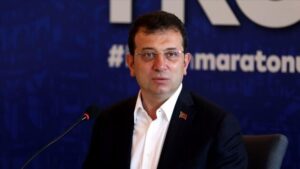
Turkey’s Good Party (IP) leader Meral Akshener has announced that she is leaving the six-party opposition bloc over disagreement over a presidential candidate, the Daily Sabah reported Friday.
“We worked tirelessly to make the voice of the people heard in the opposition, to convey the expectations of the people to the opposition. At yesterday’s meeting, five parties nominated Kemal Kılıçdaroğlu, while we proposed Mansur Yavas and Ekrem Imamoğlu. Unfortunately, our proposal was rejected,” Akshener said. According to her, in this way the bloc proved that it “does not reflect the will of the people in its decisions,” and therefore the IP is leaving it.
At the same time, Akshener noted that her party will continue to oppose the ruling Justice and Development Party, whose leader is Turkish President Recep Tayyip Erdoğan.
She also called on her candidates, Yavas and Imamoglu, who are mayors of Ankara and Istanbul respectively, “to continue to fulfill their tasks” and try to win the elections.
For his part, Kemal Kılıçdaroğlu, head of the Republican People’s Party, who was nominated by the majority in the bloc, said there was no cause for concern.
“Don’t worry, everything will fall into place,” he said.
In January, Turkish leader Recep Tayyip Erdogan said Turkey’s presidential and parliamentary elections would be held on May 14.
The elections were originally scheduled for June 18, but Erdogan has repeatedly said the vote could take place earlier. His party has pointed out that the elections in June will coincide with the high tourist season, so it would be better to postpone them.
Pre-election polls show that the battle in both the presidential and parliamentary elections will be fierce.
Western media call the upcoming elections “the biggest test” for Erdogan in 20 years. At the same time, reports note that the opposition’s inability to decide on a single candidate could significantly weaken its position and give Erdoğan an additional chance of victory.
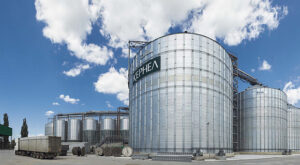
“Kernel, one of Ukraine’s largest agribusiness groups, earned $208.71 million in net income in the second quarter of fiscal year 2023 (FY, July-September 2022), down just 2.1% from the same period in the previous FY.
According to a financial report on the company’s Web site Friday evening, the agriholding’s revenue for the period fell 34.2 percent to $1 billion 235.28 million.
Gross profit was down 14.9 percent to $294.06 million, operating income was down 2.3 percent to $244.36 million and EBITDA was down 5.1 percent to $277.15 million.
These numbers are significantly better than the first quarter of this fiscal year.
The company attributed the 34% year-on-year decline in revenues to lower exports of grain, sunflower oil and meal.
The report notes that the net change in fair value of biological assets did not have a significant impact on the group’s results in the second quarter, with a profit of $0.3 million versus a profit of $27 million in the same period last year.
According to the document, shipping and handling costs accounted for 23% of cost of sales in October-December 2022, up 120% quarter-on-quarter and 64% quarter-on-quarter, reflecting sharply higher logistics costs in exporting goods from Ukraine. This caused a 15% decrease in gross profit.
“Kernel also recognized a $5 million gain from the reversal of previously recognized asset impairments, primarily related to inventories located in territories previously occupied by Russia, as the company was able to access and use such inventories in its operations.
General and administrative expenses in the second quarter of fiscal 2023 were $59 million, an increase of 33% over the first quarter of fiscal 2023, reflecting higher payroll-related accruals.
Regarding EBITDA, Kernel clarified that in the Oilseeds Processing segment, it increased 10% year-over-year to $66 million, mainly due to the second consecutive quarter of strong profitability for those players who were able to organize the logistics of sunflower oil exports from Ukraine.
“Despite improved profitability year-over-year in the reporting period for all businesses in the Infrastructure & Trading segment, a more than two-fold decline in export volumes led to a 46% year-over-year decline in segment EBITDA to $62 million,” the report said.
According to it, the Agriculture segment recorded a solid EBITDA of $204 million, up 45% from last year. This growth is largely due to the devaluation of the hryvnia, the document said.
Kernel added that its net profit from exchange rate differences in the reporting period amounted to $8 mln.
Kernel’s net debt, according to the report, decreased during the quarter by 30% – to $1.048 billion, and the ratio of net debt to EBITDA decreased from 13.5 to 11, but it is still much higher than a year ago, which was 1.9.
Overall, in the first half of 2023FG Kernel’s net profit decreased by 12.6% to $370.31 million compared to the same period last year, while revenues fell by 41.3% to $1 billion 889.78 million.
Gross profit was down 30.8% to $467.41 million, operating income was down 21.8% to $386.83 million and EBITDA was down 21.9% to $445.52 million.
As reported, Kernel ended FY 2022 with a net loss of $41 million versus $506 million in net income in the previous fiscal year on a 5% decline in revenue to $5.332 billion.

The adoption by the European Union of new carbon dioxide standards for cars and buses is postponed to a later date due to opposition from Germany, some other countries and the center-right wing of European lawmakers, the representative office of Sweden, which holds the EU Council presidency, said.
“The vote (originally scheduled for next week – IF) will take place at a later (EU) Council meeting,” the Swedish presidency said Friday, noting that no date has yet been set.
Last year, EU lawmakers and member state governments agreed that manufacturers must cut emissions from new cars by 55 percent by 2030 from 2021 levels and 100 percent in 2035. In effect, this means that sales of new cars that run on hydrocarbon fuels, such as petroleum products, will be banned.
Some countries, including Germany, have asked the European Commission (EC) to make an exception for cars running on “green fuel. It can be made from renewable energy sources and carbon emitted from the air. However, the EC is still silent.
The center-right European People’s Party (EPP), the largest faction in the European Parliament, opposes the ban and calls on the governments of the Union to do so.
The EPP’s chief negotiator on the issue, Jens Gieseke, motivated the conservatives’ position by the fact that the ban would hinder innovation, lead to the loss of thousands of jobs and the decline of a crucial European industry.
“The world will continue to drive cars with internal combustion engines. Our job is to make them as CO2-efficient as possible, not to ban them. Green fuels can help,” Gieseke said.
The European Greens are of a different opinion. Their leader in the European Parliament, Philippe Lambert, believes that this should not be a topic for further debate. Germany has already agreed to phase out internal combustion engines, and Brussels has already decided on this. Germany must remain a reliable European partner, he said in a statement sent to journalists.
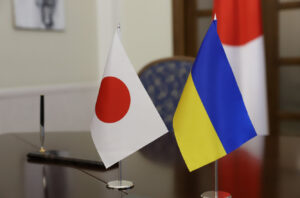
Ukraine will receive a $170 million grant from Japan to implement Ukraine’s “Rapid Recovery Plan,” Japanese Ambassador Matsuda Kuninori and Deputy Prime Minister for Reconstruction and Minister of Community Development, Territories and Infrastructure Oleksandr Kubrakov signed the agreement on Friday.
According to the Ministry of Reconstruction, the day before, the deputy prime minister also signed a memorandum under which the United Nations Development Program (UNDP) will independently oversee the use of funds for housing reconstruction in the Kiev region.
“Transparency and accountability are the basic principles of the approach to reconstruction. Without fulfilling these conditions, the involvement of international partners and, in general, the effective restoration of the destroyed is impossible (…) We plan to scale the successful experience of supervision and cooperation with UNDP in matters of independent supervision to other restoration projects in different regions of Ukraine”, – Kubrakov noted.
According to him, similar cooperation is planned with other international organizations – financial or expert.
In addition to independent oversight, UNDP will support digitalization of reconstruction, development and monitoring processes in regional development, work on enhancing the capacity of local governments to implement infrastructure projects, community access to international donor funding and energy efficiency of social infrastructure.
In addition, the UN Development Program will provide technical support to Ukraine in reconstruction.
As reported, the Government of Japan has allocated $170 million for Ukraine’s reconstruction, and before that another $95 million, which was sent to the UNDP Development Program in the framework of a partnership agreement.
In addition, in January, the “Recovery” direction was launched within the framework of the fundraising platform United24. Due to it, 18 apartment buildings in Irpen, Borodyanka, Gostomel, Buzova and Mily will be fundamentally repaired and about 4000 residents will be able to return into their homes by the end of 2023. For this purpose, according to the decision of the government, more than 500 million UAH collected at the special account of United24 will be directed.



