

The Cabinet of Ministers of Ukraine has set an immigration quota of 9,203 people for 2023.
According to the government decree No. 111 of February 7, the quota for relatives of citizens of Ukraine (full siblings, grandfathers and grandmothers, grandchildren) was 845 persons; for persons who were previously citizens of the country – 396 persons; for parents, spouses and minor children of immigrants – 2.055 thousand people; workers of science and culture, immigration of whom corresponds to interests of Ukraine – 850 people.
For persons who have carried out foreign investment activities in the Ukrainian economy in foreign convertible currency in an amount not less than $100 thousand immigration is established without restrictions.
In addition, this year under the quota can immigrate to Ukraine 5 thousand highly qualified specialists or workers who are in dire need of the economy of the country.
Among other things, a quota of 57 persons has been set for persons who have served in the Armed Forces of Ukraine for three or more years.
There is no quota for persons who have lived continuously in the territory of the state for three years from the date of their status as victims of human trafficking.
As reported, in 2021 the immigration quota was 9,818 persons, and in 2022 – 8,488 persons.
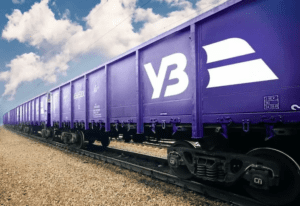
In January 2023 “Ukrzaliznytsia” (UZ) increased the volume of transportation of iron ore by 45% compared to December 2022 – up to 1.14 million tons, Deputy Director of Commercial Work Department of UZ Valery Tkachev said at a meeting of the Office of the exporters at UZ.
“After April (last year – IF), when 2.3 million tons of ore were transported, the volumes decreased: in November-December they dropped to 770-780 thousand tons in export traffic. However, January (this year) is very good news: we have already transported 358 thousand tons more, i.e. 1.14 million tons. The ore is 45% January to December,” he said.
Tkachev added that the positive dynamics of the ore will remain in February.
According to him, in January this year, the volume of transportation of ferrous metals increased by 2.1 times (+202.3 thousand tons) compared to the previous month – up to 380 thousand tons. “And this is also very encouraging”, – said Tkachev.
According to him, the transportation of cement has also increased. “But in October-November and December 2022 we already transported more than in the same months of 2021, which also shows the positive dynamics”, – Ukrzaliznytsia representative stated.
In particular, in October 2022 the volume of cement transportation was 87 thousand tons (against 85 thousand tons in 2021), in November – 83 thousand tons (66 thousand tons respectively), in December – 70 thousand tons (49 thousand tons). In January 2023 the volume of traffic decreased to 54 thousand tons, which is still higher than in January 2022 – 29 thousand tons.
UZ notes that the demand for cement greatly stimulated its consumption of sleeper plants UZ, which increased production in 2022 by 4.7 times – up to 832 thousand sleepers.
Tkachev also said that the volume of sunflower oil transportation from 20 thousand tons in March 2022 rose in January to almost 134 thousand tons, or 6.7 times, half of all exports of sunflower oil in the past month through the ports on the “grain corridor”.
The deputy director of the department said that in January 58% of all export cargo shipped by UZ, or 3 million tons, fell to the grain, while the second place – iron ore with 22%.
As reported, in January this year compared to December last year, the total volume of transportation by UZ increased by 11% – to 11.29 million tons. In 2022 it was more than halved compared to 2021 – to 150.6 million tons from 314.3 million tons.
UZ today uses 13 railway crossings, which border the EU countries and Moldova. In January the most cargo went through Izov-Hrubeshuv – 0.8 million tons, or 16%. However, port stations are further among the largest export cargo transportation points: Odessa-Port and Chornomorsk-TIS – 13% each, Chornomorsk-Port – 10%, followed by neighboring Uzhgorod – 8%, Chop and Batevo – 7% each.

The world’s largest cryptocurrency exchange, Binance, is imposing a ban on dollar deposits and withdrawals, the company said in a statement, without specifying the reasons for the decision.
“We are temporarily suspending bank transfers in dollars as of Feb. 8,” said a Binance spokesman quoted by CNBC.
He added, however, that the company is working to resume these transactions as soon as possible.
Binance US, which is regulated by the U.S. Treasury’s Financial Crimes Enforcement Network (FinCEN), said in a statement posted on Twitter that the decision to suspend operations has not affected it. Thus, it only affects users outside the U.S. who transfer dollars to or withdraw dollars from bank accounts.
Binance’s announcement triggered a surge in cash outflows from the exchange’s cryptocurrency wallets, according to Arkham Intelligence.
Net cash outflows from the exchange exceeded $172 million in one day, according to DefiLlama. By comparison, the company has $42.2 billion in cryptocurrency assets, so the outflow is negligible, Arkham noted.
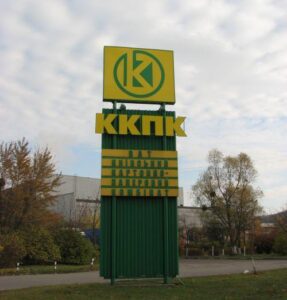
On February 7, Yuriy Golovchenko, who previously worked at the enterprise as the director of the secondary raw materials procurement department, was appointed Chairman of the Board of Kyiv Cardboard and Paper Mill (KCBK, Obukhiv, Kyiv region), the industry leader by sales volume.
According to Kyiv KBC publication in the information disclosure system of the National Securities and Stock Market Commission (NSSMC) on Wednesday, February 1, the company’s Supervisory Board (SB) made the decision, dismissing Alexander Kravchenko, who had been on the board for six months.
Golovchenko was appointed as head of the board until February 29, 2024.
As previously reported, Kravchenko, who was appointed by the National Assembly in July 2022 for almost a year was also previously in this position (from April to August 2021) and before that served briefly as director general.
The Kyiv KBC board also reappointed for a new term (until February 29, 2024) the following members of the board: Nina Kolodiy, economics and finance director; Alexander Bykovets, purchasing director; Mykola Matskevych, HR director; Nina Shevchenko, chief accountant. Kravchenko also replaced Alexey Katyshev, sales director of paper and cardboard, as a board member.
Kiev KBC is one of the largest cardboard and paper companies in Europe (corrugated packaging, sanitary and hygienic products). In 2022 it produced goods for 7 billion 432 million UAH, which is 3.5% less than the year before.
Pulp Mill Holding (Austria) owns 100% of the company.

The number of bookings in Ukrainian hotels at the end of 2022 decreased by only 13% compared to pre-COVID 2019, despite large-scale attacks on Ukrainian cities by the aggressor country, Russia, according to a study by the Booking.com portal.
“2019 was the best year in Ukraine in terms of the number of both booked and lived nights. We recorded that starting from the third quarter of 2022, the decline in bookings decreased to 27% compared to 2019, while in the second the drop was 70%. And despite the huge number of attacks on our cities, we ended the fourth quarter with a drop of 13%. If it weren’t for the attacks of the aggressor, we might have approached the figure of 2019,” market team manager of the Ukrainian office of Booking.com Iryna Kulish said during the online conference of the Association of Hotels and Resorts of Ukraine on Tuesday.
According to the study, the number of nights spent in Ukrainian hotels in 2022 halved compared to 2021. At the same time, after the collapse in March 2022, the indicator began to grow already in April and in August almost reached the January level, the expert noted.
At the same time, the average cost of a room has not changed significantly: UAH 1,328 in 2021 and UAH 1,319 in 2022.
According to Booking.com, the most frequent stays for guests last year were two-six days (52%), about a third of visitors stayed for one day, 20% of customers stayed for seven days or more.
At the same time, the booking window in 2022 has been significantly reduced. Day-to-day or day-to-date bookings accounted for 35% of total bookings due to the difficulty of planning during the war. About 28% of bookings were made two-seven days before arrival, while 18% were made eight-20 days before arrival.
At the same time, the share of the most advanced bookings (more than 21 days), most often associated with summer holidays, decreased to 19%.
According to portal statistics, last year guests most often stayed in hotels (46%) and apartments (23%), while the share of hostels and apart-hotels was only 7% and 4% respectively.
According to Booking.com, a significant competitive advantage when choosing a location in Ukraine was the provision of information about the availability of a bomb shelter, autonomous power sources, uninterrupted Internet, water and heating.
The most popular destinations in 2022 were Lviv (19.4% of bookings), Kyiv (15.5%), Bukovel (8.7%), while a year earlier Kyiv (23.7%), Odesa (14.1%) and Lviv (11.3%) were in the lead. In general, the top bookings included mainly locations in the west of the country: Yaremche, Uzhgorod, Truskavets, Ivano-Frankivsk, and Chernivtsi. Previously, high rates of bookings were shown mainly by beach destinations, Kulish noted.

The German government will transfer more than 700 generators to Ukraine to alleviate the energy crisis in the country, 41 of which will be given to food producers, in particular to support the production of bread, milk, livestock products and provide electricity to food storage warehouses.
According to a press release from the UN Food and Agriculture Organization (FAO), which is involved in the distribution and delivery of generators in Ukraine, seven bakeries across the country have already received German generators rated 450-550 kW. This will be a timely and tangible support to restore critical food value chains and provide people with life-saving food.
The press release specifies that the day before LLC “Odessa bread-baking plant № 4” (Odessa) received one of the German generators, provided by the German Federal Agency for Technical Relief (THW) with the financial support of the German Foreign Office. Distribution of generators was made by FAO and Ministry of Agrarian Policy and Food of Ukraine.
The company is located in Odessa, where the Russian military aggression at the beginning of 2023 created the most difficult situation with power supply in Ukraine. The enterprise faces constant problems in providing basic activities, as both scheduled and unscheduled power outages disrupt the technological process of baking bread, which also leads to significant financial losses.
“The company is completely dependent on an uninterrupted supply of electricity. We are pleased that thanks to the transfer of this generator we can support Ukrainians and ensure sustainable production of essential products – bread,” the FAO quoted Frank Müller, agricultural attaché of the German Embassy in Ukraine.
According to FAO, Odessa bakery is the largest producer of bakery products in the south of Ukraine and provides bread to more than 58% of the population of the Odessa region. The company employs 910 employees, producing over 100 tons of products daily. The plant’s products are sold in the Odessa, Mykolaiv and Kherson regions, as well as in Kherson, where no other bakery is operating.
“We sincerely thank the FAO and the Ministry of Agrarian Policy for their assistance in providing our enterprise with a generator from the German government. This help is critically needed for our production. Now in Odessa the electricity is provided for two hours a day, so without this generator we would not be able to fulfill our tasks of bread production, to supply sufficient quantity of products to budget organizations of the city and region: schools, kindergartens, hospitals and sanatoriums”, – the FAO quotes the director of the plant Vitaliy Dobrovolskiy.
As it was reported, Germany on January 10 delivered the first 10 high-efficiency electric generators (capacity from 450 kW) to the warehouse in Ukraine, from where they are distributed among the food producers working in the regions suffered from the Russian invasion and also in the recently de-occupied territories.
In total, the German agency planned to transfer more than 700 generators to support the Ukrainian energy system. Of these, in January it planned to supply at least 25 generators to producers of foodstuffs such as bread, milk, livestock products, electricity for food storage facilities, etc.



