

Most Ukrainians suffer from fatigue and lack of proper sleep, according to the results of a sociological survey “Psychological Markers of War” conducted by the “Rating” group on October 8-9.
In a press release with the results of the survey, released on Monday, it is noted that the majority of Ukrainians are prone to fatigue (only 34% do not feel it) and lack adequate sleep (only 47% have adequate sleep).
“Such reactions of the body are natural for stress and at the same time quite debilitating. Despite this, other emotional and moral indicators of citizens are in better condition,” the release says.
It clarifies that Ukrainians in the eighth month of a full-scale war demonstrate a good level of resilience (3.9 out of 5). The components of this indicator: psychological resilience (3.9) and physical health support (3.7) did not change significantly compared to June.
A relatively high indicator of psychological stability is provided primarily by interest in what is happening around (4.5), plans for the future (4.2), normal nutrition (4.2), lack of regret about the past (4.1) and confidence in one’s decisions. (4.0).
At the same time, since April, there has been a decrease in indicators of normal nutrition, at the same time, indicators of good sleep are growing.
“This allows you to keep a relative balance of support for physical health,” sociologists say.
They note that women have a lower level of hardiness than men. A relatively lower level of hardiness is recorded in the youngest and oldest. Having a job has a positive effect on resilience: those who work fully or partially feel better than those who do not work, because “work (employment, team) and salary cover the basic need for security and belonging to the community.”
A higher level of resilience is observed among those who have relatives who are fighting today.
In the regional context, in this study, there are no significant differences in the integral indicator. At the same time, there is a significant gap between the index of physical health (relatively lower level) and psychological stability (relatively higher level) among residents of the southern regions of Ukraine.
“In all categories of respondents, psychological hardiness (3.9) is higher than indicators of physical condition (3.7). As in the previous study, the hypothesis is confirmed that the war has physically exhausted more, and psychological endurance remains relatively stable,” – stated in release.
It also notes that, in general, the dynamics of the resilience index has improved somewhat.
“Ukrainians, despite the eighth month of the war, still have enough physical and moral strength to live in difficult conditions, work, help, fight,” summed up sociologists.
The sociological survey “Psychological markers of war” was conducted by the Sociological Group “Rating” on October 8-9, 2022. In the course of the study, 1,000 respondents aged 18 years and older were interviewed using the CATI (Computer Assisted Telephone Interviews) method in all regions, except for the temporarily occupied territories of Crimea and Donbass, as well as territories where at the time of the survey there was no Ukrainian mobile connection. The error of the representativeness of the study with a confidence probability of 0.95: no more than 3.1%.

Repair crews of NPC Ukrenergo are already working to eliminate the consequences of a Russian terrorist attack on energy infrastructure facilities in the central and northern regions of Ukraine.
“The situation in the power system is under control. However, the Ukrenergo dispatch center does not rule out the possibility of introducing emergency shutdown schedules. Therefore, it is important to save electricity consumption throughout the country, especially in the evening hours,” the company said in a statement.

Shareholders of IC Mega-Garant JSC (Kyiv) have decided to terminate the powers of the head of the Supervisory Board Roman Kipot, members of the Supervisory Board Oleksandr Batrak, Natalia Titova.
According to the company’s announcement in the information disclosure system of the National Securities and Stock Market Commission, in addition, Alexander Volokhin, who has been director of Akvis Trade LLC, Kars Technoservice LLC, and Ivan Nizhnik, director of Nizhbud LTD LLC, has been appointed members of the Supervisory Board for the last five years.
As reported, the Motor (Transport) Insurance Bureau of Ukraine announced the company’s loss of associate member status from October 5, 2022. In connection with the temporary suspension of the licenses of IC “Mega-Garan”, including for the implementation of activities on compulsory insurance of civil liability.
Earlier, on August 1, the NBU temporarily suspended the licenses for insurance activities of IC Mega-Garant JSC due to violation of mandatory financial standards.
As the regulator noted, a significant part of the assets of Mega-Garant IC was placed with Megabank JSC, which was classified as insolvent, according to the decision of the NBU dated June 3, 2022.
As a result, IC Mega-Garant lost a large amount of eligible assets that ensure the solvency of the insurer, which led to the fact that, as of June 7, 2022, the insurer does not comply with the solvency and capital adequacy ratio, as well as the risk ratio of operations.
The NBU notes that the insurer has been given a period until September 30, 2022 to eliminate the violations that became the basis for applying the enforcement measure.
JSC “IC “Mega-Garant” is a part of the banking group JSB “Megabank”. It operates in the non-life segment, including OSAGO.
In the first quarter of 2022, the insurer collected UAH 116.4 million in insurance payments (more than 80% of which are OSAGO) and paid out UAH 4.5 million in insurance payments.
The company ranks 28th among the largest Ukrainian companies operating in the OSAGO market and has a 1.24% market share in insurance premiums for this type of insurance.

Kryvyi Rih Iron Ore Plant (KZHRK) in January-September of this year reduced the production of commercial iron ore from underground mining by 24.4% compared to the same period last year – to 2.504 million tons.
According to the enterprise, in September the Pokrovskaya, Krivorozhskaya, Kozatskaya and Ternovskaya mines produced 50,000 tons each. In total, the plant produced 200 thousand tons of products last month, while in August – 270 thousand tons, in July – 280 thousand tons.
As reported, KZHRK in 2021 increased the production of underground iron ore by 12.7% compared to 2020 – up to 4.298 million tons.
KZHRK specializes in underground mining of iron ore. KZHRK has four mines: Pokrovska (former Oktyabrskaya), Kryvorizka (Rodina), Kozatska (former Guards) and Ternivska (former Ordzhonikidze Mining Administration, then Lenin ).
Starmill Limited owns 99.88% of the mill’s shares.
KZHRK is owned by the Metinvest group and the Privat group. The operational management of the enterprise is carried out by the Privat group.
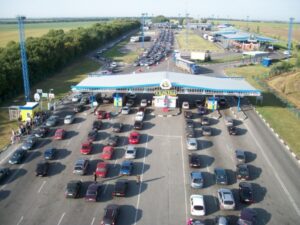
The flow to leave Ukraine through its western border from October 8 to 14 decreased by approximately 3 thousand compared to the previous week – to 250 thousand people, while the flow to enter fell immediately by 26 thousand – to 239 thousand, reported State Border Service on Facebook.
Thus, according to the agency, this week, with massive Russian rocket attacks for the second time since May 10, a net weekly outflow from the country was recorded – in the amount of 11 thousand people.
The previous time the number of those who left Ukraine for a week exceeded the number of those who entered two weeks ago, but then the net outflow amounted to 28 thousand people at once, and one of the possible reasons was the reaction to mobilization in Russia and “pseudo-referenda” in the occupied territories.
The number of passenger cars crossing the border this week fell to 125,000 from 133,000 a week earlier, while the number of vehicles carrying humanitarian cargo increased slightly from 485 to 494.
The return of the outflow from Ukraine – 15 thousand people per week – was confirmed this week by the Polish border service. According to her, the flow from Ukraine to Poland increased from 163 thousand people. a week earlier to 165 thousand, while the return flow from Poland to Ukraine decreased from 176 thousand to 150 thousand people.
In general, since the beginning of the war, 7.025 million people arrived in Poland from Ukraine, while 5.229 million people traveled in the opposite direction.
According to the State Border Service, during the week the largest influx to Ukraine was on Wednesday-Thursday – 7 thousand people each.
Another news this week was the record number of non-Ukrainian citizens who entered the country on October 14: according to the border agency, their number was about 10 thousand, while in the previous days of the war the record number was 6-7 thousand.
As reported, since May 10, the flow to enter Ukraine through its western border has consistently exceeded the flow to exit for almost a month every day. The net inflow during this time amounted to 188 thousand people. In the following weeks, there was no such clear trend, except for the week at the beginning of the new academic year, when the net inflow amounted to a record 47 thousand people.
However, in general, the statistics testified to the gradual return of Ukrainians home: the net inflow for the period from May 10 to September 23 amounted to 409 thousand people. However, over the past three weeks, the net outflow has reached 21 thousand people.
According to the UNHCR data, as of October 11, a total of 14.031 million people left Ukraine since the beginning of the war (excluding the flow to enter), of which 6.782 million went to Poland, 2.852 million people to Russia (data as of October 3), Hungary – 1.549 million people, Romania – 1.324 million people, Slovakia – 851.8 thousand people, Moldova – 654.4 thousand people, Belarus – 16.7 thousand people.
At the same time, according to the UN, from February 28 to October 11, 6.715 million people entered Ukraine (excluding data from Hungary, the Russian Federation and Belarus).
Estimates of the likelihood of a recession in the US economy have risen sharply amid high inflation and rising interest rates in the US, according to a regular poll by The Wall Street Journal.
Respondents estimated the probability of a recession in the US in the next 12 months at 63% against 49% in July. The indicator exceeded 50% for the first time since July 2020. The WSJ data since 2005 show that experts’ assessment of the chances of a recession at this level in rare cases did not correspond to a real recession.
The survey was conducted October 7-11 among 66 economists.
On average, respondents forecast a 0.2% annualized decline in US GDP in the first quarter of 2023 and a 0.1% decline in the second quarter. The July forecast called for growth of 0.8% and 1%, respectively.
Companies will respond to the shrinking economy and their profits by firing employees, experts say. According to them, the number of jobs in the US with the exception of the agricultural sector will decrease by an average of 34 thousand per month in the second quarter of next year and by 38 thousand in the third quarter. Previously, it was expected that in these six months the number of jobs will grow by an average of 65 thousand monthly.
Economists are increasingly skeptical about the Federal Reserve’s ability to keep raising rates to slow inflation without triggering a rise in unemployment and a recession. About 59% of analysts polled fear that the Fed will raise rates too high from 46% in July.
“A soft landing will most likely remain a fairy tale that will never come true,” said Daniil Manenkov, an economist at the University of Michigan.
“The negative impact from rising rates and a stronger dollar is huge and will cost about 2.5 percentage points of GDP growth next year,” said Aneta Markowska, senior economist at Jefferies LLC. “.
At the same time, the recession will be relatively short, experts believe. Those economists who estimate the probability of a recession higher than 50% generally believe that it will last 8 months. The average duration of US recessions after World War II is 10.2 months.
In 2023 as a whole, the United States economy will grow by 0.4%, in 2024 – by 1.8%, according to the consensus forecast. Economists expect growth of 0.2% this year.
Unemployment in the United States, according to the average forecast of experts polled by the WSJ, will increase from September 3.5% to 3.7% by the end of 2022, then reach 4.3% by July and 4.7% by December next year, after which it will hold around this level throughout 2024.
“The Fed is choosing the lesser of two evils – a recession and rising unemployment now or the risk of more destructive and persistently high inflation in the future,” said KPMG’s Diane Swank. “The risk of error is very high.”
The Fed raised the key interest rate by 75 basis points in the last three meetings, and now the rate is 3-3.25%. September inflation in the United States beat forecasts at 8.2%, which almost certainly means that the Fed will raise rates again in November by 75 bp.
By the end of this year, the rate will rise to 4.267%, according to the consensus forecast of economists polled by the WSJ, and the peak value of 4.551% will reach next June. At the same time, about 30% of respondents believe that the Fed will start cutting rates as early as the fourth quarter of 2023, and 28% expect a reduction in the first quarter of 2024.



