

The Ministry of Foreign Affairs of Ukraine is intensifying work on the NAZOVNI system to support domestic business, said Ukrainian Foreign Minister Dmytro Kuleba.
“Last year, at the conference of ambassadors, we presented to the President a unique product – the NAZOVNI digital system. This is an electronic account of the exporter, which is directly connected with all Ukrainian diplomatic missions around the world. To be honest, we did not deal with this project from February to June due to objective circumstances, but then I said that war is war, but helping Ukrainian business is also helping Ukraine win the war, because the economy must live,” Kuleba said in an exclusive interview with Interfax-Ukraine.
The Minister stressed that no country has won the war with a dead economy.
“We have sharply increased turnover on NAZOVNI, connected absolutely all embassies and consulates to it. This is the principle of one window: the exporter came in, created an office for himself, indicated that he was selling to the countries that interested him, the embassy of the corresponding country immediately saw it, worked it out request, went back to the exporter and said: “You can sell so much of this here, here is the partner, here is the contact, here is how the local legislation works,” he said.
Kuleba added that every two or three weeks he receives a selection of reactions that the business leaves for the work of NAZOVNI.
“We do this in order to hear comments and improve, fix bugs in the system. Our basic client is small and medium-sized businesses, we help them enter foreign markets and earn currency. And when they write kind words, they are amazed that everyone works and the state really helps, it motivates us to work even harder,” he explained.
The head of the Ukrainian Foreign Ministry drew attention to the fact that now the number of applications in the system has increased dramatically, and it is clear that business has felt the real help of diplomats. According to him, as of September 25, 662 companies are already registered in the NAZOVNI system. Basically, these are producers of agricultural products, food, cosmetics, textiles, wood and wood products, heavy industry, IT, construction service providers, Kuleba added.
“In total, this year we received 1,340 applications. And there are already several dozen specific successful projects, when we created new opportunities for Ukrainian companies in foreign markets. We will talk about these cases in more detail in order to attract even more companies to NAZOVNI,” the Foreign Minister assured Ukraine.
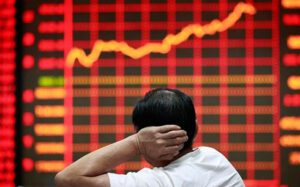
Equity markets of the largest countries in the Asia-Pacific region fell on Friday following similar dynamics in other parts of the world, the only exception was the Hong Kong index.
Stock indices of Western European countries following the session on Thursday fell to multi-month lows, the American Standard & Poor’s 500 ended trading at the lowest level since November 2020 on concerns about the state of the global economy, as well as due to increased geopolitical tensions and expectations of further monetary tightening. – credit policy of a number of major world central banks.
China’s Shanghai Composite index fell 0.55%, to its lowest in almost five months, after losing 5.6% in September. Hong Kong’s Hang Seng edged up 0.3% on Friday, but fell 12% over the month. The fall of both indicators was recorded for the third month in a row.
Business activity in the industrial sector of China in September fell to 48.1 points compared to 49.5 points a month earlier, according to the Purchasing Managers’ Index (PMI), calculated by Caixin Media and S&P Global. This is the lowest level since May. A PMI value above 50 points indicates an increase in activity in the sector, below – its weakening.
Analysts, on average, expected the indicator to remain at the August level, according to Trading Economics.
Meanwhile, a similar official indicator rose to 50.1 points from 49.4 points in August, the State Statistical Office said. The indicator exceeded this level for the first time in three months.
The official PMI for services and construction fell to 50.6 points in September against 52.6 points a month earlier. Consolidated PMI fell to 50.9 points from 51.7 points. Thus, both indicators decreased to the minimum level over the past four months.
On the Hong Kong Stock Exchange, the most significant rise in value was shown by the papers of the developer Country Garden Holdings Co. (+9%), aluminum producer China Hongqiao Group Ltd. (+4.3%), pharmaceutical CSPC Pharmaceutical Group Ltd. (+3.1%), representatives of the financial industry China Construction Bank Corp. (+3%), ICBC (+2.8%) and China Life Insurance Co. (+2.3%), as well as oil China Petroleum & Chemical Corp. (+2.4%).
At the same time, the shares of sports goods manufacturers Li Ning (-6.4%) and Anta Sports Products (-4.3%), Internet company Meituan (-2.7%), automotive BYD (- 3.2%), online retailer JD.com (-1.7%).
The value of the Japanese Nikkei 225 fell 1.8% on Friday. In September, it fell by 7.7%.
The fall leaders were shares of automakers Mazda Motor (-8.2%), Mitsubishi Motors (-8%), Subaru (-6.3%), Nissan Motor (-6.3%).
In addition, the price of securities of the investment technology SoftBank Group (-2.6%), the manufacturer of consoles Nintendo (-3.1%), Fast Retailing Co, the largest clothing retailer in Asia, decreased. (-3.6%), consumer electronics manufacturer Sony (-3.2%).
South Korean index Kospi decreased by 0.7%.
Quotes of securities of one of the world’s largest manufacturers of chips and consumer electronics Samsung Electronics Co. rose 1%, while automaker Hyundai Motor fell 2.8%.
Retail sales in South Korea decreased by 1.8% in August compared to the previous month. The last time the growth rate was recorded in November last year.
Relative to August last year, sales increased by 2.3%, which was the first rise in three months.
On average, experts expected the first indicator to decrease by 0.1%, the second – by 0.8%.
Australia’s S&P/ASX 200 plunged 1.2% to its lowest in more than three months, trailing tech stocks. In September, it fell by more than 7%.
In particular, the share price of Xero Ltd (-4%), Wisetech Global (-5.6%) and Block Inc. decreased. (-5%).
At the same time, securities of gold mining companies, including Silver Lake Resources Ltd., rose in price. (+7.3%), Regis Resources Ltd. (+6.9%), St. Barbara Ltd. (+6.5%), Falcon Metals Ltd. (+5.3%).

Unemployment in 19 countries of the eurozone in August did not change compared to July and amounted to 6.6%, which is the lowest figure in the entire history of its calculation, according to the data of the Statistical Office of the European Union.
Analysts also predicted that the indicator would remain at the same level, according to Trading Economics.
By comparison, unemployment was 7.5% in August 2021.
The number of unemployed in the euro area last month amounted to 10.966 million people, having decreased by 30 thousand people over the month.
Youth unemployment (population under 25) dropped to 13.9% from 14% in July. The number of unemployed in this age category decreased by 17 thousand compared to the previous month, to 2.136 million people.
The highest unemployment rate among European countries was recorded in Spain (12.4%) and Greece (12.3%). The lowest unemployment rate was recorded in the Czech Republic (2.4%), Poland (2.6%) and Germany (3%).
In the European Union, unemployment remained at 6% in August (6.8% in August 2021). In total, 12.921 million unemployed people were registered in the bloc, which is 52 thousand less than in July.
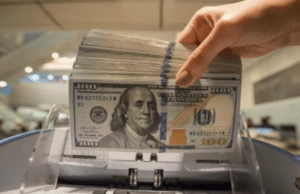
The National Bank of Ukraine (NBU) has increased from UAH 50,000 to UAH 100,000 (equivalent) the monthly limit on the purchase of non-cash foreign currency by citizens with subsequent placement on an irrevocable deposit for at least three months.
“Such changes will further reorient the demand of the population from foreign cash to non-cash, because transactions for the sale of non-cash currency by banks are carried out at a rate closer to the official than for the sale of cash, more convenient and safer,” the NBU website said on Friday.
As reported, with the outbreak of war on February 24, the National Bank banned the sale of non-cash currency to citizens, and on July 21 partially allowed it – up to UAH 50,000 per month on an irrevocable deposit of three months.

Consumer prices (HICP index) in the euro area in September increased by 10% in annual terms, according to preliminary data from the Statistical Office of the European Union.
Thus, inflation accelerated compared to 9.1% in August and updated the maximum since the beginning of the calculations.
Analysts polled by Trading Economics had expected a less significant increase of 9.7%.
The current inflation rate is five times the European Central Bank’s (ECB’s) target of 2%.
Consumer prices excluding food and energy increased by 4.8% in annual terms in September compared to 4.3% in the previous month.
The cost of energy resources soared by 40.8% (in August – by 38.6%). Food, alcohol and tobacco rose in price by 11.8% (by 10.6%), industrial goods – by 5.6% (by 5.1%), services – by 4.3% (by 3.8%) .
Consumer prices excluding food and energy (CPI Core index) this month increased by 4.8% in annual terms against 4.3% in August.
The growth of consumer prices in the euro area in September amounted to 1.2% compared to the previous month. In August, this figure increased by 0.6%.
The lowest inflation was recorded in France (6.2% in annual terms), Malta (7.3%), Finland (8.4%) and Ireland (8.6%). The most significant rise in prices occurred in Estonia (24.2%), Latvia (22.4%) and Lithuania (22.5%).

The stock market of Western Europe is actively rising on Friday, recovering from falling to the lowest level in more than two years, but still ends the next quarter with a decline.
The composite index of the largest companies in the Stoxx Europe 600 region jumped by 1.19% by 11:26 a.m. to 387.42 points. Growth leaders among industry sub-indexes are retailers, oil and gas companies and banks.
The index is down about 5% since the beginning of the third quarter and could end in the red for the third quarter in a row.
The British stock index FTSE 100 during trading on Friday rose by 0.91%, the German DAX – by 1.22%, the French CAC 40 – by 1.21%. The Italian FTSE MIB and the Spanish IBEX 35 added 1.5% and 1.2% respectively.
Investors evaluate a large array of statistical data from various European countries.
Thus, the UK economy in the second quarter of 2022 grew by 0.2% compared to the previous three months, according to the final data from the National Statistics Office (ONS). A 0.1% decline in GDP was previously reported, and analysts generally did not expect a revision of the data.
Consumer prices in France, harmonized with the standards of the European Union, in September increased by 6.2% in annual terms after rising by 6.6% in August, although experts expected inflation to accelerate to 6.7%.
Meanwhile, consumer spending in France was unchanged in August from the previous month. The average forecast of experts assumed a decline of 0.1%, according to Trading Economics.
In addition, on Friday it became known that the number of unemployed in Germany in September increased by 14 thousand, increasing for the fourth month in a row, but unemployment was expected to remain at 5.5%.
In Italy, unemployment in August unexpectedly fell to 7.8% from 7.9% in July, although analysts did not expect a change in the rate.
Aston Martin stock quotes are up 3.9% during trading on Friday on news that China’s Zhejiang Geely Holding Group Co. bought a 7.6% stake in the British sports car manufacturer.
Sportswear makers Puma and Adidas are down 5.4% and 3.9%, respectively, after U.S. rival Nike Inc. the day before, he reported on the reduction of quarterly profit and noted the impact of negative factors on profitability.
Capitalization of Italian construction company Webuild rose 2.2% on a strong full-year outlook.



