

Switzerland has allocated CHF2.5 million (about UAH 100 million) to support milk production farms in the war-affected regions – Chernihiv, Kyiv and Sumy regions, the main attention will be paid to the hygiene of the milking process.
The corresponding humanitarian project is being implemented at the request of the Ministry of Agrarian Policy and Food of Ukraine in cooperation with the Association of Milk Producers of Ukraine (AMA), the #SaveUA international charitable foundation and the State Service of Ukraine for Food Safety and Consumer Protection, according to the website of the Ministry of Agrarian Policy on Wednesday.
The goal of the project is to ensure food security in the regions by improving the quality and safety of dairy products produced in the country, mainly by monitoring compliance with the hygiene of its production. In particular, the control over the hygiene of the culture of milking animals will avoid failures in the further processing of milk, on the one hand, and outbreaks of diseases among consumers, on the other.
The Ministry clarified that by August 1, 232 dairy farms had already confirmed the need for humanitarian assistance, of which 95 were from Chernihiv, 78 from Kyiv, 59 from Sumy region.
“With the support of Switzerland, interested milk producers in the affected areas will receive products for washing and disinfecting milking equipment, pre- and post-milk treatment, udder hygiene wipes, gloves, reagents for the detection of latent forms of mastitis, disinfectants for livestock buildings, etc. in the amount of their quarterly needs,” the Ministry of Agrarian Policy said in a statement.
According to the Ministry of Agrarian Policy, until the completion of the project in November 2022, the supported farms will be able to significantly improve their financial condition by restoring product supply chains. It is also important that the purchase of goods will be carried out from Ukrainian suppliers who operated on the market before the war, which will enable them to continue to provide hygiene products and serve dairy farms in the future.
“On the path to restoring the capacity of the Ukrainian dairy sector, it is important to support production technologies built on high hygiene standards for high-quality and safe food products,” the agency concluded in a statement.
As reported, in June the Swiss government announced its intention to hold consultations for more than 100 dairy farms from the above three areas. The government of the country sent a group of consultants to Ukraine, who provided producers with recommendations in the field of restoring livestock productivity, quality control and safety of raw milk.

Ukraine in January-July this year reduced the export of pig iron in physical terms by 57.3% compared to the same period last year – up to 777.208 thousand tons.
According to statistics published by the State Customs Service (SCS), over the specified period, the export of pig iron in monetary terms decreased by 54.2% – to $423.821 million.
At the same time, exports were carried out mainly to the USA (39.02% of deliveries in monetary terms), Poland (33.76%) and Turkey (10.32%).
In January-July 2022, Ukraine imported 15 tons of pig iron from Germany for $25 thousand, while in 7 months of 2021 it imported 30.294 thousand tons of this product for $84.065 million from Brazil (19.16%), Kazakhstan (17.13% ) and RF (10.97%).
As reported, Ukraine in 2021 increased the export of pig iron in physical terms by 4.2% compared to 2020 – up to 3 million 235.772 thousand tons, the export of pig iron in monetary terms increased by 78.1% – up to $1 billion 642.596 million At the same time, exports were carried out mainly to the USA (53.61% of deliveries in monetary terms), Italy (22.08%) and Turkey (9.74%).
In 2021, Ukraine imported 185 tons of pig iron worth $226 thousand from Germany (74.34%), the Russian Federation (20.35%) and Slovakia (5.31%), while in 2020 it imported 593 tons worth $417 thousand.
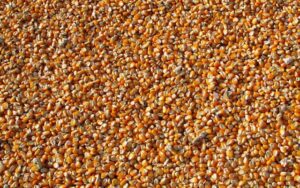
A trial train of 21 wagons with 1.2 thousand tons of feed corn has arrived in the port of Rostock (Germany), and soon three more trains with corn from Ukraine will enter the country, according to the website of the German publication NRD.
According to him, the train with corn was on the road for about eight days, which included reloading agricultural products into narrow-gauge wagons at the Ukrainian-Polish border, after which DB Cargo delivered the cargo to Rostock, where agricultural products were reloaded into port granaries. The publication clarifies that last year’s corn crop is in good condition.
It is specified that BAT Agrar from Ratzeburg (Germany) is coordinating the arrival of trains. It is not yet known where the agricultural products that arrived at the port of Rostock will go next.
“Due to Russia’s aggressive war in Ukraine, many export routes of local agriculture have become difficult or impossible. However, in accordance with the agreement, exports across the Black Sea have started again this month,” the publication recalled.
As reported, in April, the German concern Deutsche Bahn and its subsidiary logistics company DB Cargo began redirecting grain exports from Ukraine through the railway infrastructure instead of their traditional export through Ukrainian seaports, which were blocked by the Russian fleet at that time.
Michael Theurer, parliamentary secretary at the German Federal Ministry of Transport, said that Germany is obliged to ensure the shipment of 20 million tons of grain from Ukraine to prevent starvation on the planet.

The Netherlands has announced the allocation of an additional aid package to Ukraine worth more than EUR 80 million, the country’s Defense Ministry reports.
“This will include EUR 65 million for aid and investment in Ukraine. Additional money [EUR 10 million] will be earmarked to clear landmines and other explosive remnants of war,” the ministry said in a statement.
In addition, the Netherlands has reserved EUR 1 million for the reconstruction of a number of cities.
“Another EUR 2.5 million will go to the European Bank for Reconstruction and Development [EBRD] to share knowledge concerning macroeconomic reforms,” the report says.
In addition, another EUR 2 million will go to the UN Fund to support victims of sexual and gender-based violence.
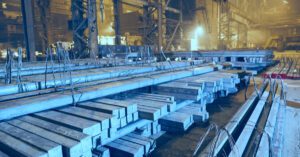
Ukraine in January-July this year reduced the export of semi-finished products from carbon steel in physical terms by 64% compared to the same period last year – up to 1 million 501.779 thousand tons.
According to statistics released by the State Customs Service (SCS), in monetary terms, exports of carbon steel semi-finished products over this period decreased by 59.3% to $955.049 million.
The main exports were to Bulgaria (21.68% of supplies in monetary terms), Italy (14.75%) and Turkey (11.2%).
In addition, Ukraine imported 5.532 thousand tons of such products in January-July, which is 56.8% less than in January-July 2021. In monetary terms, imports decreased by 55.2% – to $ 3.576 million. Imports were carried out from the Russian Federation (98.49% of supplies), Romania (1.23%) and China (0.25%).
As reported, Ukraine in 2021 reduced the export of semi-finished products from carbon steel in physical terms by 9.5% compared to 2020, to 6 million 776.44 thousand tons. In monetary terms, the export of semi-finished products from carbon steel increased by 48.8% over the year to $4 billion 93.02 million. The main exports were to Italy (30.90% of deliveries in monetary terms), Turkey (12.77%) and the Republic (8.02%).
In addition, Ukraine imported 38.97 thousand tons of such products in 2021, which is 2.6 times more than in 2020. In monetary terms, imports increased 3.9 times – up to $25.95 million. Imports were carried out from the Russian Federation (97.73% of deliveries), Turkey (1.15%) and Uzbekistan (1.08%).
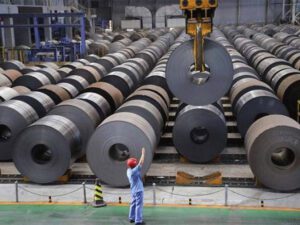
Ukrainian metallurgical enterprises in July this year reduced steel production by 85% compared to the same period in 2021, to 281,000 tonnes, taking 35th place in the ranking of 64 countries – the world’s main producers of this product, compiled by the World Steel Association (Worldsteel).
According to Worldsteel data released on Tuesday, in July 2022, a decrease in steel production was recorded in most countries of the top ten, except for India and Iran, versus July 2021.
The top ten steel-producing countries in July are as follows: China (81.430 million tonnes, a decrease of 6.4% compared to July 2021), India (10.070 million tonnes, an increase of 3.2%), Japan (7.326 million tonnes , less by 8.5%), the USA (7.002 million tonnes, less by 6.4%), South Korea (6.086 million tonnes, less by 0.6%), Russia (5.5 million tonnes, less by 13.2%), Germany (2.972 million tonnes, less by 2%), Brazil (2.823 million tonnes, less by 8.7%), Turkey (2.684 million tonnes, less by 20.7%) and Iran (2.012 million tonnes, an increase of 34.1%).
Ukraine is in 35th position with 281,000 tonnes of steel (85% less by July 2021). In June this year, the country produced 295,000 tonnes, in May – 308,000 tonnes, in April – 281,000 tonnes, in March – 200,000 tonnes, in February – 1.374 million tonnes, and in January – 1.851 million tonnes.
In general, in July this year, steel production in the world decreased by 6.5% compared to the same period last year, to 149.277 million tonnes.
Over seven months of 2022, the top ten steel-producing countries look like this: China (609.280 million tonnes, a decrease of 6.4%), India (73.305 million tonnes, an increase of 8%), Japan (53.322 million tonnes, a decrease of 4. 9%), the USA (48.036 million tonnes, less by 3%), the Russian Federation (41.432 million tonnes, decrease by 7%), South Korea (39.918 million tonnes, less by 3.4%), Germany (22.532 million tonnes, less by 5.1%), Turkey (21.639 million tonnes, a decrease of 6.9%), Brazil (20.285 million tonnes, a decrease of 3.5%) and Iran (17.394 million tonnes, an increase of 3.7%).
Ukraine, following the results of seven months of this year, took 20th place with the smelting of 4.820 million tonnes of steel (less by 62.1%).
In general, in January-July 2022, some 64 countries produced 1.102 billion tonnes of steel, which is 5.4% less than in the same period in 2021.



