

During the three months of the war, the construction industry of Ukraine has decreased by more than 70%, despite the point resumption of work at construction sites in Ukraine, while the cost of construction has increased by 20%, said Sergey Pilipenko, general director of the Kovalska group.
“I can state that, despite the statements of individual developers about the resumption of work, including Kovalska, the market has declined by more than 70%. This is if we consider the volume of construction work, the consumption of building materials,” Pilipenko said during online conference “Marshall Plan” and urban prospects of Ukrainian cities after the war: economic and urban strategies” on Thursday.
According to him, the cost of construction of facilities has increased by more than 20%, including due to a significant increase in the cost of building materials, logistics, inflation and the growth of the exchange rate.
The expert pointed out that the primary real estate market has actually stopped. “So far there are no signals for a quick exit from this state,” he said.
Pilipenko believes that the increase in the discount rate to 25% actually made it impossible to finance the business, so investment in new projects is in question. In addition, there are still no mechanisms for financing restoration projects by foreign states and investors.
In his opinion, in the near future the main construction activity will be projects of emergency repairs, dismantling, erection of temporary structures.
“Really assessing the situation, the state, in the context of ongoing hostilities, cannot fully and large-scale finance any restoration projects. It does not have the funds for this, and now the priorities are different. Therefore, from the point of view of construction activity, maximum developers can count on emergency repairs, dismantling or construction of temporary engineering structures, bridges,” he said.
PSG “Kovalska” has been operating in the construction market of Ukraine since 1956. It unites more than 20 enterprises in the field of extraction of raw materials, production and construction. The products are represented by the brands “Beton ot Kovalskaya”, “Avenue”, Siltek and others.
Enterprises of “Kovalska” work in Kyiv, Zhytomyr, Lvov, Kherson and Chernihiv regions. The total number of employees is 5 thousand people.
In addition, the group includes Kovalska Real Estate, which is engaged in the construction of residential facilities in Kyiv. Her portfolio includes 20 completed residential projects.

The governmental emergency response team of Ukraine CERT-UA, operating under the State Service for Special Communications and Information Protection, warns of a mass mailing of dangerous emails with the subject line “LIST of links to interactive maps.”
“Mailing lists are carried out, in particular, among Ukrainian media organizations (radio stations, newspapers, news agencies, etc.). More than 500 recipient addresses have been identified. Emails contain an attachment in the form of a LIST of links to interactive maps.docx document, the opening of which may result in the download of the CrescentImp malware,” the message posted on the CERT-UA website on Friday evening reads.
Experts warn that attackers are increasingly resorting to sending emails to compromised government email addresses.
Said hacking activity is tracked by UAC-0113 (medium confidence associated with the Sandworm group).
This group was involved in organizing a large-scale hacker attack on the energy sector of Ukraine in April of this year.
Civilian casualties from February 24, when Russia started the war against Ukraine, to 24:00 June 9 amounted to 9,585 civilians (a day earlier – 9,519), including 4,339 dead (4,302), reports the Office of the UN High Commissioner for Human Rights (OHCHR) on Friday.
“OHCHR believes that the actual figures are much higher as information is delayed from some areas of heavy fighting and many reports are still awaiting confirmation,” the UN data document notes.
According to him, this applies, for example, to Mariupol (Donetsk region), Izyum (Kharkiv region) and Popasna (Luhansk region), where there are reports of numerous civilian casualties. They are subject to further verification and are not included in the above statistics.
“The majority of civilian deaths or injuries were caused by the use of explosive devices with a wide area of effect, including shelling from heavy artillery and multiple launch rocket systems, as well as rocket and air strikes,” the report says.
According to confirmed UN data, 1,646 men, 1,098 women, 105 boys and 102 girls died, while the sex of 67 children and 1,321 adults has not yet been determined.
Among the 5,246 injured were 151 boys and 120 girls, as well as 172 children whose gender has not yet been determined.
Compared to the report the day before, two children were killed and four more were injured.
OHCHR indicates that in Donetsk and Luhansk regions, as of midnight on June 10, there were 2,370 (2,339) dead and 2,328 (2,326) injured in government-controlled territory, and 157 (154) dead and 662 (653) injured in territory controlled by self-proclaimed “republics”.
In other regions of Ukraine under government control (in Kyiv, as well as in Zhytomyr, Zaporozhye, Kyiv, Sumy, Odessa, Mykolaiv, Kharkiv, Kherson, Dnepropetrovsk, Cherkasy and Chernihiv regions), the UN recorded 1812 (1809) dead and 2256 (2238) wounded .
The summary has traditionally stated that the increase in figures from the previous summary should not be attributed only to the cases on June 9, since during this period the Office verified a number of cases from previous days.

The U.S. Department of Agriculture (USDA), in its June report published on Friday, raised its forecast for Ukrainian corn this year by 5 million tons compared to a month ago, to 25 million tons, while maintaining export estimates at 9 million tons.
American experts increased the forecast for carry-over stocks for the upcoming 2022/2023 marketing year (MY) by 4 million tons – up to 12.07 million tons compared to 6.77 million tons for the current MY.
In addition, USDA raised the estimate of domestic consumption in the new MG by 1.5 million tons – up to 10.7 million tons.
According to the report, in general, the forecast for the feed grain harvest in Ukraine for MY 2022/23 has been increased by 5.2 million tons, to 31.76 million tons, although at the same time, the export estimate has been reduced by 0.2 million tons, to 10.83 million tons.
American experts have increased the forecast of feed grain carry-overs following the results of the upcoming MY by 3.9 million tons – up to 13.06 million tons compared to 7.77 million tons at its beginning.
In addition, USDA raised the estimate of domestic consumption of feed grains in the new MG by 1.5 million tons – up to 15.65 million tons.
The US Department of Agriculture recalled that in the past 2020/21 MY, the wheat harvest in Ukraine amounted to 25.42 million tons, and exports – 16.85 million tons. According to his estimates, in this ending MY, with a crop that has grown to 33.01 million tons, exports will increase to 19 million tons, and carryovers – from 1.51 to 5.61 million tons. In addition, American experts expect domestic wheat consumption in Ukraine to grow to 10 million tons in 2021/22 MY from 8.7 million tons in the previous MY due to livestock.
As for corn, according to the report, in the past 2020/21 MY, its harvest in Ukraine was 30.3 million tons, and exports – 23.86 million tons. According to USDA estimates, in this ending marketing year, with a corn crop that has grown to 42.13 million tons, its exports will decrease to 23 million tons, and carry-over stocks will jump from 0.83 to 6.77 million tons. In addition, American experts expect domestic corn consumption in Ukraine to grow to 13.2 million tons in 2021/22 MY from 7.1 million tons in the previous MY, also due to livestock.
In general, the feed grain harvest in Ukraine in 2020/21 MY, according to the US Department of Agriculture, was 39.59 million tons, and exports were 28.15 million tons. According to USDA estimates, in this ending MY, with a forage grain harvest that has grown to 53.51 million tons, it will increase only to 29.06 million tons, and carry-over stocks will jump from 1.65 to 7.77 million tons. In addition, American experts expect in 2021/22 MY an increase in domestic consumption of feed grains in Ukraine to 18.37 million tons from 12.41 million tons in the previous MY, also due to livestock.

Ukraine and Moldova agreed to deepen cooperation in the field of food safety, as well as expand the list of permitted commodity items for export to Moldova, in particular, for pigs and composite products.
Relevant agreements were reached during a meeting between the head of the State Service of Ukraine on Food Safety and Consumer Protection, Anatoliy Vovniuk, and Ambassador of the Republic of Moldova to Ukraine Valeriu Chiveri, according to the website of the Ukrainian department.
According to the Food Safety and Consumer Protection Service, as of today, 18 forms of veterinary certificates for export from Ukraine to Moldova have been agreed between the countries.
“During the Russian military aggression against the Ukrainian people, the support of friendly countries is extremely important for our state,” Vovniuk said.
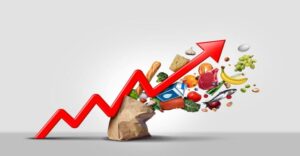
Rising food prices are explained by speculative transactions of some market players, said UN Special Rapporteur on extreme poverty and human rights Olivier de Schutter.
“The real reason for the rise in prices is not that there is not enough food. The real problem is the panic that grips the markets because we do not know when this conflict in Ukraine will end. And some financial players are profiting from this uncertainty by speculating on growth, mechanically provoking it,” the expert said on Friday in an interview with the Belgian francophone radio station La Premiere.
According to him, it is necessary to calm the markets. “We need more transparency about the state of stocks. The bulk of food reserves are in the hands of private operators, large grain traders who are not involved in the exchange of information that governments need to calm the nervousness of the markets,” de Schutter explained.
According to him, “five or six companies control 80% of the world’s grain transactions and own the bulk of stocks.” But they do not publish data on the state of their reserves. Opacity persists, and this gives rise to speculation, said the UN Special Rapporteur.
“Markets anticipate growth and create speculative bubbles – this is the main explanation for the rise in food prices in world markets,” said de Schutter.
He said that in a number of countries, such as Ethiopia, South Sudan, Nigeria, Yemen, Afghanistan, Somalia, “the risk of starvation is increasing from hour to hour.” “Unfortunately, the international community does not have the means to respond, and there is every reason to be concerned about the two dozen countries pointed out by the Food and Agriculture Organization of the United Nations (FAO) and the UN World Food Program (WFP),” he said.
De Schutter said that “no conclusions have been drawn from the crisis of 2007-2008” and today the international community is still not ready for cases when a humanitarian crisis is brewing.
“750 thousand people are in a situation of hunger, of which 400 thousand are only in the Tigray region (northern Ethiopia). In principle, it is necessary to have reserves so that the WFP can immediately come to the aid of this population. Instead, international agencies should knock on doors donors, and it takes two to three months for them to wake up and disburse the money.Then you need to determine where the food shipments can be purchased, and you still need to deliver them to the places of danger.All this takes up to six months.During this time, the population either either dying out or moving,” the UN Special Rapporteur outlined the situation.
Professor Olivier de Schutter (Belgium) was appointed as the UN Special Rapporteur on extreme poverty and human rights by the Human Rights Council at its 43rd session in March 2020. He was Special Rapporteur on the right to food from 2008 to 2014. and member of the Committee on Economic, Social and Cultural Rights from 2015 to 2020. Prior to his appointment to these positions, he served as Secretary General of the International Federation for Human Rights (FIDH).



