
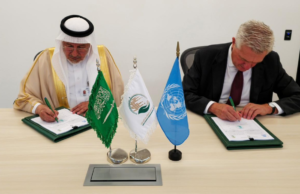
The King Salman Humanitarian Aid and Relief Centre (KSrelief) and the United Nations Development Programme (UNDP) have launched a 15-month programme worth $5 million to strengthen Ukraine’s civilian healthcare system, according to the UNDP website.
The programme provides for strengthening the capacity of four medical institutions in Kyiv, Odesa and Dnipropetrovsk regions, with a focus on priority needs identified jointly with health authorities. It concerns two institutions in Kyiv region and one each in Odesa and Dnipropetrovsk regions.
The support will cover maternal and newborn healthcare, intensive care for children, surgical and trauma care, diagnostics and emergency stabilization of patients. Assistance will include the procurement of medical equipment, its installation and commissioning, user training, warranty servicing and support for safe and long-term operation.
“KSrelief is pleased to sign this important Joint Executive Programme with our valued partner – UNDP – to strengthen the provision of civilian healthcare services in Ukraine. By working together, we can save and improve people’s lives by providing urgent support for the recovery and development of the civilian healthcare system in several regions of the country,” said Adviser at the Royal Court and Supervisor General of KSrelief Dr. Abdullah Al Rabeeah.
The programme will be implemented in consultation with national and regional partners and beneficiary medical institutions, while the scope of equipment and related support will be determined in accordance with confirmed needs, including its installation, staff training, maintenance and long-term operation.
It is expected that up to 900,000 people will be able to benefit indirectly from the programme.
The agreement was signed during the 81st session of the United Nations General Assembly within the framework of the cooperation agreement between KSrelief and UNDP.
HEALTHCARE, HOSPITALS, HUMANITARIAN AID, KSRELIEF, MEDICAL AID, SAUDI ARABIA, UKRAINE, UNDP, UNITED NATIONS
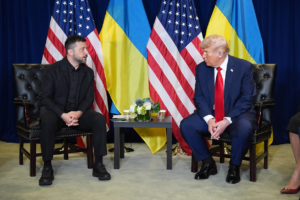
U.S. President Donald Trump said that he hopes an agreement between Ukrainian President Volodymyr Zelenskyy and Kremlin leader Vladimir Putin will be reached before the onset of the harsh winter.
“But you know what I want from Zelenskyy? I want him to make a deal. I want him to reach an agreement with Putin, and I want Putin to reach an agreement with him,” Trump said while speaking with journalists.
Asked by a journalist about Patriot missiles, Trump noted that he had spoken with Zelenskyy a lot, but did not give a specific answer to the question.
“I have spoken with him a lot; the process is moving forward, Putin is acting too, and one day — I hope in the not-too-distant future, perhaps even before the onset of the harsh winter — they will reach an agreement,” Trump emphasized.
As reported, Ukrainian President Volodymyr Zelenskyy earlier emphasized that during a meeting in New York on the sidelines of the UN General Assembly, U.S. President Donald Trump said that Ukraine would receive licenses to manufacture Patriot missiles.
“President Trump, during his last meeting with me, emphasized that ‘yes, I have made a final decision — Ukraine will receive licenses to manufacture Patriot missiles,’” the president said at the time.
Patriot, PATRIOT MISSILES, PEACE TALKS, PUTIN, TRUMP, UKRAINE, UN General Assembly, UNITED STATES, ZELENSKYY
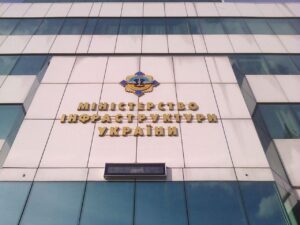
On Friday, September 25, Vinnytsia, Vyshneve, Sheptytskyi, Lebedyn, and Zaporizhzhia signed memorandums with the Ministry of Infrastructure regarding the construction of five more central kitchens, according to Minister of Education and Science Andriy Butenko.
“These projects were selected by the Ministry of Infrastructure with the support of the European Investment Bank on a competitive basis. According to preliminary estimates, the new central kitchens will be able to provide meals to approximately 181 educational institutions—schools and kindergartens, particularly in rural areas,” Butenko wrote on his Telegram channel on Friday.
He emphasized that the school meal reform primarily concerns children’s health and the development of their eating habits.
“It is important that every child, regardless of where they live, has access to a nutritious hot meal. For small and rural schools, where it is difficult to set up their own kitchen, central kitchens can also be an effective solution. At the same time, this model allows communities to ensure consistent meal quality across the entire network of educational institutions,” the minister emphasized.
He also visited the first central kitchen in Bucha. This model enables the centralized preparation of high-quality, balanced lunches, ensures uniform meal standards, and makes more efficient use of community resources.
“We are working with communities to ensure schools are ready to work with such facilities. After all, it is important not only to prepare a high-quality lunch but also to deliver it on time, store it properly, and serve it to the children. That is why the Ministry of Education and Science is primarily directing the subsidy toward modernizing school cafeterias that receive ready-made, chilled meals in schools that are part of the network of central kitchens. “I am glad that more and more communities are choosing this model,” the minister concluded.
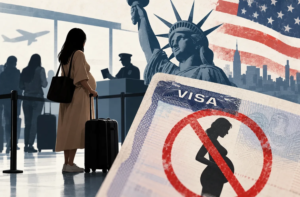
The U.S. has imposed new visa restrictions on foreign nationals who knowingly participate in organizing so-called “birth tourism” or facilitate such trips, U.S. Secretary of State Marco Rubio announced.
The State Department’s new policy took effect on September 23, 2026, and is enforced under Section 212(a)(3)(C) of the U.S. Immigration and Nationality Act. The restrictions may apply to individuals who participate, have previously participated, or assist in organizing trips to the U.S. with the primary purpose of giving birth to a child and securing U.S. citizenship for that child.
Specifically, the measures may affect owners, executives, and managers of companies specializing in “birth tourism,” visa brokers who instruct clients to provide false information when applying for visas, as well as foreign healthcare professionals who knowingly facilitate such trips or the fraudulent use of the Medicaid program. The restrictions may also extend to other individuals who support commercial schemes and, in certain cases, to their family members.
According to Rubio, commercial “birth tourism” networks advertise their services abroad, help applicants conceal the true purpose of their trip, and may charge tens of thousands of dollars to arrange childbirth on U.S. soil.
However, this is not the first time a ban has been in place on using a B-category visitor visa for a trip whose primary purpose is to give birth to a child in order to obtain U.S. citizenship for that child. Since January 24, 2020, U.S. consular officers have been required to deny a B visa if they have reason to believe that this is the primary purpose of the trip.
The new 2026 policy shifts the focus from the applicants themselves to the organizers, intermediaries, and infrastructure behind such schemes. Immigration lawyers note that the State Department has not yet disclosed in detail what evidence will be used, how exactly individuals subject to the restrictions will be identified, or whether the new measures will affect visas that have already been issued.
Pregnancy alone is not an automatic basis for visa denial. The State Department continues to allow travel to the U.S. for medical treatment, including medical care during pregnancy, provided the applicant meets the requirements for the relevant visa and can confirm the purpose of the trip and the ability to pay for medical expenses. However, “birth tourism”—where the primary purpose is to obtain U.S. citizenship for a child—is not officially considered a valid basis for issuing a visitor visa.
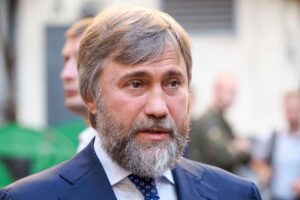
Ukrainian businessman, former member of parliament, and one of the most prominent major investors in Ukraine’s metallurgical industry, Vadim Novinsky, has been granted Serbian citizenship, according to the Serbian business portal Parametar.
According to Parametar, the decision to grant Novinsky citizenship of the Republic of Serbia was made by the country’s government on September 24, 2026, and published in the official “Službeni Glasnik.” The document was signed by Serbian Prime Minister Džuro Matsut.
Novinsky was born on June 3, 1963, in Staraya Russa, in what is now Russia, but he has built a significant portion of his business career in Ukraine. He obtained Ukrainian citizenship in 2012.
In Ukraine, Novinsky is best known as the founder of Smart Holding and a long-time partner of Rinat Akhmetov’s SCM Group in the mining and metallurgical group Metinvest. Smart Holding held a 23.76% stake in Metinvest. The group’s business interests also spanned shipbuilding, the agricultural sector, real estate, and other areas.
In late 2022, Novinsky announced that he had transferred his assets to a trust. Metinvest subsequently stated that Novinsky is not a beneficiary of the company and does not exercise actual control over it.
Novinsky was also involved in politics. From 2013 to 2022, he served as a member of the Ukrainian Parliament for several terms, first as part of the Party of Regions faction and later as part of the “Opposition Bloc.”
In December 2022, Ukraine imposed personal sanctions against Novinsky. In January 2025, the State Bureau of Investigations and the Security Service of Ukraine reported that the former People’s Deputy was suspected of high treason and inciting religious hatred. Ukrainian media identified the suspect as Vadym Novinsky. The businessman himself denied the charges against him and called them politically motivated.
In June 2025, Ukrainian law enforcement agencies also reported an investigation into possible tax evasion totaling more than 4 billion UAH involving the former lawmaker, whom the media identified as Novinsky. At this point, these are allegations and investigations, not final, legally binding convictions.
After the start of Russia’s full-scale invasion of Ukraine, Novinsky publicly spoke out against the war.
Serbian authorities have not yet publicly disclosed the specific reasons for granting Novinsky citizenship, nor have they reported on any potential investment projects by the businessman in Serbia.
Source: Serbian business portal Parametar.
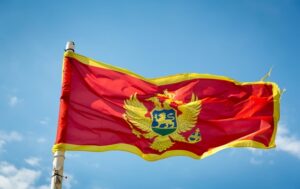
According to an analysis by the Serbian business portal Parametar, starting November 1, 2026, Montenegro will introduce a visa requirement for citizens of Russia, Belarus, and Turkey, which could significantly impact the country’s tourism, labor market, rental sector, and real estate market.
On September 24, the Montenegrin government confirmed the initiation of the procedure to terminate the existing visa-free travel agreements with these three countries. The decision was made as part of efforts to bring the country’s visa policy into line with European Union regulations. As early as July 23, the government approved changes to the visa regime, which are set to take effect on November 1.
Until October 31, citizens of Russia and Belarus may enter Montenegro without a visa and stay there for up to 30 days. A similar visa-free regime applies to Turkish citizens. Once the new rules take effect, holders of ordinary passports will need a Montenegrin visa. Regarding Turkey, Podgorica plans to conclude a separate agreement, maintaining visa-free entry for holders of diplomatic, service, and special passports.
However, there are significant exceptions. Citizens of these countries who hold a valid Schengen, U.S., British, or Irish visa or a corresponding residence permit will, as before, be able to enter Montenegro without a separate Montenegrin visa for up to 30 days.
The new regime also does not require a tourist visa for foreigners who already hold a valid temporary or permanent residence permit in Montenegro or a permit for temporary residence and work.
According to data from the Montenegrin Ministry of the Interior cited by Parametar, as of the end of 2025, 20,793 Russian citizens and 13,506 Turkish citizens held temporary or permanent residence permits. Together, these two communities account for approximately 5.5% of the country’s population, which totals about 624,000 people.
The Belarusian community is significantly smaller. According to the latest census, as of late October 2023, 738 Belarusian citizens had permanent residence in Montenegro; more recent data on Belarusians is not currently available.
Tourism could become one of the most vulnerable sectors. In 2025, Russian tourists accounted for 16.4% of all overnight stays by foreign visitors in Montenegro, while tourists from Turkey accounted for another 4.3%. In the private accommodation segment, the Russian market’s share reached 22.1%, while the Turkish market’s share was 4.9%. Thus, these two countries accounted for more than a quarter of all foreign overnight stays in apartments, villas, and other private accommodations.
According to Parametar’s assessment, the most noticeable impact may not be among Russians and Turks who already legally reside in Montenegro, but rather among new tourists, real estate buyers, renters, and those considering the country as a place to relocate. This is particularly important for Budva, Bar, Tivat, Kotor, and Herceg Novi, where foreign demand plays a significant role in the rental, real estate, hospitality, and service markets.
The changes may also affect the labor market. In 2025, 10,346 temporary residence and work permits were issued to Turkish citizens, and 7,429 to Russian citizens. Turkey has become the largest source of foreign labor in Montenegro. The introduction of an additional visa procedure for new workers could potentially delay their recruitment in the construction, hospitality, and other sectors.
The visa reform is linked to Montenegro’s EU accession process. The country’s government notes that full alignment of visa policy is one of the conditions for closing Negotiation Chapter 24, “Justice, Freedom, and Security.” Fulfilling this condition also paved the way for receiving approximately 4 million euros under the EU Growth Plan for the Western Balkans.
As part of a broader reform of Montenegro’s visa regime, visa requirements will also apply to citizens of China and Saudi Arabia starting November 1, since Podgorica’s previous policy toward these countries was also not in line with EU regulations. However, the government’s September 24 decision to suspend international agreements directly concerns Russia, Belarus, and Turkey.



