

Residential real estate prices in Italy rose 4% in the second quarter of 2026 compared to the same period last year, according to preliminary data from the Italian National Institute of Statistics (Istat).
The pace of housing price increases slowed slightly: in the first quarter, the year-over-year increase was 5.1%.
Compared to the first quarter of 2026, the housing price index increased by 1.7%. Newly built homes rose in price by 5% over the year, while existing homes rose by 3.7%. In the previous quarter, these figures were 6.7% and 4.6%, respectively.
On a quarterly basis, prices for new housing rose by 2.7%, and for existing housing by 1.5%.
Among major Italian cities, housing prices rose the fastest in Turin. In the second quarter, prices there were 8.5% higher than a year earlier, whereas in the first quarter, the year-over-year increase was only 3.8%.
In Rome, residential real estate prices rose by 6.4% following a 5.5% increase in the first quarter.
In contrast, in Milan—which in previous years had been one of the country’s most dynamic real estate markets—the pace of growth slowed sharply. Prices rose by 2.4% year-over-year, compared to 7.1% in the first quarter.
The most noticeable slowdown in Milan was recorded in the new-construction segment: after a 20.1% jump in the first quarter, year-over-year growth in the second quarter was only 1.1%.
Regionally, Istat recorded the highest price growth in Central Italy—5.1%. In the northeast, housing prices rose by 4.2%; in the northwest, by 3.9%; and in the south and on the islands, by 2.6%.
The rise in prices is occurring against a backdrop of a de facto stabilization in the number of transactions. According to data from the Italian Tax Agency’s Real Estate Market Observatory, the number of housing transactions in the second quarter increased by only 0.1% year-over-year, following a 4.4% increase in the first quarter.
Based on the results of the first two quarters, the cumulative increase in the housing price index for 2026 stands at approximately 3.8%. Istat plans to release its next market assessment on December 17, 2026.
The expansion of Ukrainian companies into foreign markets increases the importance of conducting preliminary checks on potential buyers and distributors. The risks are particularly high when working with a new counterparty on deferred payment terms, Dun & Bradstreet analysts note.
One of the tools for such checks is Dun & Bradstreet’s (D&B) international business information databases, which make it possible to identify a company, verify its registration data, ownership structure, financial indicators, operating history and associated risks.
When entering a new market, Ukrainian companies often focus primarily on finding a buyer and agreeing on commercial terms, while checking the buyer’s solvency remains a secondary task.
“Receiving an order does not yet mean receiving the money. For an exporter, a situation is particularly dangerous when the first large shipment is made to a new partner with deferred payment. Before signing such a contract, it is necessary to understand whether the company actually exists, how long it has been operating, what its financial indicators are, who its owner is and how high the credit risk associated with this counterparty is,” said Maksym Urakin, Director of Development and Marketing at Interfax-Ukraine, Head of the D&B-Interfax-Ukraine business unit, PhD in Economics.
Dun & Bradstreet has a global database containing information on hundreds of millions of companies. A unique nine-digit D-U-N-S Number is used to identify businesses, making it possible to distinguish between legal entities with similar names and link companies within corporate groups.
For a Ukrainian exporter, such a check is particularly relevant when working with companies that are offering a large contract for the first time, requesting a significant payment deferral or acting as intermediaries between the manufacturer and the end buyer.
Depending on the country and the availability of information, a D&B business report may contain registration details, information about executives and owners, financial statements, information on corporate relationships, credit ratings and other indicators used for risk assessment.
“The cost of a check is almost always incomparable with the potential loss from a single unpaid export shipment. International business information should be viewed not as an additional reference, but as one of the elements of the decision-making procedure regarding the credit limit, the amount of prepayment and the terms of the contract,” Maksym Urakin believes.
At the same time, negative information about a potential partner does not necessarily mean that the transaction should be rejected. It may serve as a basis for changing its terms — increasing the prepayment, reducing the size of the first shipment, using a bank guarantee, trade credit insurance or shortening the deferred payment period.
Dun & Bradstreet is an international provider of business data and analytical solutions whose history began in 1841. The company provides tools for business identification, counterparty verification, assessment of credit and commercial risks, compliance, supply chain management and work with corporate data.
The official representative of Dun & Bradstreet in Ukraine is the Interfax-Ukraine news agency. The specialized D&B-Interfax-Ukraine unit helps Ukrainian companies work with international business data, verify foreign partners and obtain a D-U-N-S Number.
Questions can be submitted through the specialized D&B resource — dnb.ua, by email at Urakin@interfax.kyiv.ua or by phone at +38 (044) 270-65-74.
COUNTERPARTY, D&B, DUN & BRADSTREET, EXPORT, UKRAINE, URAKIN
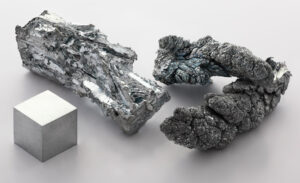
In January–August 2026, Ukraine reduced imports of zinc and zinc products by 35% compared to the same period last year, down to $24.126 million.
According to statistics released by the State Customs Service of Ukraine, imports of zinc and zinc products in August totaled $3.306 million.
Zinc exports for the eight-month period totaled $1,108 million; in August, they amounted to $189,000, compared to $888,000 in January–August 2025.
As previously reported, Ukraine reduced its imports of zinc and zinc products by 9.6% in 2025 compared to 2024, down to $52.982 million. Zinc exports last year reached $1.234 million, whereas in 2024 they totaled $563,000.
Pure metallic zinc is used to recover precious metals, protect steel from corrosion, and for other purposes.
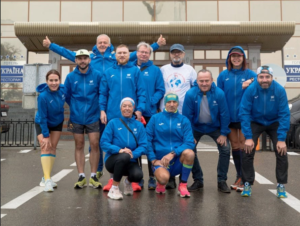
A team of Ukrainian and Slovak athletes set out from Kyiv to Košice as part of the Peace Run charity initiative, which aims to draw the attention of the European public to the ongoing war in Ukraine and support children affected by it.
The run began in Kyiv on September 24. According to the Slovak news agency TASR, citing one of the project’s organizers, Eduard Burash, the athletes will cover the approximately 1,000-kilometer route in a relay format. A total of 25 participants took the starting line in Kyiv, and Ukrainian and Slovak runners will take turns along the route.
Initially, the core of the project team consisted of five Ukrainian and five Slovak athletes. On their way to Slovakia, the participants will visit seven regional centers in Ukraine, including Uzhhorod.
Organizers expect the athletes to arrive in Košice on October 2. According to the official program for “Days of Ukraine 2026” in Košice, the Peace Run finish will be one of the event’s central sporting highlights.
The “Veterans’ Mile” holds a special place in the program; it will take place on October 3 in Košice City Park. Ukrainian war veterans will join the event, including servicemen who have suffered severe physical injuries, as well as participants with visual impairments. Representatives of the diplomatic corps are also expected to attend.
The final stage of the initiative will be the participation of Ukrainian athletes in the 103rd International Peace Marathon in Košice on October 4. The main marathon and the relay race will start at 9:00 a.m., and the half-marathon at 10:30 a.m.
The Košice Peace Marathon is considered one of the oldest marathons in Europe. The first race took place in 1924, and in 2026, the event will be held for the 103rd time.
The “Peace Run” is part of the 11th “Days of Ukraine” in Košice, which will take place October 1–4. The organizers have designated peace and an end to the war in Ukraine as the main theme of this year’s events. The project is being implemented by the FEMAN association in collaboration with partners from Ukraine and Slovakia, with financial support from the Slovak Ministry of Tourism and Sports.
As part of the Peace Run, a charity fundraiser is also being held to help children affected by the war.
Information about the project and the fundraiser: Peace Run Kyiv – Košice
Fozzy Group, one of Ukraine’s largest commercial and industrial groups, will lay off some employees from the holding company’s office divisions, the “Silpo” supermarket chain, and its logistics division starting November 1, 2026, due to mounting business losses resulting from Russian attacks.
As the group announced on LinkedIn, employees were informed of the organizational changes during internal meetings. Similar changes had previously taken place at the MAUDAU marketplace, as well as within the IT teams at TEMABIT Software Development and E-commerce & Ecosystem.
“Unfortunately, this means we will have to part ways with some of our colleagues from the holding company’s office teams, the Silpo chain, and the logistics division. Similar changes had already taken place at MAUDAU and within the IT teams at TEMABIT Software Development and E-commerce & Ecosystem. This is a necessary decision stemming from the fact that the war is increasingly affecting our work,” the Fozzy Group statement reads.
Between August 1 and September 25 alone, Russian attacks destroyed or damaged more than 20 of the group’s facilities, including distribution centers, supermarkets, and production facilities.
The company notes that the attacks resulted in the loss of part of its infrastructure and inventory, while ensuring the uninterrupted operation of the business is becoming more difficult and expensive. Fozzy Group is reassessing its priorities, suspending some projects and tasks, abandoning others, and seeking new solutions for the rest.
At the same time, the group continues to open stores, restore damaged facilities, and reorganize its logistics. To support these efforts, Fozzy Group is continuing to hire employees for supermarkets, warehouses, and production facilities throughout Ukraine.
“Our goal right now is to keep the business strong enough to serve our customers and have the resources to rebuild what the war continues to destroy,” the company emphasized.
Fozzy Group is one of Ukraine’s largest commercial and industrial groups and operates more than 825 retail outlets. It includes the Silpo, Fora, Fozzy, Thrash!, “Belaya Romashka,” and E-ZOO chains, as well as logistics, manufacturing, IT, and other assets.
The group’s key retail asset is Silpo-Food LLC. According to data from the YouControl system, the company’s revenue in 2025 amounted to approximately 106.8 billion UAH, up from roughly 93 billion UAH in 2024. At the same time, net financial results remained under pressure from high operating costs, logistics expenses, energy costs, and the consequences of the war.
Another major asset of the group is the “Fora” store chain, operated through Fora LLC. Its annual revenue already exceeds 30 billion UAH, making the company one of the largest operators in the Ukrainian grocery retail sector.
The combined scale of Fozzy Group’s business is significantly larger than the figures for individual legal entities, as the holding company unites dozens of companies in retail, manufacturing, logistics, the restaurant business, e-commerce, and IT. According to publicly available corporate data, the group has traditionally estimated its workforce at approximately 50,000 employees, making it one of Ukraine’s largest private employers.
Fozzy Group is owned by Ukrainian businessmen Vladimir Kostelman, Oleg Sotnikov, and Roman Chigir. The group was founded in 1997 and is now one of the largest players in the Ukrainian grocery retail sector.
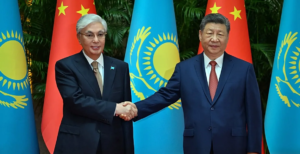
Astana and Beijing signed 50 commercial agreements totaling $8.2 billion during the “Kazakhstan–China” investment forum in Almaty, according to the press service of the President of Kazakhstan.
In particular, an agreement was signed on the construction of an electrolytic aluminum plant and an accompanying wind power plant in the Abai region (Eastern Kazakhstan), as well as on the construction of a particleboard plant in Semey (Semipalatinsk). The document was signed by the regional governor and a consortium of companies comprising Xinjiang Sanbao Industrial Group Co., Ltd. and Inner Mongolia Wanjiang Investment Co., Ltd.
An agreement on joint project development was signed between Samruk-Energo JSC, China Energy Overseas Investment Co., Ltd., and SANY Renewable Energy Co., Ltd.
In addition, a document outlining the basic terms for establishing a specialized investment fund—focused on financing promising projects in Kazakhstan—at the Astana International Financial Center was signed between JSC “NC ‘Kazakh Invest’” and Silk Road Finance Corporation.
An agreement on cooperation in the construction of wind power plants with a total capacity of 450 MW in the Akmola Region was concluded between the regional administration and Sungrow Renewable Development Co., Ltd.
A memorandum of understanding regarding the implementation of the project “Creation of a High-Tech Automobile Manufacturing Complex for the Production of Passenger and Special-Purpose Vehicles” was signed between the administration of the East Kazakhstan Region and the Kazakh-Chinese joint venture East Motors Corporation.
In addition, cooperation agreements were signed between the Turkestan Region and Turan Chemical Company LLC regarding the construction of a urea fertilizer plant.
An agreement on cooperation in organizing and supporting the issuance of dim sum bonds on the Hong Kong Stock Exchange (HKEX) was signed between the Mayor of Almaty and Guotai Junan Securities (Hong Kong) Limited.
An agreement was signed for the construction of a multifunctional complex featuring an international-brand hotel and a business center between the mayor of Almaty, Everest Development, and SunnyWorld Group.
An agreement was concluded on the preliminary terms for financing investment projects in priority economic sectors between the Development Bank of Kazakhstan and the Astana Branch of China Construction Bank Corporation.



