

According to Experts.news, foreign professionals who have completed a university degree or vocational training in Germany can obtain a permanent residence permit after two years of skilled work in the country.
The current version of §18c of the Aufenthaltsgesetz provides for a special shortened period for those who have successfully completed vocational training or studies at a higher education institution directly in Germany. For such professionals, the required period of residence with a permit for skilled work is two years, and the required period of pension insurance contributions is 24 months.
At the same time, the official German portal for foreign professionals, Make it in Germany, clarifies that this preferential provision is not entirely new: it was already in effect as part of a special regime for graduates of German universities and vocational training institutions and was retained following the reform of immigration legislation. For other skilled workers, the standard period for obtaining permanent residency is three years, not five.
To take advantage of the two-year path to permanent residency, a foreign national must have held a residence permit for at least two years as a skilled worker, researcher, or EU Blue Card holder under the relevant provisions of the law. They must also work in a position that meets the conditions of the residence permit, have paid contributions to the state pension insurance system for at least 24 months, have German language proficiency at the B1 level, possess basic knowledge of Germany’s legal and social systems, and have sufficient living space.
Separate, even faster rules apply to EU Blue Card holders. A permanent residence permit can be obtained after 27 months of skilled work, or after 21 months if the applicant has a B1 level of German.
In recent years, Germany has been gradually simplifying the process of attracting and retaining foreign specialists amid a labor shortage. In particular, the Skilled Immigration Act reform expanded entry opportunities for skilled workers, introduced the Opportunity Card for job seekers, and streamlined a number of procedures for Blue Card holders and their family members.
According to data from Destatis, Germany’s Federal Statistical Office, as of the end of 2025, 14.07 million foreign nationals residing in Germany were registered in the Central Register of Foreigners. Approximately 5 million of them were EU citizens, and another 4.6 million held citizenship of other European countries.
Turkish citizens remained the largest single group of foreign nationals, numbering 1.520 million. In second place were Ukrainian citizens—1.410 million—followed by Syrian citizens—936,000—Romanian citizens—904,000—Polish citizens—840,000—and Italian citizens—629,000. Germany was also home to approximately 450,000 citizens of Afghanistan, 422,000 citizens of Bulgaria, 413,000 citizens of Croatia, and over 311,000 citizens of India.
At the same time, the number of Ukrainian citizens increased by approximately 76,000 in 2025, marking one of the largest increases among individual nationalities. The number of Indian citizens rose by 34,000. At the same time, the number of Syrian citizens decreased by 39,000, while the number of Polish and Turkish citizens decreased by approximately 25,000 each, and the number of Russian citizens decreased by 18,000
If we look at the data by country of birth rather than citizenship, the picture is somewhat different. In 2025, there were 16.4 million people living in Germany who had immigrated to the country themselves. The largest groups were born in Poland and Turkey—approximately 1.5 million people each—in Ukraine—1.3 million—and in Russia and Syria—approximately 1 million each.
These five countries accounted for about 39% of all immigrants living in Germany. In total, about 21.8 million residents of the country had personal experience with migration or were direct descendants of immigrants.
Thus, Ukrainians are currently the second-largest group of foreign nationals in Germany after Turkish citizens and one of the three largest immigrant groups by country of birth.

Ferrexpo, a mining company with assets in Ukraine, ended the first half of 2026 with a net loss of $14.9 million, which is 13.2 times less than in the first half of 2025, according to the company’s report released on Friday.
According to the report, revenue fell 2.3-fold to $196 million due to a decline in sales volume, while EBITDA was negative at $4 million, compared to a positive $4 million in the first half of 2025, reflecting the combined impact of lower sales volumes and selling prices, as well as rising production costs.
Following the morning release of the financial results, the stock rose from 28.9 pence to 32.88 pence and closed at 32.48 pence, representing a 13.33% increase over the previous day’s closing price. The last time the stock traded at such a high price was more than five months ago.
Ferrexpo noted that it deliberately reduced capital expenditures (CapEx) to $10 million from $28 million in January–June 2025, allocating 88% of these expenditures to projects necessary to sustain operations and only 12% to development projects.
Due to prolonged delays in VAT refunds and the resulting decline in financial liquidity, the group was forced to reduce production to a single pellet production line, according to the report.
Total commercial output for the first half of the year amounted to 1.556 million metric tons, which is 40% less than in the previous half-year (ending December 31, 2025) and 54% less than in the first half of 2025.
The production mix in the first half of 2026 consisted of 89% pellets and 11% marketable concentrate, compared to 61% and 39%, respectively, in the first half of 2025, when the higher share of concentrate production provided additional market opportunities during a period of reduced demand for pellets and lower market premiums, Ferrexpo noted.
Interim Chairman of the Board Lucio Genovese recalled that in early September, the company was able to raise $100 million through an additional share issuance, which significantly strengthened its liquidity position and provided additional financial stability and greater flexibility to manage the ongoing operational and financial pressures facing the business.
“However, the additional capital does not resolve the underlying issues arising from the prolonged withholding of VAT refunds, the war in Ukraine, constraints on logistics and energy infrastructure, as well as the need to maintain disciplined cash and working capital management,” he noted.
On Friday Ferrexpo clarified that C1 production costs rose to $81.3 per metric ton from $77.1 in the first half of 2025 due to increased mining and maintenance activities, the impact of higher electricity and fuel prices, and rising personnel costs.
It is noted that the group has made significant efforts to reduce costs in order to maintain financial stability. These measures include reducing employees’ working hours, cutting back on the procurement of goods and services, and suspending all non-critical capital expenditures, overhead costs, and corporate social responsibility expenditures.
In addition, there were no impairment losses in the first half of 2026, whereas in the first half of 2025, they amounted to $154 million.
In the report, Genovese emphasized that the continued suspension of VAT refunds by Ukrainian tax authorities remains a significant financial challenge: as of June 30, the net balance of VAT pending refund stood at $82.7 million, and as of September 24, the State Tax Service had suspended VAT refunds totaling 3.885 billion UAH, or $86.9 million.
The report also notes that during the first six months of 2026, Ferrexpo received news of the deaths of 11 more colleagues who served in the Armed Forces of Ukraine, bringing the total number of fatalities since the start of Russia’s full-scale invasion to 67, whereas in 2024 and 2025, the number of fatalities was 11 each year.
According to the report, as of the end of June 2026, 804 Ferrexpo employees were serving in the Armed Forces of Ukraine, and 218 had been demobilized, whereas at the end of 2025, those figures were 771 and 194, respectively, and a year earlier—706 and 160.
Ferrexpo owns 100% of Yeristovsky GOK LLC, 99.9% of Bilanivsky GOK LLC, and 100% of the shares of Poltava GOK PJSC.
The London Stock Exchange (LSE) suspended trading in Ferrexpo shares in early May due to the company’s inability to publish its annual financial statements on time, but resumed trading on September 7.
In 2025, the company’s revenue fell by 16% to $787 million, its EBITDA dropped 2.5 times to $28 million, and its net loss rose nearly 4.5 times to $223.9 million.
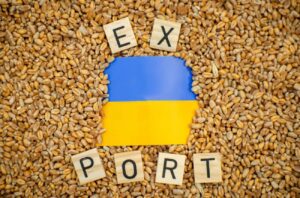
Yevgen Osipov, CEO of the agricultural holding “Kernel,” anticipates—in a stress scenario—a 12-million-metric-ton decline in grain production in Ukraine next year due to a possible reduction in planted acreage by farmers, if no solution is found within the next six months to resume exports, according to a correspondent for the Interfax-Ukraine news agency.
“It is difficult to make such forecasts today. We hope that some solutions will be found in the next six months. If no practical solution is found, then, objectively speaking, the area under cultivation will be reduced. In such a stress scenario, we estimated this would result in a shortfall of 12 million metric tons of grain next year,” he said at the “Forbes Ukraine” Economic Resilience Forum in Kyiv on Wednesday.
According to Osipov, with seaports closed, Ukraine will be able to export only about 20 million metric tons of the 50 million metric tons of agricultural products needed—that is, 40% of the required volume—so companies are having to pivot to other business models.
“Based on our own experience with the most recent export corridors, about 50% of the operations were inefficient; we need to find new ways. Because right now, for businesses, it’s a matter of building a new business model. In other words, the old business model doesn’t work there anymore. That’s why, for our part, we’re focusing on processing and exporting processed products,” Osipov noted.
According to him, under its new business model, “Kernel” is focusing on exporting smaller volumes of products with higher added value, while retaining the ability to purchase oilseeds from Ukrainian farmers, pay them, and export processed products.
Osipov also added that, due to security and logistical constraints as well as external factors, it is currently not realistic to expect that the Danube ports will be able to handle the same volume of shipments that Ukraine had in 2022–2023.
As previously reported, in its September report, the U.S. Department of Agriculture (USDA) raised its estimate for this year’s wheat production in Ukraine by 0.6 million metric tons compared to the August forecast—to 26 million metric tons—and its estimate for other grains (excluding wheat and corn) by 0.5 million metric tons, to 7.29 million metric tons, and maintained its corn production forecast at 31.8 million metric tons. Thus, the USDA estimates Ukraine’s total grain production this year at 65.09 million metric tons.
Ukraine’s retail trade turnover in January–August 2026 rose by 8.8% compared with the same period in 2025, according to the State Statistics Service (SSS).
According to its data, in nominal terms, retail trade turnover in January–August of this year amounted to 1.968 trillion UAH.
In August, retail trade turnover increased by 3.3% compared to July of this year, and by 7.6% year-over-year compared to August 2025.
The State Statistics Service notes that retail trade turnover (for legal entities) in January–August 2026 increased by 8.9% compared to January–August 2025, totaling nearly 1.363 trillion UAH.
Retail trade turnover in August rose by 3.1% compared to July of this year and by 7.5% year-over-year (as of August 2025).
According to the statistics agency, retail turnover in Ukraine grew by 7.5% in 2025.
The State Statistics Service notes that these figures do not include territories temporarily occupied by the Russian Federation or parts of territories where hostilities are (or were) taking place.
Electricity exports from Ukraine on September 14–20 decreased by 17.3% compared to the previous week, to 109.3 thousand MWh, while imports increased by 12.2%—to 18.6 thousand MWh.
“Overall, electricity sales were nearly six times higher than purchases,” the DIXI Group analytical center reported on Wednesday, citing data from Energy Map.
As the center noted, weather conditions had the greatest impact on electricity trade during the reporting period. A cloudy start to the week, combined with a gradual seasonal decline in solar power generation, reduced the daytime power surplus, and the largest decline in exports occurred during daylight hours. At the same time, comfortable temperatures, mostly without precipitation, did not create peak loads on the power grid. Industrial consumption remained low due to Russian attacks.
According to Energy Map, Hungary accounted for the largest share of last week’s exports—53.8 thousand MWh, or 49.2%. Moldova accounted for 36,2 thousand MWh (33.1%), Romania for 19,0 thousand MWh (17.4%), and Poland for 0,3 thousand MWh (0.3%).
Compared to the previous week, exports declined across all destinations: to Poland by 72% (due to insignificant supply volumes), to Romania by 28%, to Moldova by 22%, and to Hungary by 8%. Exports to Slovakia remained at zero.
Hungary also remained the main source of imports, accounting for 8,900 MWh (47.8%). Poland accounted for 5,900 MWh (31.4%), Romania for 3,800 MWh (20.6%), and Moldova for 0.04 thousand MWh (0.2%).
As previously reported, in August 2026, electricity imports to Ukraine increased by 5% compared to July—to 184,000 MWh—while exports jumped by 63.8% to 380,900 MWh, marking the highest monthly export volume since September 2025. As a result, Ukraine maintained its status as a net exporter for the second consecutive month: sales exceeded purchases by nearly double.

Around $680 billion in financing annually is needed to transform global agrifood systems by 2030, but the effectiveness of international programs will depend not only on the amount of funding, but also on farmers’ and agribusinesses’ access to finance, markets and economic incentives.
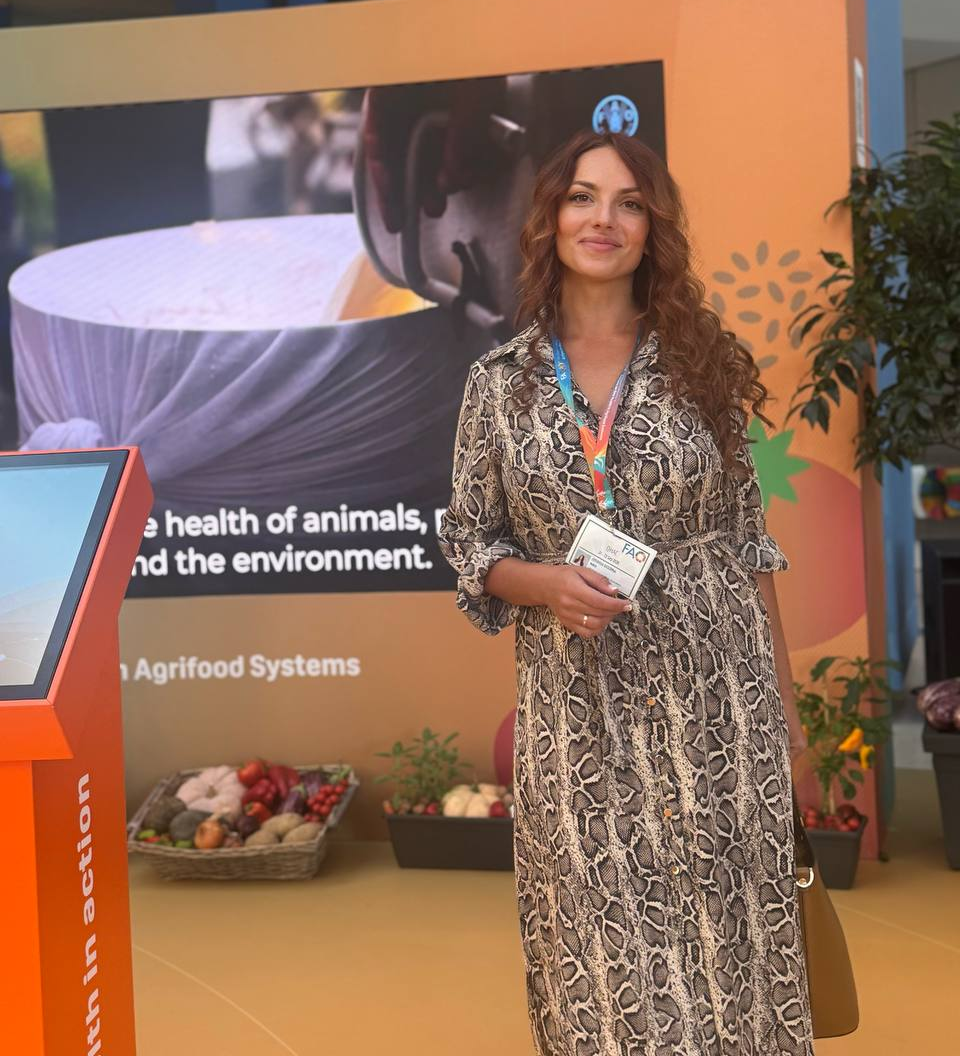
According to SEEDS, financing issues were discussed in Rome during the FAO Global Conference “Actions in One Health in Agrifood Systems,” which took place on September 21–23 and was dedicated to implementing the One Health approach in agrifood systems.
According to FAO estimates, the annual financing requirement for the transformation of agrifood systems in low- and middle-income countries amounts to around $680 billion. Of this amount, approximately $425–426 billion should go directly to investments, with another approximately $255 billion allocated to social protection systems.
International expert on sustainable agriculture and agrifood systems and founder of Sapienza.media Kateryna Zvierieva, who participated in the conference, stressed that the volume of international financing alone does not guarantee results if resources do not reach direct producers.
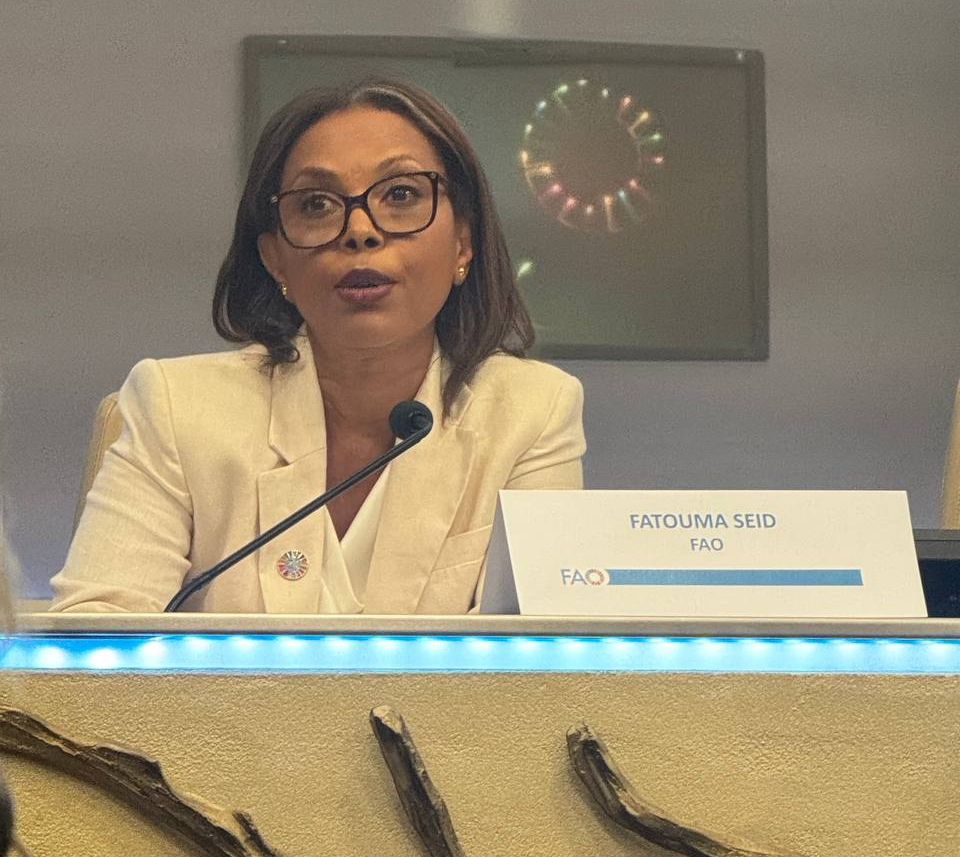
“We can develop effective environmental and veterinary solutions, but they will not become widespread practice if the farmer does not have access to financing, sales markets and economic incentives for their implementation,” she said in a comment to SEEDS.
Rwanda became one example of effective fundraising. About $25 million in financing from the Pandemic Fund was accompanied by the mobilization of approximately another $160 million in additional resources and related investments. The program is aimed at strengthening epidemiological surveillance, early warning systems and coordination between human and animal health services. FAO, WHO and UNICEF are involved in its implementation.
During the conference, programs in Zimbabwe and Afghanistan were also discussed, where the One Health approach is used to combine veterinary safety, healthcare, food security and support for agricultural production. Participants stressed that animal diseases, climate risks and water-related problems often extend beyond individual states and require regional investment programs.
The reduction of international assistance remains a separate problem. Representatives of the European Commission drew attention to the need to involve the World Bank, IFC, the International Fund for Agricultural Development and private capital more broadly in financing, since grant resources are insufficient for a large-scale transformation of the agricultural sector.
For Ukraine, these approaches are particularly important due to the need to simultaneously restore agricultural production, infrastructure, the veterinary system and water resources, as well as adapt the sector to EU standards.
According to Zvierieva, international programs should be accessible not only to large institutions, but also directly to agricultural enterprises, cooperatives and small producers. Farmers, in her opinion, should be involved in the development of such programs already at the planning stage, since it is they who can assess the real cost of introducing new technologies and the economic risks for farms.
FAO also emphasizes that without the involvement of the private sector, financial institutions and direct producers, it will be impossible to overcome the global financing gap in agrifood systems.
Source: SEEDS — “$680 billion for the transformation of agrifood systems”



