

The updated licensing requirements for motor carriers could take effect in Ukraine by the end of 2026, according to Volodymyr Golubosh, deputy head of the State Service of Ukraine for Transport Safety.
According to “Interfax-Ukraine”, the draft of the new licensing conditions was published by Ukrtransbezpeka on March 18. The agency then collected and reviewed proposals from stakeholders, and the finalized document was resubmitted for approval.
“We expect that after amendments are made to the legislation and the new procedure is approved, the updated conditions will take effect by the end of this year,” Golubosh said during the conference “Regional Dialogues with Business on European Integration: The Transportation Sector” in Lviv.
The changes are part of the harmonization of Ukrainian transportation legislation with European Union standards, specifically EU Regulations No. 1071, No. 1072, and No. 1073. According to a representative of Ukrtransbezpeka, Ukraine must fulfill the relevant European integration obligations by April 2027.
The draft amendments are being developed by Ukrtransbezpeka in collaboration with the Ministry of Community and Territorial Development. Its goal is to modernize the road transport licensing system and bring Ukrainian requirements in line with European market access rules.
The new approach stipulates that a license will confirm more than just a company’s formal right to provide transportation services. Carriers will also be required to demonstrate their ability to organize operations professionally and safely.
Specifically, the right to operate in the licensed road transport sector will be granted to companies and entrepreneurs who can demonstrate professional competence, financial capacity, and integrity.
The introduction of these criteria is intended to bring the operating rules for Ukrainian road carriers in line with the requirements of the EU’s single transport market and serve as one of the steps toward integrating Ukraine’s transport sector into the European space.
EUROPEAN INTEGRATION, LICENSE, ROAD TRANSPORT, TRANSPORTATION, UKRAINE
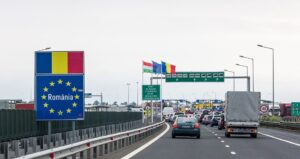
In Romania, a new payment system for using national roads will take effect on October 1, 2026: the cost of the vignette for passenger cars will depend on the vehicle’s environmental standard, while a per-kilometer TollRo system will be implemented for trucks weighing more than 3.5 metric tons.
Romania’s National Road Infrastructure Management Company (CNAIR) has confirmed that the new vignette and TollRo rates will take effect on October 1, 2026. The new model is based on the principle that vehicles that pollute the environment more or use the road infrastructure more intensively pay more.
Three rate categories are being introduced for passenger cars and minibuses with up to nine seats. Electric vehicles and Euro VI-compliant cars will pay 254 lei per year, Euro IV–V vehicles will pay 292 lei, and Euro III and older vehicles will pay 330 lei. A one-day vignette will cost 22, 26, and 29 lei, respectively. For a 10-day period, the fee will be 30, 35, or 39 lei; for 30 days, 48, 55, or 62 lei; and for 60 days, 76, 87, or 99 lei, depending on the vehicle’s emissions class.
As a result, for owners of new vehicles, the annual fee will remain virtually unchanged and will even decrease slightly compared to the current rate, while for older vehicles, it will increase significantly. Specifically, owners of vehicles meeting the Euro III standard or lower will pay approximately 25% more for an annual vignette than under the current system.
Previously purchased vignettes for passenger cars will remain valid until their expiration dates.
For commercial vehicles with a maximum permitted weight exceeding 3.5 metric tons, the TollRo system will be introduced on October 1. Unlike the traditional vignette, the fee will be calculated based on the actual distance traveled by the truck, its technical specifications, and its emission level.
CNAIR confirms that the new system will apply specifically to trucks weighing over 3.5 metric tons.
At the same time, Romania is abolishing a number of individual tolls for crossing bridges over the Danube. Starting October 1, tolls will no longer be collected at the Fetești-Cernavodă bridge complex—one of the main road routes leading to Romania’s Black Sea coast—as well as on the Giurgiu-Vadu Oi bridge.
The toll on the Giurgiu-Ruse bridge when traveling from Romania to Bulgaria is also being eliminated. However, the toll in the opposite direction—from Ruse to Giurgiu—is collected by the Bulgarian side and remains in effect. The toll for crossing the Calafat-Vidin bridge will also remain in effect.
CNAIR reported that drivers who have purchased toll passes in advance for the bridges where tolls are being abolished will be able to request a refund for unused trips.
The new system is part of a broader reform of road tolls in Romania. Starting January 15, 2027, Romania’s electronic toll collection system is set to become compatible with the European Electronic Toll Service (EETS), which will allow for its integration with similar systems in other EU countries.

The loan portfolio of the international financial service “NovaPay” (TM NovaPay), part of the Nova Group, reached 2.6 billion UAH, up from 2 billion UAH as of February 18 of this year, the company reported in a press release on its website.
According to the release, credit cards have become the most significant loan product in terms of portfolio volume: since February, the portfolio has grown by 61.3%—to 1 billion UAH—while installment loans grew by only 11%, to 925 million UAH.
As for the “Parcel on Credit” service portfolio, it decreased by 29% to 206 million hryvnia, while the remainder of the portfolio consists of loans for entrepreneurs, including financing for e-commerce and partners of the NOVA group of companies.
According to the company, approximately 50,000 new customers have used its credit products over the past 12 months.
“Approximately 140,000 customers have already used NovaPay’s credit products since the company began operations. At the same time, 40% of active borrowers use two or more credit products, and about 42% of customers take out repeat loans,” said Bogdan Gryvko, CEO of NovaPay Credit, as quoted in the press release.
The financial service specified that the average consumer loan amount is 5,000 UAH, while the average credit card limit is 27,500 UAH, and the average loan amount for sole proprietors in e-commerce is 422,000 UAH.
NovaPay was founded in 2001 as an international financial service that is part of the Nova Group (“Nova Poshta”) and provides financial services both online and offline at “Nova Poshta” branches.
In 2023, the company became the first non-bank financial institution in Ukraine to receive an expanded license from the National Bank of Ukraine (NBU), which allowed it to open accounts and issue cards; it was also the first non-bank to launch its own financial app with a wide range of financial services at the end of last year.
According to the results of the first half of 2026, “NovaPay Credit” increased its net profit 3.2 times compared to the same period in 2025—to 172.01 million UAH—and its revenue 2.2 times, to 586.42 million UAH.
The company’s equity as of the end of June stood at 688.5 million UAH, compared to 516.5 million UAH at the beginning of the year, while liabilities totaled 1.69 billion UAH, compared to 1.37 billion UAH.

Kuyalnik Salt Works LLC plans to invest over $20 million in a project to extract excess salt from the Kuyalnik Estuary and process it into table salt, according to the publication SEEDS.
The Odesa Regional Military Administration and the company signed a memorandum of cooperation on the implementation of investment and environmental projects in the Kuyalnik Estuary area. The Odesa Regional Military Administration officially confirmed the investor’s intention to invest over $20 million in the project.
According to SEEDS, Kuyalnik Salt Works LLC was established in 2026. The company plans to extract excess salt from the estuary and process it into food products. The estimated production capacity is approximately 300,000 metric tons of salt per year.
This volume accounts for about three-quarters of Ukraine’s salt imports in 2025. According to the State Customs Service, last year Ukraine imported about 415,000 metric tons of salt worth $49.6 million.
Thus, the implementation of this project could significantly reduce Ukraine’s dependence on imported table salt, and once production reaches full capacity, it could lay the groundwork for resuming salt exports.
The need to develop new salt sources increased sharply after the Artemsil plant in Soledar shut down in 2022. Prior to the full-scale invasion, Ukraine was a major producer and exporter of salt; however, after losing access to its key production facilities, it became heavily dependent on supplies from abroad.
The project on the Kuyalnik Estuary also has an environmental component. According to the Odesa Regional State Administration, the memorandum provides for the development of environmental protection infrastructure, the implementation of modern environmental solutions, and the execution of “green” projects. The issue of utilizing the estuary’s salt resources has been under consideration for over a year, with the participation of the Cabinet of Ministers, scientists, and relevant experts.
Before commencing industrial extraction, the company must still complete the procedures required by law, including an environmental impact assessment and obtaining the necessary permits for the use of natural resources. The Kuyalnik Estuary has special environmental protection and resort status.
Original source of the article: SEEDS – “Investor Plans to Invest Over $20 Million in Processing Salt from the Kuyalnik Estuary for Food Use”.
this)
INVESTMENT, Kuyalnik Estuary, ODESA REGION, PROCESSING, SALT
From September 1 to 21, 2026, Ukraine exported 1.6 million metric tons of agricultural products, which represents 43% of the volume that would have been exported had the logistics system been operating at full capacity, Minister of Agrarian Policy and Food Taras Vysotsky said at a briefing on Thursday.
He specified that 275,000 metric tons of oilseeds were shipped abroad, or 75% of the volume that would have been exported under normal logistics conditions; 190,000 metric tons of oil (55%); 173,000 metric tons of meal (41%); while grain exports totaled 960,000 metric tons (38%).
“We see that the share of grains (compared to potential volumes – IF-U) is the smallest, and, accordingly, the share of oilseeds, oil, and meal is larger. Therefore, yes, as of today, the priority remains on exporting value-added products,” Vysotsky said.
As reported, during the first 15 days of September, Ukraine exported 131,000 metric tons of oil, which accounted for 62% of the volume that would have been exported during this period if the ports had been operating freely.

India continues to strengthen its position as the world’s second-largest steel producer and is gradually closing the gap with China, according to data from the World Steel Association (Worldsteel) published on September 24, 2026.
From January through August 2026, Indian steelmakers produced 115.9 million metric tons of steel, a 6% increase compared to the same period last year. During the same period, China’s production fell by 3.1% to 651.9 million metric tons.
According to Open4Business calculations based on Worldsteel data, India produced approximately 109.3 million metric tons of steel in the first eight months of 2025, while China produced approximately 672.8 million metric tons. Thus, the absolute gap between the two largest producers over the year narrowed from approximately 563 million to 536 million metric tons, or by nearly 5%.
The ratio of production volumes is also shifting in India’s favor. While China produced about 6.2 times more steel than India from January through August of last year, that figure fell to about 5.6 times in 2026.
This trend continued in August. India increased its steel output by 4.6% year-over-year—to 14.8 million metric tons—while production in China fell by 3.7%—to 74.6 million metric tons. (World Steel Association)
India also more than doubles the output of the United States, which ranks third among the world’s largest producers. U.S. steelmakers produced 57.5 million metric tons of steel from January through August, increasing output by 5.5%. Japan produced 54 million metric tons, Russia—43.8 million metric tons, and South Korea—42.8 million metric tons.
Thus, India’s output over the eight-month period is already roughly double that of the U.S. and more than double that of Japan.
India accounted for about 9.5% of all steel produced by the 70 countries that provide statistics to Worldsteel, while China’s share was about 53% and the U.S.’s was about 4.7%. These 70 countries accounted for approximately 98% of global steel production in 2025.
The difference is particularly noticeable against the backdrop of the industry’s overall stagnation. From January through August, global steel production fell by 0.7% to 1.225 billion metric tons, while India continued to show steady growth. In August, global production declined by 1.2% year-over-year to 144.2 million metric tons.
Vietnam remains another fast-growing Asian producer. Over the eight-month period, it increased its output by 29.1%—to 20.6 million metric tons—with growth reaching 36.4% in August alone. Overall, however, steel production in Asia and Oceania has declined by 0.9% since the beginning of the year—to 906.4 million metric tons—primarily due to trends in the Chinese market.
China, meanwhile, maintains a huge lead and remains the undisputed leader in the global steel industry. However, the diverging trends of the two largest producers indicate a gradual increase in India’s share of the global steel industry.
Original source: World Steel Association — August 2026 crude steel production



