
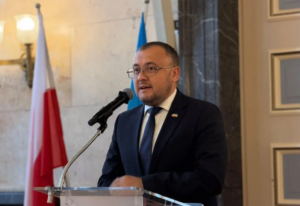
On September 23, 2026, the Honorary Consulate of Ukraine officially opened in Katowice, Poland, and will be located at ul. Wita Stwosza 2.
According to the Consulate General of Ukraine in Kraków, the opening ceremony was attended by Vasyl Bodnar, Ukraine’s Ambassador to Poland; Oresta Starak, Ukraine’s Consul General in Kraków; Luiza Gananya, Ukraine’s Honorary Consul in Katowice; Silesian Voivode Marek Wujcik, Marshal of the Silesian Voivodeship Wojciech Saluga, and Katowice Mayor Marcin Krupa.
The event was also attended by representatives of the diplomatic corps, local government bodies, and the Ukrainian community.
Vasyl Bodnar, Ukraine’s Ambassador to Poland, stated that the opening of the Honorary Consulate is an important step in the development of cooperation between Ukraine and the Silesian Voivodeship.
“We expect that the Honorary Consulate will become a close partner to the Ukrainian community, support Ukrainian citizens, and at the same time contribute to the development of contacts between Ukraine and the Silesian Voivodeship,” Bodnar noted.
He also thanked Honorary Consul Luiz Ganani for his willingness to carry out this mission, and the authorities of the Silesian Voivodeship and the city of Katowice for their support of Ukraine.
The consulate is expected to promote the development of Ukrainian-Polish interregional cooperation, expand contacts with local authorities, businesses, and civil society organizations, and provide support to Ukrainians living in the Silesian Voivodeship.
The Silesian Voivodeship is one of Poland’s largest industrial and economic regions, and Katowice is its administrative center. The opening of the Ukrainian Honorary Consulate creates an additional platform for the development of regional, economic, cultural, and humanitarian ties between Ukraine and Poland.
The energy shock caused by the U.S.-Iran war is likely to last longer than previously anticipated and extend beyond the oil sector, said Isabel Schnabel, a member of the Executive Board of the European Central Bank (ECB).
“At first, one might have assumed this was a short-term phenomenon, but, unfortunately, we have had to conclude that it is much more persistent,” Schnabel said at an event in Salsomaggiore Terme, Italy, on Thursday. “We’re not just talking about oil, but also diesel and natural gas.”
Her remarks reflect the ECB leadership’s ongoing concern about the consequences of the Middle East conflict, which has already caused inflation in the region to accelerate to a level significantly above the 2% target.
The year-over-year rate of consumer price inflation in the eurozone reached 3.2% in August, and analysts do not rule out it rising to 4% later this year, according to Bloomberg.
Expectations for further tightening of the ECB’s monetary policy have recently increased, with traders factoring in the likelihood of four interest rate hikes of 25 basis points (bp) by the regulator by the end of 2027.
“We’ve raised interest rates twice this year—first in June, then again in September—because we’re concerned about inflation. That’s why we had to act,” Schnabel said on Thursday.
The ECB raised all three key interest rates by 25 bps at its September meeting; the deposit rate now stands at 2.5% per annum.

According to Experts.news, Lisbon was included in the UBS Global Real Estate Bubble Index for the first time and was immediately classified as a city at high risk of a housing price “bubble.”
The Portuguese capital’s index stood at 1.04 in 2026, according to a UBS study published on September 22. The bank classifies readings between 1.0 and 1.5 as “elevated risk.”
Over the past decade, real housing prices in Lisbon have risen by an average of nearly 7% annually—the highest rate among all 23 cities included in the study.
Since mid-2025 alone, housing prices, adjusted for inflation, have risen by an additional 10% or so.
UBS attributes the market’s long-term upswing, in particular, to policies aimed at attracting foreign investment and new residents.
However, analysts note that the factors that previously supported growth are gradually weakening. Lisbon has become one of Europe’s least affordable housing markets; rent growth has stalled, and demand is beginning to shift toward more affordable areas outside the city.
UBS cites Portugal’s shift toward a more selective immigration policy as an additional factor.
In terms of risk, Lisbon now ranks just behind Zurich, Tokyo, Miami, Dubai, Seoul, and Geneva. At the same time, it ranks ahead of Amsterdam, Madrid, Frankfurt, Munich, Paris, and London.
The study does not imply that UBS is forecasting a drop in prices in Lisbon. The index points to a buildup of imbalances between real estate prices, household incomes, rental rates, lending volumes, and other fundamental indicators.
Kyiv was not included in this study.
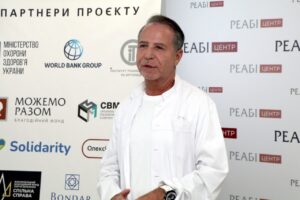
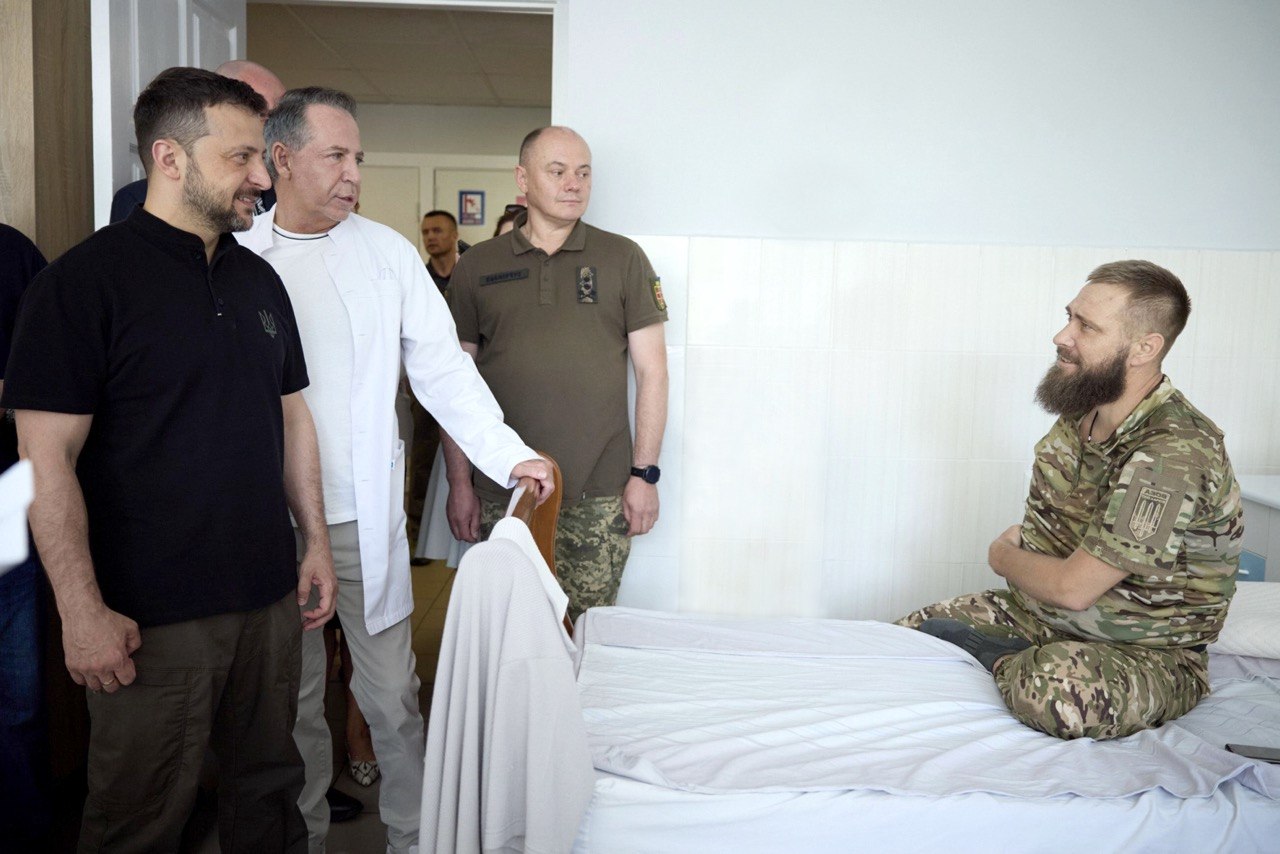
Yuriy Polyachenko, Director of the State Institution “Institute of Traumatology and Orthopedics of the National Academy of Medical Sciences of Ukraine,” was awarded the special Gennadiy Knyshov Award “For loyalty to humanistic ideals and the promotion of universal human values” as part of the 30th anniversary season of the nationwide “Person of the Year 2025” program.
Poliachenko is a Doctor of Medical Sciences, professor, Honored Physician of Ukraine, laureate of the State Prize of Ukraine in Science and Technology, and a full Knight of the Order “For Merit.”
He was born on February 20, 1963, in Kyiv. After graduating from the Kyiv Medical Institute in 1986, he began his professional career at the Kyiv Research Institute of Orthopedics, which now operates as the Institute of Traumatology and Orthopedics of the National Academy of Medical Sciences of Ukraine. He rose through the ranks from junior to senior research fellow at the Clinic of Bone and Purulent Surgery.
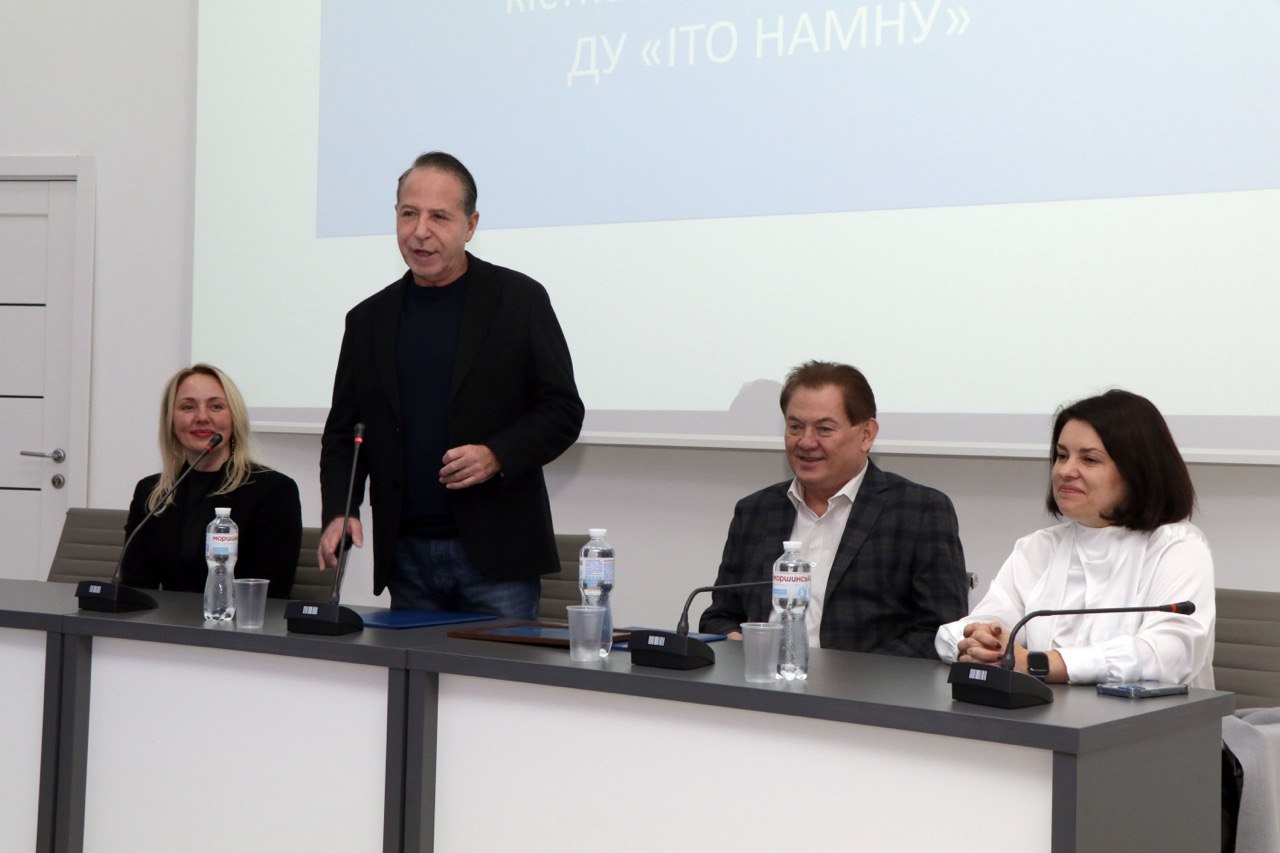
In 1995, Yuriy Polyachenko traveled to Cuba, where for three years he headed the International Medical and Health Center and organized treatment for critically ill children, particularly those with cancer and systemic diseases. In 1997, he was awarded the title of “Honored Physician of Ukraine.”
Starting in 1999, Polyachenko devoted a significant portion of his professional career to public administration in the field of healthcare. He served as Deputy Minister and First Deputy Minister of Health, State Secretary of the Ministry of Health, Deputy Secretary of the National Security and Defense Council of Ukraine, and advisor to the President of Ukraine.
From 2005 to 2007, Yuriy Polyachenko headed the Ministry of Health of Ukraine.
After leaving government service, he returned to clinical and scientific medicine. In 2007, he became director of the O.O. Shalimov National Institute of Surgery and Transplantology, a position he held until 2013.
In 2013, Polyachenko was awarded the State Prize of Ukraine in Science and Technology for a series of scientific works. From 2013 to 2014, he served as a People’s Deputy of Ukraine and worked on the Parliamentary Committee on Health Care, where he chaired the Subcommittee on Transplantology.
Since 2020, Polyachenko has headed the Institute of Traumatology and Orthopedics of the National Academy of Medical Sciences of Ukraine. After the start of full-scale Russian aggression, the institute became one of the medical centers providing care to military personnel and civilians with severe injuries.
In 2025, Yuriy Polyachenko was awarded the Order of Merit, First Class, for organizing assistance to wounded and injured civilians and military personnel. He had previously received the Second and Third Classes of this state award.
For over 25 years, Yuriy Polyachenko has combined scientific research with clinical, administrative, and teaching work. He defended his doctoral dissertation in 2002 and was awarded the title of professor in 2004. Since 2025, he has headed the Department of Traumatology and Orthopedics at the O.O. Bogomolets National Medical University.
He is the author of over 100 scientific publications and co-author of nine monographs.
The special Gennadiy Knyshov Award, presented as part of the “Person of the Year” program, is given for contributions to the development of humanistic values, medicine, and socially significant initiatives.
Open4Business is the media partner for the 30th anniversary season of the nationwide “Person of the Year 2025” program.
HEALTHCARE, MEDICINE, National Academy of Medical Sciences of Ukraine, PERSON OF THE YEAR, Yuriy Polyachenko
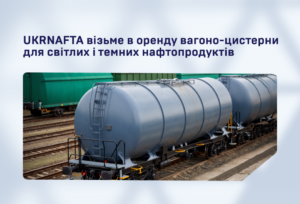
UKRNAFTA is seeking reliable logistics partners.
The company is announcing a commercial procurement for the long-term lease of rail tank cars.
We are accepting proposals for two categories:
• steam-jacketed tank cars for the transportation of dark petroleum products;
• non-steam-jacketed tank cars for the transportation of light and dark petroleum products.
The location for service provision is Ukraine.
We are accepting proposals from September 23 until 3:00 p.m. on October 14, 2026.
Let’s work together to support Ukraine’s energy resilience!
For more details, see this link.
JSC “Ukrnafta” is Ukraine’s largest oil producer and operates the country’s largest national network of gas stations—UKRNAFTA. In 2024, the company began managing Glusco’s assets. In 2025, it finalized a deal with Shell Overseas Investments BV to acquire the Shell network in Ukraine. In total, it operates nearly 700 gas stations.
The company is implementing a comprehensive program to resume operations and modernize the format of the gas stations in its network. Since February 2023, it has been issuing its own fuel vouchers and “NAFTACard” cards, which are sold to legal entities and individuals through Ukrnafta-Postach LLC.
The largest shareholder of Ukrnafta is NJSC Naftogaz of Ukraine, with a stake of 50% plus one share.
In November 2022, the Supreme Commander-in-Chief of the Armed Forces of Ukraine decided to transfer to the state the portion of the company’s corporate rights previously held by private owners; the company is now managed by the Ministry of Defense.
LOGISTICS, PETROLEUM PRODUCTS, PROCUREMENT, TANKER, UKRNAFTA
According to the Serbian business publication Parametar, the Serbian oil and gas company NIS has submitted a new request to the Office of Foreign Assets Control (OFAC) of the U.S. Department of the Treasury for a special license that would allow the company to continue its operations beyond September 30. The current license expires on that very day.
NIS emphasizes that the company’s uninterrupted operations, the stable operation of the oil refinery in Pančevo, and the regular supply of petroleum products to the Serbian market are crucial for the country’s energy stability.
U.S. sanctions against NIS were imposed in early 2025 due to Russian ownership stakes in the company. Since then, OFAC has repeatedly issued temporary licenses allowing NIS to continue its operations.
At the same time, the process of restructuring NIS’s ownership continues. Hungary’s MOL is in negotiations with Gazprom Neft regarding the acquisition of a 56.15% stake in NIS. In June, the Serbian government and MOL already signed a shareholders’ agreement outlining the future governance model for the company should the deal be finalized.
To finalize the deal, not only is a purchase and sale agreement between MOL and Gazprom Neft required, but also additional approvals from regulatory authorities, primarily OFAC. Serbia has also agreed to the possibility of increasing its stake in NIS by another 5 percentage points.
Serbian authorities had previously reported that a company from the UAE might also participate in the future structure of the deal. This refers to the possible entry of a Middle Eastern investor into NIS’s capital following the completion of the deal with MOL.
As of June 30, 2026, Gazprom Neft owned 44.85% of NIS, the Republic of Serbia owned 29.87%, and another 11.3% was held by JSC Intelligence. The remaining shares are held by minority investors.
NIS remains Serbia’s key oil company. It owns an oil refinery in Pančevo, and the company’s network of gas stations also operates in neighboring countries in the region.
Currently, the main question for the Serbian energy market is whether OFAC will extend the license before the current permit expires on September 30, while negotiations regarding the change in NIS ownership are still ongoing.



