

Visa, in partnership with RozetkaPay (FC “EVO”), has launched the Visa Payment Passkey solution in Ukraine for biometric authentication of online payments, enabling purchases to be confirmed using a fingerprint or facial recognition instead of passwords and one-time SMS codes.
“Together with RozetkaPay, we are helping to simplify authentication in e-commerce by reducing the use of passwords and one-time codes and providing consumers with a seamless shopping experience,” said Tetyana Chorna, Vice President and Regional Manager of Visa in Ukraine.
According to the press release, Visa Payment Passkey is based on FIDO (Fast Identity Online) standards and provides authentication tied to the user’s device, which is intended to increase resistance to phishing, data interception, and theft.
After a one-time registration, users can use Visa Payment Passkey on all e-commerce platforms that have already implemented this solution.
RozetkaPay, for its part, noted that the new payment verification method is designed to simplify the payment process for shoppers and may help increase order conversion rates for merchants.
As reported, in January 2026, Visa, in collaboration with payment provider PSP Platon (Platezh Online LLC), completed the integration of the Visa Payment Passkey solution in Ukraine for confirming online payments using biometric data or other device unlock methods without one-time codes or passwords.
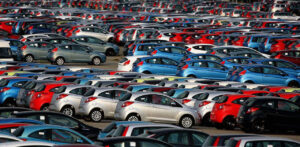
In March 2026, Ukrainians purchased approximately 5,900 new passenger cars, which is 16% more than in March 2025 and 35% more than in January of this year, according to Ukravtoprom on its Telegram channel.
Toyota remains the most popular brand with 908 units (1,021 units in March 2025). Skoda ranks second with 521 units (452 units), and Renault came in third with 520 units (955).
Next are Volkswagen – 498 units, Hyundai – 347 units, BMW – 284 units, Nissan – 270 units, Suzuki – 238 units, Mazda – 223 units, and BYD – 201 units.
The Toyota Rav-4 crossover was the best-selling model of the month.
“Ukravtoprom” notes that a total of 15,400 new passenger cars were sold in the country from January to March, which is 8% more than last year.
Meanwhile, the Automotive Market Research Institute states on its website that March 2026 marked a genuine resurgence in activity in the new car market—following the traditional winter lull, the segment demonstrated strong positive momentum.
According to their data, a total of 5,474 first registrations were recorded—9% more than in March of last year—of which 5,335 were imported cars (9.3% more than last year and 26.8% more than in February 2025), and 139 units were Ukrainian-made (almost the same as in March 2025).
Experts note that the brand rankings show the usual dominance of the Japanese auto industry, with Toyota effectively controlling the lion’s share of sales (813 units).
“The battle for second and third place has unfolded among European brands, which are banking on corporate sales and practicality,” the post states.
However, the appearance in the top ten of China’s BYD (one of the sales leaders in the final months of 2025, which was no longer in the top ten by February 2026—IF-U), according to experts, indicates that “consumers are increasingly trusting innovations in the field of alternative energy sources and modern electronics.”
At the same time, they note that the fuel type breakdown in March 2026 reflects a new pragmatism among Ukrainians: although gasoline engines still hold the lead, they are rapidly losing their monopoly—their share rose by 1.9 percentage points to 41.9%, while diesel’s share fell by 3.5 percentage points to 22.1%.
According to their assessment, the main trend has been the surge in hybrid vehicles, whose share rose by 1.3 percentage points to 32% in March.
“Buyers are choosing this option as the ‘happy medium’—a way to save on fuel without the risks associated with finding charging infrastructure. Diesel, on the other hand, is in reverse—fuel prices at gas stations do not inspire buyers to ‘save.’ Although commercial carriers currently have no other choice,” the post states.
The share of electric vehicles stood at 3.9% (+0.7 percentage points).
“This may be a result of the exhaustion of the rush demand from previous periods and the stabilization of the market following tax changes. Diesel engines remain in demand primarily among buyers of large SUVs and commercial vehicles, where torque is important,” the Institute’s experts believe.

Kernel, one of Ukraine’s largest agricultural holdings and a major taxpayer in the country’s agricultural sector, has signed a purchase agreement to acquire a 100% stake in Enselco Holding Limited — an agricultural holding with a land bank of 190,000 hectares, controlled by Kernel’s chairman of the board of directors and its majority owner, Andriy Verevskyi.
“The total transaction amount is $348 million, reflecting a 5% discount ($18 million) from an independent fair market value appraisal of $366 million, prepared by a reputable international valuation expert at the company’s request and under the supervision of its independent directors,” according to a statement by Kernel on the Warsaw Stock Exchange.
It is noted that the purchase price was determined by the company’s directors, who have no conflict of interest, and accepted by the seller—Veretsky—and the discount was applied to ensure that the transaction provides a clear economic benefit to the company compared to the independently assessed fair value.
According to the statement, Enselco currently manages a consolidated agricultural business comprising 190,000 hectares of leased farmland, its own network of grain storage facilities, agricultural machinery and equipment, as well as a fleet of grain railcars. The scope of the transaction includes agricultural assets that Kernel previously sold in 2022–2023 for $210 million, as well as additional assets acquired and integrated by Enselco since then, including 56,000 hectares of leased land, a network of grain storage facilities, grain railcars, agricultural machinery and equipment, and related working capital.
Payment will be made in two installments: $300 million will be paid immediately upon signing the purchase and sale agreement, and the remaining amount by June 30, 2026.
“This transaction will secure the company’s core production supply chain and support the group’s grain export and oilseed processing value chains. Mr. Andriy Verevskyi abstained from voting on the board of directors’ resolutions approving the transaction,” the statement concludes.
Kernel Agri-Holding is the world’s largest producer and exporter of sunflower oil, Ukraine’s largest grain exporter, an operator of an extensive network of logistics assets, and a leading producer of grains and oilseeds in Ukraine. It is one of the largest producers and sellers of bottled oil in Ukraine. It is engaged in the cultivation and sale of agricultural products.
In the first half of fiscal year 2026 (FY, July–December 2025), Kernel reduced its net profit by 33% compared to the same period last year—to $119 million. Consolidated revenue amounted to $1.924 billion, which is 1% less than in the first half of FY 2025, while EBITDA fell by 14% to $247 million.

According to the Ukrainian Agribusiness Club (UAC), Ukraine exported 5.5 million tons of agricultural products in March 2026, a 10.8% increase from the previous month, the organization reported on Facebook.
According to the report, following four months of stable shipments, an increase in exports was observed across all product categories in March. Specifically, grain exports rose by 7% compared to February, totaling 3.7 million tons. In the structure of grain exports, corn accounted for 75%, wheat for 24%, and barley for 1%.
Exports of oilseeds increased by 12% to 338,800 tons (soybeans – 58%, rapeseed – 40%, sunflower seeds – 1%). Supplies of vegetable oils rose by 16% to 506,800 tons, with sunflower oil accounting for 84%, soybean oil for 9%, and rapeseed oil for 7%. Exports of oilseed meal after oil extraction rose by 15% to 542,600 tons (sunflower meal – 73%, soybean meal – 27%). Other agricultural products demonstrated the highest growth rate (+32%), with sales totaling 474,800 tons.
“In the coming months, we expect at least stable shipments, if not an increase in grain exports. There are three months left until the start of the new marketing year, and there are still sufficient volumes intended for export, which threatens the formation of carryover stocks,” the association reported.
“An increase in exports is observed across all product categories following four months of steady shipments,” the UCAB noted, adding that the increase in shipments is critically important for freeing up storage capacity ahead of the new season.

The European Commission (EC) has announced an increase in support for “Ukrainian innovators in the high-tech sector.”
“The European Commission has allocated €20 million to fund 41 cutting-edge Ukrainian startups and small and medium-sized enterprises through the European Innovation Council (EIC) competition to help them turn innovative ideas into real solutions,” according to an EC communiqué published on Wednesday.
“This funding will help integrate Ukrainian startups into the European innovation ecosystem, strengthening Ukraine’s long-term economic ties with the EU,” noted EC Commissioner for Startups, Research, and Innovation Katerina Zakharieva.
The statement notes that each company will receive between EUR300,000 and EUR500,000, as well as the opportunity for accelerated access to the EIC’s flagship funding program—the EIC Accelerator—which offers larger grants and equity investments through the EIC Fund.
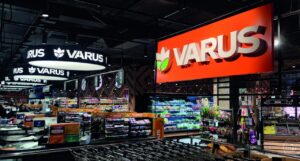
The national supermarket chain Varus invested approximately 648 million UAH in network expansion, the retailer’s press service told the Interfax-Ukraine news agency.
Capital investments were directed toward opening new stores, modernizing the existing network, developing logistics infrastructure, and increasing energy independence, particularly through the installation of generators and solar panels.
“Our key task is to ensure the uninterrupted operation of stores, maintain liquidity, and ensure the predictability of financial flows even during blackouts, power outages, and logistical disruptions,” said CFO Marina Panina.
The opening of a five-year EBRD hryvnia credit line worth $25 million served as an additional sign of financial stability. The company views this as confirmation of international financial institutions’ confidence in businesses operating in Ukraine amid a full-scale war.
The company also reported that maintaining operational stability amid high uncertainty will remain a key financial priority in 2026. Among the main challenges are unstable power supply, labor shortages, and the impact of military operations on logistics.
Varus is a national supermarket chain represented in Ukraine’s grocery retail market by Omega. The first store opened in 2003 in Dnipro; seven new stores opened last year, bringing the total to 118 supermarkets across various cities in Ukraine. The chain operates in several formats: traditional supermarkets, To Go stores, and the Varus.ua online store.
According to the company, its network’s turnover in 2025 increased by 19.5% to UAH 28.8 billion. Tax payments to budgets at all levels totaled UAH 1.99 billion, which is 13.45% more than in 2024.
According to Opendatabot data, the owner of Omega LLC is the Cypriot company “Viant Enterprises Limited.” Valeria Kiptika and Ruslan Shostak are listed as the ultimate beneficiaries.



