

A new study from the National University of Singapore has shown that caffeine can restore impairments in social memory following sleep deprivation by acting on a specific circuit in the hippocampus. The study was published in the journal Neuropsychopharmacology.
The scientists studied the CA2 region of the hippocampus, which is important for social memory—the ability to recognize familiar people or, in the experiment, familiar mice. In a laboratory model, after five hours of sleep deprivation, mice exhibited impaired synaptic plasticity and deficits in social memory, and caffeine helped restore these measures.
The researchers explain the effect by the fact that caffeine blocks the signaling pathways of adenosine receptors, which accumulate during wakefulness and inhibit brain activity. At the same time, the authors emphasize that their work does not concern a general “brain boost,” but rather a quite specific mechanism in a particular memory-related circuit.
As for the broader effects of coffee, literature reviews do link regular coffee consumption to a lower risk of Parkinson’s disease, while the data on Alzheimer’s disease appear less clear-cut: some reviews and meta-analyses point to a possible protective association, but the authors typically note that a causal relationship has not been definitively proven.
The authors’ main conclusion remains cautious: caffeine may temporarily mitigate certain cognitive effects of sleep deprivation, but it is no substitute for sleep. Sleep itself remains the foundation of normal memory and healthy brain function.

According to Fixygen, PJSC “Kharkiv Biscuit Factory” will hold a remote shareholders’ meeting on April 29, 2026. The agenda includes financial results, financial statements, and management decisions.
The factory is part of the Biscuit-Chocolate Corporation, one of Ukraine’s largest confectionery holdings. The group’s key beneficiaries are Alla Kovalenko and entities associated with her.
Control of the company is concentrated among private shareholders, with the major shareholders holding more than 50%.
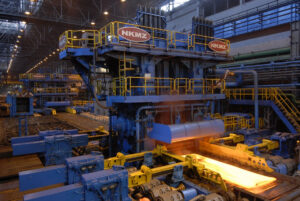
Novokramatorsk Machine-Building Plant (NKMZ, Kramatorsk, Donetsk Oblast) ended 2025 with net sales revenue of UAH 1.485 billion, which is 29.6% higher than the corresponding figure for 2024.
According to the financial report published on the plant’s website, the plant incurred a loss of UAH 127 million, whereas in 2024, net profit amounted to UAH 36.3 million.
The plant’s gross profit was UAH 331.2 million—12.5% less than in 2024—but the loss from operating activities nearly doubled to UAH 141.3 million.
Products worth UAH 1.191 billion were exported, accounting for 80.2% of total revenue (82% a year earlier).
India was the largest importer of the plant’s products, with shipments to that country increasing by 10.2% over the year to UAH 615.2 million.
Exports to Kazakhstan increased 2.4-fold to UAH 43.7 million, to Lithuania by 32% to UAH 167.2 million, while exports to Slovakia decreased by 35% to UAH 60.3 million.
At the same time, new export markets included Bulgaria (90 million UAH) and Uzbekistan (3.8 million UAH). Exports to all other countries increased by 52% to 215 million UAH.
Supplies to Ukrainian customers increased by 43.5% to 293.7 million UAH.
According to the plant, in physical terms, the volume of shipments within Ukraine amounted to 1,500 tons; to Asian countries—4,250 tons; to Europe—2,700 tons; to Africa—313 tons; and to the Americas—43 tons.
“The marketing strategy of PJSC ‘NKMZ’ is to maintain and expand strategic market segments and increase its presence in the countries of Eastern, Central, and Western Europe, the Middle East, Central Asia, and Africa,” the report states.
At the same time, the plant notes that markets in developed countries are characterized by a high level of competition due to the high activity of heavy machinery leaders, as well as local European and Asian manufacturers.
“The mining and processing equipment market is also characterized by intense competition from American equipment manufacturers: Caterpillar, P&H Mining Equipment, and European companies such as Metso Minerals, ABB, Sandvik (Sweden), and Demag (Germany),” the document notes.
Competition in the market for metallurgical plant equipment is driven by the presence of major engineering companies such as Danieli (Italy), SMS Demag (Germany), and Primetals Technologies (UK).
“In addition, numerous manufacturers from China are expanding their presence in all these markets, characterized by low prices and favorable supply terms (credit agreements, payment deferrals, etc.),” NKMZ notes.
NKMZ considers the European market to be the most promising in the near future.
In 2025, NKMZ invested UAH 12 million in production development, including UAH 7.7 million in machinery and equipment and UAH 4.3 million in workshop facilities.
The value of contracts signed but not yet fulfilled as of the end of last year amounted to 667.31 million UAH, with expected revenue from their fulfillment totaling 170.4 million UAH.
The plant reiterates that it is located in a frontline area, and a key factor remains its operations “under conditions of Russian military aggression against Ukraine.” This results in a significant reduction in production volumes and leads to an irregular nature of production and business activities.
NKMZ is a city-forming enterprise in Kramatorsk, the largest in Ukraine in the production of rolled, metallurgical, forging and pressing, hydraulic, mining, lifting and transport, hydraulic, and railway equipment.
As reported, NKMZ’s operations were forced to shut down with the start of Russia’s full-scale military invasion of Ukraine, and it began partially resuming operations on October 1, 2023.
The plant ended 2024 with a net profit of 36.3 million UAH, while in 2023 the loss amounted to 856.93 million UAH; net revenue grew 3.2-fold to 1.15 billion UAH, with 82% of production exported.
As reported, NKMZ shareholders plan to allocate UAH 223.314 million in retained earnings to dividend payments at the meeting on April 28.
According to Fixygen, PFTS Stock Exchange JSC will hold a general meeting of shareholders on April 29, 2026, via remote participation. The agenda includes the approval of financial statements and issues regarding the exchange’s future operations.
PFTS is one of Ukraine’s oldest stock exchanges. Its major shareholders are professional market participants—banks and investment companies. Large blocks of shares are distributed among financial institutions, with no single shareholder holding absolute control.
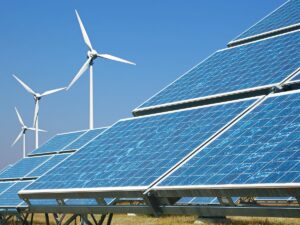
The European Bank for Reconstruction and Development (EBRD) plans to provide a loan of up to $45 million (equivalent to EUR 38 million) to Energy RTB 2 LLC, a subsidiary of the Kernel Group, the bank announced on its website.
“The project is expected to be co-financed by a parallel loan of up to $10 million,” the statement said.
The bank has completed its final review of the project, and approval by the Board of Directors is expected.
The project is expected to receive partial first-loss risk coverage from the European Union under the Ukraine Investment Facility (UIF).
“This program promotes the ‘green’ transition of the Ukrainian economy by supporting sustainable investment in green urban infrastructure, the greening of logistics chains, energy efficiency, and the transfer of ‘green’ technologies in industrial processes, commercial activities, and construction,” the EBRD explained.
The program also provides support to companies directly affected by the military conflict to ensure rapid recovery and resilience to the consequences of the ongoing war.
As reported with reference to Kernel CEO Yevgen Osipov, the company intends to invest approximately $400 million in the energy sector over the next two years,
“We have made a strategic decision to enter the energy sector. Our liquidity is one of the components of these new investments. We already implemented a $20 million pilot project last year, and over the next two years we plan to invest $400 million in this area,” he said.
According to Osipov, the company is planning large-scale projects in wind and solar power generation, as well as energy storage systems (ESS) with a total capacity of about 600 MW. Currently, the holding company is in the process of securing financing from international financial institutions, including the EBRD.
In January 2026, during the World Economic Forum in Davos, Osipov announced Kernel’s strategic goal of becoming a leading player in the green energy sector. At that time, the company confirmed the implementation of its first pilot 20-MW solar power plant project and plans to build a 250-MW solar power plant in the Chernivtsi region.
Kernel Agricultural Holding is the world’s largest producer and exporter of sunflower oil, Ukraine’s largest grain exporter, an operator of an extensive network of logistics assets, and a leading producer of grains and oilseeds in Ukraine. It is one of the largest producers and sellers of bottled oil in Ukraine. It is also engaged in the cultivation and sale of agricultural products.
In the first half of fiscal year 2026 (FY, July–December 2025), Kernel reduced its net profit by 33% compared to the same period in 2025, to $119 million. Consolidated revenue amounted to $1.924 billion, which is 1% less than in the first half of FY 2025. EBITDA fell by 14% to $247 million.
According to Fixygen, PJSC “MTB Bank” has scheduled its annual shareholders’ meeting for April 24, 2026; it will be held remotely. The main items on the agenda for the bank’s annual meeting include the approval of financial statements, profit distribution, reports from the supervisory board and management board, as well as other decisions related to the credit institution’s operations. Information regarding the convening of the meeting is available in the shareholders’ section on the bank’s website.
MTB Bank is a Ukrainian commercial bank based in the Black Sea region, historically linked to Odesa and Chornomorsk. The bank operates in the corporate, retail, and depositary segments. The institution has been operating in its current form since the transformation of the former Marfin Bank and is among Ukraine’s mid-sized banks. The bank’s official website contains corporate information, documents for shareholders, and an archive of meeting resolutions.



