
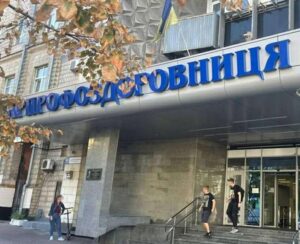
Ukrprofozdorovnitsa, the association of trade union health resorts in Ukraine, increased its net profit by 55% compared to the previous year, to UAH 22.7 million, based on its 2025 results.
As reported by the association in the NSSMC’s disclosure system, the review and approval of the 2025 financial results will take place at the annual general meeting of shareholders scheduled for April 24, 2026.
According to the draft agenda for the meeting, shareholders plan to allocate UAH 13.9 million, or 61% of the profit earned, to dividend payments. The dividend per share amounts to UAH 0.86. Another 5% (UAH 1.1 million) of the profit is proposed to be transferred to the reserve fund, while 34% (UAH 7.7 million) is to be retained as undistributed earnings.
The company’s total accounts receivable as of the end of 2025 decreased by 0.8% to UAH 124.4 million, while current liabilities decreased by 3.3% to UAH 90.2 million.
In addition, it is planned to authorize the payment of a material reward for effective property management in the amount of 5% of the 2025 profits of the respective facilities to the directors of the “Karpaty” sanatorium, Ivan Koshel; the ‘Sinyak’ sanatorium, Marianna Shvardak; and the “Shayan” sanatorium, Lyubomyr Prokopovych.
As noted in the report, the balance sheet of “Ukrprofzdravnitsa” at the end of 2025 amounted to 932.2 million UAH, of which 857.5 million UAH came from the association’s subsidiaries. The clinical sanatorium “Karpaty” in Zakarpattia Oblast (89.3 million UAH), the ‘Morshynkurort’ sanatorium in Lviv Oblast (77.9 million UAH), the “Roscha” sanatorium in Kharkiv Oblast (62.4 million UAH), the B. V. Pashkovsky “Slavutych” Sanatorium in Dnipropetrovsk Oblast (UAH 55.4 million), and the Pirogov Sanatorium in Odesa Oblast (UAH 53.3 million).
As reported, PJSC “Ukrprofzdravnitsa” recorded a net profit of 14.6 million UAH for 2024, compared to a loss of 60.9 million UAH in 2023.
“Ukrprofzdravnitsa” was founded by the Federation of Trade Unions of Ukraine and the Social Insurance Fund of Ukraine for Temporary Disability. It is the largest association in the country’s health resort services sector, comprising 39 health resorts and 8 auxiliary enterprises. It operates 61 mineral water deposits and 13 therapeutic mud deposits.

In Romania, social support for Ukrainian refugees under temporary protection is provided, in particular, through the minimum inclusion income system; when determining eligibility for such assistance, the applicant’s total income is taken into account, including their Ukrainian state pension. This is stated in the explanations provided by the Dopomoha.ro portal.
According to the published information, Ukrainians under temporary protection in Romania are eligible for various social benefits under Law No. 196/2016 on the minimum inclusive income, as well as other support programs. The platform’s materials note that assistance depends on the applicant’s individual circumstances and legal status.
As indicated by publications on this topic, when transitioning to this support model, the authorities assess the household’s total income, and the Ukrainian pension is included in this calculation as income. This means that the amount of the Romanian social benefit may be reduced to account for the pension already received from Ukraine.
At the same time, other forms of assistance remain available to Ukrainians in Romania, including child benefits, support for mothers of newborns, unemployment benefits, and access to social services for people with disabilities. The amount and type of support depend on the specific category of the applicant and the documents submitted.
Thus, the key change for some Ukrainian refugees in Romania is that the pension from Ukraine is considered part of their total income and affects the amount of targeted social assistance they can receive under the Romanian system. According to Eurostat, as of the end of January 2026, there were over 193,000 people under temporary protection in Romania who had left Ukraine.

Agricultural holding Astarta, Ukraine’s largest sugar producer, has purchased over 50 units of agricultural machinery and components with a total value of over $5.2 million for spring fieldwork, the holding announced on Facebook.
“Systematic investments in modern equipment allow us to optimize operational processes, reduce costs, and lessen the environmental impact, particularly by reducing our carbon footprint,” said Astarta’s Chief Operating Officer Vasyl Chmeliuk.
The list of purchased equipment includes heavy-duty and small tractors, planting complexes, precision seeders, and other equipment. The majority of the fleet has already been delivered to production sites. The modernization is aimed at implementing precision and regenerative farming practices, as well as optimizing soil cultivation processes.
Astarta clarified that the infrastructure upgrade is part of a long-term investment strategy. By the end of 2025, the holding’s total investments in modern equipment amounted to approximately $22 million.
Astarta is a vertically integrated agro-industrial holding operating in eight regions of Ukraine. It comprises six sugar factories, agricultural enterprises with a land bank of 220,000 hectares and dairy farms with 22,000 head of cattle, an oil extraction plant in Hlobine (Poltava region), seven grain elevators, and a biogas complex.
According to the results for 2025, Astarta reduced its total revenue from sales of key product categories by 15.6% compared to 2024—to UAH 21.05 billion—while physical sales volumes of its main products fell by 23.5%—to 1.21 million tons.

McLaren Racing and Schneider Electric, a global leader in energy technologies, announced today that Schneider Electric will become the official energy technology partner of McLaren Racing, including the McLaren Mastercard Formula 1 Team, the Arrow McLaren IndyCar Team, the McLaren F1 Academy, and the McLaren United Autosports WEC Hypercar Team.
Together, Schneider and McLaren Racing will develop and implement energy technologies that deliver maximum performance under the most demanding conditions—both in ensuring a reliable power supply directly at race tracks around the world and at the McLaren Technology Centre in Woking, UK. The partnership is rooted in a shared culture based on the intelligent use of data, accelerated innovation, and engineering excellence.
Schneider and McLaren Racing will build on their supplier relationship, which spans over 20 years, to tackle complex energy challenges where performance and uptime are critical. This will include optimizing existing assets—including the wind tunnel, manufacturing facilities, data centers, and other sites—using sustainable systems to reduce energy consumption, promoting electrification through advanced energy technologies, and leveraging digital twin technology to generate data analytics for improved efficiency and sustainability.
Zack Brown, CEO of McLaren Racing, said:
“We are delighted to welcome Schneider Electric as our official energy technology partner. This partnership is built on a strong foundation and reflects our shared commitment to innovation and energy efficiency. By combining Schneider’s expertise in energy technologies with McLaren’s pursuit of peak performance, we will unlock new ways to make our operations smarter and more efficient.”
Olivier Blum, CEO of Schneider Electric, noted:
“Racing is one of the most demanding environments for demonstrating the value of advanced energy and digital technologies. McLaren Racing pushes every system to its limits—that’s where our expertise in performance, reliability, and efficiency is crucial. We are proud to become McLaren’s official energy technology partner, providing energy analytics they can rely on both on and off the track.”
About Schneider Electric
Schneider Electric is a global leader in energy technologies, driving efficiency and sustainability through the electrification, automation, and digitalization of industry, business, and residential spaces. The company’s technologies enable buildings, data centers, factories, infrastructure, and power grids to function as open, interconnected ecosystems, enhancing productivity, resilience, and sustainability.
The company’s portfolio includes smart devices, software-defined architectures, AI-based systems, digital services, and professional consulting services. With 160,000 employees and 1 million partners in over 100 countries, Schneider Electric consistently ranks among the world’s most sustainable companies.
Learn more at https://www.se.com/ua/uk/

According to preliminary data, Cherkasy Bus JSC ended 2025 with a net profit of UAH 82.98 million, which is 32% less than the corresponding figure for 2024, as indicated in the agenda for the company’s annual general meeting of shareholders summarizing last year’s results.
According to the draft resolution of the meeting scheduled for April 24, published in the disclosure system of the National Securities and Stock Market Commission (NSSMC), shareholders intend to retain 95% of the profit earned, or UAH 78.83 million, at the company’s disposal, and allocate 5% (UAH 4.15 million) to the reserve fund.
As previously reported, based on the results of operations in 2024, the shareholders of “Cherkasy Bus” also allocated nearly all of the net profit to development. Meanwhile, the planned profit for 2025 amounted to UAH 102.8 million.
At the meeting, it is planned, in particular, to approve a projected profit target for 2025 of UAH 143.83 million.
Shareholders also plan to re-elect the chair and members of the supervisory board, as well as appoint TOA “Advo-Audit” as the auditor of the company’s financial statements for 2026.
According to data from the National Securities and Stock Market Commission (NSSMC) for the fourth quarter of 2025, Oleksandr Dorosh, head of the “Isuzu-Ataman Ukraine” business, owns nearly 42.29% of the shares of JSC “Cherkasy Bus,” Anna Suprun owns nearly 13.65%, and three other individuals, including long-time board chairman Vitaliy Raabe, each hold 7.9275%.
The company’s authorized capital is UAH 162.97 million.
Founded in 1994, the “Cherkasy Bus” plant manufactures Ataman small-class buses (including school buses) as well as other wheeled vehicles based on Japanese Isuzu components, specifically Isuzu trucks, using a semi-knockdown assembly method.
The plant did not disclose the number of buses and trucks produced and sold in 2025, but in 2024, according to its data, it reduced bus production by nearly 15% compared to the previous year, to 425 units, and truck production by 15%, to 321 units; bus sales decreased by 15.7% to 425 units, while truck sales increased by 8% to 319 units.
At the same time, the plant plans to manufacture 385 buses, 300 trucks with a payload capacity of 3 to 18 tons, and 302 Isuzu pickups for the National Police, the State Emergency Service, the State Border Guard Service, and other companies in 2025.
In addition, construction of a small-series production facility was scheduled to begin in the third quarter of 2025.
According to data from YouControl, in 2025 the company reduced its net sales revenue by 2.2% compared to 2024—to 1.733 billion UAH. Retained earnings as of early 2026 amounted to 346.2 million UAH.

Administrative barriers are one of the key factors slowing down the entry of new housing into the market, said Yevhen Favorov, head of the Ukrainian Association of Developers, during a roundtable discussion.
According to him, the government has now become one of the key drivers of housing demand in Ukraine: programs offering subsidized mortgages, compensation for destroyed housing, programs for military personnel, and other government initiatives are generating significant effective demand. However, the market cannot respond to demand immediately, since by the time a building is commissioned, 80–90% of the most liquid apartments have usually already been sold.
“If the government wants to secure additional housing stock for its programs, it will take time—at least 2–4 years, a significant portion of which is devoted to the administrative preparation of the project,” Favorov noted.
According to him, the association he heads conducted its first annual industry survey of developers, in which 120 respondents participated—owners, executives, and specialists from development companies, who collectively account for one-third of the total supply in the primary residential construction market. According to the survey results, the average duration of administrative project preparation—from land registration to obtaining a construction permit—is approximately 14.4 months; land rights registration takes 13.3 months; and obtaining urban planning conditions and restrictions (UPC) takes an additional 9.78 months.
Respondents cited problems with obtaining UCRs (35%), difficulties in the area of land and property relations (30%), instability of permits and their revocation (24%), difficulties in obtaining technical specifications (22%), as well as constant changes to rules, requirements, and legislation (20%).
Among the procedures that, according to developers, most need optimization at the state level, the top priorities are cultural heritage protection (49%), cadastral and land procedures (29%), access to urban planning information (28%), and digital services and registries (26%).
During the discussion, Olena Shulyak, Chair of the Parliamentary Committee on the Organization of State Power, Local Self-Government, Regional Development, and Urban Planning, emphasized that the problem with administrative permits is much deeper than simply a matter of administration or the speed of document issuance.
“Urban planning permits have effectively become a quasi-licensing tool that creates corruption risks, reinforces the monopoly of local authorities, and in some cases places developers in a dependent position,” Shulyak believes.
At the same time, she believes a systemic solution to this problem is impossible without up-to-date urban planning documentation—digitized and made public at the national level—so that the market has access to clear and transparent rules. The MP also called for a resolution to be submitted to the government as soon as possible, one that establishes a mechanism to address unjustified refusals by local authorities to issue building permits and empowers the State Architecture and Urban Planning Inspectorate (DIAM) to act as an arbitrator in such situations.
Oleksandr Novytskyi, Head of the State Architecture and Urban Planning Inspectorate (DIAM), added that the set of technical specifications and utility connections requires separate reengineering—with a transition to a unified digital process and a “single window” for the client.
Market representatives, in turn, confirmed that the absence or long-standing rejection of urban planning documentation has not only regulatory but also direct economic consequences: land plots are not being developed, investments are being postponed, and housing supply is not reaching the market in the necessary volume.
The survey results will serve as the basis for the association’s future advocacy work in collaboration with the government and the professional community.



