

As a result of the introduction of a zero quota on the export of ferrous metal scrap effective January 1 of this year, the scrap collection industry is losing its potential, reducing raw material procurement, and being forced to lay off employees, stated the head of the Ukrainian Association of Secondary Metals (UAVtormet) Volodymyr Bubley said this at a press conference held at the Interfax-Ukraine press center on Tuesday, titled “Ban on scrap exports: economic consequences for the market and the state.”
According to him, the ban on scrap metal exports—without balancing consumption and procurement of this raw material—has essentially had a negative impact on the operations of scrap metal procurement companies. At the same time, steel production in Ukraine has fallen: in January-February 2026, compared to the same period in 2025, steel production decreased by 13.3%—from 1.183 million tons to 1.026 million tons.
At the same time, the purchase of ferrous metal scrap by metallurgical enterprises decreased significantly—by 31.7%, from 257,800 tons to 176,000 tons. Meanwhile, procurement fell by 41.1%—from 313,600 tons to 184,800 tons.
“Previously, scrap exports accounted for 20–25%. We felt more comfortable operating in the domestic market. We are still operating there now, and we want to continue working in Ukraine,” said Bubley, emphasizing that the price of scrap in the EU is more attractive and has reached 300–330 euros per ton.
“The state loses 12 million euros every month due to the export ban. It loses 200 million hryvnias in taxes. Meanwhile, steelmakers are 112% supplied with scrap,” the head of UAVtormet cited his data.
According to his estimates, Ukraine will produce 7.4 million tons of steel in 2026, which will require 1.5 million tons of scrap—the industry can supply up to 2 million tons of scrap.
Serhiy Vovk, CEO of Ukrmet-Invest LLC, noted that the scrap metal collected by companies is not being purchased by steel mills; his company’s scrap metal stockpile has currently reached 13,000 tons. “Export is the only way for the industry to survive,” the CEO believes.
Vladislav Kleshchynskyi, CEO of the Ukrmet Group of Companies, added that the ban was imposed due to an alleged scrap metal shortage.
“But there is no shortage. Steel mills purchase 30–50% at most. So it’s impossible to call this a shortage. Right now, the scrap market in Ukraine is a market of metallurgical enterprises that dictate prices. We have already cut our staff by 50%, 35 divisions are operating at 20% of their capacity, and we have shut down our entire export infrastructure,” the CEO stated.
Mykola Klimovich, Director of Mirten LLC, clarified that in 2022–2026, the scrap market will be in surplus, and scrap exports were an opportunity to sell it.
According to experts, following the government’s ban on scrap exports, the procurement sector is in a “severe recession” with a trend toward further reductions in procurement.
Earlier, Bubley stated that the export ban automatically affected not only procurement volumes but also domestic prices, as reduced competition allowed steelmakers to act as monopolists in the domestic market. Thus, the cost of one ton of scrap at procurement sites has halved: from 8,000 UAH/t to 4,000 UAH/t.
Under these conditions, companies engaged in scrap procurement are forced to reduce their workforce. In January–February 2026, compared to the same period last year, the number of employees in the industry decreased significantly. In just the first two months, companies in our industry were forced to lay off about 2,000 employees, reported the head of UAVtormet.
“The trend is grim: almost every day we receive reports from companies about a complete shutdown of operations or significant staff reductions. According to our forecasts, 4,000 workers will be laid off in the industry by May,” Bubley predicted earlier.
According to UAVtormet’s research, due to the export ban, the state is losing approximately 200–250 million UAH in taxes each month. A separate category of losses is foreign exchange revenue: approximately 25 million euros have already been lost.
As reported, Ukrainian companies reduced exports of ferrous metal scrap by 77.3% in January–February of this year compared to the same period last year—to 9,309 thousand tons from 40,980 thousand tons. According to statistics from the State Customs Service (SCS), there were no exports in February; 9,309 thousand tons were exported in January, and a record 68,520 thousand tons of scrap were exported in December 2025.
In 2025, Ukraine’s scrap metal processing enterprises increased exports of ferrous metal scrap by 45.3% compared to the previous year—to 448,685 thousand tons from 293,190 thousand tons.
Due to the sharp increase in exports of strategic raw materials from Ukraine, the Ministry of Economy initiated the introduction of a licensing and quota system for scrap exports, setting a zero quota. The government temporarily imposed a zero export quota for 2026 on the export of ferrous metal scrap.
Scrap collection companies in Ukraine increased exports of ferrous metal scrap by 60.7% in 2024 compared to 2023—to 293,190 thousand tons from 182,465 thousand tons. In monetary terms, scrap exports for the year rose by 73.2%—to $91.311 million from $52.723 million.
Sources: https://interfax.com.ua/news/press-announcement/1153229.html; https://uavtormet.com/en/na-mezhi-katastrofy-zagotivlya-bruhtu-chornyh-metaliv-vpala-na-40/

JSC “Ukrenergomashiny” (Kharkiv), more than 75.22% of which is owned by the state, plans to allocate nearly UAH 2.305 million, or 75% of its net profit, to dividend payments based on its 2025 performance, according to a draft resolution of the general meeting of shareholders.
According to a notice of the meeting posted on the National Securities and Stock Market Commission’s disclosure system on April 23 of this year, the remaining 25% of the profit is planned to be retained as undistributed.
“Ukrenergomashiny” does not specify the amount of net profit earned last year, but according to calculations, it exceeded 3 million UAH.
As reported, last year the company paid dividends to shareholders for 2024 totaling UAH 0.66 million (or, in accordance with the state dividend policy, 75% of the net profit earned in the amount of UAH 0.88 million) at a rate of UAH 0.00156 per share with a par value of UAH 0.25.
At the meeting, shareholders plan, in particular, to approve the company’s main areas of activity for the current year and to ratify agreements with TAScombank.
JSC “Ukrenergomashiny” (formerly JSC ‘Turboatom’ and “Elektrovazhmash”) is Ukraine’s sole manufacturer of turbine equipment for hydroelectric, thermal, and nuclear power plants. It also manufactures, among other things, electric motors for rail and urban transport (the “Elektrovazhmash” product line).
In addition to the state, the company’s shareholders (according to the NSSMC as of the fourth quarter of 2025) include the “Seventh” investment fund, managed by the asset management company “Svarog Asset Management” and associated with entrepreneur Kostyantyn Hryhoryshyn, holding 15.3416% of the shares, non-resident Valery Valandin – 5.598% of shares.

Sant Joan de Déu Barcelona Children’s Hospital, a leading pediatric care facility and teaching hospital, partnered with Schneider Electric, a global leader in energy technologies, to modernize its electrical infrastructure using automation solutions that provide enhanced energy efficiency and convenient control in patient rooms. Using the Schneider SpaceLogic KNX portfolio of energy management and automation solutions, the maternity ward achieved an average of 40% energy savings.
Since its founding in 1867 as Spain’s first children’s hospital, Sant Joan de Déu has been a pioneer in comprehensive care for women, children, and adolescents. The hospital is known as one of Europe’s most important specialized and technologically advanced pediatric centers. Since 2009, it has sought to create adaptive healthcare models focused on the patient and comfort, using the most modern technological solutions.
In 2022, Sant Joan’s electricity bills tripled—from €400,000 to €1.2 million—and prices have remained volatile since then, prompting the hospital to implement an energy management system to optimize consumption and reduce its carbon footprint. As a leading adopter of “smart hospital” technologies, Sant Joan also uses its own unique Cortex management system to monitor patient status, building occupancy, and energy consumption. This means that any energy management solution must seamlessly integrate with Cortex’s advanced automation capabilities without compromising high standards of comfort and patient care.
Thanks to the SpaceLogic KNX solution, patients in the maternity ward have gained more control over lighting, blinds, and temperature in their rooms, maximizing comfort without complicating care through a simple interface. This was made possible by the SpaceLogic KNX Pushbutton with Dynamic Labeling, which provides an intuitive interface for controlling lighting, blinds, and climate directly from the bed. Additionally, the SpaceLogic system provides Sant Joan’s building management team with reliable recommendations for further optimizing energy consumption through seamless integration with Cortex.
“After just one week, we were able to prepare a proposal for Sant Joan regarding the implementation of SpaceLogic KNX. After an hour of installation work, we integrated SpaceLogic KNX with Cortex,” said Ignacio de Ros, EcoXpert, Home and Small Building Automation, Schneider Electric, and co-founder of Albo de Ros Canto Engineering. “Smooth installations demonstrate to our customers how easy it is to achieve measurable results without compromise. We look forward to a long-term and fruitful partnership with Sant Joan de Déu Hospital.”
Thanks to the SpaceLogic KNX system, the maternity ward has achieved 35% energy savings during the day and 50% at night for lighting and air conditioning, averaging 40% overall savings compared to the floor below, which has not yet been automated.
“Patients come from all over the world to receive treatment at Sant Joan de Déu, and we are constantly investing in improving their care. SpaceLogic KNX gives our patients more control over their room and personal comfort,” noted Juan Antonio Rivas, Head of Facilities Operations at Sant Joan de Déu. “In the future, we plan to collaborate with Schneider Electric to implement SpaceLogic KNX throughout the hospital.”
In addition to automating energy management throughout the hospital, Sant Joan plans to use the flexibility of the SpaceLogic KNX system to create animated light installations in some common areas for the youngest patients.
To learn more about the collaboration between Sant Joan de Déu and Schneider Electric, watch the video here. The SpaceLogic KNX range is available worldwide; learn more on the website.
About Schneider Electric
Schneider Electric is a global leader in energy technologies, driving efficiency and promoting sustainable development through the electrification, automation, and digitalization of industry, business, and residential spaces.
The company’s technologies enable buildings, data centers, factories, infrastructure, and power grids to function as open, interconnected ecosystems, enhancing productivity, resilience, and sustainability.
The company’s portfolio includes smart devices, software-defined architectures, AI-based systems, digital services, and professional consulting services. With 160,000 employees and 1 million partners in over 100 countries, Schneider Electric consistently ranks among the world’s most sustainable companies.
Learn more at https://www.se.com/ua/uk/
ENERGY, maternity ward, Sant Joan de Déu, Schneider Electric

According to Serbian Economist, Serbia’s real estate market continued to grow through the end of 2025: in the fourth quarter, the total volume of transactions reached €2.4 billion, marking the highest quarterly level since the Real Estate Price Register was established. This was reported by the Republic Geodetic Institute of Serbia (RGZ).
According to RGZ, in October–December 2025, the market value rose by 9% year-over-year, and the number of purchase and sale agreements increased by 6.9%, to 37,386. Apartments accounted for €1.4 billion, or 61% of the total value of all transactions.
Regionally, the number of transactions in the fourth quarter rose by 10.9% in Belgrade and by 5.8% in Kragujevac, while a decline of 6.5% was recorded in Niš and 8.7% in Novi Sad. A total of €768.5 million was spent on apartment purchases in Belgrade alone during this period.
The most expensive apartment of the quarter was sold in the municipality of Savski Venac for €1.4 million, with an area of 90 square meters, while the maximum price per square meter in the same municipality reached €15,298. The most expensive house was also sold in Savski Venac for €1 million, and a parking space for €60,000.
Earlier, RGZ reported that as early as the first quarter of 2025, the market showed a 9.3% increase in value alongside a 2.4% decline in the number of transactions, indicating further appreciation of assets. By the end of the year, this trend persisted, but the market simultaneously returned to growth in the number of transactions.
Vera Yegorova-Tolsta, owner of the real estate agency VIDOVSTAN, also noted the market’s growth in her review. Overall, RGZ data show that even with local fluctuations in individual cities, Serbia’s real estate market remained one of the most stable segments of the country’s economy through the end of 2025.
https://t.me/relocationrs/2490
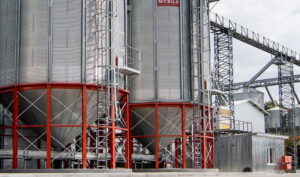
Agroprodservice (Ternopil region) is implementing a project to build a new feed mill and a 3 MW biogas plant to strengthen energy independence and expand the agricultural holding’s export potential, said the company’s commercial director, Taras Baran.
“Environmental requirements are driving us to improve: we are obtaining EU-compliant certification for our farms and are also preparing to implement a 3-megawatt biogas plant project. This will also help us become more resilient to power outages,” he said at the Soybean Market: Growing. Processing. Trade. conference.
The new feed mill will be equipped with its own soybean processing line. Its launch will allow the holding company to separate production flows: the new plant will fully meet the company’s internal needs for pig and cattle feed, while the capacity of the existing soybean processing facility (approximately 2,500 tons per month) will be dedicated exclusively to export and external sales.
As Baran emphasized, the company’s strategy is based on vertical integration and creating added value at every stage. Currently, “Agroprodservice” processes about 30,000 tons of soybeans per year and produces oil and meal from them. The company already holds non-GMO certification, which allows it to receive a price premium when selling products in the German and Czech markets.
PJSC “Agroprodservice” was established in 1999 and is a diversified agricultural holding operating in the Ternopil and Ivano-Frankivsk regions. It cultivates approximately 45,000–50,000 hectares of land and owns grain storage facilities with a capacity of 200,000 tons, as well as seed and feed mills. The holding is among the top five largest pork producers in Ukraine (60,000 head) and also maintains 16,000 head of cattle and 600,000 head of poultry.
In 2025, the agricultural holding invested UAH 45 million in the launch of the “Babusia Marusia” food products plant at the “Western Ukrainian Industrial Hub” industrial park. The facility specializes in the production of canned vegetables, pickles, and semi-finished products, with a projected capacity of 650 tons of products per year. Additionally, the “Nasha Ptitsya” (chicken processing) and “Ternopil Meat Processing Plant” divisions operate within the hub.
According to data from the Opendatabot service, the ultimate beneficiaries of the private joint-stock company “Agroprodservice” are Tetiana Chaikivska (70%) and Andriy Baran (30%). Until 2020, the business was owned by the company’s founder, Ivan Chaikivsky, who is currently the secretary of the Verkhovna Rada’s Agrarian Committee.
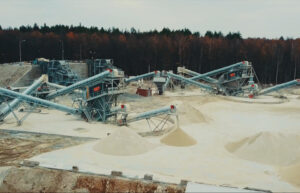
PJSC “Maidan-Vilsky Refractory Plant” (MVKO, village of Mykhailiuchka, Khmelnytskyi Oblast) reported a net loss for 2025, the exact amount of which was not specified.
According to the company’s announcement in the disclosure system of the National Securities and Stock Market Commission (NSSMC) regarding the holding of a remote general meeting of shareholders on April 27, there are six items on the agenda.
In particular, the meeting is scheduled to review the company’s supervisory board report for 2025, approve the results of financial and operational activities for the past year, and approve a resolution regarding the coverage of losses.
Shareholders will also terminate the powers of the supervisory board members and elect new ones. Additionally, the meeting is scheduled to preliminarily approve significant transactions within one year from the date of such a decision.
Draft resolutions, copies of which are available to the Interfax-Ukraine agency, propose covering the loss incurred as a result of financial and operational activities in 2025 using retained earnings from previous periods. No dividends will be paid to shareholders for 2025 due to the absence of profit.
PJSC “Maidan-Vilsky Refractory Plant” was registered on June 19, 2006. It specializes in the production of refractory ceramic products.
According to the State Registration Service data for the fourth quarter of 2025, PJSC “Company ”Association Ukraine” (Kyiv) owns 96.0601% of the company’s shares.



