
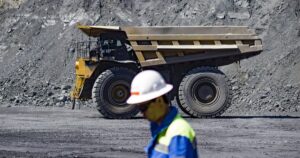
Ferrexpo plc, a mining company with its main assets in Ukraine, has announced the resumption of pellet production at Poltava Mining and Processing Plant (PGZK, Gorishni Plavni, Poltava region) after a temporary suspension of operations on January 20 due to a power outage caused by shelling of Ukraine’s energy infrastructure.
“Following the temporary suspension of operations announced on January 20, 2026, improvements in the availability and prices of domestic and imported electricity have enabled the resumption of production at PGZK. Currently, one pellet production line is in operation. The group uses its own fleet of railcars to export products to customers in Eastern and Central Europe,” the company said in a statement on Monday.
Commenting on the resumption of production, interim CEO Lucio Genovese noted that with the onset of spring, the group was able to resume operations, produce and export high-quality iron ore products.
“Following the intense attacks on Ukraine’s power generation and transmission infrastructure, we are grateful for the hard work across the country that has enabled the rapid completion of repairs. I am also grateful to my colleagues who have worked tirelessly to restore one of the pelletizing lines. This once again demonstrates our ability to be flexible and agile in very challenging conditions,” said the CEO.
In addition, Ferrexpo plc also provided updated corporate information regarding its Swiss subsidiary Ferrexpo AG (FAG).
According to this information, in the course of its normal business, FAG has a number of banking relationships, including with MBaer Merchant Bank AG (MBaer), which recently had its license revoked and was ordered into liquidation by the Swiss Financial Market Supervisory Authority (FINMA).
It is specified that MBaer was used by the group to make commercial payments outside Ukraine. FAG has approximately $3 million in MBaer, and this amount is part of the group’s net cash resources of approximately $30 million as of February 27, 2026. According to a public statement by MBaer’s liquidators, sufficient assets are available to fully satisfy all customers and creditors, so FAG currently expects a full return of its deposit in MBaer, although the timing of when this will be possible is currently unknown.
However, it is noted that the revocation of MBaer’s license does not affect FAG’s or the group’s relationship with its other banking partners and is not expected to have a material impact on the group’s operating subsidiaries in Ukraine. Despite the liquidation of MBaer, the company has made certain payments outside Ukraine, although its ability to do so is limited.
“Management is actively exploring alternative banking options so that FAG can continue to make commercial payments on behalf of the group, but these negotiations are complicated and have historically been complicated by issues related to one of the beneficiaries of The Minco Trust, which owns Fevamotinico S.a.r.l. If the group is unable to arrange alternative banking arrangements outside Ukraine, there is a risk of significant negative consequences for it,” the statement concludes.
As reported, Ferrexpo suspended production and sent some of its employees on leave due to a power supply failure at its enterprises as a result of shelling of Ukraine’s energy infrastructure on January 20.
Ferrexpo owns 100% of Yeryistovsky GZK LLC, 99.9% of Bilanovsky GZK LLC, and 100% of Poltavsky GZK PJSC.
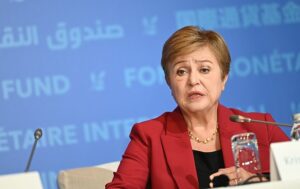
The protracted conflict in the Middle East could worsen market sentiment, increase inflationary pressures, and slow economic growth, said International Monetary Fund Managing Director Kristalina Georgieva, speaking at a symposium organized by the Japanese Ministry of Finance.
According to her, in the new global environment, authorities should “think about the unthinkable and prepare for it.” Georgieva noted that the global economy is once again being tested for resilience due to the new conflict in the region.
According to the IMF chief, if oil prices remain 10% higher for most of the year, this could add about 0.4 percentage points to global inflation.
Against this backdrop, oil prices rose more than 25% on Monday, reaching their highest level since mid-2022. Rising energy prices are fueling fears of a new round of inflation and a slowdown in global economic activity, as well as complicating the scope for further monetary policy easing by leading central banks.

By the end of the week, the price of diesel fuel at filling stations may rise to 80 UAH/liter from the current 70-74 UAH/liter, and there are prerequisites for further growth to 90 UAH/liter, while gasoline will rise slightly in price, according to Sergey Kuyun, director of the consulting company A-95.
“Over the weekend, diesel fuel began to arrive at the price that had formed during the week – 70 UAH/liter. It is already in Ukraine, at 72 UAH/liter wholesale and 73 UAH/liter at stations. The price will definitely tend toward 80 UAH/liter by the end of the week, and then we will see. Morning price quotes (in Europe – EUR) are equivalent to 80 UAH/liter. Plus the station’s markup, plus transportation. That is, it may rise to somewhere around 90 UAH/liter,” Kuyun said at a briefing at the Media Center of Ukraine in Kyiv on Monday.
At the same time, he noted that he does not believe in a diesel fuel price of 100 UAH/liter.
“Everyone likes round numbers. And is 90 UAH/liter not enough? … I honestly don’t believe in 100 UAH/liter myself. For the simple reason that the global economy cannot sustain such prices. All forces will be mobilized to extinguish this,“ said the director of A-95.
At the same time, he noted that demand for fuel has begun to decline. (Last week, Kuyun reported its growth amid a 1.5-fold increase in prices – ER.)
”Among the good news: networks say that demand has declined. The hype drove up the price. This happened not only in Ukraine. There was a grab-and-go reflex, but, as I understand it, everyone who could has already filled up, and the market has calmed down,“ the expert noted.
He also stressed that the rise in gasoline prices has slowed down.
”There is a slowdown in gasoline. If there is a correction, it will be minor. More or less, gasoline prices may stabilize at around 70 UAH/liter,” Kuyun believes.
He explained that the European gasoline market, unlike the diesel market, has a surplus, so there are no preconditions for such sharp price jumps.
As for forecasts, he said that the end of the war in Iran, regardless of the outcome, will lead to lower oil prices.
“I think that no matter how the war in Iran ends, the result will be the same – oil prices will fall because the reason for the price increase will disappear. And the situation will quickly return to normal… Maybe even below $60 per barrel when Iran resumes production,” Kuyun said.
At the same time, he noted that traders are now very cautious about contracting fuel supplies amid a possible decline in prices if the war in Iran ends.
“If the price falls, there will be a review of tactics. Many traders are very cautious about contracting and purchasing because they are listening to the news and statements by Trump, who promises to end everything soon. If the price collapses, for example, to $800/ton, what will happen to the fuel purchased at $1,300/ton?” Kuyun described the situation.
At the same time, he emphasized that the number one issue is not the price of fuel, especially diesel, but its physical volumes in Europe.
“After Hungary, diesel supplies from Poland have been suspended for a week, as Poland has taken a break. Romania and Moldova have closed their exports. There is also a pause in other directions. And here the government needs to talk to its partners. Everyone has closed down out of fear… But nothing special is happening – oil is flowing, factories are working,” said the director of A-95.
At the same time, Kuyun emphasized that the rise in oil prices has a very positive effect on the Russian economy, which “in January-February traded at zero for many fields, and at a loss for depleted ones.”
As reported earlier on Monday, Kuyun, director of the consulting company A-95, noted that it is only possible to restrain retail fuel prices, in particular for diesel, amid a sharp surge in oil and petroleum product prices on world markets by reducing VAT. According to him, in 2022, VAT was reduced from 20% to 7%, and today a similar step would dampen prices by UAH 10/liter.
Over the weekend, the price of oil rose to $117 per barrel (+24%) and diesel fuel (DF) to $1,367 (+18%) per ton on the ICE Futures Europe exchange in London.

In July 2025-February 2026, Ukraine retained its position as the leading supplier of sunflower oil to the European Union and provided almost 92% of the total imports of this product by the bloc’s countries, according to the specialized publication OFI Magazine, citing data from the European Commission.
According to a report by the German Union for the Promotion of Plants and Proteins (UFOP), in the first seven months of the 2025-2026 marketing year (MY, July-June), the EU-27 countries imported a total of just under 1.04 million tons of sunflower oil. Despite its leadership, the total import figure decreased compared to the same period last year, when it amounted to 1.28 million tons.
According to UFOP estimates, the annual sunflower harvest in Ukraine decreased from 13 million tons in 2024 to 10.5 million tons in 2025, as the decline in harvest led to a reduction in processing volumes and limited sunflower oil exports.
Researchers at Agrarmarkt Informations-Gesellschaft also noted significant pressure from Russian attacks on infrastructure and port facilities, which complicated oil logistics.
Market observers, in turn, noted the stabilization of sunflower oil export flows despite security risks.
Moldova (5% of the market) and Serbia (less than 2%) ranked second and third among suppliers. Moldova showed an increase in supplies, while Serbia lagged significantly behind the previous year’s level.

China’s foreign exchange reserves, the largest in the world, increased by $28.7 billion (+0.85%) in February compared to the previous month and amounted to $3.428 trillion, according to a statement by the People’s Bank of China.
The reserves reached their highest level since November 2015.
The US dollar rose 0.51% against a basket of major world currencies last month. The yuan rose 1.35% against the US currency.
Gold reserves in China rose for the sixteenth consecutive month in February, to 74.22 million ounces from 74.19 million ounces in January. In value terms, gold reserves rose to $387.59 billion from $369.58 billion at the end of January.

Last year, the forestry industry received UAH 6.9 billion in net profit, which is UAH 4.4 billion more than in 2024. This was announced by Viktor Smal, head of the State Forestry Agency, during the annual public report for 2025.
“In 2025, timber worth UAH 30.4 billion was sold, which is UAH 6.7 billion more than last year. The net profit of the industry amounted to UAH 6.9 billion, which is UAH 4.4 billion more than in 2024,” said the head of the State Forestry Agency.
Thus, the growth in profit significantly outpaced the growth in revenue.
The State Forestry Agency believes that this result was achieved thanks to the reforms and digitalization of the industry, even despite the fact that during the war there was a reduction in the areas available for management.
“Before the reform in 2020, when there were more resources and less extreme working conditions, the industry managed to earn only UAH 0.2 billion — almost 35 times less. This is the best proof that the reforms we have carried out have proven their effectiveness,” said Viktor Smal.
Also, according to him, in 2025, the profitability of forestry sector enterprises was 22.8% — 12.3% more than in the previous year, and the average salary increased by almost UAH 6,000 and currently stands at over UAH 30,000.
“Another indication of the success of the forestry sector reform was the amount of taxes paid. In 2025, UAH 16.1 billion was transferred to the budget, which is UAH 6.8 billion more than in the previous year. This is an absolute record in the history of independent Ukraine. And I am proud of this result, which was achieved through the diligent and systematic work of 24,000 employees in the industry,“ concluded the head of the State Forestry Agency.

As noted by the head of the State Enterprise ”Forests of Ukraine” Yuriy Bolokhovets, the economic results of 2025 were influenced not only by positive market conditions. There was an increase in the percentage of competitive procurement by the enterprise. For the first time, 97% of the procurement budget of the State Enterprise “Forests of Ukraine” was directed to Prozorro, resulting in savings of over UAH 700 million. Reorganization was also carried out, and administrative staff was optimized.
The team at State Enterprise “Forests of Ukraine” is constantly faced with pressure and attempts to lobby for the pre-reform opaque system of forest product sales. However, the company sells timber (except for firewood for the population and the social sector) exclusively through open auctions. Data on concluded exchange agreements for the purchase of timber is now fully open.
“The increase in forestry revenues means record growth in budget contributions, the restoration and protection of Ukrainian forests from fires, support for the Armed Forces of Ukraine, investments in infrastructure development, and technical re-equipment of forestry. Before the reform, profits were lost, but today financial flows have been de-shadowed and work in the interests of the state and the industry,” said Yuriy Bolokhovets.



